Apple bought Samplab's AI audio editor in a June 2026 asset deal, an EU filing shows
My stack My fav 6 tools for AI music after testing 70+
-
 ElevenMusic · Music generation
-
 Moises · Stem separation
-
 Controlla · Voice swap & cloning
-
 Cryo Mix · Mixing + mastering
-
 Neural Frames · Music videos
-
 ONCE · Distribution
Some links are affiliate links — I earn a commission at no cost to you. Every tool here is one I run myself and truly believe in. This stack is proven.
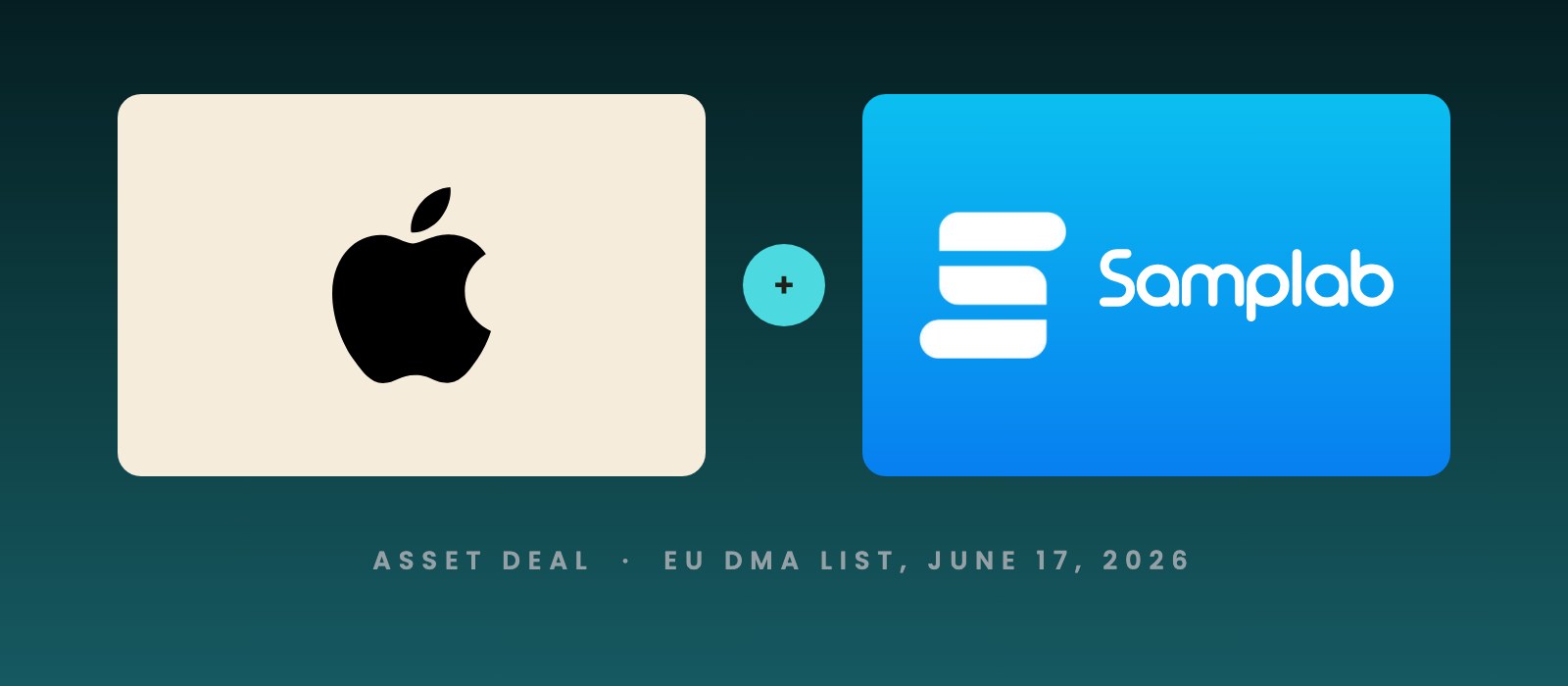
Apple bought the AI audio editor Samplab back in June 2026, and the public only found out on October 19.
That’s the day the European Commission added a new Apple entry, dated June 17, to its Digital Markets Act list of acquisitions. It says Apple, through a subsidiary, “will acquire certain assets of Samplab GmbH” and “offer employment to and hire certain Samplab employees.”
So this is an asset deal: Apple took the software and some of the people, and the Swiss company stayed behind. There’s no price, no headcount, and Apple hasn’t commented, 9to5Mac reported.
Samplab itself went offline on September 17, 2026. Type samplab.com into your browser today and you land on apple.com.
What Samplab’s AI audio editor did for musicians
Samplab called itself “the ultimate audio editor for musicians” and promised you could “edit audio files as if you were working with MIDI.”
So you dropped in a sample, and Samplab turned the sound into notes you could move. Change a note in a chord and it stays in key. Then export the chords as a MIDI file and play them with any instrument you like.
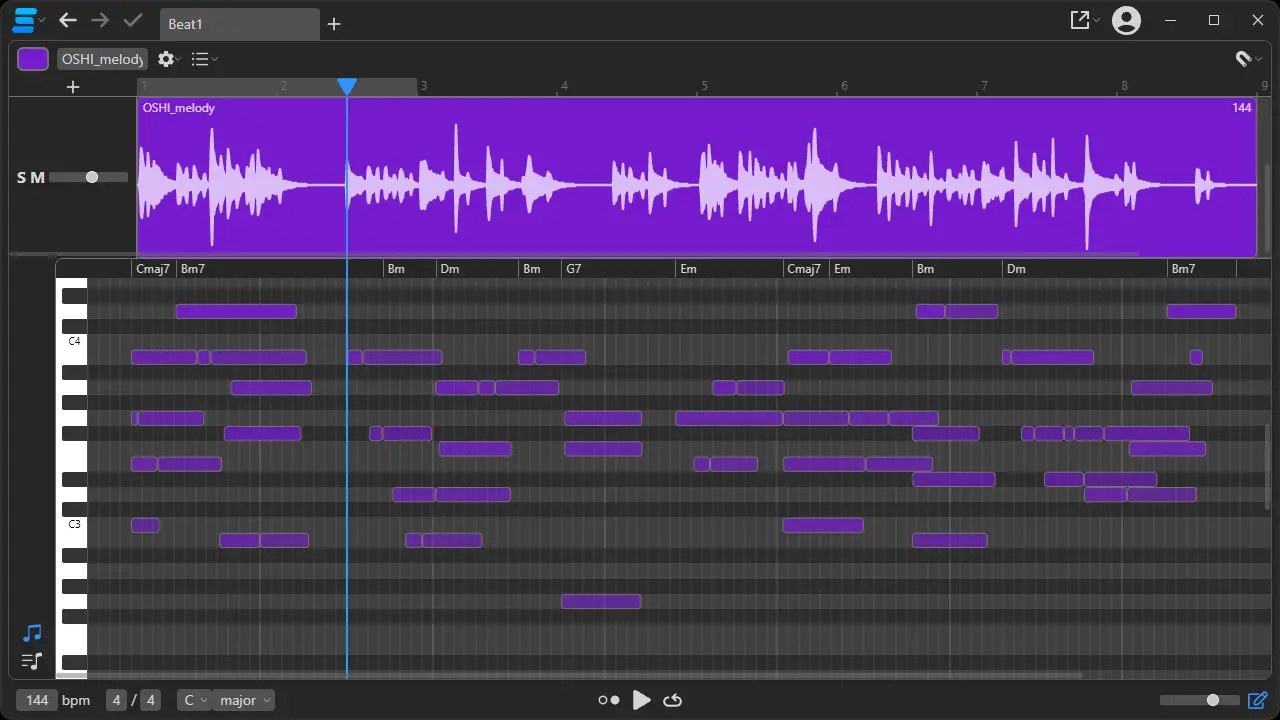
It also matched the tempo and key of different samples so they’d fit together, and split any audio into stems you could then edit note by note. (If stems are new to you, my stems cheatsheet explains what each one holds.)
Samplab ran as a VST3 and AU plugin inside your DAW, or as a desktop app. The free Basic tier took up to 10 seconds of mono audio per file. Premium and Complete took full-length stereo files, and Complete added Samplab’s Resynthesizer.
The hard part was polyphonic audio, which just means several notes at once, like a chord on a piano. Producer KSHMR called Samplab “pure magic” on its homepage and wrote that “no other program lets you tweak the notes of polyphonic audio while actually sounding good.”
The closest tool on my site that does this today is RipX DAW, which also edits single notes inside mixed audio. Universal Audio’s LUNA Studio has audio-to-MIDI and chord extraction too.
Why Apple’s June 2026 Samplab deal only surfaced in October
Apple counts as a “gatekeeper” under the EU’s Digital Markets Act, so it has to tell the Commission about deals like this one, MacRumors explains. The Commission published the Samplab entry 4 months after its June 17 date.
Swiss records show what happened to the company. Manuel Fritsche and Gian Marco Hutter registered Samplab GmbH in Altstätten in April 2021. On June 24, 2026, one week after the EU date, the company renamed itself Quitten GmbH, according to the St. Gallen commercial register.
Its new purpose is holding assets, in particular income from developing and selling music and audio software (my translation from the German). Startupticker reads it the same way: Apple appears to have bought the rights to the software, with sales income possibly flowing to Quitten GmbH.
Samplab’s users actually heard first. By June 21, 2026, 4 days after the EU date, samplab.com carried a wind-down notice. It promised refunds for the rest of any yearly subscription and a final version that keeps existing projects working.
After many years of working on Samplab, we have made the decision to pursue a new opportunity.
Samplab is one of 11 Apple deals dated 2026 on that EU list. The entry right before it, dated June 9, covers Huxe, an AI audio briefing app founded by former NotebookLM developers. In January, Apple bought the audio startup Q.ai.
Will Samplab’s note editing end up in Logic Pro or GarageBand?
Apple hasn’t said a word. 9to5Mac wrote that it “isn’t hard to imagine” Samplab’s technology in Logic Pro or GarageBand, or helping Final Cut Pro’s audio editing.
MacRumors made the more specific point: Logic Pro already has Stem Splitter and Chord ID, so polyphonic note editing would be the new part. That was Samplab’s headline feature, changing one note inside a recorded chord without wrecking the sound.
So if Samplab was in your workflow, keep the final version installed, because the download page is gone. And keep an eye on the next Logic Pro release notes.
Frequently asked questions
Can I still open my Samplab projects after September 17, 2026?
Samplab said older versions of its app would stop working entirely after September 17, 2026, and that no new audio could be uploaded after that date. It released a final version during the wind-down that lets you keep working with existing projects, plus a fully offline Resynthesizer for buyers and Samplab Complete subscribers. samplab.com now redirects to apple.com, so the download page is gone.
Who founded Samplab, the AI audio editor Apple bought?
Manuel Fritsche and Gian Marco Hutter registered Samplab GmbH in Altstätten, Switzerland, in April 2021, according to the Swiss commercial register. Startupticker dates the startup itself to 2020 and says it reached the Venture finals and joined the Wingman Campus Fund portfolio in 2022.
How much did Apple pay for Samplab's assets?
Nobody has said. The EU Digital Markets Act entry dated June 17, 2026 names no price and no number of employees, and Apple has not commented on the deal.
Which other audio startups did Apple add to the EU acquisitions list in 2026?
The entry just before Samplab, dated June 9, 2026, gives Apple a non-exclusive license to Huxe's intellectual property and the right to hire Huxe staff. Huxe makes an app that creates personalized audio content. In January 2026, Apple bought all the shares of Q.ai, which develops sensor-based speech, biometric and audio interfaces.
About the author

Covering AI music tools, industry shifts, and news for music creators and professionals. Twice-weekly newsletter at aimusicpreneur.com.