AI-generated pro-Russian war songs are spreading as propaganda on Spotify, Apple Music, YouTube and Deezer
My stack My fav 6 tools for AI music after testing 70+
-
 ElevenMusic · Music generation
 -
 Moises · Stem separation
 -
 Controlla · Voice swap & cloning
 -
 Cryo Mix · Mixing + mastering
 -
 Neural Frames · Music videos
 -
 ONCE · Distribution
Some links are affiliate links — I earn a commission at no cost to you. Every tool here is one I run myself and truly believe in. This stack is proven.
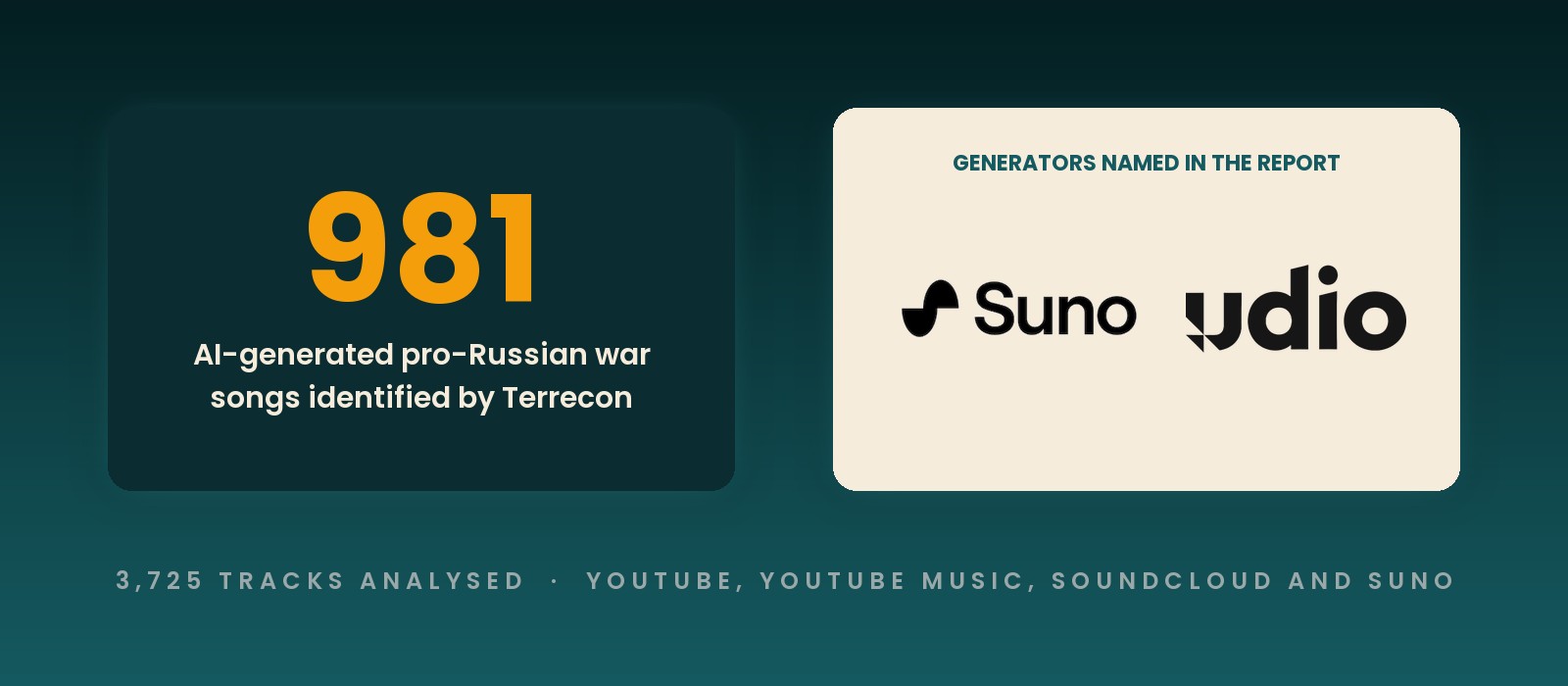
Terrecon, a Ukrainian threat-intelligence nonprofit, found 981 AI-generated songs pushing pro-Russian war narratives. It checked 3,725 tracks on YouTube, YouTube Music, SoundCloud and Suno to get there.
The songs glorify Russian soldiers and depict Ukrainians in dehumanising terms, sometimes with ethnic slurs. The New York Times reported they have been played millions of times on Spotify, Apple, YouTube and Deezer, the same services your own releases sit on.
One of the most popular is “Power of Artillery”, a Russian-language rock song about artillery systems. It has passed 2 million views on YouTube, 112.ua reported.
What Terrecon found in 3,725 tracks
Most of the 981 songs that had a traceable publish date went up after 2024. Terrecon says the people behind them used AI music generators such as Suno and Udio, because they make tracks faster and cheaper than hiring composers, singers and a studio.
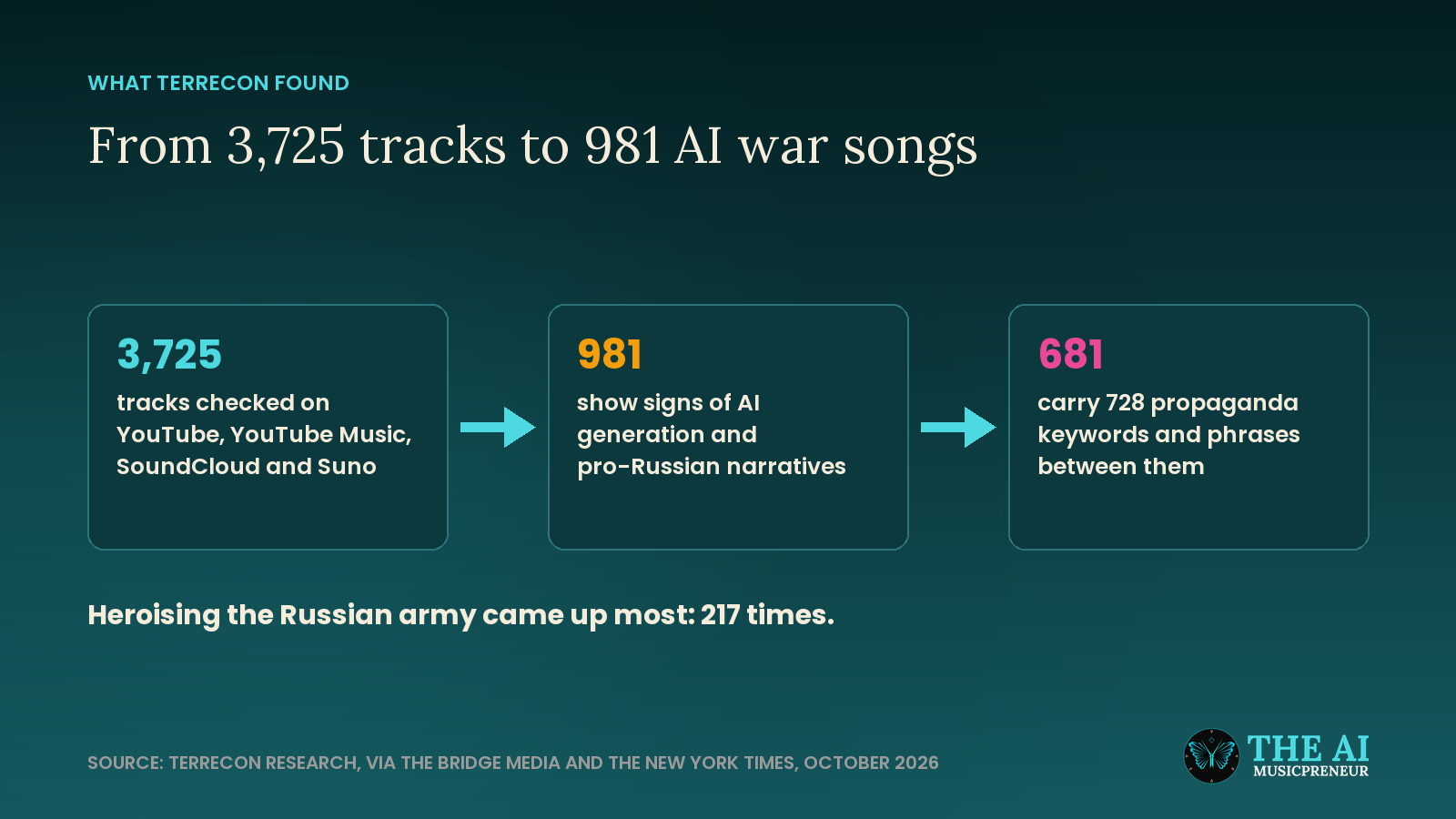
The breakdown published by The Bridge Media goes deeper:
- 681 songs carried 728 propaganda keywords and phrases between them.
- Heroising the Russian army was the most common theme, at 217 instances.
- Cloned and imitated voices show up throughout, with stylings close to Viktor Tsoi, Sabaton and Rammstein, and tracks using a voice generated in the likeness of Adolf Hitler.
- Children’s formats are in the sample too: anime, video game characters, holiday songs for May 9 and children’s karaoke.
- Reach for some of these tracks approaches 1 million listens.
Daria Verbytska, a founder of Terrecon, compared it to how Russia scaled up its use of drones.
They have found new ways to create cheaper drones and use them on a massive scale. It's like that with music – creating massive propaganda with the help of AI.
So the cost of making a song dropped to almost nothing, and the propaganda volume followed.
How AI music generators made propaganda songs cheap to produce
Terrecon also ran its own test. It prompted several AI music generators to write songs promoting Russian views of the war, and found they could produce lyrics that include calls for violence.
Who is behind the songs is less clear. The New York Times says the extent of the Russian government’s role isn’t known, and Terrecon didn’t determine how directly the state is involved in these particular tracks.
Terrecon does point to money, though. It says hundreds of millions of rubles have gone to AI-generated content and cultural projects about the war through the Presidential Fund for Cultural Initiatives, including a “NeuroMarathon” for young content creators ahead of May 9.
Why streaming platforms struggle to label AI propaganda songs
Most of the big services don’t label AI music on the song itself. 112.ua notes that only a few platforms, Deezer and YouTube among them, currently require AI content to be clearly labelled.
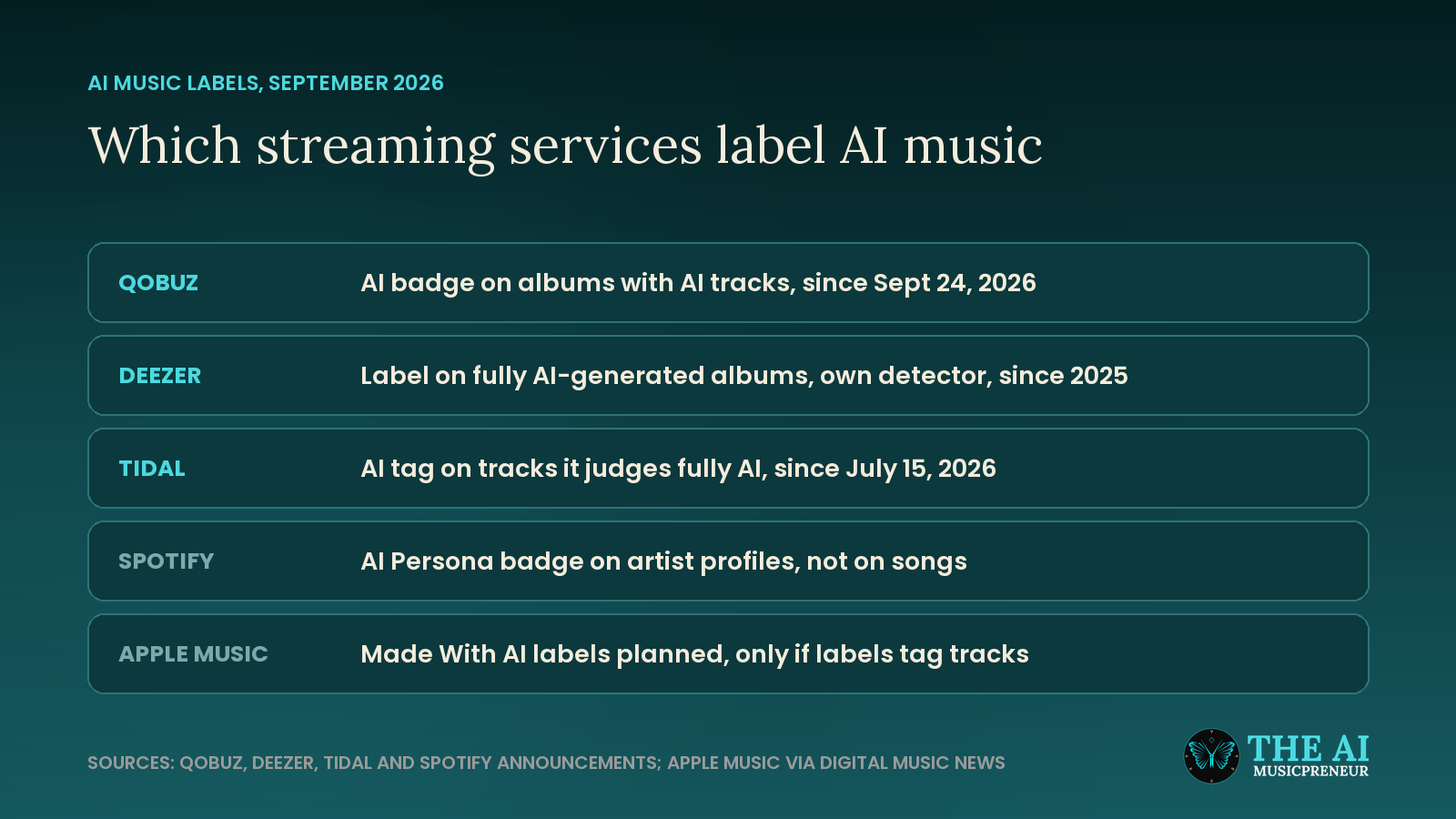
Spotify puts an AI Persona badge on artist profiles, not on songs. Deezer and Qobuz tag albums their own detectors catch.
And a label only answers one question: was AI used? It says nothing about what the lyrics are doing, which is a content moderation question, and that one sits with the platforms’ hate speech and violence rules.
The generators that Terrecon names are the same ones music creators use every day. Expect this report to show up the next time a platform or a lawmaker argues about AI labels and generator safeguards.
Frequently asked questions
What is Terrecon?
Terrecon is a Ukrainian nonprofit that does open-source threat intelligence and supports the Ukrainian government. Its report on AI-generated war songs was covered by The New York Times in October 2026.
How many AI-generated pro-Russian war songs did Terrecon find?
981, out of 3,725 tracks it checked on YouTube, YouTube Music, SoundCloud and Suno. In 681 of them, researchers logged 728 propaganda keywords and phrases.
Which AI music generators were used to make Russian propaganda songs?
Terrecon says the authors used generators such as Suno and Udio. It also tested several AI music generators with propaganda prompts and found they could produce songs that include calls for violence.
Is the Russian government behind the AI-generated war songs?
That isn't established. Terrecon did not determine how directly the Russian government is involved in these particular songs, though it says state funds have gone to AI content and cultural projects about the war.
About the author

Covering AI music tools, industry shifts, and news for music creators and professionals. Twice-weekly newsletter at aimusicpreneur.com.