The AI Music Briefing #14: Suno shipped its compliance layer in a single day, and one part of it reads your prompts
The week of August 3–7, 2026, when disclosure stopped being a choice: Suno confirmed a download cap, watermarking and Musixmatch prompt screening in a single day, the EU's AI transparency rules went live, and 3 established acts named their own AI use before anyone made them.
My stack My fav 6 tools for AI music after testing 70+
-
 ElevenMusic · Music generation
 -
 Moises · Stem separation
 -
 Controlla · Voice swap & cloning
 -
 Cryo Mix · Mixing + mastering
 -
 Neural Frames · Music videos
 -
 ONCE · Distribution
Some links are affiliate links — I earn a commission at no cost to you. Every tool here is one I run myself and truly believe in. This stack is proven.
Issue #14 · the week of August 3–7, 2026 · ~7 min read. The Friday read for music industry professionals working at the intersection of AI and the traditional music business. Curated by Christopher Wieduwilt.
Three artists disclosed AI use, then Suno made the file disclose it for them
This week the disclosure question stopped being a choice.
Luke Steele called AI a smart guitar pedal. Rudy Sarzo said he uses Suno as his studio band. AG Cook built half a Charli xcx single with an AI plugin. Then on August 6 Suno confirmed a download limit, watermarking within weeks, and prompt screening from Musixmatch, 4 days after the EU’s AI transparency rules went live. Every artist who spoke first had 20 years of catalog behind them.
What’s in store:
- Top Story: Suno shipped a compliance layer in a day, and part of it reads your prompts
- Three established acts disclosed AI use in 4 days, and nobody punished them
- Merlin signs the indie sector into Spotify’s AI covers tool, with no rate published
- 6 cases in the Lawsuit Tracker, and the 3 big ones sat still
High Signal News: the EU’s watermark rule, Merlin’s Spotify deal, and Treblo’s own detector
Luke Steele, Rudy Sarzo and AG Cook disclosed AI use in 4 days, and nobody punished them
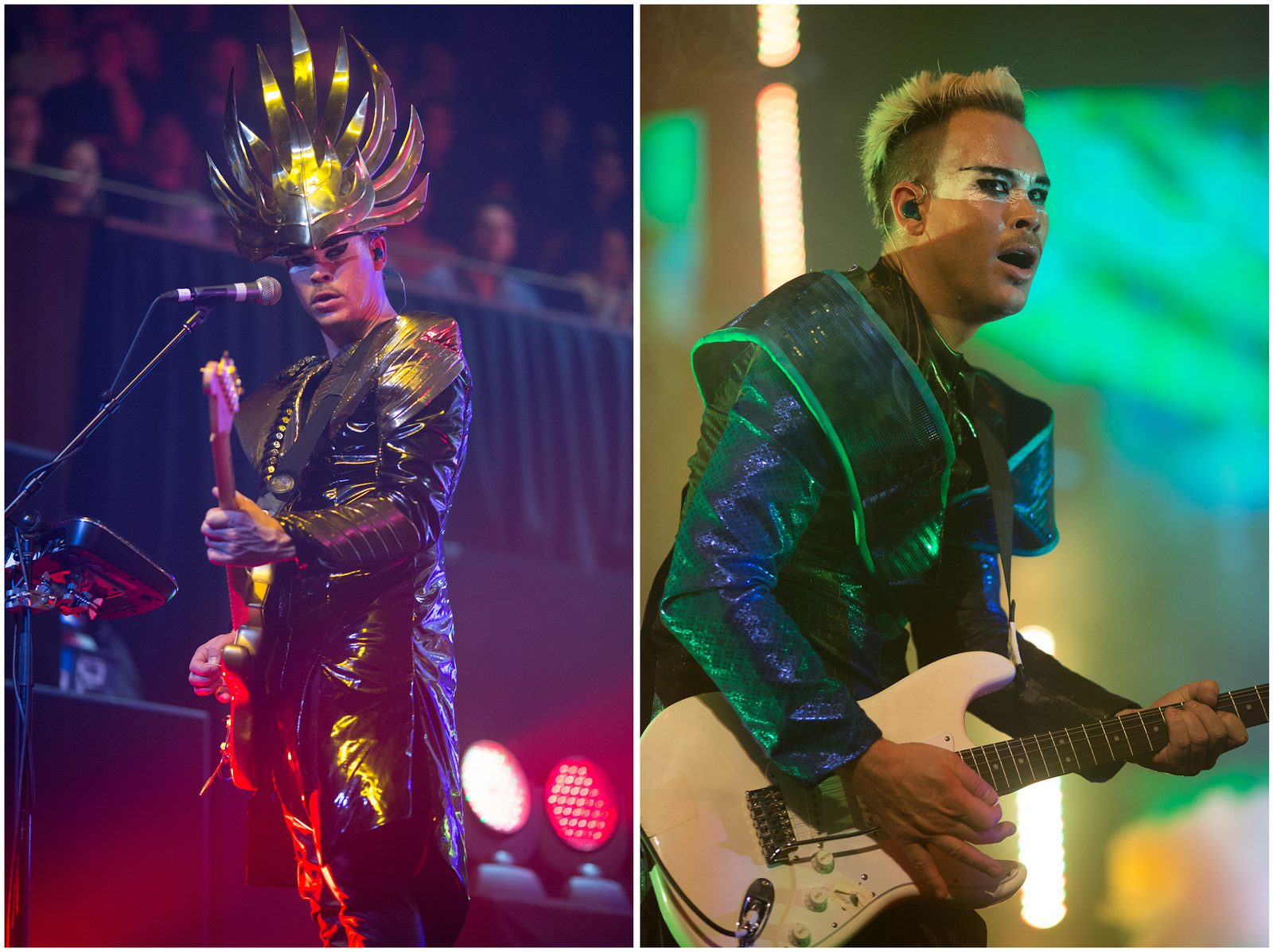
Luke Steele of Empire of the Sun answered “of course” when iHeartRadio Canada asked, calling AI a smart guitar pedal. Rudy Sarzo told The Music Biz Weekly Podcast he uses Suno as a “studio band”. AG Cook built the second half of a Charli xcx single with an AI plugin. None of them took damage for it.
The EU AI Act’s watermark duty landed on Suno and OpenAI, not on the artists using them
On August 2 the AI Act’s transparency, compliance and enforcement provisions became enforceable. Article 50 puts the machine-readable watermark on the company that built the AI system, so Suno, Udio and OpenAI carry it. General-purpose model developers also have to respect rightsholder opt-outs. Universal flagged “significant obligations and costs related to monitoring and compliance” in its 2025 filings.

The label most people read into the headlines is narrower than that. A creator only has to disclose when the output is a deepfake or text published to inform the public, and evidently artistic work is carved out: the mention has to sit somewhere that doesn’t hamper enjoyment of the work. An independent producer in Ohio releasing an AI-assisted track to EU listeners owes no banner across the art. The duty that landed this week landed on the tool.
Merlin signed the independent sector into Spotify’s AI covers tool with no rate published
Spotify announced the Merlin agreement on August 4 for its fan-made covers and remixing tool, launching as a paid Premium add-on. Participation is opt-in for artists on Merlin-covered labels. Spotify named 5 rightsholders in October 2025 and has landed 2 since. Still no launch date, no add-on price, no per-generation payout and no songwriter credit mechanism.
Treblo’s own detector says Fenix Flexin’s Billboard hit “Rubberz” came from Treblo
Treblo shipped a tool checking whether a track came from its own model, and it flags Fenix Flexin’s “Rubberz”, which peaked at No. 58 on the Hot 100. Fenix denies it. He posted a Pro Tools stem view as proof, then deleted it after others noted a stem splitter produces the same view from an AI file.
Saregama builds AI videos for 1960s songs it never owned the visuals to, at about $740 each
India’s oldest label owns the recordings and compositions for thousands of film songs, never the visuals, because those stayed in film negatives nobody thought to sell. Managing Director Vikram Mehra told investors on August 4 the label now builds them with AI at roughly INR 70,000 each, for a YouTube channel with around 64 million subscribers.
Brad Paisley and Willie Nelson lead country artists against AI data centers in Nashville and Texas
Brad Paisley, Tanya Tucker, Gavin Adcock and Willie Nelson have all come out against data center construction. Jack White, Sheryl Crow and Margo Price backed Paisley’s fight over a Nashville site 500 yards from the zoo. Texas has 248 planned. Paisley tied the buildings to training data, which held the coalition together.
AI Music Lawsuit Tracker
Six cases this week. The 3 oldest sat still and 3 others all moved on August 5.
RIAA v. Suno: partly settled, with Sony and Universal pushing for 61,026 recordings
RIAA v. Suno: Partly settled. Warner settled in November 2025, and Sony and Universal are still pushing to expand the case to 61,026 recordings.
This week: No change this week.
RIAA v. Udio: Sony alone still litigating over 30,117 recordings
RIAA v. Udio: Mostly settled. Sony alone is still litigating, and filed a second suit in July 2026 over 30,117 recordings.
This week: No change this week.
GEMA v. Suno: decided, and the appeal window is open
GEMA v. Suno: Decided. GEMA won on July 31, 2026. Suno must disclose revenues and pay damages, and can still appeal.
This week: No change this week. The appeal window is open and nothing has been filed.
Woulard v. Udio: dismissal denied and the case moved to Manhattan
Woulard v. Udio: Ongoing. Independent artists led by David Woulard of Attack the Sound sued over training, DMCA violations and market dilution.
This week: August 5, a judge denied Udio’s motion to dismiss and moved the case from Illinois to the Southern District of New York in the same order. The biometric voiceprint claims survive.
AFM v. Universal & Warner: both majors have now moved to dismiss
AFM v. Universal & Warner: Ongoing. The musicians’ union says licensing recordings for AI training is a new use under the Sound Recording Labor Agreement, and session players are owed for it.
This week: August 5, Universal moved to dismiss, arguing the agreement fixes no rate for AI training. Both majors have now filed. Judge Ramos has not ruled.
Concord v. Anthropic: Anthropic moves to strike the DMCA count over lyrics
Concord v. Anthropic: Ongoing across 2 cases. Publishers sued in 2023 over lyrics Claude reproduced, then again in January 2026 over $3B of allegedly torrented works.
This week: August 5, Anthropic moved to dismiss the claim resting on Dario Amodei’s alleged torrenting, and to strike the DMCA count. Its argument: CMI removal applies to whole compositions, not the lyrics inside them.
→ Full case files and timelines
Top Story: Suno shipped its compliance layer in a single day, and one part of it reads your prompts
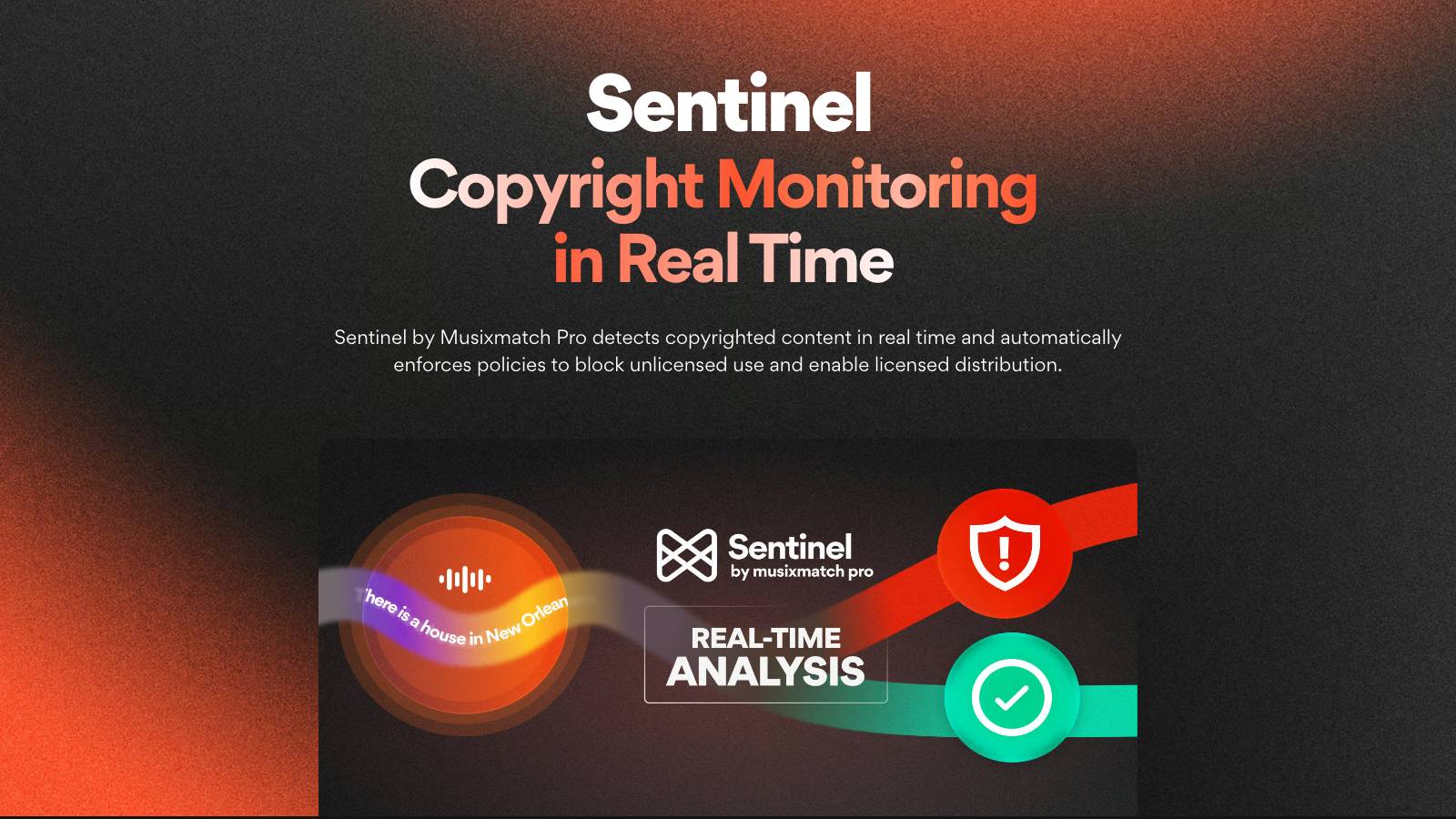
On August 6 Suno published 4 operating principles, confirmed a policy limiting mass distribution of its songs to streaming platforms, said audio watermarking ships in the coming weeks, and signed on as the first customer of Musixmatch’s Sentinel. Four moves, one day, one company.
Six days earlier a Munich court ruled Suno had infringed GEMA’s catalogue. The company that spent 2 years arguing training was fair is now buying copyright detection from a vendor that licensed lyrics from all 3 major publishers in October 2025.
Musixmatch’s Sentinel reads the prompt before a song exists
Every detection fight in AI music so far has argued about finished audio. Deezer’s scanner, the volunteer trackers, Treblo’s own-model detector. All read a file after it exists and guess how it was made. Sentinel moves upstream, matching prompt text against a licensed lyrics corpus before anything is generated.
- Musixmatch says it identifies durable matches with millisecond-level latency, and monitors outputs too.
- Its rightsholder network runs to 14 names, including Universal, Sony Music Publishing, Warner, Kobalt and the NMPA.
Suno’s download cap is the move with teeth
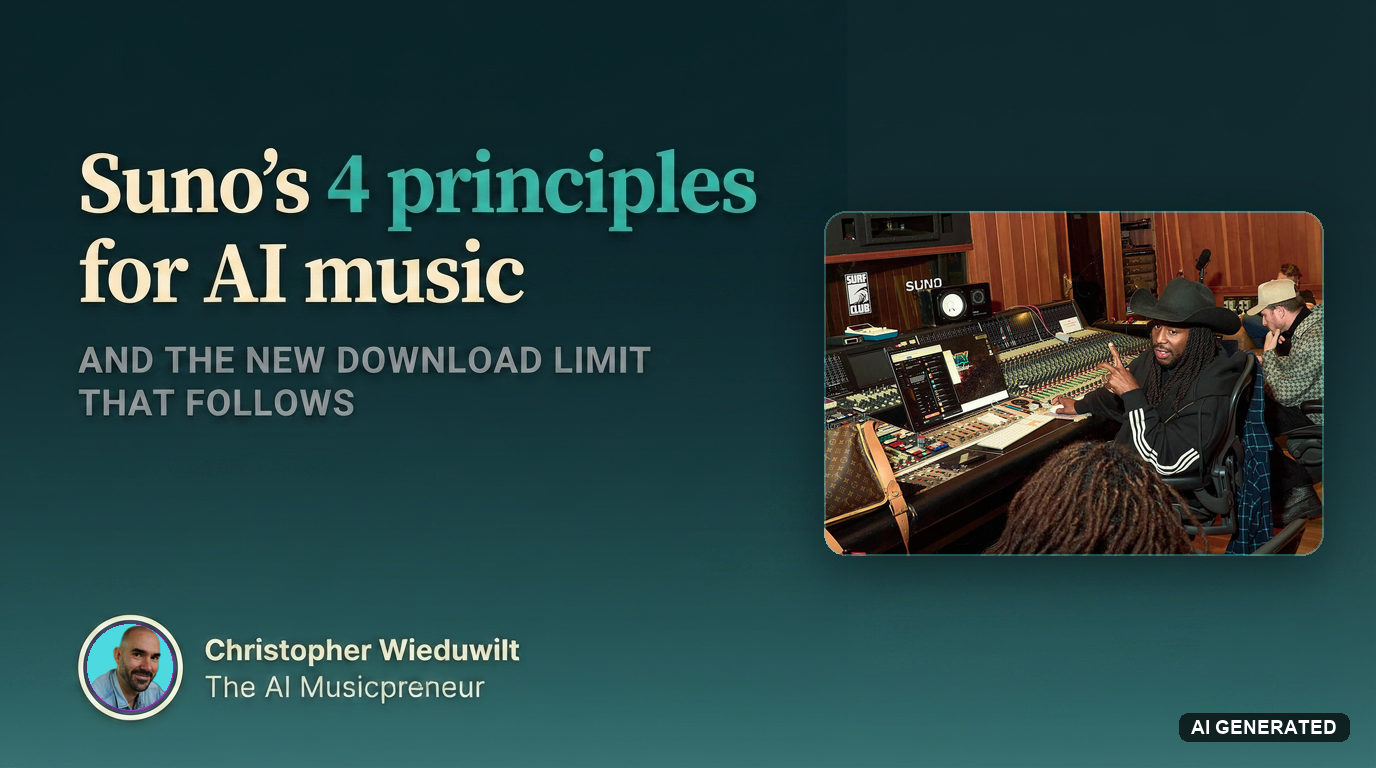
Suno will cap mass distribution of its songs to streaming platforms, a plan Billboard traces back to the Warner settlement terms. Watermarking makes the file identify itself. Principle 3 says the tools should enable originality, which is the sentence Sentinel is meant to enforce.
“One of our guiding principles is to ensure our tools enable original music creation, not imitation, and Musixmatch has been a key partner in helping us identify and prevent misuse,” Phil Castro, General Counsel at Suno, said in the Musixmatch announcement.
What happens when Sentinel flags a prompt? Suno hasn’t said
Musixmatch describes Sentinel’s job for Suno as visibility that informs moderation, which is not the same as a block. No download cap number, no watermark date, no per-prompt policy. The infrastructure is announced, the thresholds are not.
A vendor category formed this week: the music industry selling compliance infrastructure to the AI companies it is suing, and both sides are signing. If you release Suno tracks commercially, 3 of these 4 moves land on your workflow this year, and the prompt box is the one nobody saw coming.
Music Intelligence: Josh Fawaz’s No. 1, the OMNi DAW, and Fender’s “analog AI”
Musixmatch’s Sentinel moved detection upstream of the song
Every detector until this week read a finished file and guessed how it was made. Treblo confirmed a charting record came from Treblo. Medasin’s 2 accusations, against Fenix Flexin and Tyga, both ran on general-purpose classifiers nobody can check. Then Musixmatch’s Sentinel started screening Suno prompts against a licensed lyrics corpus, before a song exists. Matching text is a lookup. Classifying audio is a guess.
Josh Fawaz’s AI “Like A Prayer” rework hit No. 1 on Australian radio before ARIA had a rule
Released in April, No. 1 on Australia’s Radio Monitor Hot 100 by June, still among the most-played songs on national radio since. Radio programmers backed an AI track before ARIA had any rule covering it. Chart bodies keep writing eligibility frameworks for a hypothetical. Australia already has the case.
OMNi, a free DAW written in Rust, ships image-to-sound synthesis in its first alpha
Developer Tomasz Głuc shipped v0.1 alpha on August 3 for Windows and Linux, with 14 synth engines, 16 effects, and CLAP, VST3 and LV2 support. Sample generation runs on ElevenLabs, and a built-in synth called Iris does image-to-sound synthesis via Gemini 2.5 Flash. Generation moving inside the DAW is the pattern worth watching.
Fender CEO Bud Cole called cover music “analog AI” and guitar YouTubers pushed back
Bud Cole told T3 cover music has been “a sort of analog AI for a long time”. Rhett Shull and JHS Pedals founder Josh Scott criticised it publicly, and Samuraiguitarist posted a rebuttal video. The objection is consent. Timing sharpened it: Fender is sending cease-and-desists over the Stratocaster shape and recently sued Thomann.
Christopher’s read: Cole’s analogy fails on consent, and coming from the company sending cease-and-desists over a body shape, it was never going to land.
My Take: write your AI disclosure before Suno’s watermark writes it for you

Suno spent 2 years telling courts its model was transformative. This week it bought the music industry’s own screening tech to watch what you type. I read the whole August 6 bundle as one move: the principles are the press release, and Sentinel, the download cap and the watermark are the terms sheet. Compliance became a product Suno pays for, 6 days after Munich put a price on going without it.
Here’s what I keep coming back to. Once the watermark travels inside the file, the story of how you made a song travels with it, whether you tell it or not. Steele, Sarzo and AG Cook got ahead of it this week. Each named the exact step a tool touched, and nobody laid a finger on them. The window to frame your own process is closing quietly, and most creators won’t notice it closing. Write your one-line disclosure before a platform writes it for you.
One thing to do this weekend: write chords, an arpeggio and a bassline with Reason 14 Players
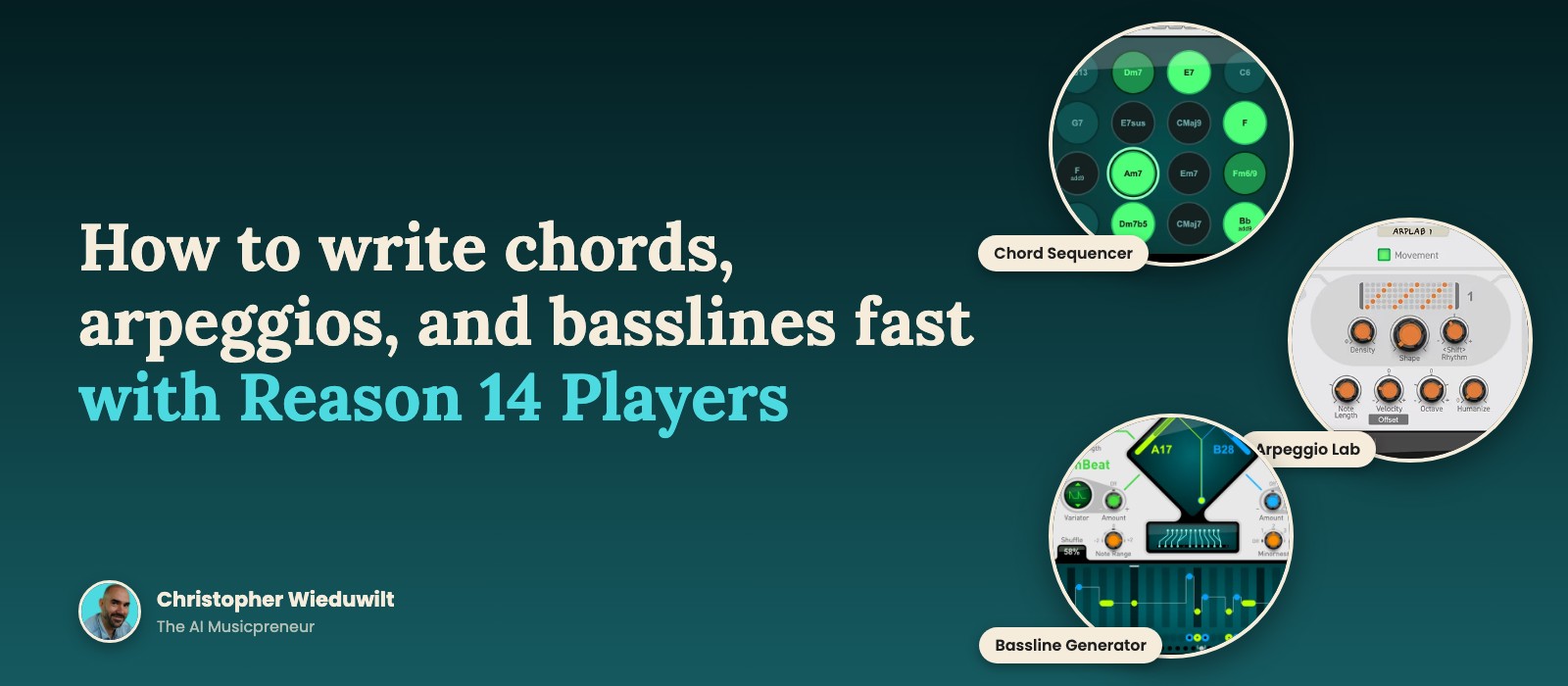
Load Chord Sequencer for the progression, Arpeggio Lab to break it into a pattern, and Bassline Generator on a separate bass track. About 20 minutes, no theory needed. You don’t need Reason as your DAW: the Reason Rack plugin carries all 93 devices into Ableton and FL Studio for €6.58 a month billed annually, with a 7-day free trial. Buying Reason 14 outright does not include these 3 devices, so check what you’re paying for.
About The AI Music Briefing
The AI Music Briefing is a weekly Friday read for music industry professionals working at the intersection of AI and the traditional music business. Curated and written by Christopher Wieduwilt, founder of The AI Musicpreneur. Browse every issue of the briefing.
Got a tip, a story, or a partnership idea? Reach out any time. Every message lands directly in my inbox.
Always rooting for you,
Christopher
About the author
Covering AI music tools, industry shifts, and news for music creators and professionals. Twice-weekly newsletter at aimusicpreneur.com.