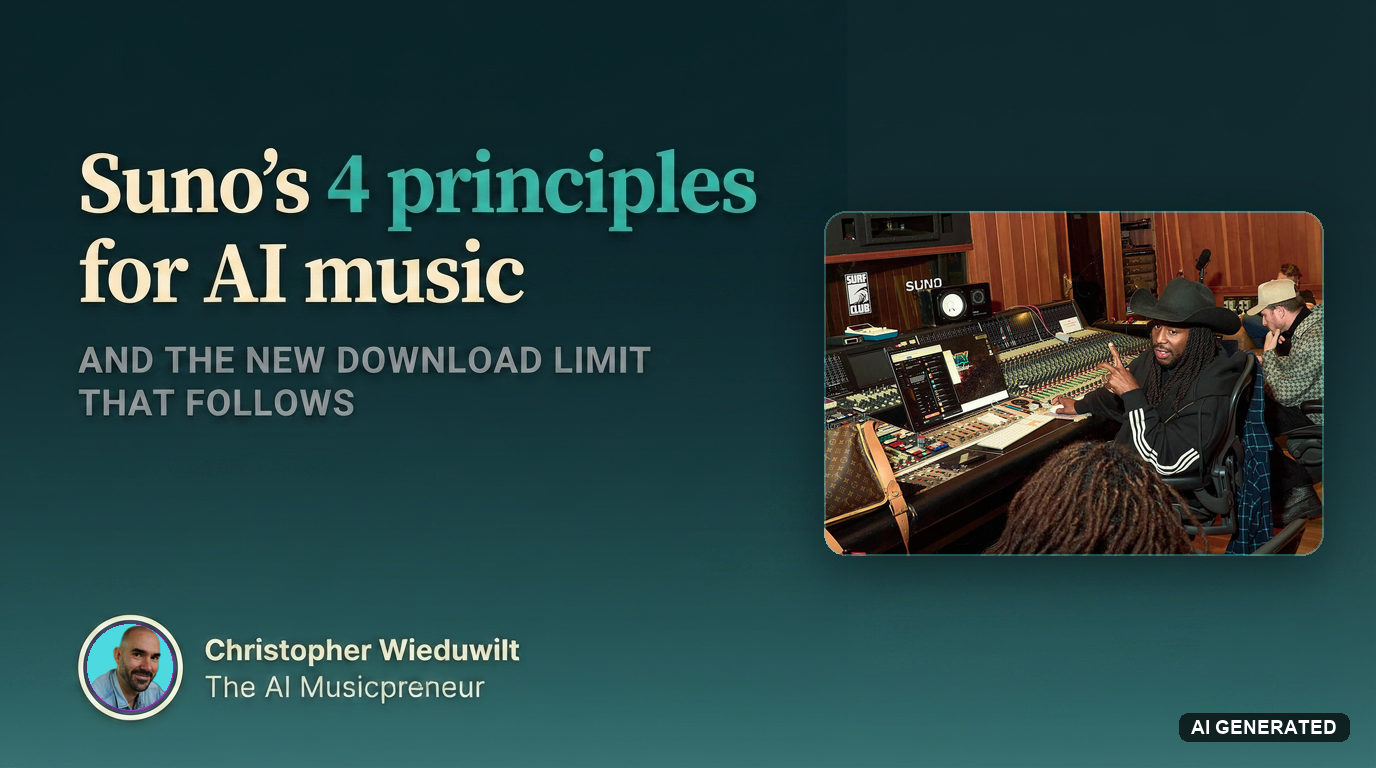
Symphonic adds MusicShield, a tool that poisons your track against AI training
My stack My fav 6 tools for AI music after testing 70+
-
 ElevenMusic · Music generation
 -
 Moises · Stem separation
 -
 Controlla · Voice swap & cloning
 -
 Cryo Mix · Mixing + mastering
 -
 Neural Frames · Music videos
 -
 ONCE · Distribution
Some links are affiliate links — I earn a commission at no cost to you. Every tool here is one I run myself and truly believe in. This stack is proven.
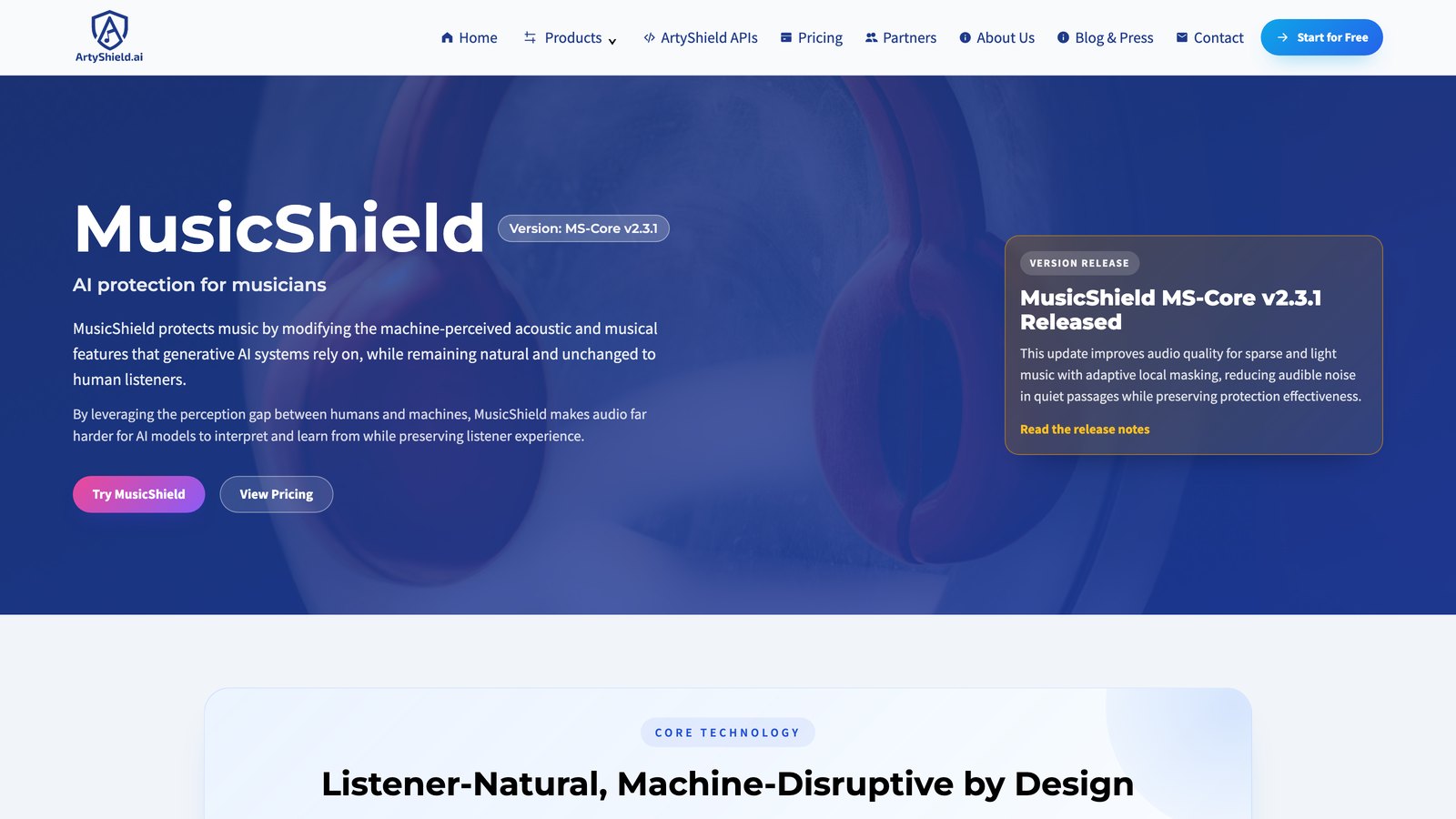
Symphonic has partnered with ArtyShield to give its clients tools built to keep their music and voices out of AI systems without permission. The deal, announced August 6, 2026, puts ArtyShield’s technology inside the Client Offerings section of SymphonicMS through single sign-on. At the center is MusicShield, which protects a recording before it goes out.
MusicShield modifies what ArtyShield calls the “machine-perceived acoustic features” of a track. The edits are inaudible to people, and the point is to make the recording harder for an AI system to interpret, learn from, or train on, while the listening experience stays exactly as it was.
MusicShield was built around a simple idea: artists deserve meaningful protection before their work becomes part of AI systems.
How MusicShield’s inaudible noise degrades an AI model’s training data
The technique is not new to researchers. MusicShield builds on HarmonyCloak, a 2024 tool developed by a team led by Jian Liu during his time as a professor at the University of Tennessee, Knoxville, working with PhD student Syed Irfan Ali Meerza and Lehigh University’s Lichao Sun. The work was presented at the IEEE Symposium on Security and Privacy.
The underlying idea is to embed noise that tricks a generative model into treating a track as if there is nothing in it worth learning, so music trained on the protected file comes out degraded. It is the audio version of Glaze and Nightshade, the tools visual artists have used to disrupt AI image generators. Most protection products in music work after the damage: they detect a clone, flag a scrape, or file a takedown. MusicShield runs before release, which is the part that makes it different.
Symphonic CEO Jorge Brea framed the timing directly. “The conversation around AI shouldn’t begin after someone’s work has already been copied or misused,” he said, adding that opportunities in AI “have to be built on consent, transparency, and respect for the people creating the music in the first place.” The tie-up follows Symphonic’s work with Sureel AI, now owned by Warner Music Group, and a separate SourceAudio partnership offering an opt-in licensed marketplace for AI training data.
Where MusicShield stops working, and what it cannot undo
Protection that works by fooling a model is a moving target, and ArtyShield’s own release notes show it. The current build, MusicShield MS-Core v2.3.1, exists to improve “audio quality for sparse and light music with adaptive local masking, reducing audible noise in quiet passages while preserving protection effectiveness.” Read that plainly: on quiet, sparse material the protection was audible enough to need fixing, and quality and protection strength pull against each other.
The bigger limit is scope. MusicShield only covers what you run through it from now on. Anything already released, already scraped, and already sitting in a training set is untouched, and the catalogs documented inside existing AI training databases are not going to be unlearned because you protected your next single. Hacked source code from Suno listed YouTube Music, Deezer, and Genius among the platforms it scraped, per Music Business Worldwide.
Frequently asked questions
What is ArtyShield's MusicShield?
MusicShield is a tool from the startup ArtyShield that protects a recording before release by modifying the acoustic and musical features generative AI systems rely on. The changes are designed to be inaudible to human listeners while making the track harder for AI models to interpret or learn from. It is now available to Symphonic clients inside SymphonicMS.
How does MusicShield stop AI models from training on a song?
MusicShield embeds imperceptible noise that leads a generative model to treat the track as if there is nothing useful to learn from it, so any model trained on the protected file produces degraded output. It works before release rather than flagging misuse after the fact, which makes it the audio counterpart to Glaze and Nightshade in visual art.
What is HarmonyCloak, and how does it relate to MusicShield?
HarmonyCloak is the 2024 research project MusicShield is built on, developed by a team led by Jian Liu while he was a professor at the University of Tennessee, Knoxville, alongside PhD student Syed Irfan Ali Meerza and Lehigh University's Lichao Sun. The work was presented at the IEEE Symposium on Security and Privacy. Jian Liu is now founder and CEO of ArtyShield.
What other AI protection tools does ArtyShield offer besides MusicShield?
Symphonic clients also get access to VeriTune, which analyzes recordings to assess whether a track may be AI-generated, and VoiceShield, which is built to protect vocal performances from voice cloning and synthetic speech. These sit alongside MusicShield in the same ArtyShield suite.
About the author

Covering AI music tools, industry shifts, and news for music creators and professionals. Twice-weekly newsletter at aimusicpreneur.com.