Sonorie builds a working VST3 plugin from a chat description, for $19.99 a month
My stack My fav 6 tools for AI music after testing 70+
-
 ElevenMusic · Music generation
 -
 Moises · Stem separation
 -
 Controlla · Voice swap & cloning
 -
 Cryo Mix · Mixing + mastering
 -
 Neural Frames · Music videos
 -
 ONCE · Distribution
Some links are affiliate links — I earn a commission at no cost to you. Every tool here is one I run myself and truly believe in. This stack is proven.
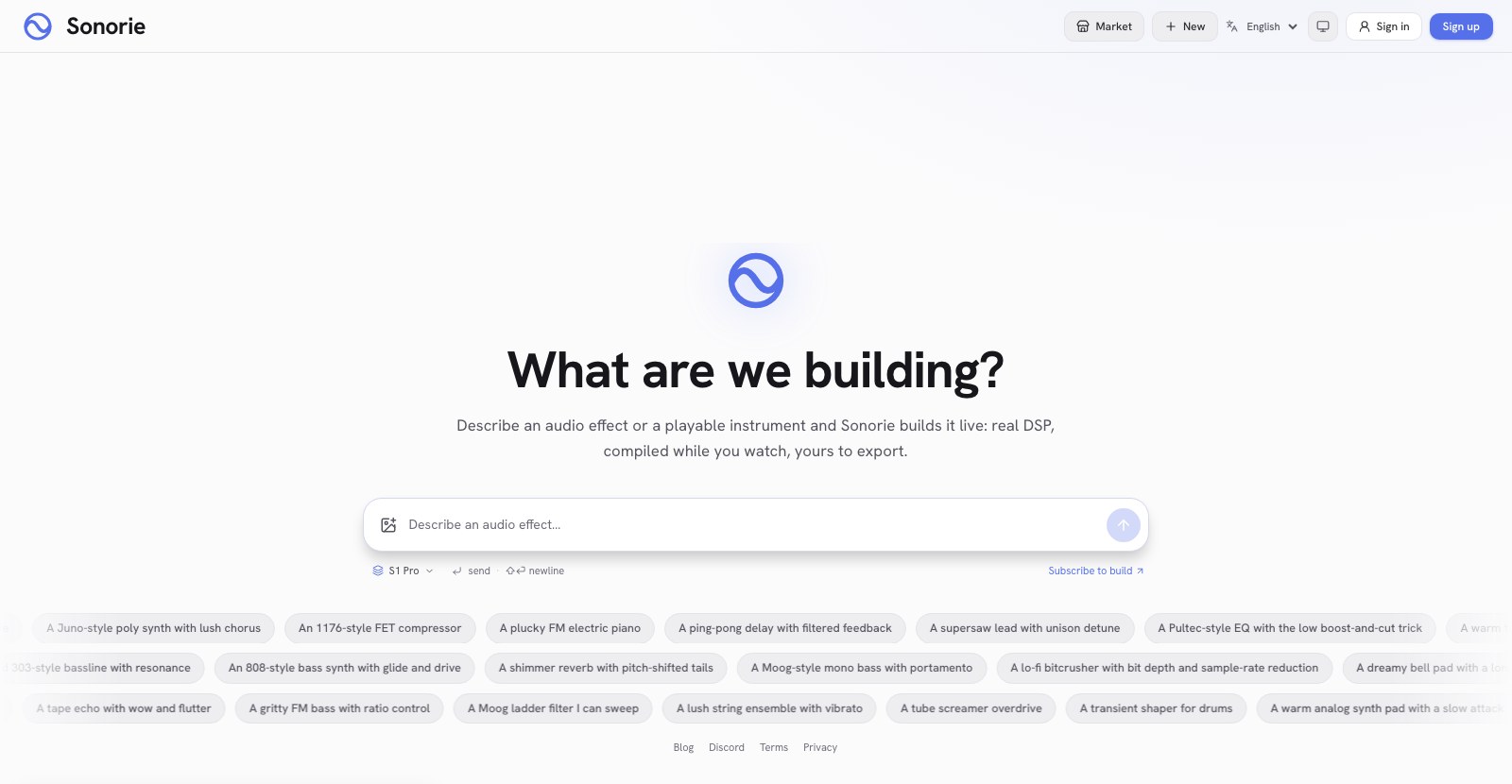
A service called Sonorie now turns a sentence into a working audio plugin. You describe an effect or an instrument in plain words, Sonorie writes the C++ DSP code behind it, compiles it while you watch, and hands you a genuine VST3, AU or CLAP file for Windows, macOS or Linux. We Rave You reported the launch on September 8, 2026. It costs $19.99 a month, and there is no free tier.
DSP is the maths that shapes the sound inside a plugin: what a compressor grabs, how a filter rolls off, how long a reverb tail runs. Writing it has always meant knowing C++.
How Sonorie turns a sentence into a VST3 file
Ask for a warm, tube-saturated vintage opto compressor and three things happen in order.
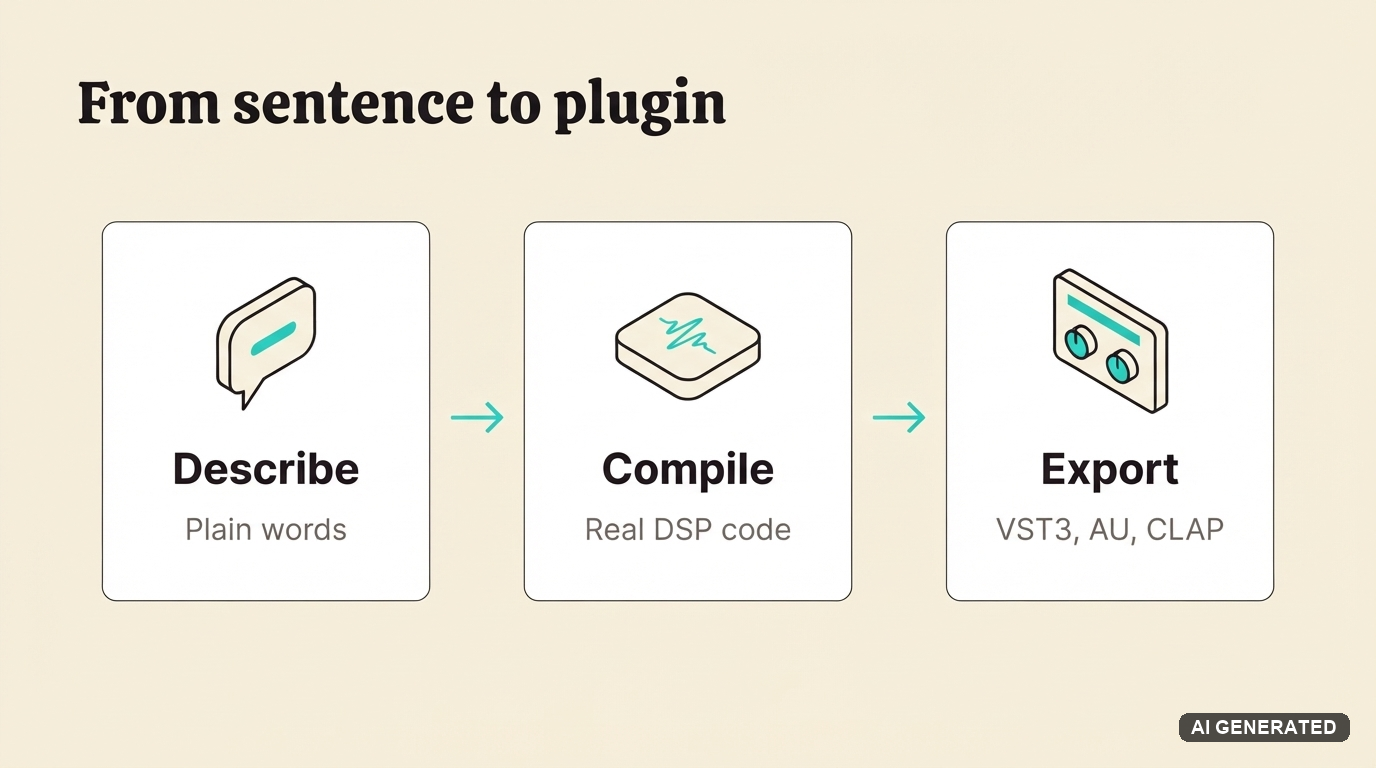
Sonorie writes the DSP code, compiles it to WebAssembly so it runs in the browser, and gives you a playable faceplate to audition on the spot. Then you export.
The part that makes it usable is the second pass. Ask for a slower release and it edits the DSP you already have instead of starting over, which is the difference between a code generator and a tool you can shape.
Coverage spans saturation, compressors, filters, reverbs, delays and synths, with MIDI input and polyphonic voices. Sonorie says the results are measured against real hardware behaviour. Generation runs on S1, a model the company built itself, split into S1 Pro for harder builds and S1 Mini for simple ones.
Sonorie generates code, not audio, and that changes the legal question
Nearly every AI music story this year has been about output. Suno, Udio and Google’s Lyria 3.5 all make finished audio, and all of them face the same question about what went into training.
Sonorie makes software. The plugin it hands you processes whatever audio you feed it, so it sits closer to a development tool than to a song generator.
That does not clear the deck. The suggested prompts on the Sonorie homepage name real gear: an 1176-style FET compressor, a Juno-style poly synth, a Moog ladder filter, a Pultec-style EQ. Circuit models and specific hardware behaviours carry their own history of disputes, and “measured against real hardware behaviour” is the kind of phrase that gets read closely if an output lands too near a commercial product.
The Sonorie marketplace is empty on launch day
Sonorie’s pitch includes a marketplace where you sell what you build. I opened it on September 8, 2026 to see what was there.
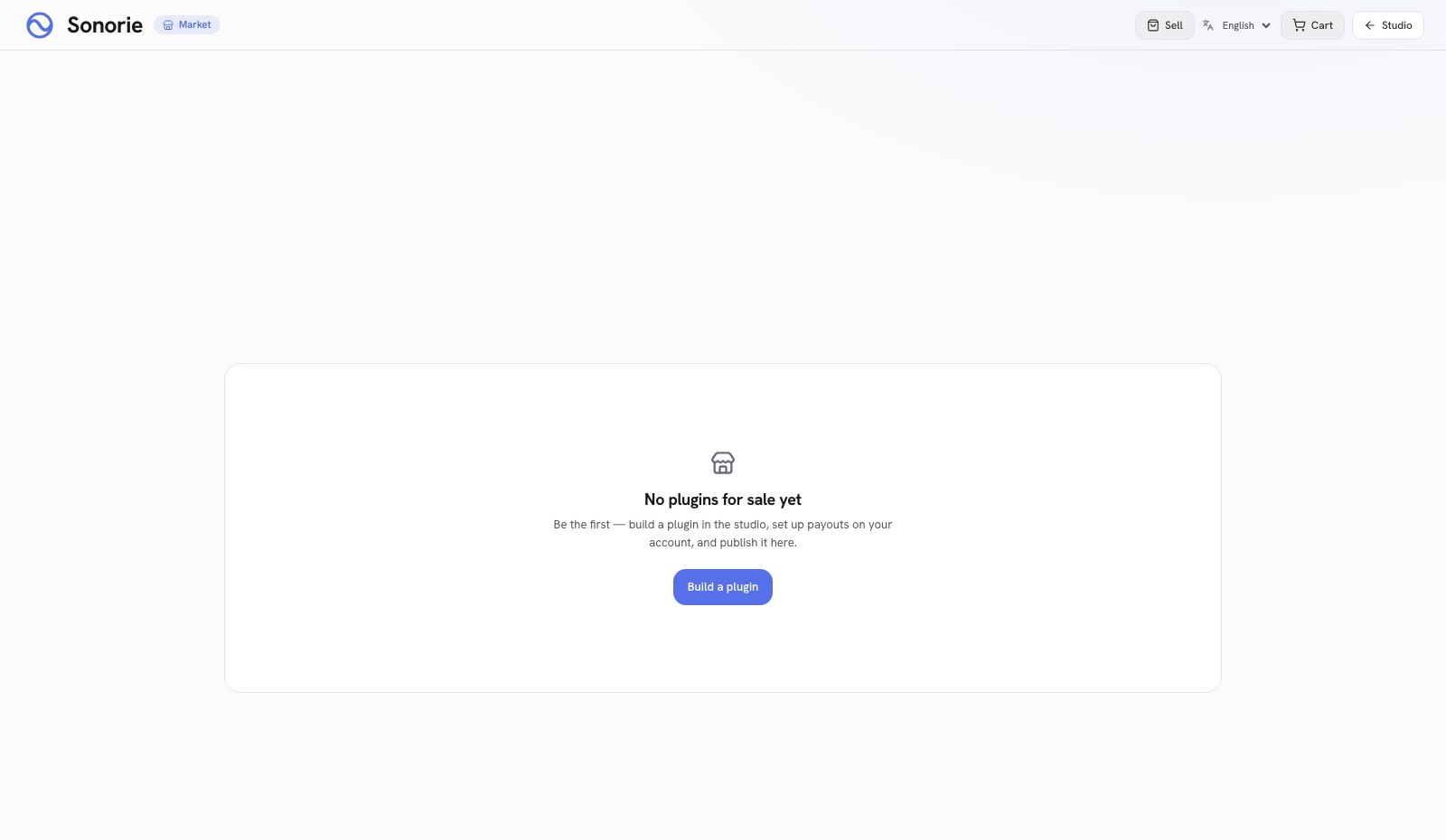
Nothing yet. The page reads “No plugins for sale yet” and invites you to be the first.
That is honest, and it is also the whole risk in one screen. The resale promise only pays off if enough generated plugins turn out good enough that other producers buy them. Right now the marketplace is a plan, not a market.
Should producers pay $19.99 to test Sonorie
The gap between a plugin that compiles and a plugin worth putting on a mix bus is wide, and no free tier means you pay before you find out which one you got.
Compare that with what already exists. My roundup of AI VST plugins covers tools built by DSP engineers who spent years on a single algorithm. FuturBeats Songstarter and the LALAL.AI stem separator both ship as finished products you can hear first.
Sonorie is worth one month if you want a specific utility nobody sells: a strange gate, an odd modulation shape, a filter that behaves exactly one way. Judge it by whether the third revision sounds better than the first. That tells you whether S1 is shaping DSP or guessing at it.
Frequently asked questions
What is Sonorie and what does it build?
Sonorie is a web service that turns a plain-language description of an audio effect or instrument into a working audio plugin. It writes the DSP code, compiles it while you wait, and exports a genuine VST3, AU or CLAP file for Windows, macOS and Linux. Sonorie says the exported plugin is yours to keep and to sell.
How much does Sonorie cost?
Sonorie runs as a subscription at $19.99 a month. There is no free tier, so there is no way to hear how the generated plugins sound before you pay for the first month.
What AI model does Sonorie use to generate plugins?
Sonorie generates code with S1, a model the company developed in-house. It comes in two sizes, S1 Pro for more complex builds and S1 Mini for simpler ones. The model writes C++ DSP code rather than generating audio.
What types of plugins can Sonorie generate?
Sonorie covers saturation, compressors, filters, reverbs, delays and synths, and supports MIDI input with polyphonic voices. The company says the results are measured against real hardware behaviour, and the homepage suggests requests modelled on classic studio gear.
About the author

Covering AI music tools, industry shifts, and news for music creators and professionals. Twice-weekly newsletter at aimusicpreneur.com.