Riffle launches its multiplayer music studio after 7,000 musicians tested it in early access
My stack My fav 6 tools for AI music after testing 70+
-
 ElevenMusic · Music generation
 -
 Moises · Stem separation
 -
 Controlla · Voice swap & cloning
 -
 Cryo Mix · Mixing + mastering
 -
 Neural Frames · Music videos
 -
 ONCE · Distribution
Some links are affiliate links — I earn a commission at no cost to you. Every tool here is one I run myself and truly believe in. This stack is proven.
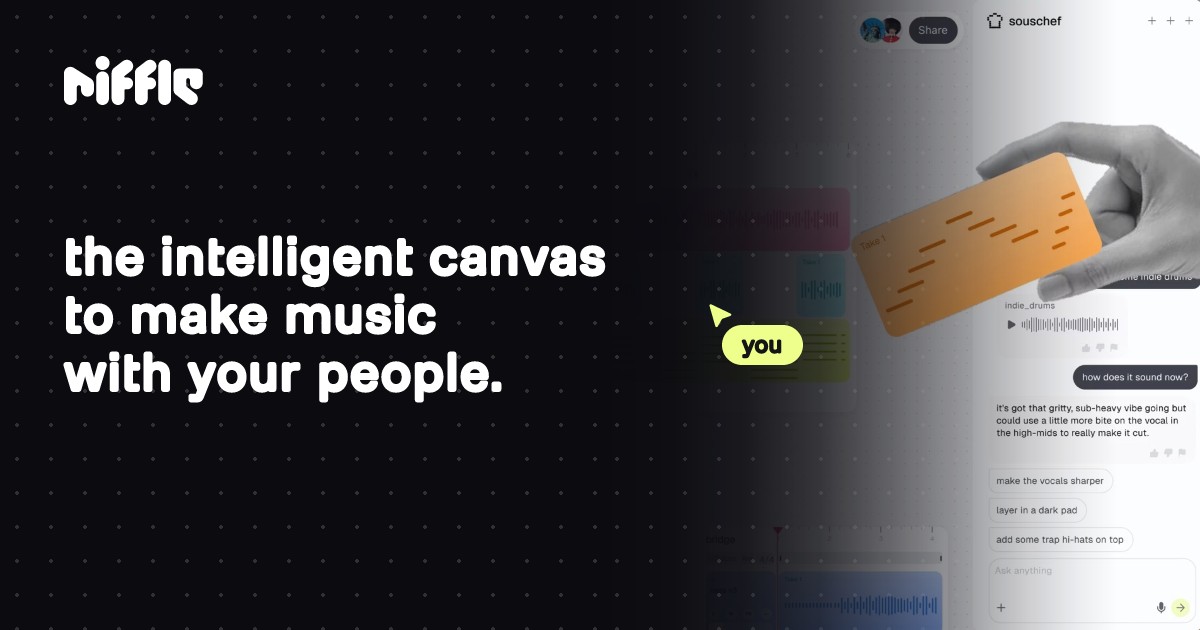
Riffle opened its browser-based multiplayer music studio to everyone on August 12, 2026, ending a three-month early-access run with 7,000 musicians. The launch arrived with a feature drop, including a full-screen timeline editor and an MPC-style sampler.
Riffle pitches itself as the space between two things you already know: pro digital audio workstations, which are built for finishing, and prompt-driven AI platforms like Suno, which are built for output.
Music was multiplayer long before software made it a single player game. The best songs are made by playing around, experimenting, and collaborating.
What Riffle shipped alongside its public launch
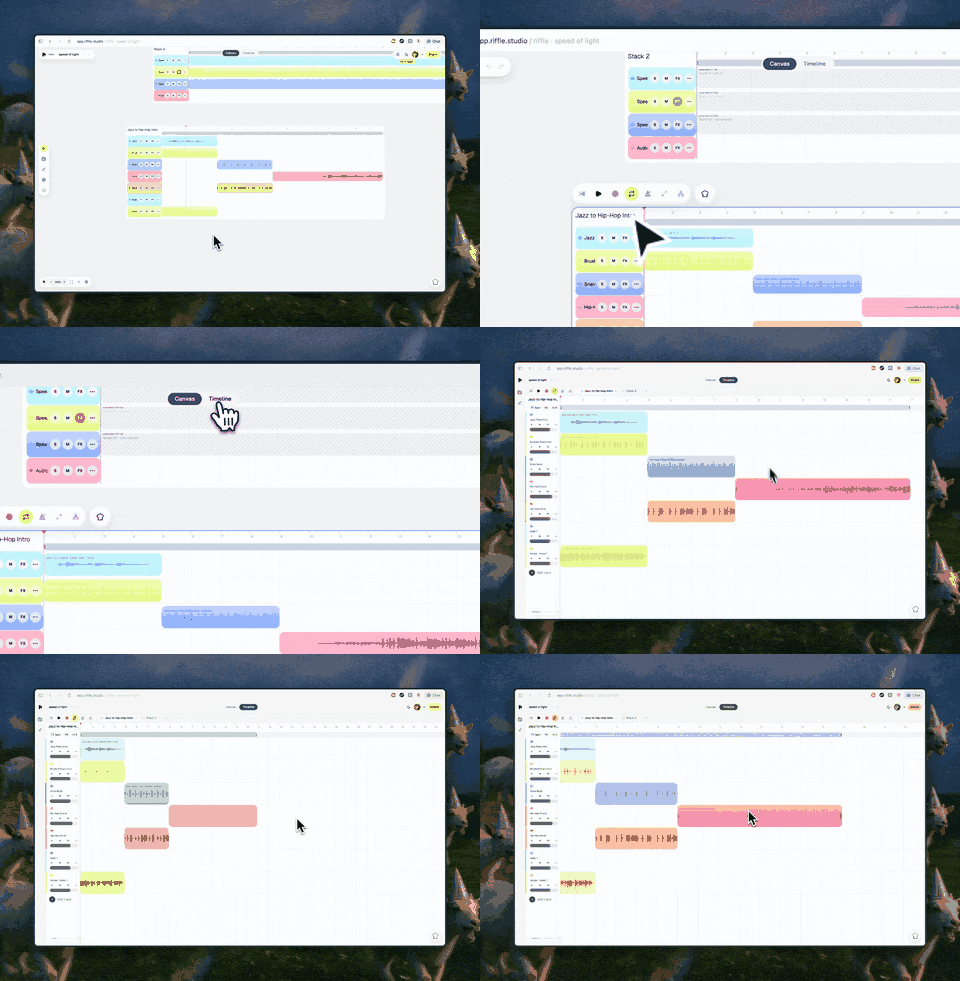
Timeline gives a single stack a full-screen editor. The infinite canvas is where ideas live in parallel. Timeline is where one of them gets finished, moving a stack out of the canvas and into a focused arrangement view with room to tighten parts.
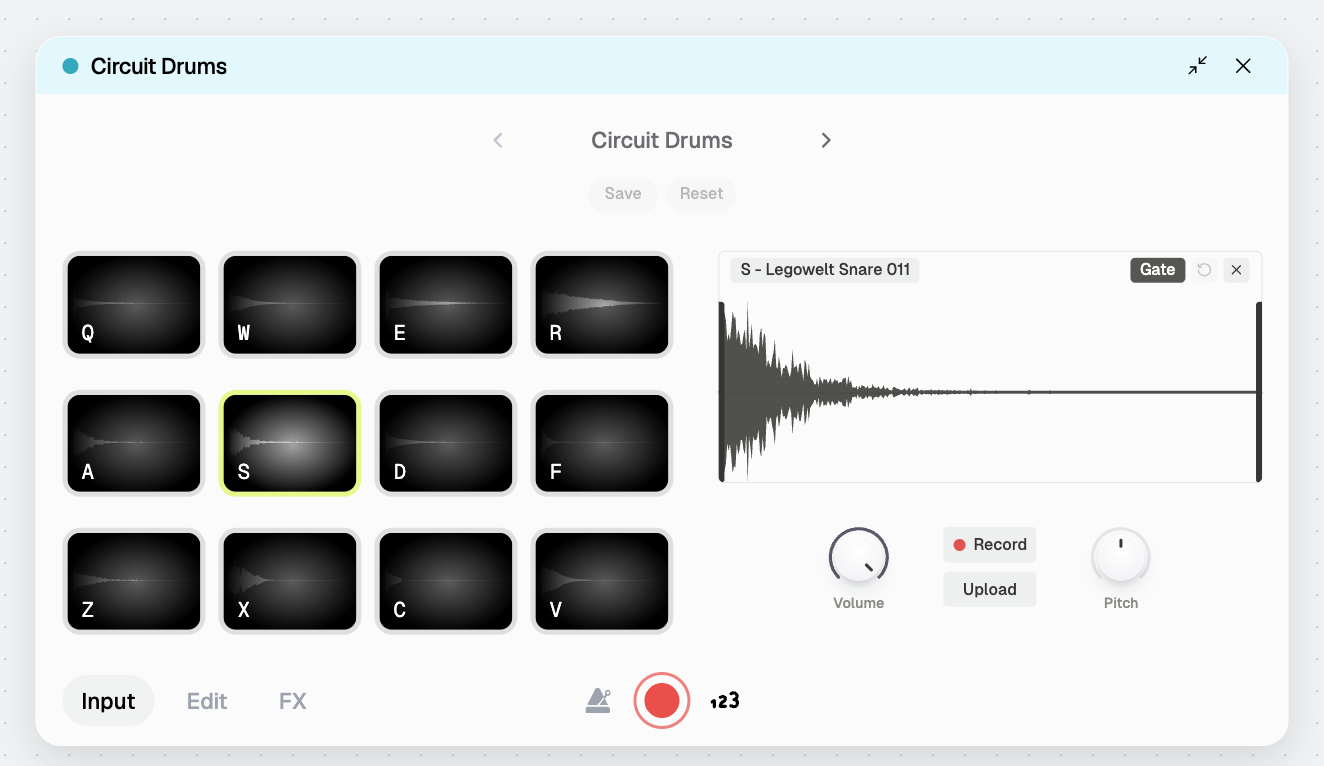
The sampler is an MPC in the browser. You record straight into any pad or drag a sample onto it, then trim the start and end, gate how long it plays, change pitch and volume, or choke one sound with another. Custom kits save and carry across every board.
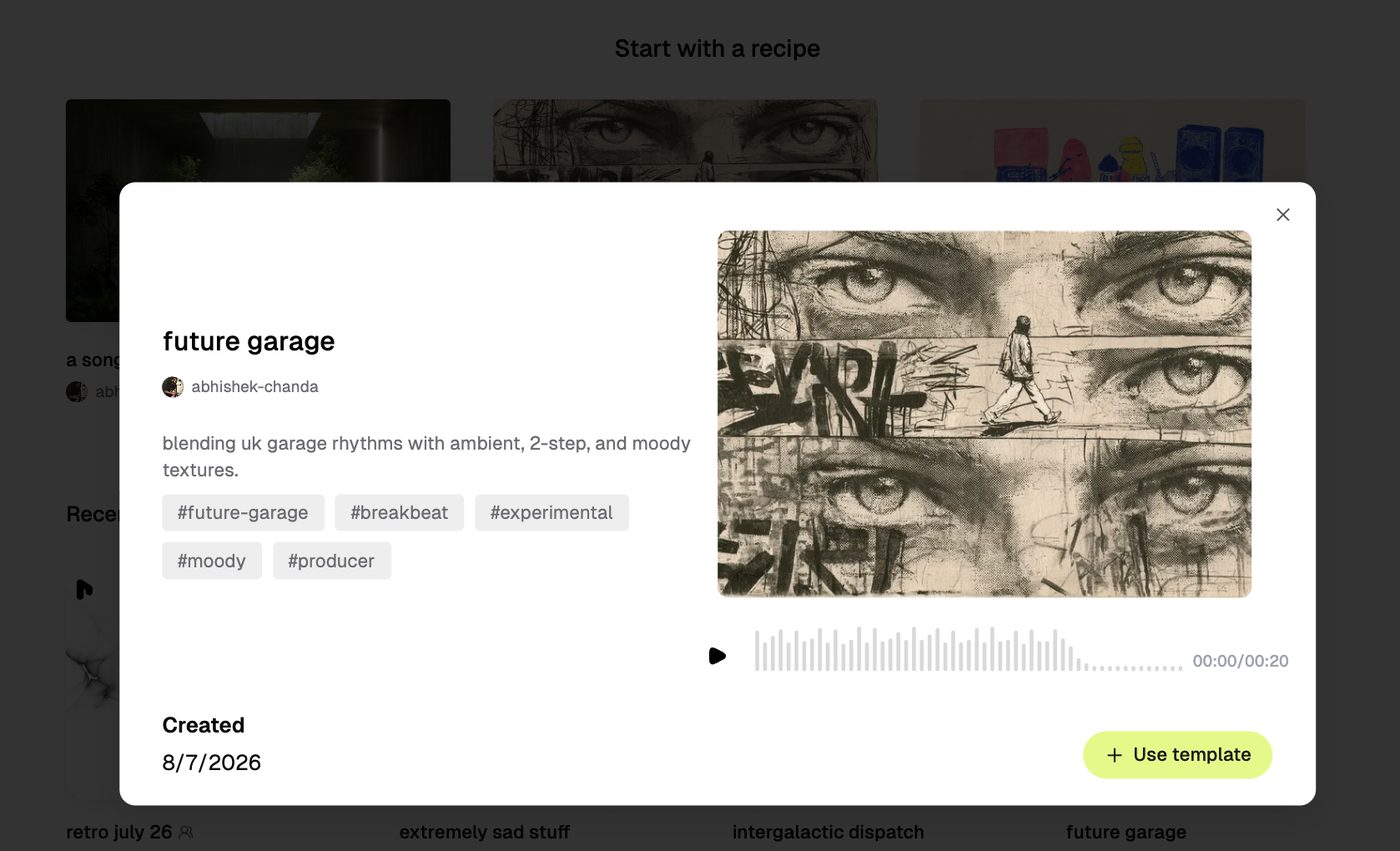
Templates answer the blank canvas. Featured recipes sit on the home screen, each one a starting board with a genre and a mood attached. Riffle says user-made templates are coming.
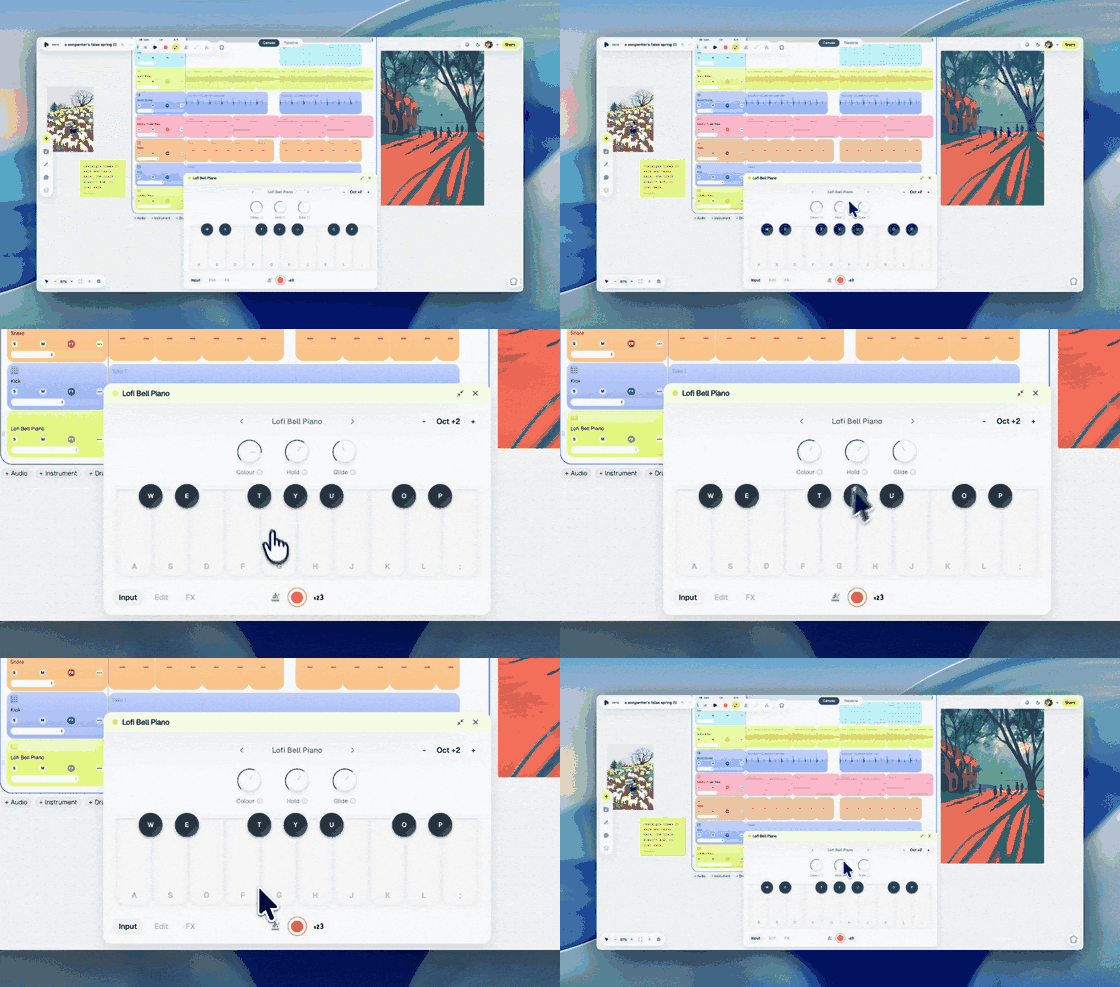
Three macros landed on the MIDI keyboard. Colour makes a sound brighter or darker, hold sustains a note, and glide slurs each note into the next.
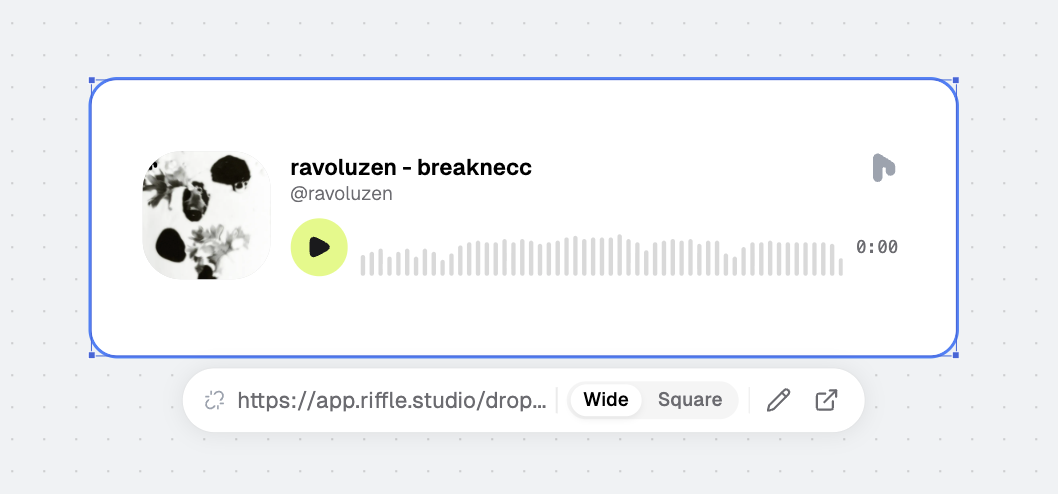
Public drops now play on the board. Paste a drop link onto the canvas and it becomes playable in place, the same behaviour Riffle already had for YouTube and Spotify links.
The quieter changes matter for daily use. You can merge two clips into one, the sous chef assistant reads your MIDI and tailors how it talks to your experience level and the kind of artist you are, big boards and large stacks load faster, and playback and trimmed clips get automatic fades.
Where Riffle sits between a DAW and a prompt box
I spent 3 hours on Riffle in June 2026 and rated it 4.6. My step-by-step Riffle walkthrough covers the click path from a blank board to exported stems. The thing worth knowing is what it asks of you. Riffle hands you a keyboard and a sample library, not a finished song. You play the bass in. You pick which of your two parallel stacks survives.
Timeline changes the shape of that. Early Riffle was strong at starting and weak at finishing, so ideas piled up on the canvas with nowhere to go. A full-screen arrangement view closes some of the gap, though you still export stems to Logic or Ableton for real mixing and automation.
Frequently asked questions
What is Riffle's multiplayer music studio?
Riffle is a browser-based music studio built on an infinite canvas where several people can work on the same board at once. You play parts in, chop samples, and arrange stacks side by side. It runs in any modern browser with no install.
What did Riffle add in its August 2026 launch update?
Riffle shipped a full-screen timeline editor, an MPC-style sampler with recordable pads and custom kits, board templates, and three MIDI keyboard macros called colour, hold and glide. Public drop links now play directly on a board.
How many musicians tested Riffle before its public launch?
Riffle ran a three-month early-access period with 7,000 musicians before opening to everyone on August 12, 2026.
Is Riffle an AI song generator like Suno?
No. Riffle positions itself between pro digital audio workstations and prompt-driven AI music platforms. You play and arrange the music yourself, and its sous chef assistant suggests parts, reads your MIDI, and gives feedback rather than generating a finished track from a text prompt.
Can you export stems out of Riffle into a DAW?
Yes. Riffle exports individual stems as .wav files or a full mixdown, so you can finish a track in Logic, Ableton, or FL Studio. Riffle has no deep mixing or automation of its own.
About the author

Covering AI music tools, industry shifts, and news for music creators and professionals. Twice-weekly newsletter at aimusicpreneur.com.