ONCE adds real-time copyright scanning to its AI music distribution chatbot
My stack My fav 6 tools for AI music after testing 70+
-
 ElevenMusic · Music generation
 -
 Moises · Stem separation
 -
 Controlla · Voice swap & cloning
 -
 Cryo Mix · Mixing + mastering
 -
 Neural Frames · Music videos
 -
 ONCE · Distribution
Some links are affiliate links — I earn a commission at no cost to you. Every tool here is one I run myself and truly believe in. This stack is proven.
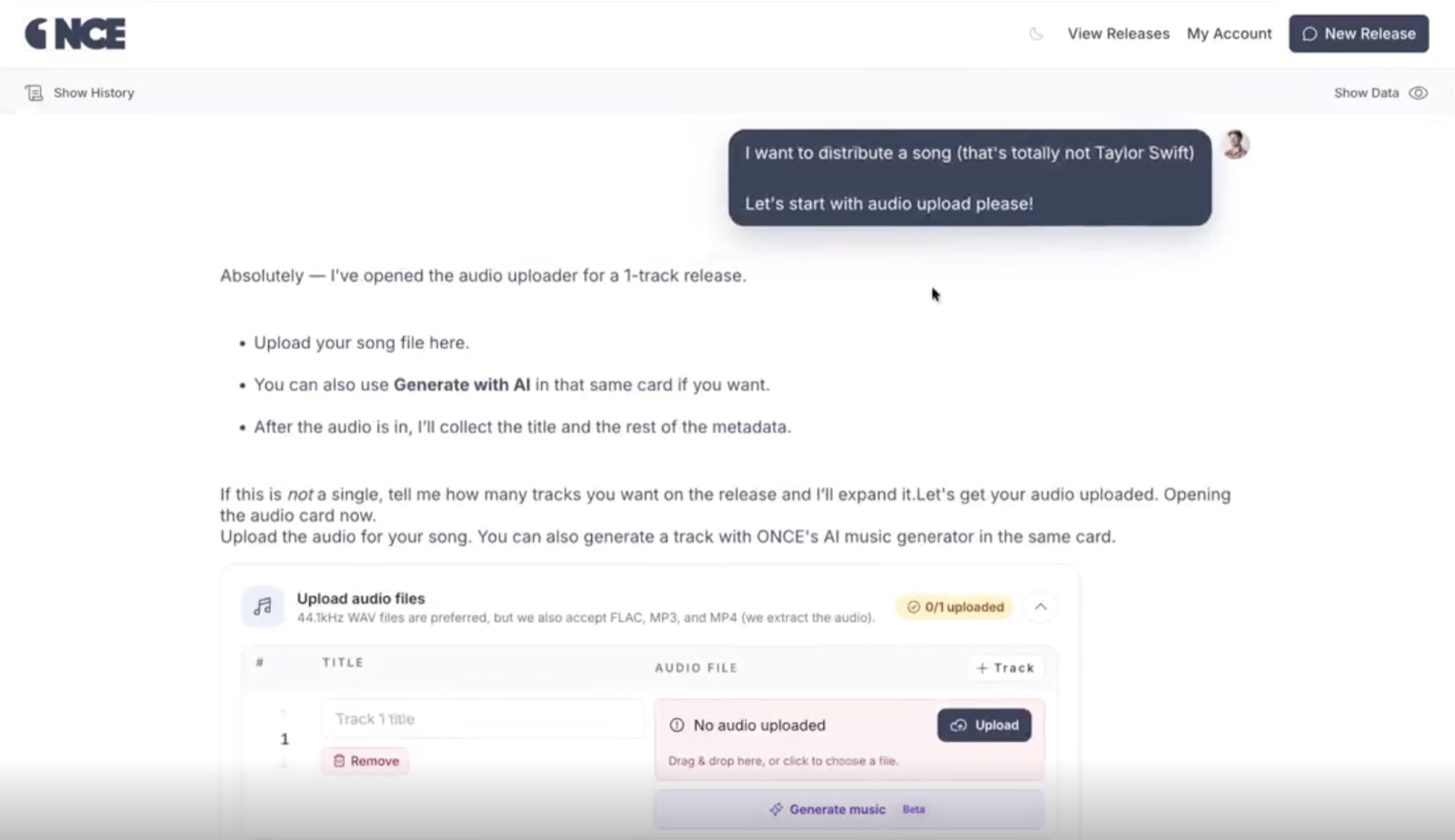
ONCE turned music distribution into a conversation on May 27, 2026. The Nashville distributor now takes releases through an AI chat agent that collects metadata, scans audio against Vobile’s 100-million-asset catalog in real time, and flags covers, remixes, or pitched samples before the artist submits. Co-founder Chris McMurtry announced the upgrade in a LinkedIn post the same day, calling it the first of its kind. The chat sits on top of ONCE, the AI-first distributor we covered when it shipped its built-in AI generator and Artist Compensation Fund in April.
Until this week, automatic content recognition at ONCE ran after submission. Artists waited 20 to 30 minutes for a copyright flag, then traded emails with the team to resolve it. Sometimes for days. The new flow surfaces matches inside the same chat where the release gets built, with the agent asking follow-up questions while the artist still has context loaded.
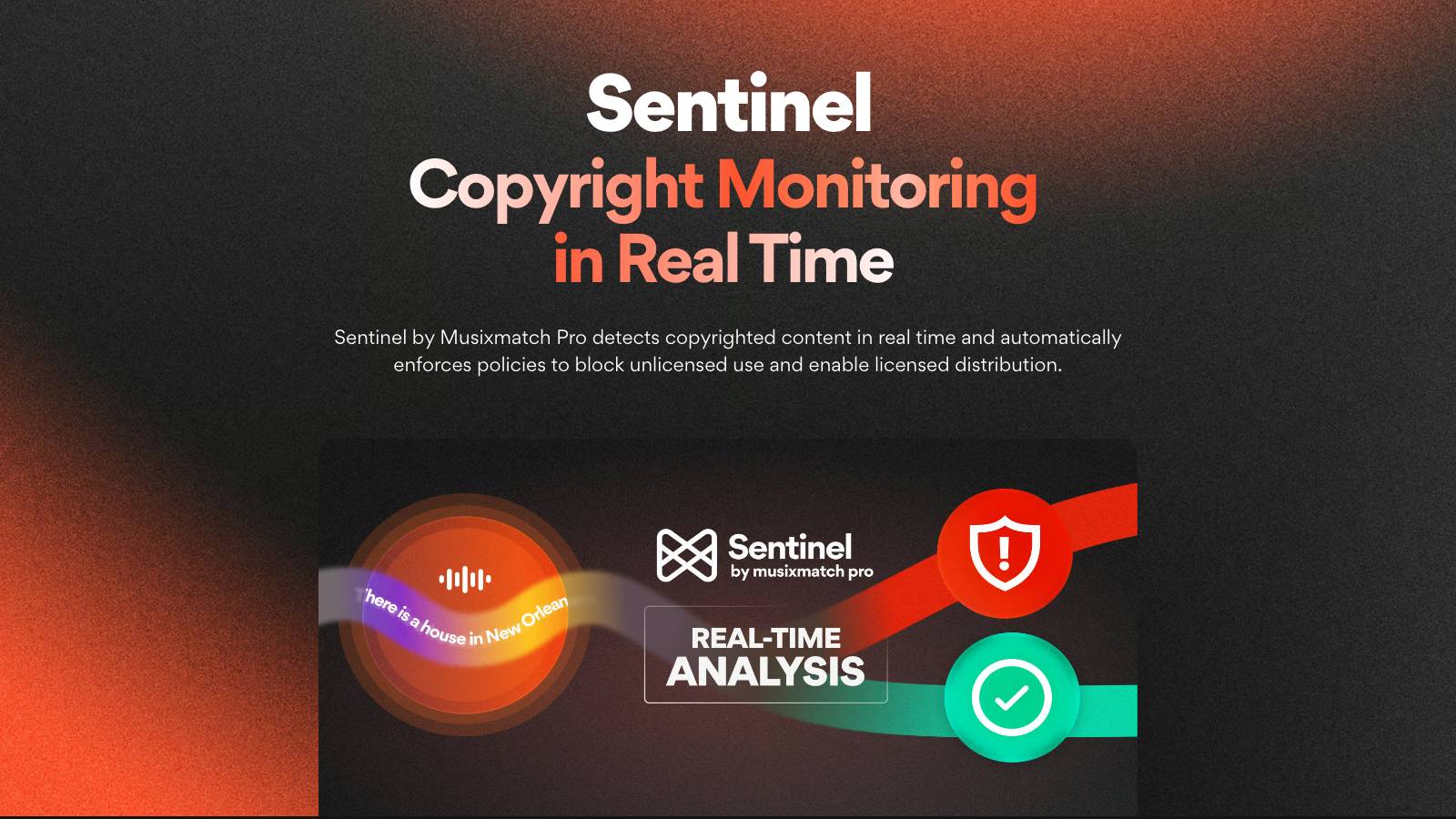
The detection engine is Vobile’s Search and AI Song Detection API. McMurtry credits the Pex Vobile team for the latency profile that made the architecture possible. The system matches against the full library on as little as one second of audio and catches covers, remixes, pitch and speed shifts, mashups, and modified live recordings.
Most cases resolve in seconds. Edge cases escalate cleanly.
Why in-chat ACR matters now
Real-time copyright scanning is the bridge ONCE needed to make AI music releases work at scale. AI releases cost a flat $2 versus $1 for human-recorded tracks, with roughly $0.92 of every AI dollar routed to the Artist Compensation Fund. That premium only holds if the platform can prove every uploaded track has been screened, and ONCE is the first distributor to put that screen inside the release conversation instead of behind it.
The competitive angle is procurement. DistroKid, TuneCore, and CD Baby still treat copyright clearance as something that happens to a release after the form is submitted. AudioShake’s Copyright Compliance System, launched the day before ONCE’s chat update, ships the same logic for broadcasters and rights owners on the back end. ONCE is pulling that logic forward, into the distribution flow itself, so the artist sees the flag before payment instead of in a support ticket after.
What Suno and Udio creators gain
If you release Suno or Udio tracks at volume, ONCE is now the cheapest path with the lowest legal floor. The pre-submission scan flags any track that pulls too close to a copyrighted recording before the file leaves the chat. That matters because Sony Music’s amended Udio complaint filed three days ago names 30,304 specific Udio outputs identified via Audible Magic against Sony’s catalog. The Sony-cited matches are exactly the class of overlap Vobile’s API is built to catch.
The practical move is to chain ONCE’s release agent with your own generation pipeline through the public MCP server at once.app/mcp. Build a prompt that captures your usual metadata (artist name, release pattern, default genre tags, credit splits), feed it once, and the agent fills the rest from the audio plus your inputs. ONCE pairs that with a repeatable release strategy that holds whether the track came from your DAW or from Suno.
Frequently asked questions
What is ONCE's AI music distribution chatbot?
ONCE's AI music distribution chatbot is a conversational release agent that handles metadata, audio uploads, and copyright clearance through a chat interface. Artists describe the release and upload the audio, the agent collects every DSP-specific field, including the Classical-music fields most distributors hide behind dropdowns, and submits the release to Spotify, Apple Music, and roughly twenty other stores worldwide.
How does ONCE's real-time ACR inside the release chat work?
ONCE runs Vobile's Search and AI Song Detection API against every uploaded audio file inside the chat, before submission. The system returns matches against a 100-plus million-asset library on as little as one second of audio, then asks follow-up questions in the same conversation. Co-founder Chris McMurtry says most cases resolve in seconds and edge cases escalate cleanly.
Can I distribute Suno or Udio tracks through ONCE's chatbot?
Yes. Suno, Udio, Sonauto, Mureka, AIVA, Boomy, and any other AI generator are accepted, provided the artist holds a plan that grants commercial release rights. AI releases cost a flat $2 each, with roughly $0.92 of every AI dollar routed to ONCE's Artist Compensation Fund and paid out to working musicians and music non-profits.
How does ONCE's AI release agent compare to DistroKid, TuneCore, and CD Baby?
DistroKid, TuneCore, and CD Baby still rely on web forms and post-submission copyright queues. ONCE replaces the form with a chat agent and moves copyright scanning to before submission, so flags are resolved in the same conversation instead of by email after the fact. ONCE also retains zero royalty share at a one-time per-release fee, with no annual subscription.
Where does ONCE's chatbot deliver distributed music?
ONCE delivers releases to Spotify, Apple Music and iTunes, Amazon Music, Tidal, YouTube Music, Deezer, Pandora, TikTok, Instagram, Facebook, iHeartRadio, Napster, Anghami, Boomplay, Audiomack, JioSaavn, KKBOX, NetEase Cloud Music, Tencent Music, and other regional stores. AI tracks and human-recorded tracks reach the same destinations.
About the author

Covering AI music tools, industry shifts, and news for music creators and professionals. Twice-weekly newsletter at aimusicpreneur.com.