Beat Shaper generates editable MIDI from licensed data for electronic music producers, exports full Ableton Live projects
My stack My fav 6 tools for AI music after testing 70+
-
 ElevenMusic · Music generation
 -
 Moises · Stem separation
 -
 Controlla · Voice swap & cloning
 -
 Cryo Mix · Mixing + mastering
 -
 Neural Frames · Music videos
 -
 ONCE · Distribution
Some links are affiliate links — I earn a commission at no cost to you. Every tool here is one I run myself and truly believe in. This stack is proven.
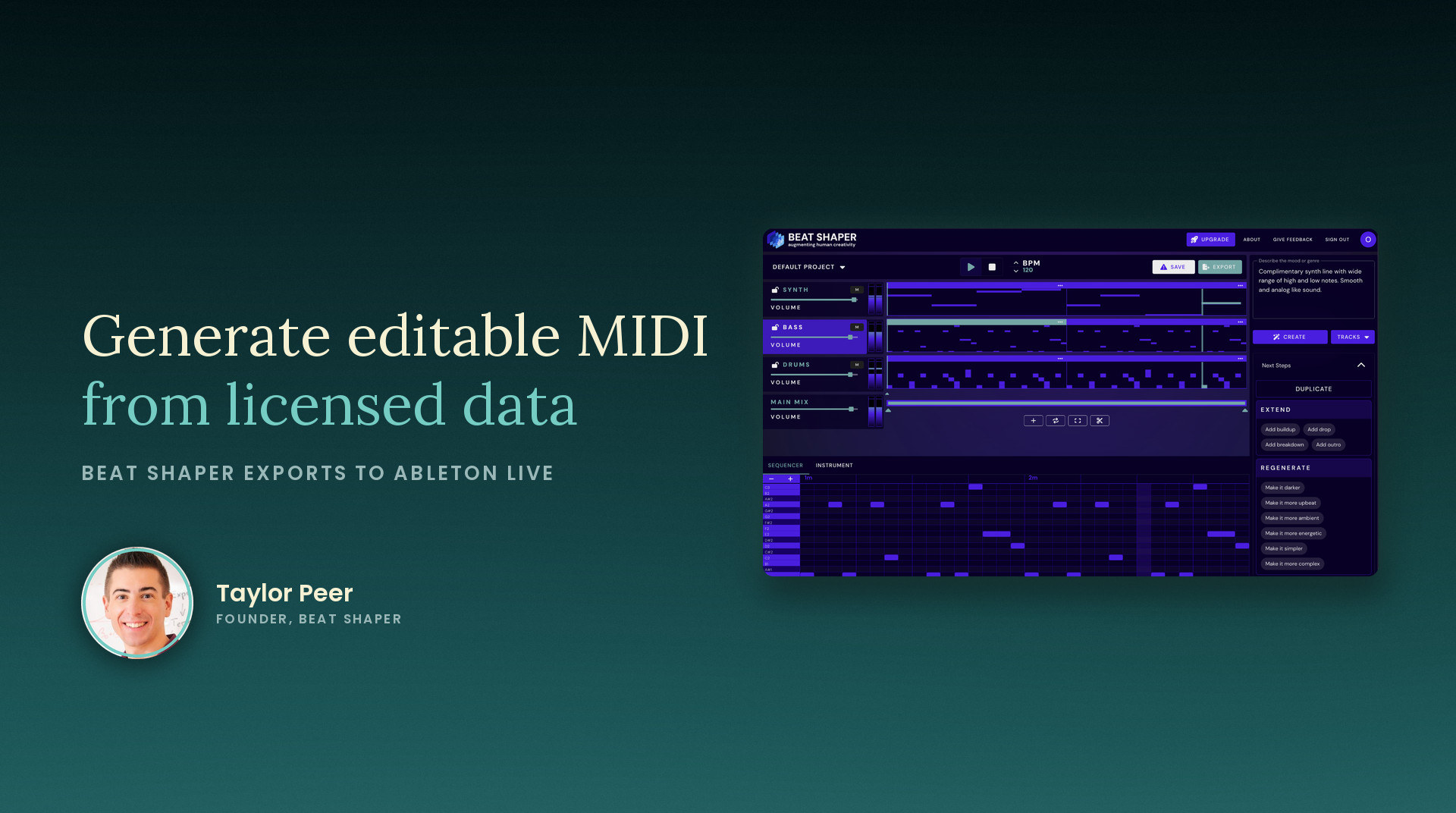
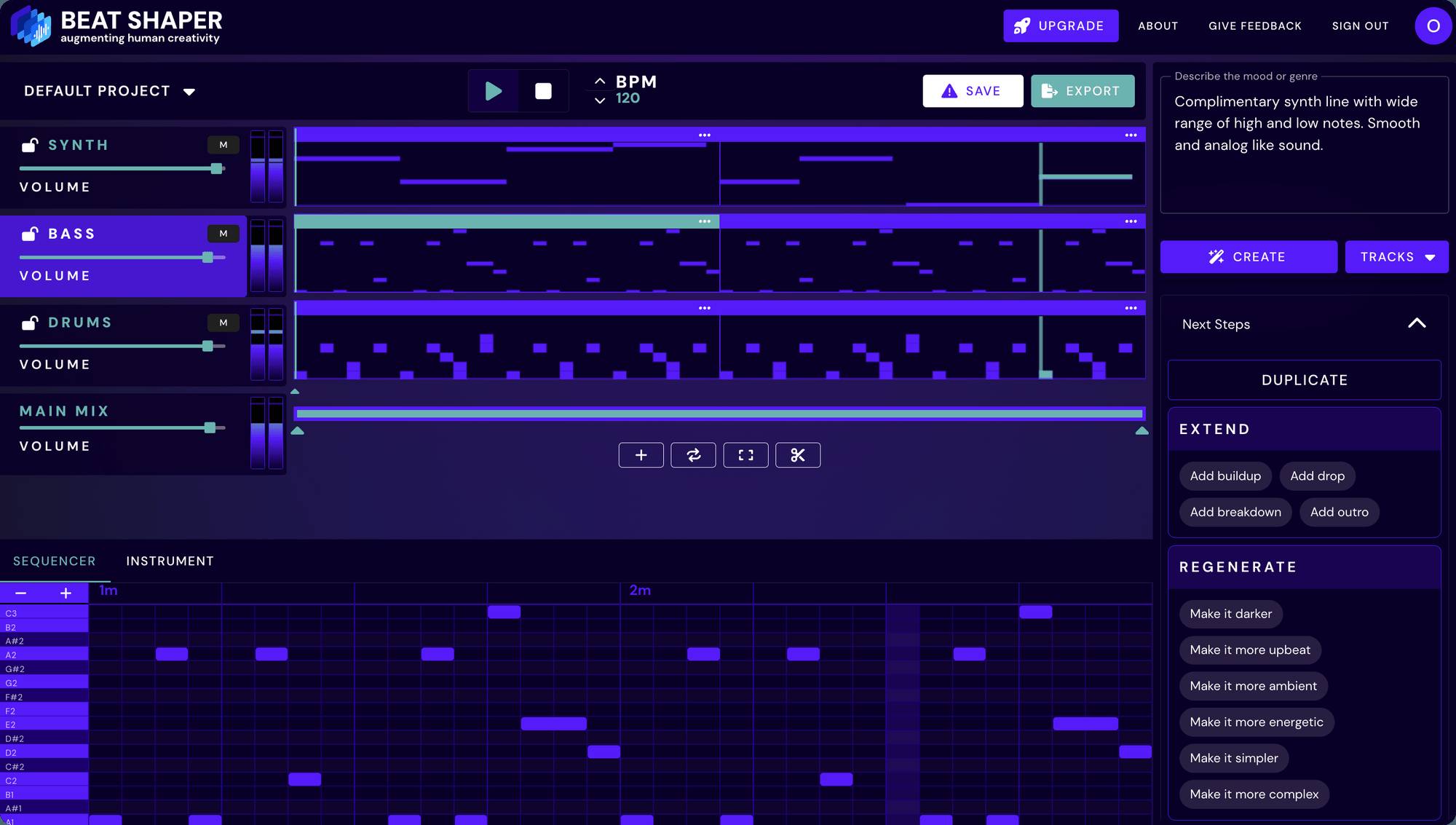
Beat Shaper generates editable MIDI in your browser: drums, basslines, and synth parts, written from a text prompt as separate tracks. Every note stays editable after it lands, so you can open the piano roll and move a single hit. The Vienna startup trained its model on licensed MIDI loops instead of scraped songs, and the free Starter plan comes with unlimited generations. Founder and ML engineer Taylor Peer built it for electronic music producers who finish tracks in a DAW: generate the parts, reshape them in the piano roll, then open the result in Ableton Live as a complete project.
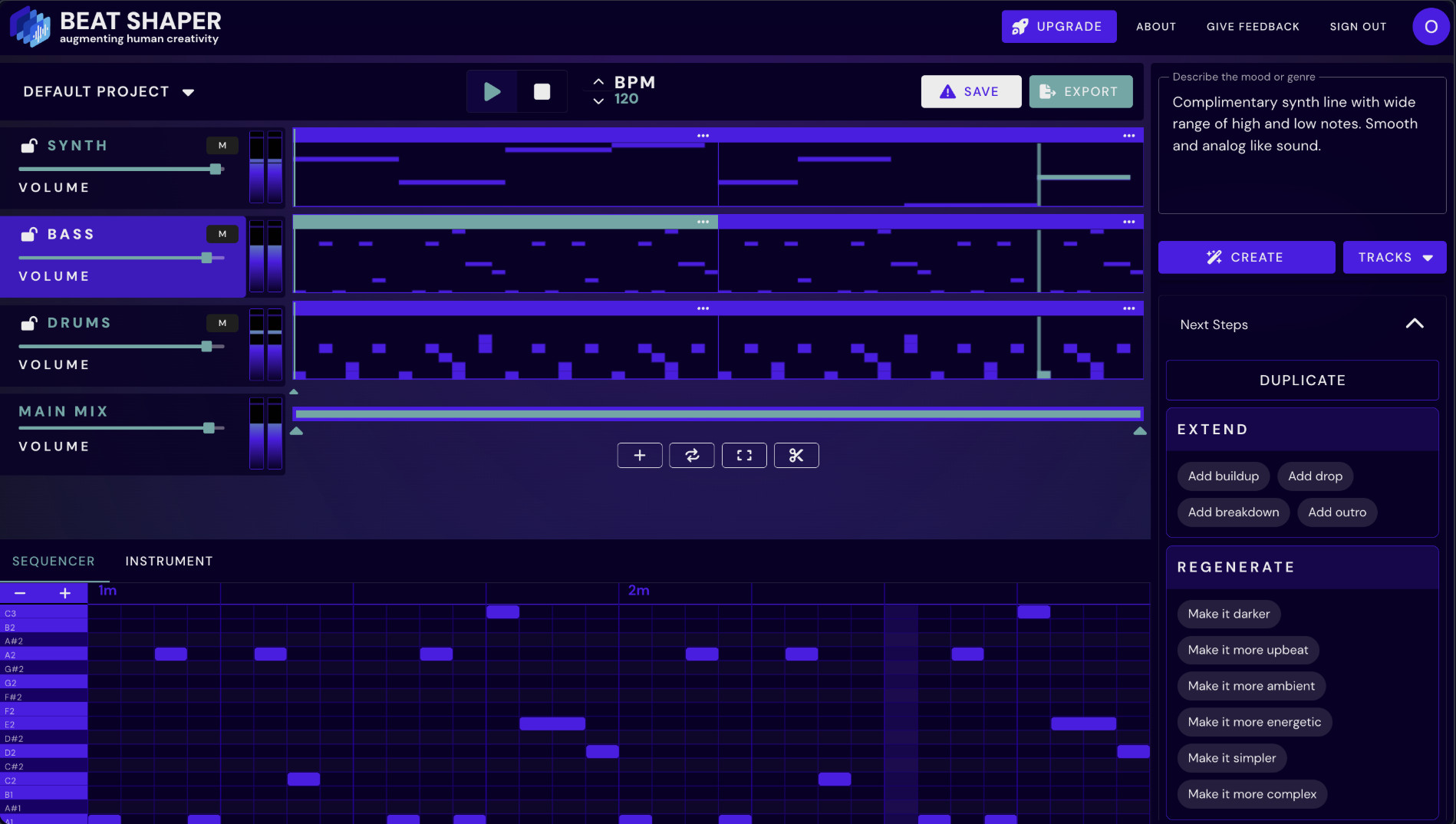
How Beat Shaper generates editable MIDI in the browser
You describe a mood or genre in plain text, something like a dark minimal techno loop, or you push sliders for genre, mood, and energy. The engine answers with a cohesive two-bar loop: a drum pattern, a matching kit, a tempo, a bassline, and a synth patch. Supported genres are Techno, House, Acid, Drum & Bass, Hip-Hop, and Trance.
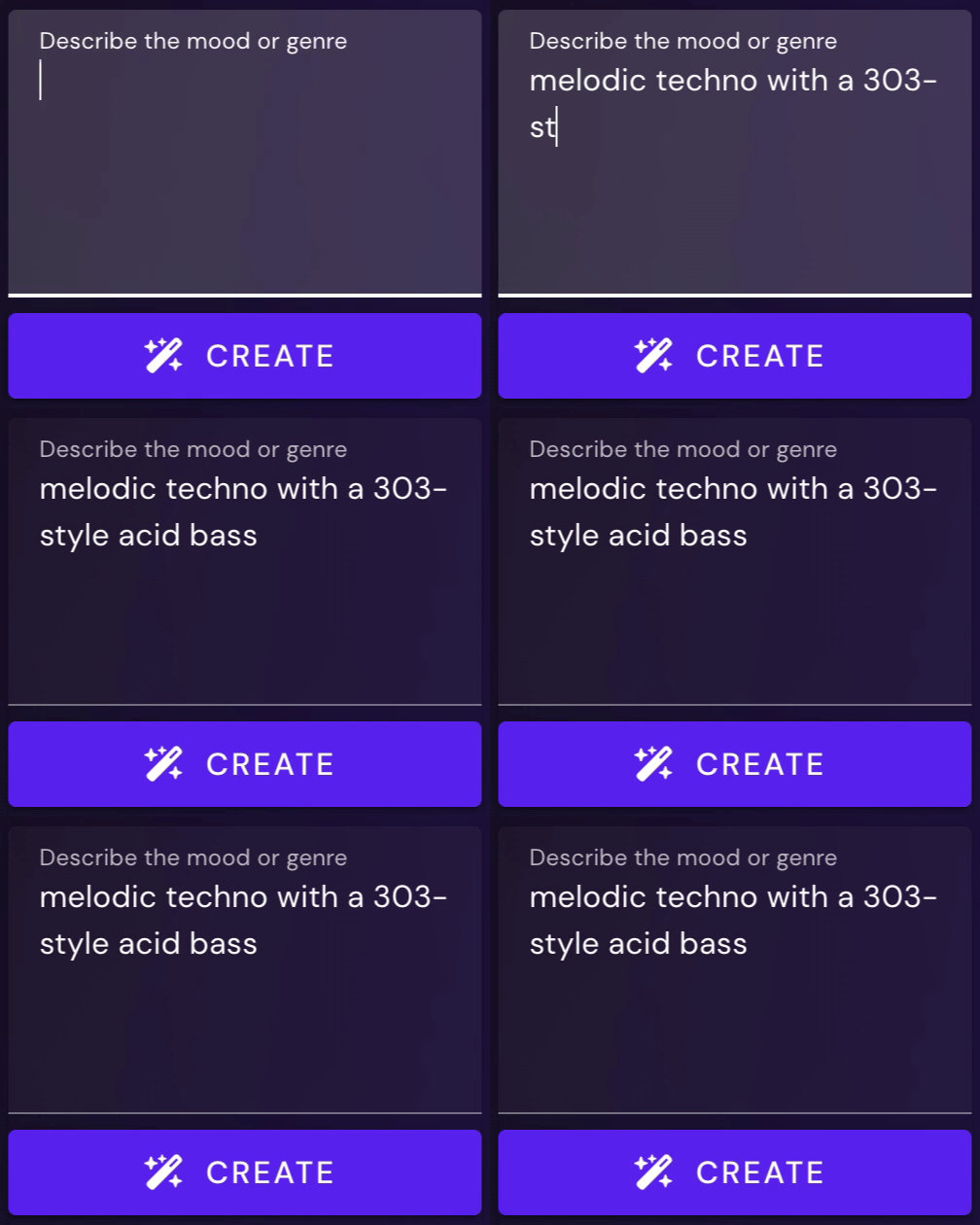
Under the hood, an LLM reads the prompt and a custom Transformer writes the notes as symbolic data. Audio gets rendered after generation, near real time, on a regular CPU. The company documents the architecture in its white paper. Because the MIDI is the model’s native output, the note data arrives clean.
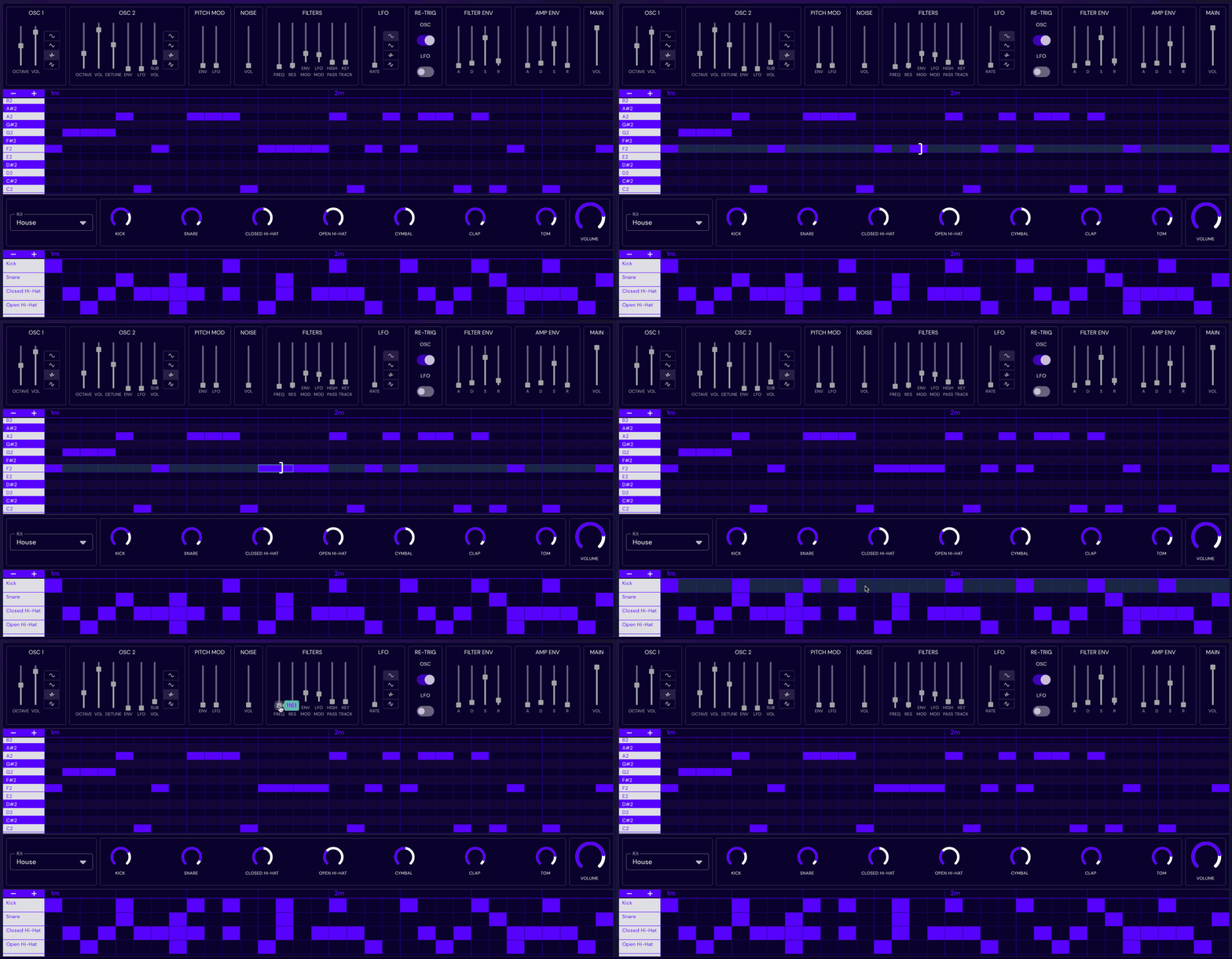
Everything stays open after generation. Move notes in the piano roll, change timing and duration, or tweak the synth parameters in real time without regenerating. If the bassline works but the drums don’t, you regenerate one part and keep the rest. The drum machine runs 7 voices across 15 custom kits, from House to Berlin Techno, with per-voice delay and reverb sends.
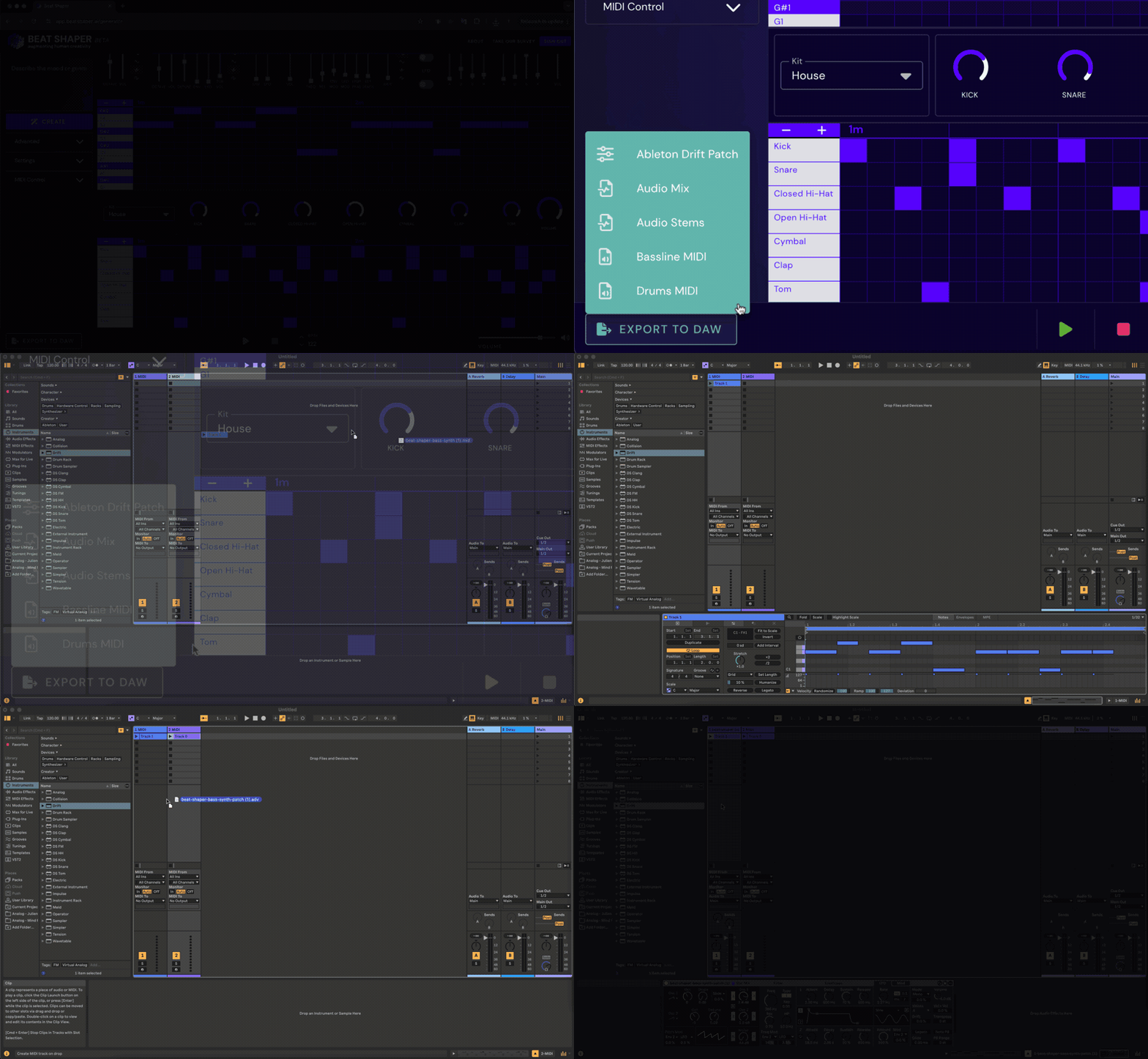
What opens in Ableton Live when you export a Beat Shaper track
Beat Shaper exports MIDI, WAV, MP3, or a complete Ableton Live project, per track or combined. The Live export is the standout, and the company describes it as “an entire Ableton Live project file”. Drums land in an Ableton Drum Rack loaded with the Beat Shaper kit. Bass and synth MIDI load into Ableton Drift instruments with patches matched to the browser sound, which the company calls “nearly identical” with minor tonal differences. Drift needs Live 11.3 or newer. Plain MIDI and audio work in Logic, FL Studio, Cubase, and every Live edition.
Beat Shaper’s Max for Live device generates MIDI inside Ableton Live 12
Max for Live is Ableton’s platform for building instruments, effects, and tools that run inside Live, built on Max from Cycling ‘74. It ships with Live Suite, and Standard users buy it as an add-on. Anyone can build a device on it, which is how a small Vienna startup gets its model into Ableton without Ableton shipping a thing.
Beat Shaper’s Max for Live device is exactly that: the generation engine as a panel on a MIDI track.
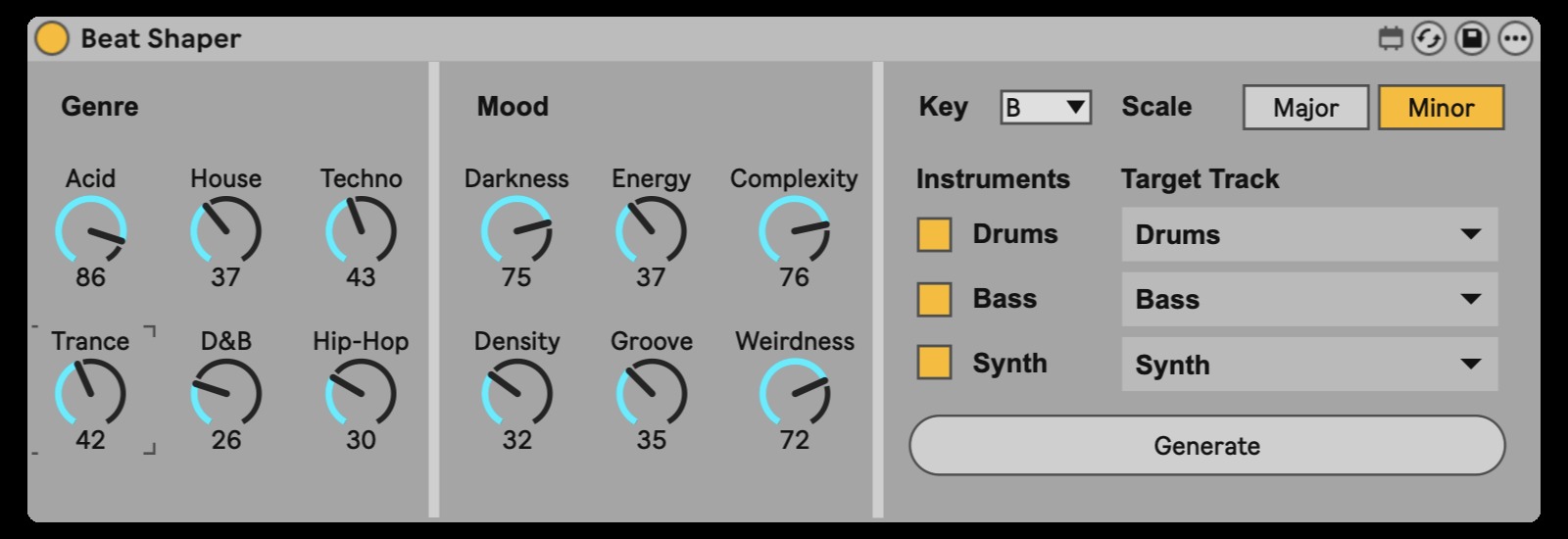
The controls split 3 ways. Genre dials cover Acid, House, Techno, Trance, D&B, and Hip-Hop, and they blend instead of switching, so you can pull a house pattern toward techno. Mood dials cover Darkness, Energy, Complexity, Density, Groove, and Weirdness. Then you set a key and scale, or leave the key on Any and let the engine pick.
Each instrument gets its own target track. Hit Generate and the MIDI clips land in slots on the tracks you chose, queued for playback. Those track menus update themselves as you add, rename, or move tracks, so the device stays wired to the session as it grows.
The device needs Live 12 Suite, or Live 12 Standard with the Max for Live add-on. It also needs an internet connection, because generation runs on Beat Shaper’s servers instead of your CPU.
What Beat Shaper costs and which plan unlocks Ableton export
Three plans, in euros including VAT (full breakdown on my Beat Shaper tool page):
- Starter, free: unlimited generations, MP3 downloads, non-commercial use
- Creator, 9 euros per month: MIDI and WAV export, unlimited song length, commercial rights
- Producer, 28 euros per month: Ableton Live project export, the Max for Live device, real-time MIDI output
You own what you make on every plan. My newsletter subscribers get a Beat Shaper discount this month.
Why licensed training data is Beat Shaper’s bigger story
Suno and Udio trained on scraped catalogs and are defending RIAA lawsuits over it. Beat Shaper took the other route: the company told me its model is trained on MIDI loops licensed from sample-pack providers explicitly for machine learning, expanded through augmentation. Its site FAQ describes the approach as “legally usable training material and a responsible AI workflow.” ElevenMusic does licensed training at label scale, Lemonaide through direct producer deals. Beat Shaper shows the same posture works at indie scale.
The MIDI-first architecture is the other dividing line. Suno can convert its generated audio to MIDI, but Suno’s MIDI export transcribes stems at 10 credits per conversion, and independent reviews rate the result a rough sketch with phantom bass notes. Beat Shaper writes the MIDI first and renders audio second, so there is no transcription step to clean up.
Peer has been circling this idea for a decade. He spent 8 years on NLP problems at Cortical.io in Vienna, produced electronic music on the side with releases in the UK and US, and built his first AI drum machine 10 years ago, before Transformer models existed. Beat Shaper went through the Wavelab incubator at the Munich University of Music and Theatre and is supported by Austria Wirtschaftsservice. The site footer reads “Built in Austria by Humans.”

For producers, the licensing shows up on commercial releases. A club track or a sync brief built on Beat Shaper MIDI carries no rights uncertainty from scraped training data, and the commercial license starts at the 9-euro plan.
Frequently asked questions
What is Beat Shaper?
Beat Shaper is a browser-based AI MIDI generator from Vienna, built for electronic music producers. It generates multitrack MIDI loops from text prompts and genre sliders, with drums, bass, and synth parts on separate tracks, and every note can be edited after generation. Founder and ML engineer Taylor Peer runs the company.
Is Beat Shaper trained on licensed data?
Yes. Beat Shaper's model is trained on a custom dataset of MIDI loops licensed from sample-pack providers explicitly for machine learning, then expanded through augmentation. The company publishes the approach in a white paper on its site.
What does the Beat Shaper Max for Live device do?
It puts Beat Shaper's generation engine on a MIDI track inside Ableton Live 12, with dials for genre and for mood settings including Darkness, Groove, and Weirdness. You choose a target track per instrument, hit Generate, and the MIDI clips are inserted into slots on those tracks and queued for playback. It requires Live 12 Suite, or Live 12 Standard with the Max for Live add-on, plus an internet connection.
Does Beat Shaper work with Ableton Live?
Yes. On the Producer plan, exports arrive as complete Ableton Live projects, with drums in a Drum Rack and bass and synth MIDI loaded into Ableton Drift patches, which need Live 11.3 or newer. A separate Max for Live device generates clips inside Live 12, and plain MIDI or WAV exports work in Logic, FL Studio, Cubase, and every Live edition.
About the author

Covering AI music tools, industry shifts, and news for music creators and professionals. Twice-weekly newsletter at aimusicpreneur.com.