






AI Music News
Your independent source for AI music news and what each story means for music creators.
I track the AI music lawsuits, label licensing deals, streaming policy, and the artists testing what AI makes possible. Tool launches and reviews live in AI music tools news; interviews and analysis in AI music industry. Want it in your inbox? Get the AI music newsletter.
- 27 Oct
 27 Oct
Apple asks a court to block Suno's subpoena, saying it already handed over data on Suno tracks
- Apple has asked a federal court in Northern California to quash Suno's subpoena, or to grant a protective order, Digital Music News reported on October 26, 2026.
- Apple says it already produced data and declarations about Suno-generated tracks on Apple Music after more than a year of talks with both sides.
- Suno's subpoena asks about Apple Music's minimum royalty guarantees to Universal and Sony, its terms for AI content, and how it calculates royalties for AI and non-AI audio.
- 27 Oct
 27 Oct
Police cut short Cryo Mix and Monetunes' Amsterdam Dance Event 2026 showcase at 21:30, after the hotel moved it 4 hours before doors
- Monetunes says police shut down Room Service, its showcase with Cryo Mix at Room Mate Aitana in Amsterdam, at 21:30 on October 22, 2026, during ADE week.
- The flyer billed the showcase from 18:00 to midnight, and Monetunes says it lost the hotel suite 4 hours before doors.
- Monetunes says its branding was banned, its 6 boxes of signage went missing, and some guests were charged at a paid-for open bar.
- 27 Oct
 27 Oct
A judge has thrown out RBX's bot-stream lawsuit against Spotify for a second time
- Judge Josephine L. Staton dismissed RBX's class action against Spotify USA with prejudice on October 23, 2026, so the claims can't be refiled.
- RBX, whose real name is Eric Dwayne Collins, alleged that bots generated a non-trivial share of Drake's roughly 37 billion Spotify streams from January 2022 to September 2025.
- The court ruled twice that Spotify owed RBX no legal duty to protect him from third-party bot streams.
- 27 Oct
 27 Oct
Universal Music discussed going private with Apollo, TPG and Blackstone after its shares fell 29% this year
- Bloomberg reported on October 26, 2026 that Universal Music Group's management held preliminary talks earlier in 2026 with Apollo, TPG and Blackstone about taking the company private.
- The talks did not progress, UMG has not started a sale process, and its board is aware of the discussions.
- UMG's shares are down about 29% in 2026, below the 2021 listing price, for a market value of about €29 billion ($32 billion).
- 27 Oct
 27 Oct
Universal and Sony can depose the ex-Menlo investor who said Suno replaced her Spotify listening
- Magistrate Judge Paul G. Levenson let Universal Music Group and Sony Music serve a deposition subpoena on C.C. Gong on October 26, 2026, and depose her within 30 days.
- Gong, a former Principal at Suno investor Menlo Ventures, deleted a post saying she had shifted most of her listening to Suno because Spotify kept giving her the same overplayed recommendations.
- The labels say the post bears directly on the fourth fair use factor, which asks how Suno affects the market for their recordings.
- 26 Oct
 26 Oct
Australian screen composers launch “Human Made” AI copyright campaign at the 2026 Screen Music Awards
- The Australian Guild of Screen Composers launches its Human Made campaign at the APRA AMCOS Screen Music Awards in Brisbane on Wednesday, October 28, 2026.
- The campaign asks for a licensing system that pays composers who choose to opt in to AI training, instead of letting AI train on their work by default.
- Composer Antony Partos, who leads it, says Sonar Music composers are being asked to recreate AI-generated tracks so productions can claim a human author.
- 26 Oct
 26 Oct
Anthropic's Claude Duet agent can work with Spotify, Ticketmaster, Splice and Viberate, but only in the US for now
- Anthropic opened a research preview of Claude Duet on October 21, 2026, a proactive agent built on Claude Opus 5.5.
- Duet is limited to Pro and Max subscribers in the US for now, by waitlist, as a standalone iOS and Android app and on claude.ai.
- It carries over the apps you've connected to Claude, and Claude's connector directory includes Spotify, Ticketmaster, Splice and Viberate.
-
FREE AI music newsletter
Get this in your inbox — free
- AI Music Briefing — the week's biggest AI music news, the AI Music Lawsuit Tracker, and Music Intelligence.
- 1 tutorial every week — AI music promotion: from a 4-week song-release strategy to a music video in under 10 minutes.
- 26 Oct
 26 Oct
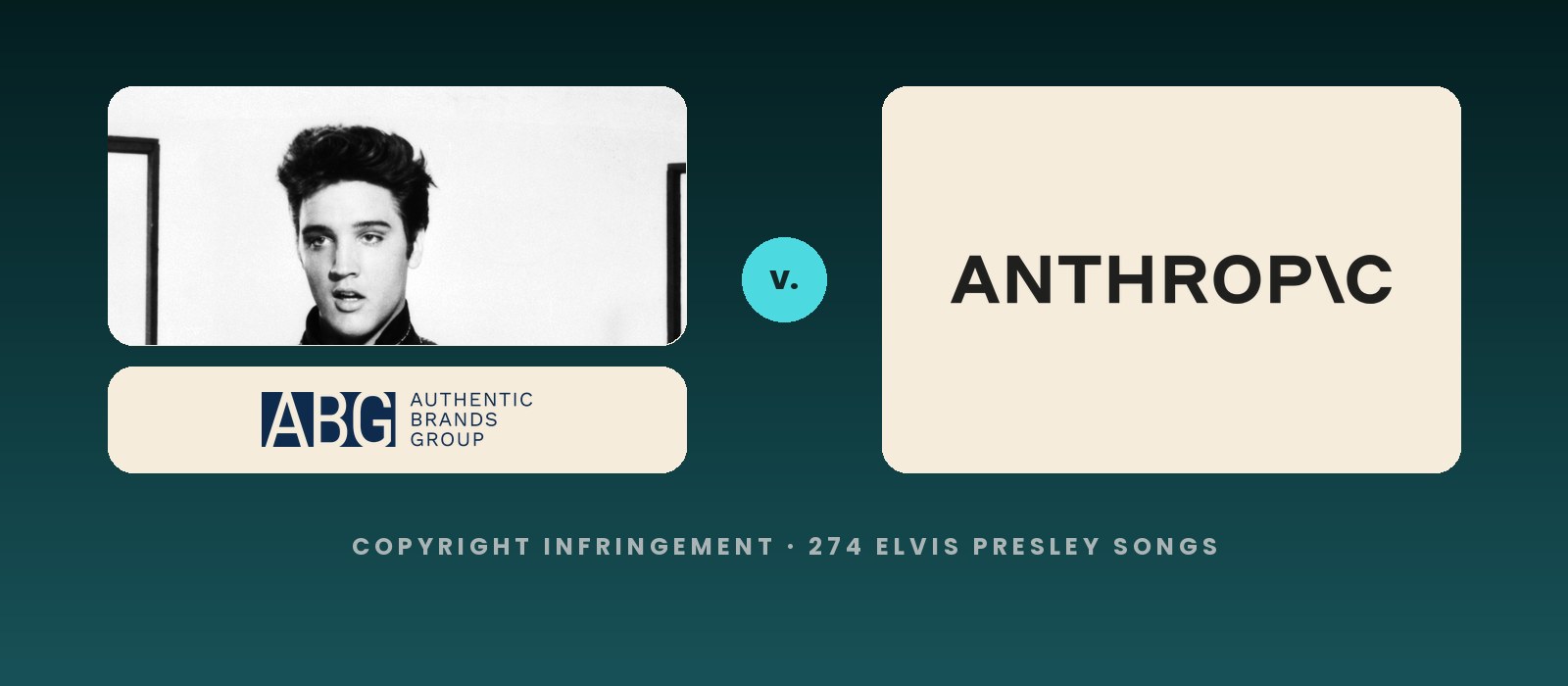
Elvis Presley's rights owners sue Anthropic over 274 songs, seeking $41.1 million
- Elvis Presley's rights owners sued Anthropic on October 23, 2026 in the US District Court for the Northern District of California, case 5:26-cv-12473.
- The lead plaintiff is ABG EPE IP LLC, a unit of Authentic Brands Group, joined by other companies that hold rights in Presley's music.
- The complaint covers 274 songs, including “Can't Help Falling in Love”, “Don't Be Cruel” and “A Little Less Conversation”.
- 26 Oct
 26 Oct
China's AI rap “Guo Lai Ren” passes 120 million views, made by 1 creator in 3 to 4 days
- The AI rap video “Guo Lai Ren” (过来人, The OGs) passed 120 million views across Chinese platforms by 9pm on October 22, 2026.
- Douyin accounts for about 75 million of those views and WeChat Channels for about 45 million.
- Du Fu, Su Shi and Liu Bang rap the 3 verses about renting in middle age, layoffs at 35 and starting late, and 7 more historical figures join for the finale.
- 26 Oct
 26 Oct
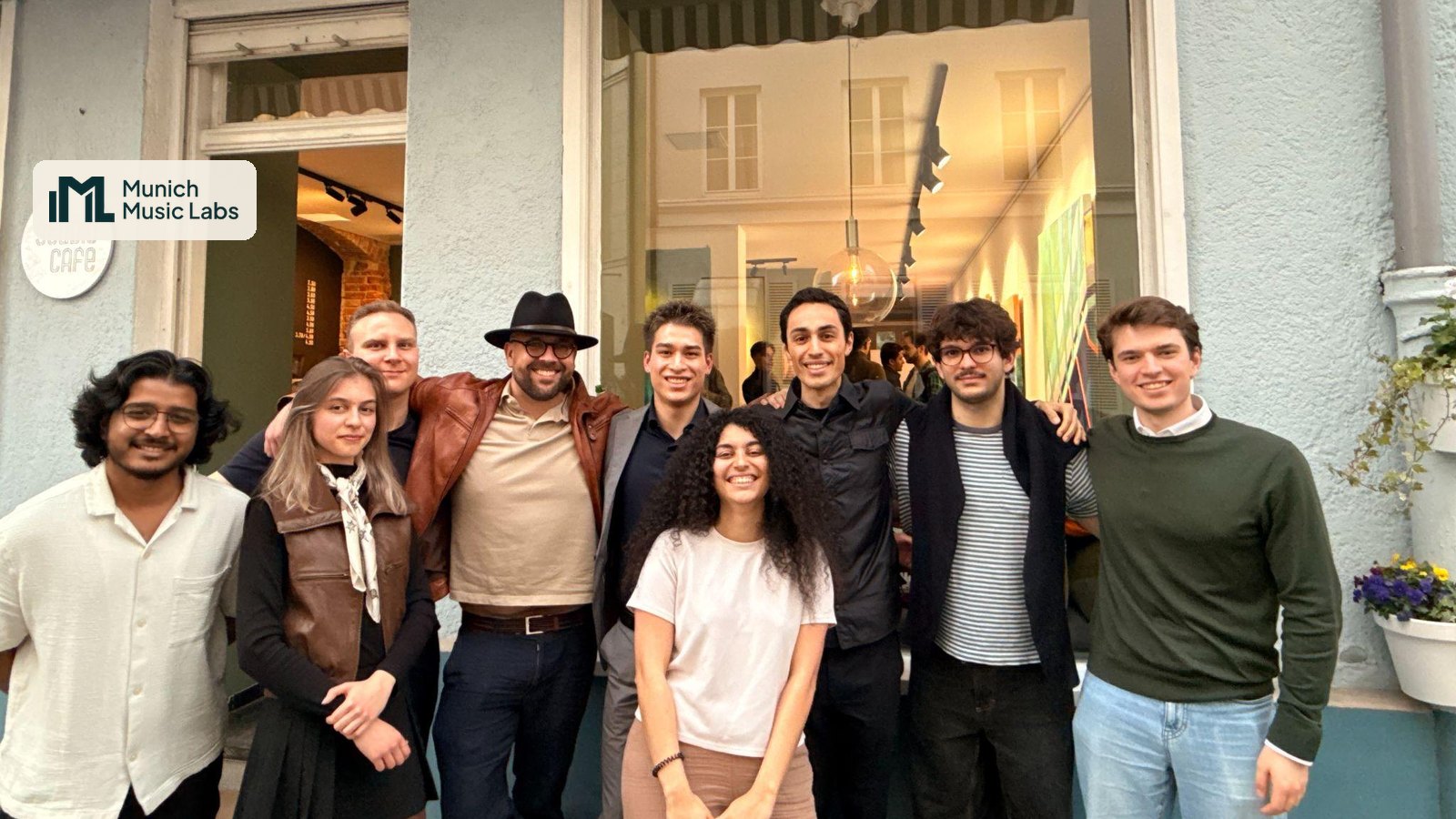
Munich Music Labs wants startups and investors to help build its music tech venture lab in the ecosystem of TUM, the EU's top-ranked university
- Munich Music Labs, a nonprofit student initiative at the Technical University of Munich founded in 2025, plans to launch a music tech venture lab and invites startups and investors to help shape it.
- In its first year it built a community of 60+ members, ran 17 Knowledge Sharing Sessions and started research projects with BMAT Music Innovators and Klangio.
- Hackatune 2026 brought 20 teams and more than 100 participants to TUM for 48 hours, with 4 challenges set by Impulse Audio Lab, Cyanite, Klangio and Neural Frames.
- 26 Oct
 26 Oct
Pozalabs reveals AI producer Steal Saturday as its own act, with a 5-track ballad EP
- Seoul AI music company Pozalabs said that the AI producer Steal Saturday is an act it created, the first time it has said so officially, with an EP released on October 26, 2026.
- The reveal came with Steal Saturday's 5-track EP “그럼에도, 오늘은” (Even So, Today), a set of ballads built on band sound, acoustic guitar and strings.
- Three guest vocalists, Naran, Seo Jeong-gil and Eliot Rue, appear on 4 of the 5 tracks, and Steal Saturday sings 1 itself.
- 24 Oct
 24 Oct
Charlotte de Witte's Azadi EP features NAVA, an AI singer meant to speak for Iranian women barred from singing in public
- Charlotte de Witte previewed "Tales Of The Desert" on Instagram with vocals from NAVA, an AI-generated Persian vocalist.
- The track is on Azadi, a 3-track EP due in November 2026 on her label KNTXT, and all 3 tracks reportedly feature NAVA.
- British-Iranian digital artist Farbod Mehr created NAVA in 2025 as a symbolic voice for Iranian women who face restrictions on singing in public.
- 24 Oct
 24 Oct
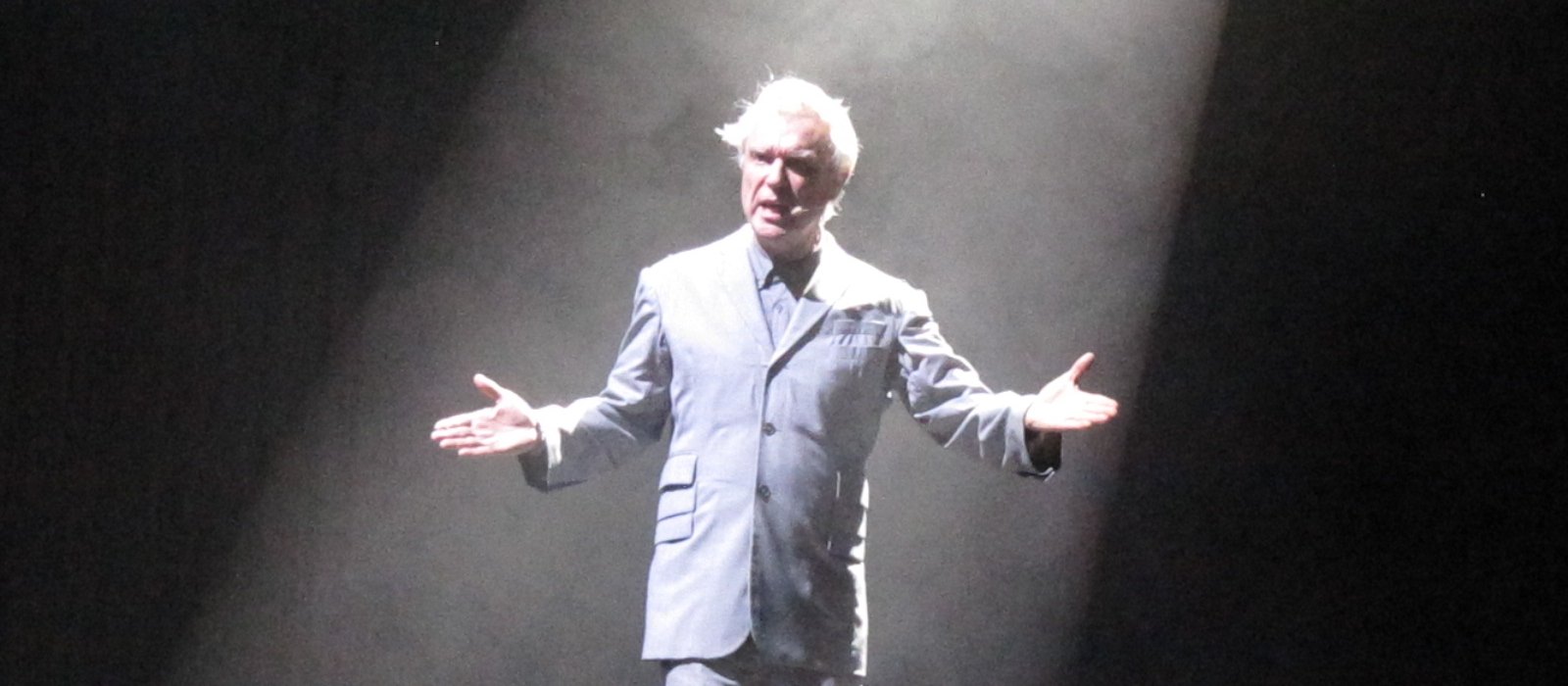
David Byrne says AI is 'not going to end well', after calling AI soundalike songs 'an endless nightmare'
- David Byrne told i-D in an interview published on October 22, 2026 that AI is "going to make people really stupid" and that "it's not going to end well."
- He still called some AI a "handy tool", for finding patterns in spreadsheets or helping skin doctors catch the start of a melanoma.
- On WXPN during his Who Is The Sky? US tour, he separated useful tools like the stem separation used on old Beatles recordings from AI that scrapes music to make soundalikes, which he called "an endless nightmare."
- 24 Oct
 24 Oct
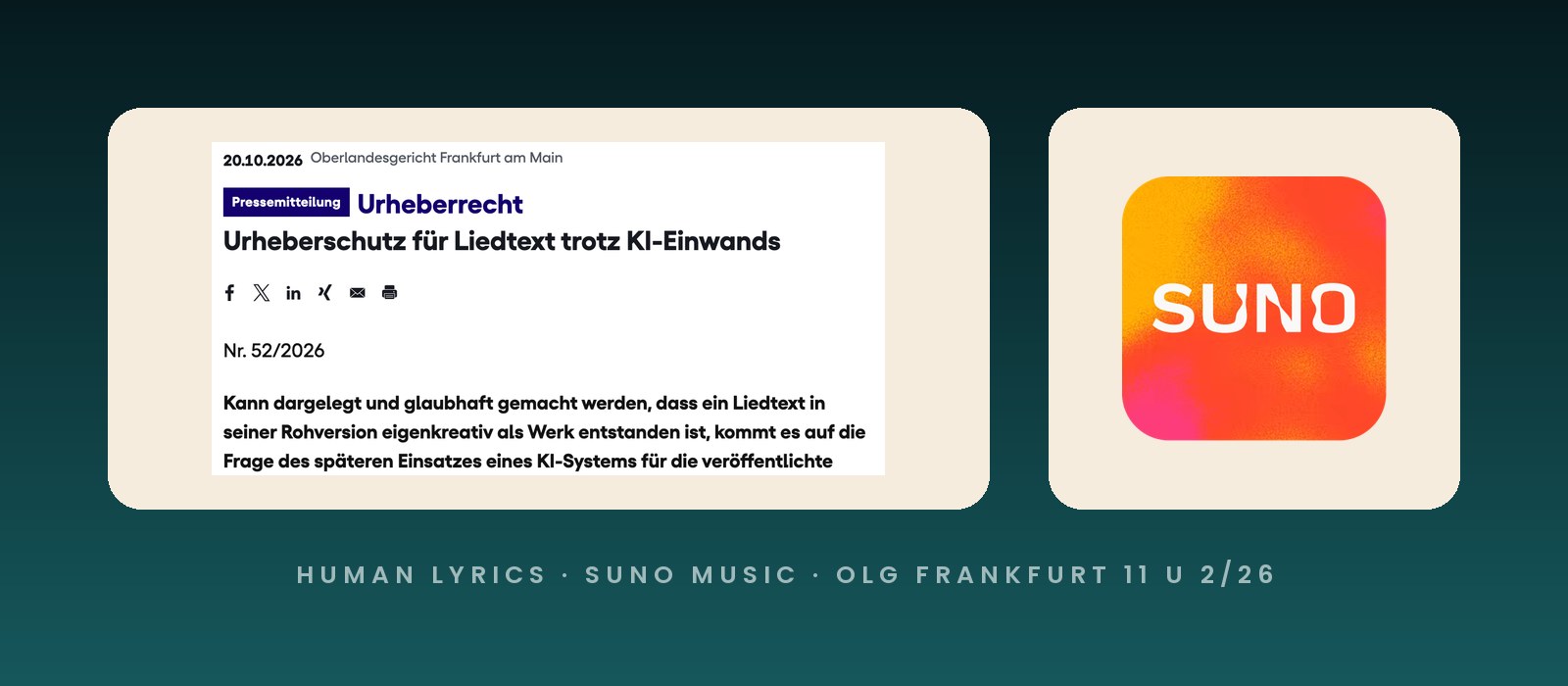
German appeals court rules your own lyrics stay protected when Suno makes the music
- The Higher Regional Court of Frankfurt am Main ruled on October 1, 2026 (case 11 U 2/26) that a songwriter keeps copyright in lyrics she wrote herself, even though her partner made the music with Suno.
- The other side argued the lyrics were AI-generated and brought a private expert report, and the court said its "AI indicators" pointed away from AI, if anything.
- She won on sworn statements that she wrote the raw version herself, and the decision in these fast-track proceedings can't be appealed.
- 24 Oct
 24 Oct
AI agent artist RŌSIEN gets an SBS Inkigayo stage, and its makers say it will never betray fans
- SBS lists RŌSIEN, a generative AI artist, on episode 1328 of its K-pop show Inkigayo on October 25, 2026, alongside IVE, BABYMONSTER and NCT WISH.
- The songs are human-written, with Hong Jin-woo and Nam Ji-hoon behind the debut single, while the singing voice is AI.
- RŌSIEN's persona runs as an AI agent built on large models such as Gemini and ChatGPT, and its makers say it replies in about 3 seconds in more than 47 languages.
- 23 Oct
 23 Oct
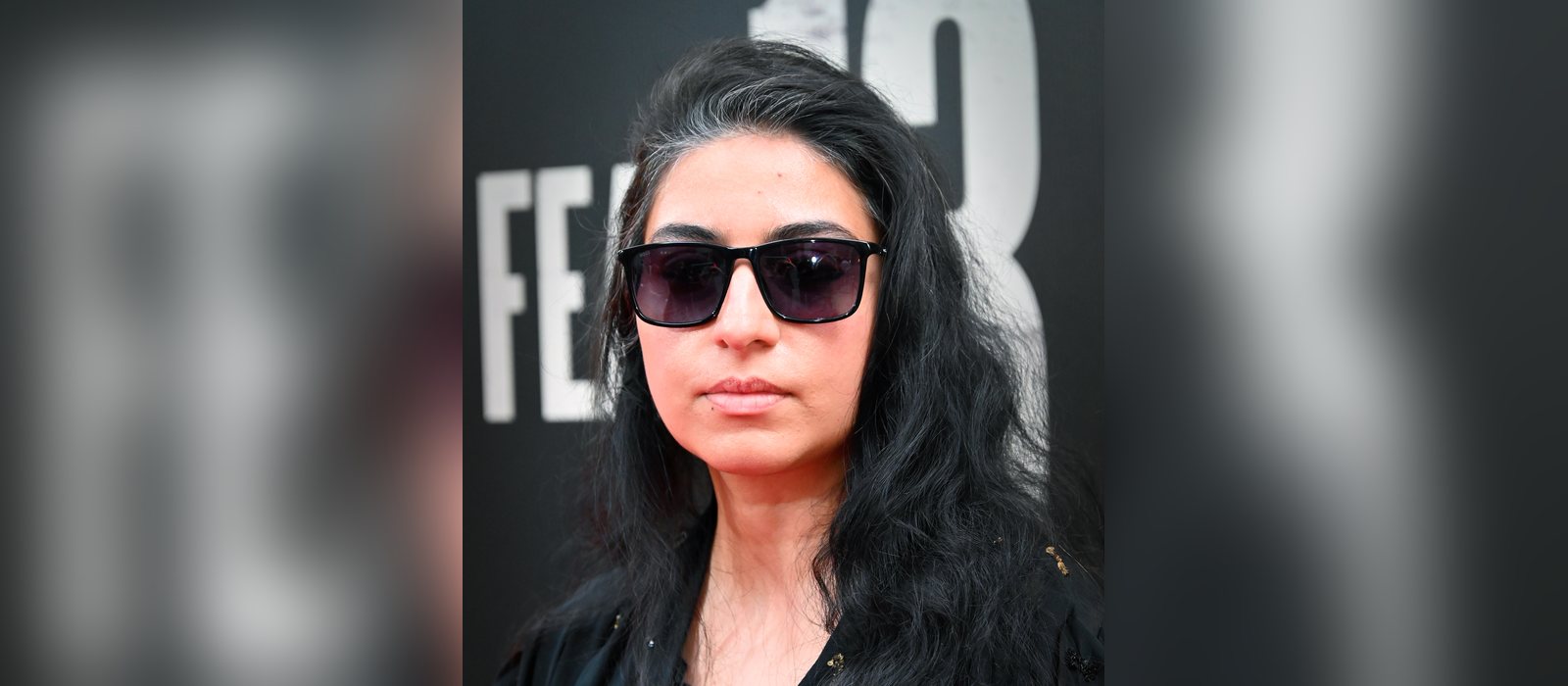
Grammy winner Arooj Aftab says musicians should be paid when AI trains on their music
- Grammy winner Arooj Aftab called for musicians to be paid when AI uses their work, in 2 Instagram stories on October 20, 2026.
- She wrote that artists should be paid because AI has already trained on their music, which she called 'usage'.
- She added that artists should be paid every time AI uses what it learned to make new music, which she called 'derivative work'.
- 23 Oct
 23 Oct
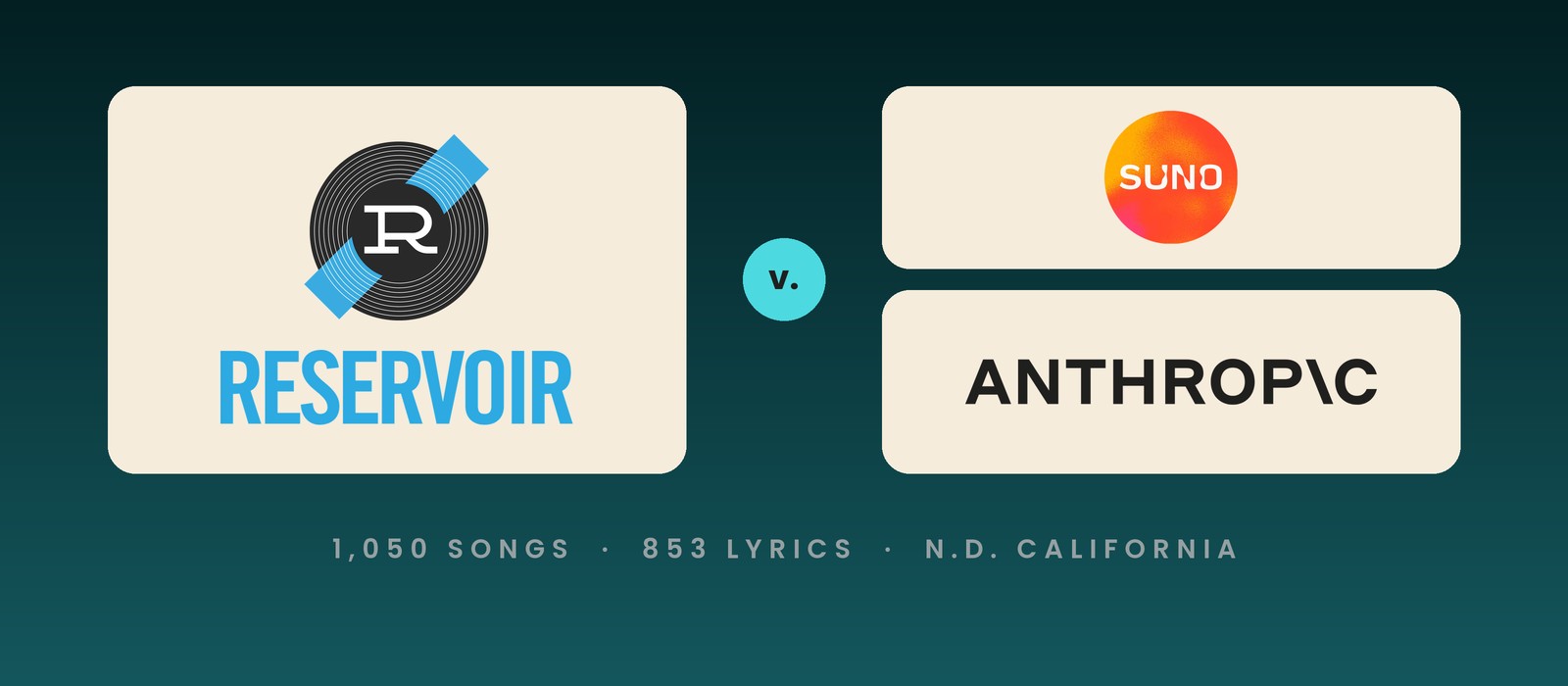
Reservoir sues Suno over 1,050 songs and Anthropic over 853 lyrics, from Joni Mitchell to Madonna
- Reservoir filed 2 federal lawsuits on October 21, 2026 in the Northern District of California, one against Suno and one against Anthropic.
- The Suno complaint lists 1,050 compositions, including Joni Mitchell's “Both Sides Now” and Johnny Cash's “Ring of Fire”, and claims up to $186.4 million.
- The Anthropic complaint says Claude was trained on the lyrics of 853 Reservoir compositions and claims up to $151.4 million.
Frequently asked questions
Where can I find AI music copyright news and lawsuit updates?
The AI Music Lawsuit Tracker follows every major AI music case: RIAA v. Suno, RIAA v. Udio, GEMA v. Suno, Concord v. Anthropic, and AFM v. Universal and Warner. Each tracker lists the filings, key events, and current status. Major rulings land in this news feed the day they break.
How often is AI music news published on The AI Musicpreneur?
New stories go up most weekdays, and this feed updates daily. Every Friday, the AI Music Briefing newsletter rounds up the week's biggest industry stories, and the weekly Top 5 recap covers what mattered and why.
What is the difference between AI music news and AI music tools news?
This page covers the industry: lawsuits, label deals, streaming policy, and artist stories. AI music tools news covers the products: launches, feature updates, reviews, comparisons, and tutorials. A story about a single tool lives there; everything else lands here.