What is Tencent MusicBuddy? Tencent Music's closed-beta AI agent takes a song from first idea to release and promotion
My stack My fav 6 tools for AI music after testing 70+
-
 ElevenMusic · Music generation
 -
 Moises · Stem separation
 -
 Controlla · Voice swap & cloning
 -
 Cryo Mix · Mixing + mastering
 -
 Neural Frames · Music videos
 -
 ONCE · Distribution
Some links are affiliate links — I earn a commission at no cost to you. Every tool here is one I run myself and truly believe in. This stack is proven.
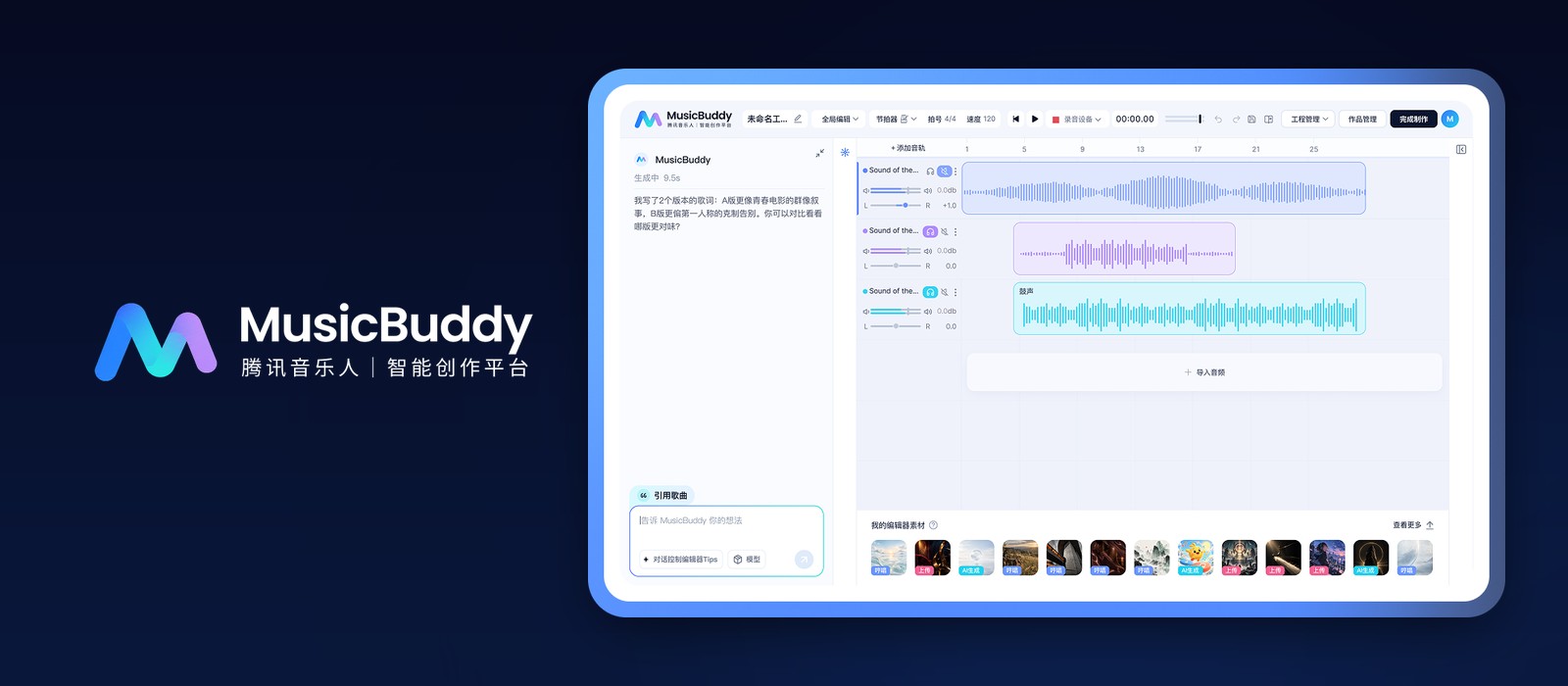
Tencent Music’s MusicBuddy is an AI agent that takes one song from the first idea to release and promotion, and you steer every step through a chat panel docked beside a multitrack editor. It’s in closed beta in China, and its official site went live around September 22, 2026.
So MusicBuddy is about 2 weeks old. It came back into the news on October 7, when Pandaily counted it among roughly 8 vertical AI agents Tencent rolled out between July and September.
The short version for anyone outside China: you can’t use it yet, and Tencent Music hasn’t published a price or named the models behind it.
I don’t have the Tencent Musician account MusicBuddy asks for, so I couldn’t test it myself. Everything below comes from Tencent’s own page and Chinese coverage.
What is Tencent MusicBuddy?
MusicBuddy is Tencent Music’s AI music agent for musicians. Its Chinese homepage calls it a “smart creation platform for musicians” that handles inspiration, refinement, release and promotion “all through AI conversation” (my translation).
The logo carries the name Tencent Musician (腾讯音乐人). That’s the program Tencent Music already runs for independent artists who release on QQ Music, Kugou and Kuwo, and it counted more than 580,000 music groups at the end of 2024, according to Tencent Music’s 2024 ESG report.
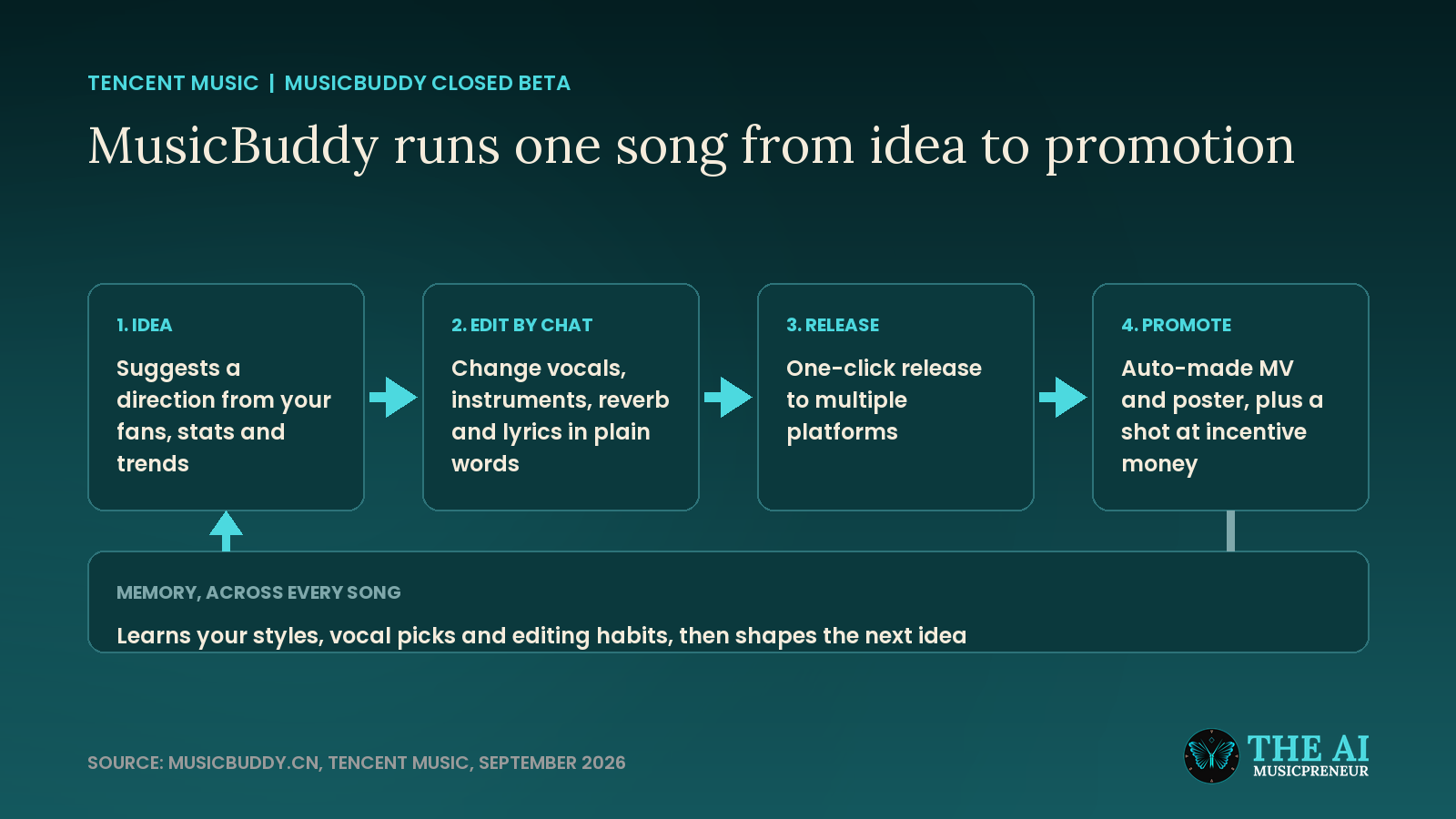
Tencent’s page splits the work into 4 jobs:
- Idea: MusicBuddy suggests what to write next from how your songs perform, what your fans like and what’s trending.
- Edit: you change the arrangement, swap instruments, adjust reverb and rewrite lyrics by typing into the chat panel.
- Release: one click sends the finished song out to multiple platforms.
- Promote: after release, it generates a music video and a promo poster, and songs that meet Tencent’s bar get a shot at incentive money.
A memory layer runs under all 4. Tencent says MusicBuddy keeps learning your creative preferences, your strongest styles and your editing habits, then uses them on your next song and your next release.
The step that makes MusicBuddy look different from a prompt box is the second one.
How Tencent MusicBuddy’s chat panel edits a multitrack song
Open the editor and it looks like a stripped-down DAW. Tracks run across the main window with their waveforms, and the top bar carries a metronome, a 4/4 time signature, a tempo field set to 120 and a recording input. You can import audio, write MIDI melodies and pull sounds from a built-in library.
The difference sits on the left. A chat panel is built into the editor, and Tencent’s own example of what you’d type is “Turn the vocals up, remove the guitar in the second section, keep everything else the same” (my translation).
The same panel writes lyrics. In Tencent’s demo screenshot it offers 2 versions, one written like a youth-film ensemble story and one as a restrained first-person goodbye, then asks which fits better.
Tencent says the chat can build a full arrangement from scratch as well as handle instrument swaps and reverb changes. Whether it does that well is the part nobody outside the beta can check yet.
Suno users have seen this before. Suno Studio 2.0 added a chat bar on August 13 that reads your session and acts on plain requests, from generating clips to building effect chains. MusicBuddy puts the same idea into a Chinese-language editor and wires it straight into release.
Where the two split is what happens before the first note.
Why Tencent MusicBuddy pitches song ideas from your fan data and trending signals
Suno starts from your prompt. MusicBuddy starts from your numbers.
Tencent’s page names 3 inputs for song ideas: how your existing songs perform, what your fans prefer and “hot signals”, meaning what’s trending. The sample request on the page is “Based on my fans’ preferences, recommend a creative direction” (my translation). From there you pick a generation model, choose a voice or upload a reference track, and get a first draft.
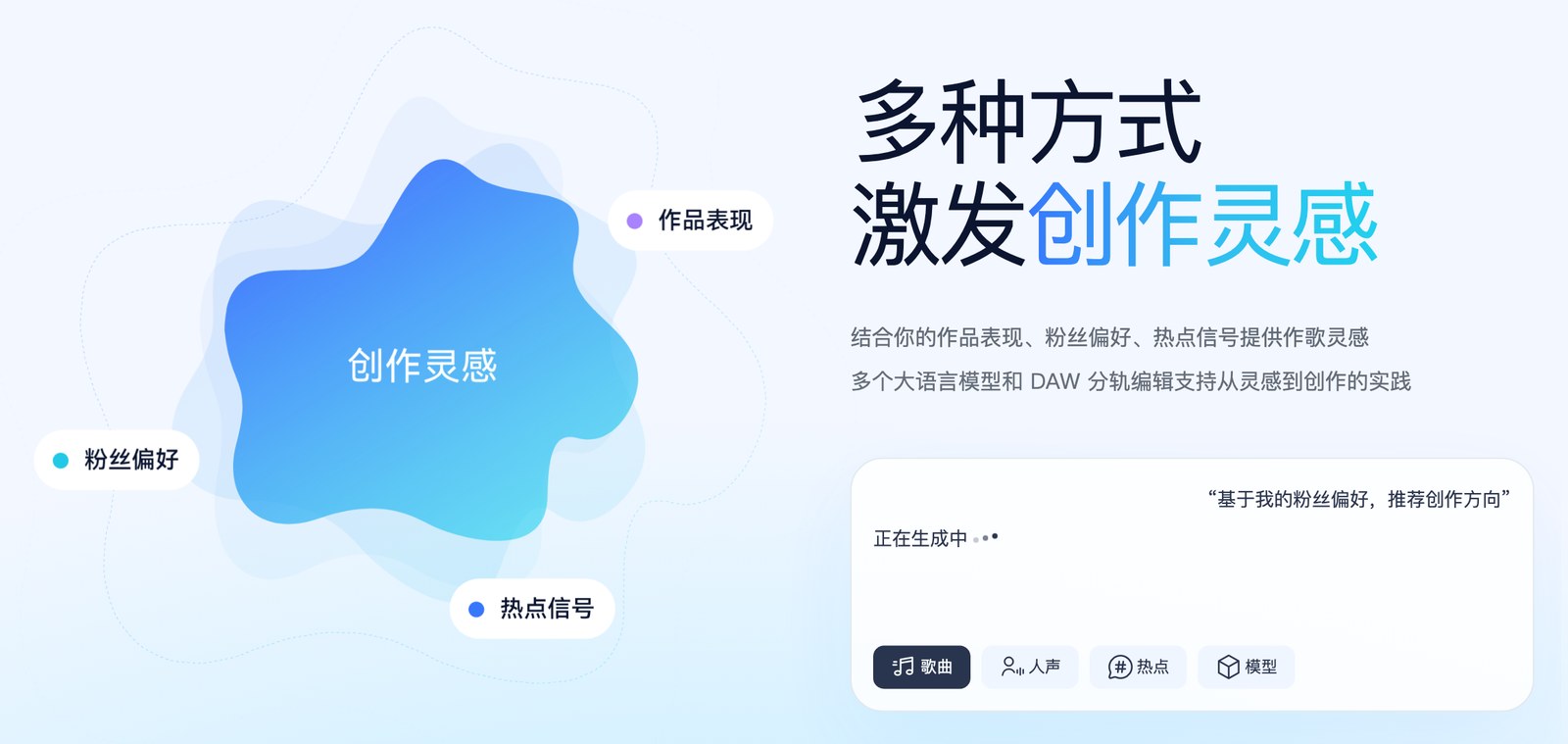
That’s useful when you’ve released a handful of songs and have no idea which one your listeners actually liked.
But a tool that suggests your next song from what’s already trending is likely to nudge a lot of artists toward the same few sounds. Add incentive money for songs that meet a bar Tencent hasn’t published, and the platform ends up setting the brief.
When did Tencent Music launch MusicBuddy?
MusicBuddy’s official site went live around September 22, 2026. That day, the Chinese product site Woshipm reported the closed beta, and a second Woshipm piece, republished in English by 36Kr, noted the site had just gone online. Trademark records cited there show Tencent Music’s Shenzhen technology unit filed for MUSICBUDDY on August 28, 2026.
Most of the pieces existed before MusicBuddy got its name:
Liang gave that 10 million figure on the March 17 earnings call, as Music Business Worldwide reported, and KrASIA logged the Vemus beta in December. My earlier piece covers why rights holders pushed back when Tencent Music wired DeepSeek into QQ Music.
Tencent Music hasn’t said whether MusicBuddy replaces Vemus or sits beside it. On paper, MusicBuddy adds the chat-controlled multitrack editor, the auto-made promo material and the memory layer, all in one place.
Can musicians outside China use Tencent MusicBuddy?
Not right now.
MusicBuddy’s site is Chinese only. The login box says that if you already have a Tencent Musician account you can sign in and sync your account information in one click, and it offers 3 ways in: phone number, WeChat or QQ. The phone field defaults to China’s +86 code and asks for a registered number.
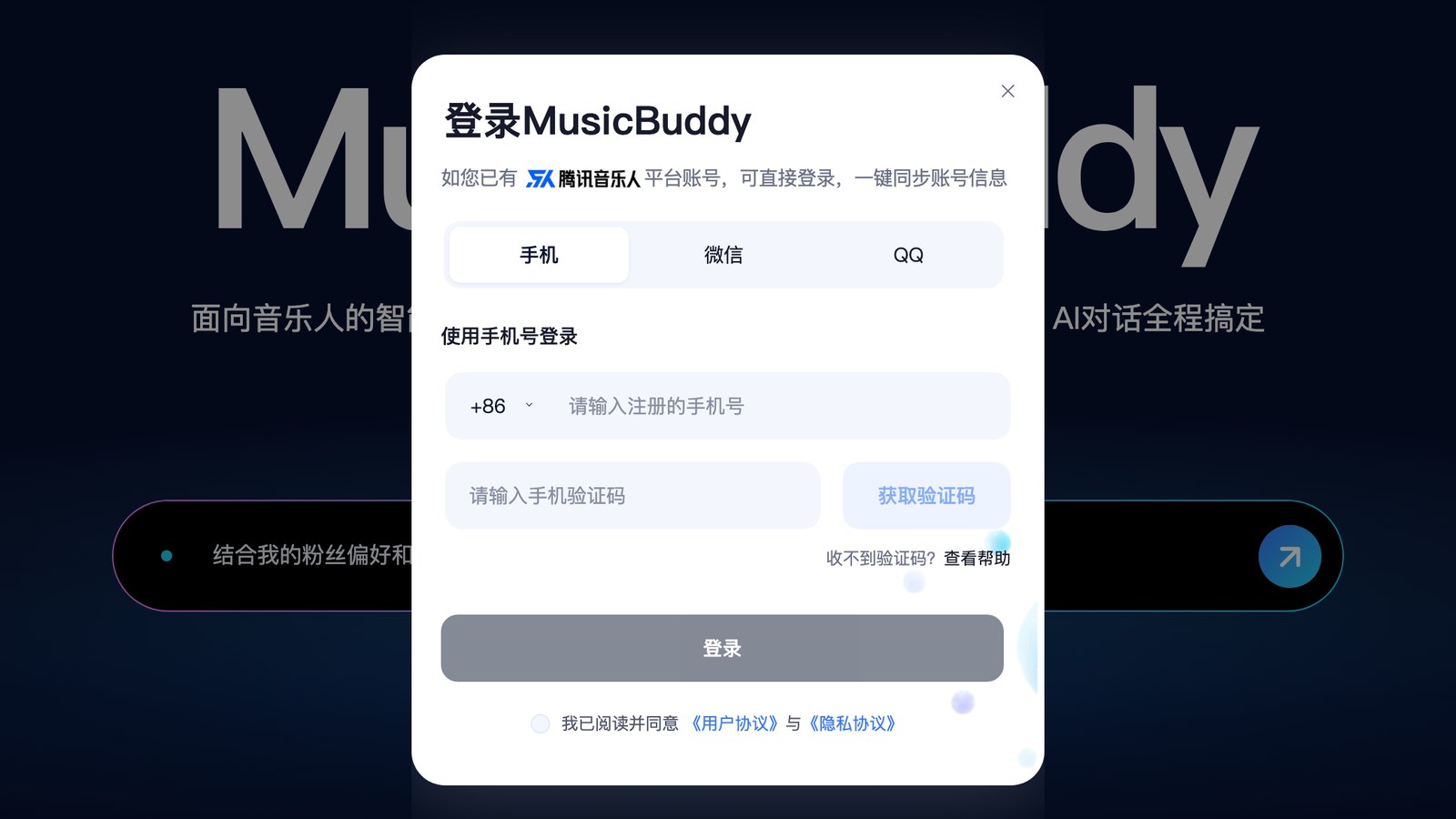
Getting into the beta is a second step. The Shenzhen Artificial Intelligence Industry Association’s write-up of the launch says creators log in and apply for access, and Pandaily still describes MusicBuddy as in internal testing. Tencent Music hasn’t published a price, a public launch date or an English version.
Distribution is the other open question. Tencent’s own page only promises one-click release to “multiple platforms”.
The Shenzhen association’s write-up lists QQ Music, Kugou and Kuwo plus Spotify and Apple Music, across more than 150 channels. I couldn’t find that list anywhere on Tencent’s page, so treat it as reported, not confirmed.
If you release from outside China, the route into QQ Music, Kugou and Kuwo is still a distributor, and my AI music distribution roundup compares the options. For you, MusicBuddy is a preview of what a streaming company builds once it owns the creation tool too.
How Tencent MusicBuddy compares with Suno Studio, ONCE and LANDR
In the West, every piece of MusicBuddy exists, but different companies own them:
- Suno Studio has the chat bar inside an editor, for Premier subscribers at $24 a month on annual billing.
- ONCE runs releases through a chat-based agent that delivers to Spotify, Apple Music and about 20 other services.
- LANDR bundles AI creation tools, mastering and distribution under one account.
- Promotion is its own category, with startups like Base for Music saying they can predict a campaign’s return before launch.
None of Suno, ONCE or LANDR owns the streaming app your song ends up on. Tencent Music does, because QQ Music, Kugou and Kuwo are its own apps, and that’s why MusicBuddy can take fan data in, send the song out and pay the incentive inside one company.
China’s other giants are building their own versions. Alibaba put HappyShrimp 1.0 into beta on August 17, and ByteDance’s Soda Music has an AI music tool called Miaoxiang (妙响) tied to Douyin, according to the same Woshipm report.
Chat inside a DAW is spreading fast: Suno and Tencent Music put theirs out within 6 weeks of each other. The loop is the part I’d keep an eye on. When the company that pays you also suggests what you write, it’s worth asking who the song is really for.
Frequently asked questions
Is Tencent MusicBuddy free to use during its closed beta?
Tencent Music hasn't published any pricing for MusicBuddy. As of October 8, 2026, the musicbuddy.cn homepage lists features and a login, with no plans or prices. Creators log in and apply for beta access, so the cost after the beta is still unknown.
Which AI models power Tencent MusicBuddy?
Tencent Music hasn't named them. Its site says MusicBuddy pairs several large language models with multitrack editing, and a write-up from the Shenzhen Artificial Intelligence Industry Association says it draws on Tencent Music's own Qinyun and Qinyue music models plus its AI singing synthesis and source separation. Tencent hasn't confirmed that list on its own page.
What is the incentive money Tencent MusicBuddy offers for released songs?
Tencent Music's site says songs released through MusicBuddy that meet its standard have a chance at incentive money and deeper cooperation opportunities. It doesn't say what the standard is, how much is paid or who decides. Until Tencent Music publishes terms, treat it as a promise without numbers.
Is Tencent MusicBuddy part of the same Buddy family as WorkBuddy and CodeBuddy?
By name, yes. Tencent's Buddy line includes WorkBuddy, released on March 4, 2026, plus CodeBuddy and DataBuddy, and Pandaily counted MusicBuddy among roughly 8 vertical AI agents Tencent launched between July and September 2026. MusicBuddy itself comes from Tencent Music, whose Shenzhen technology unit filed the MUSICBUDDY trademark on August 28, 2026.
About the author

Covering AI music tools, industry shifts, and news for music creators and professionals. Twice-weekly newsletter at aimusicpreneur.com.