Roland ships Melody Flip with 250 palettes, free on every Roland Cloud tier
My stack My fav 6 tools for AI music after testing 70+
-
 ElevenMusic · Music generation
 -
 Moises · Stem separation
 -
 Controlla · Voice swap & cloning
 -
 Cryo Mix · Mixing + mastering
 -
 Neural Frames · Music videos
 -
 ONCE · Distribution
Some links are affiliate links — I earn a commission at no cost to you. Every tool here is one I run myself and truly believe in. This stack is proven.
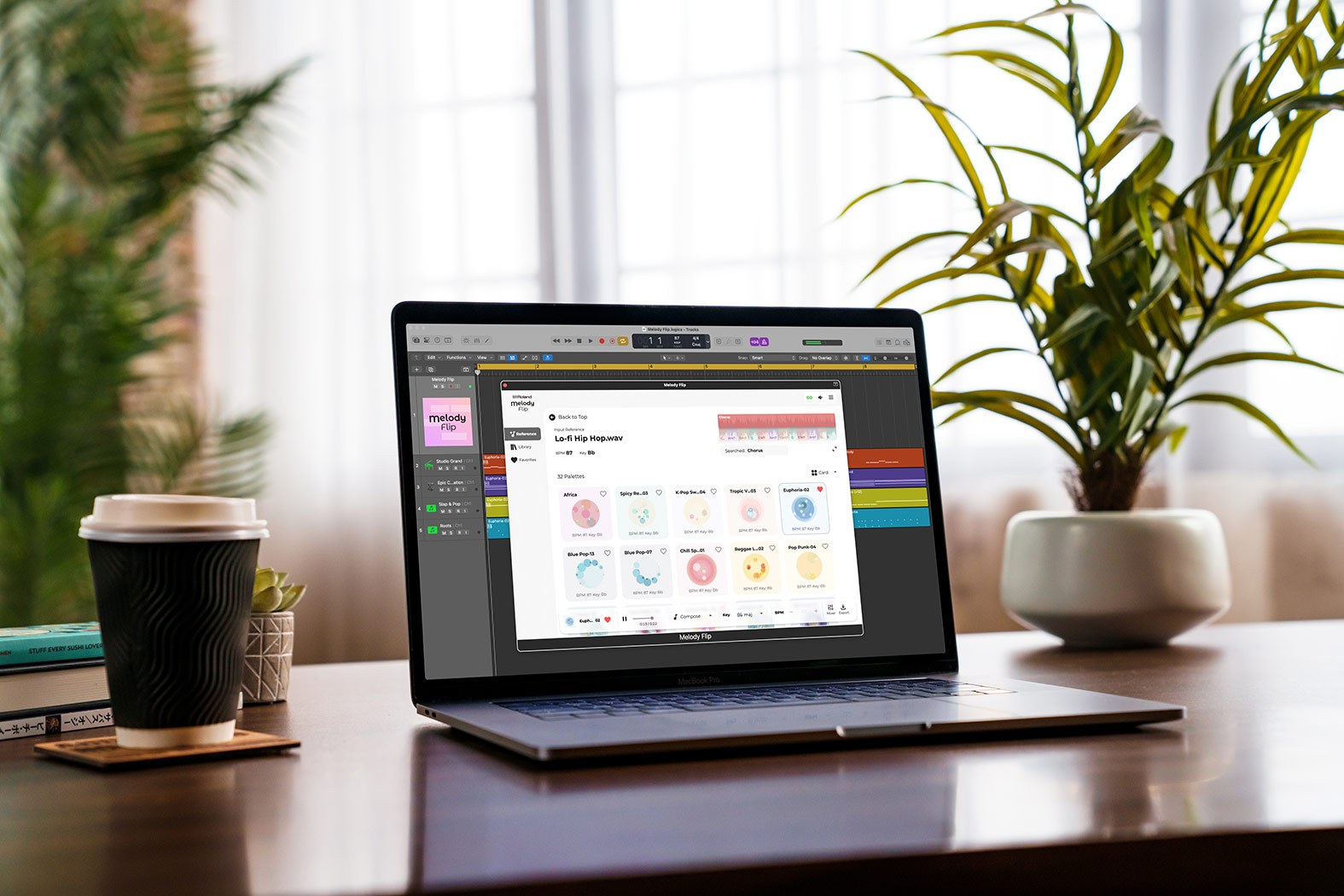
Roland released Melody Flip on September 4, 2026, and it is free on every Roland Cloud tier. The plugin came out of a research partnership with Sony Computer Science Laboratories, ships with roughly 250 palettes of musical ideas, and exports everything it makes as audio or MIDI. I first covered it back when Roland announced Melody Flip in March. This is the shipping build.
What sits inside a Melody Flip palette
A palette is not a loop pack. Each one is a small library of musical ideas built from four connected parts: melody, chords, bass and drums.
They stay locked to one key and tempo, so anything you pull out of a palette already fits the rest of it. The release covers pop, rock, EDM, R&B, jazz, anime, ambient and a spread of other styles.
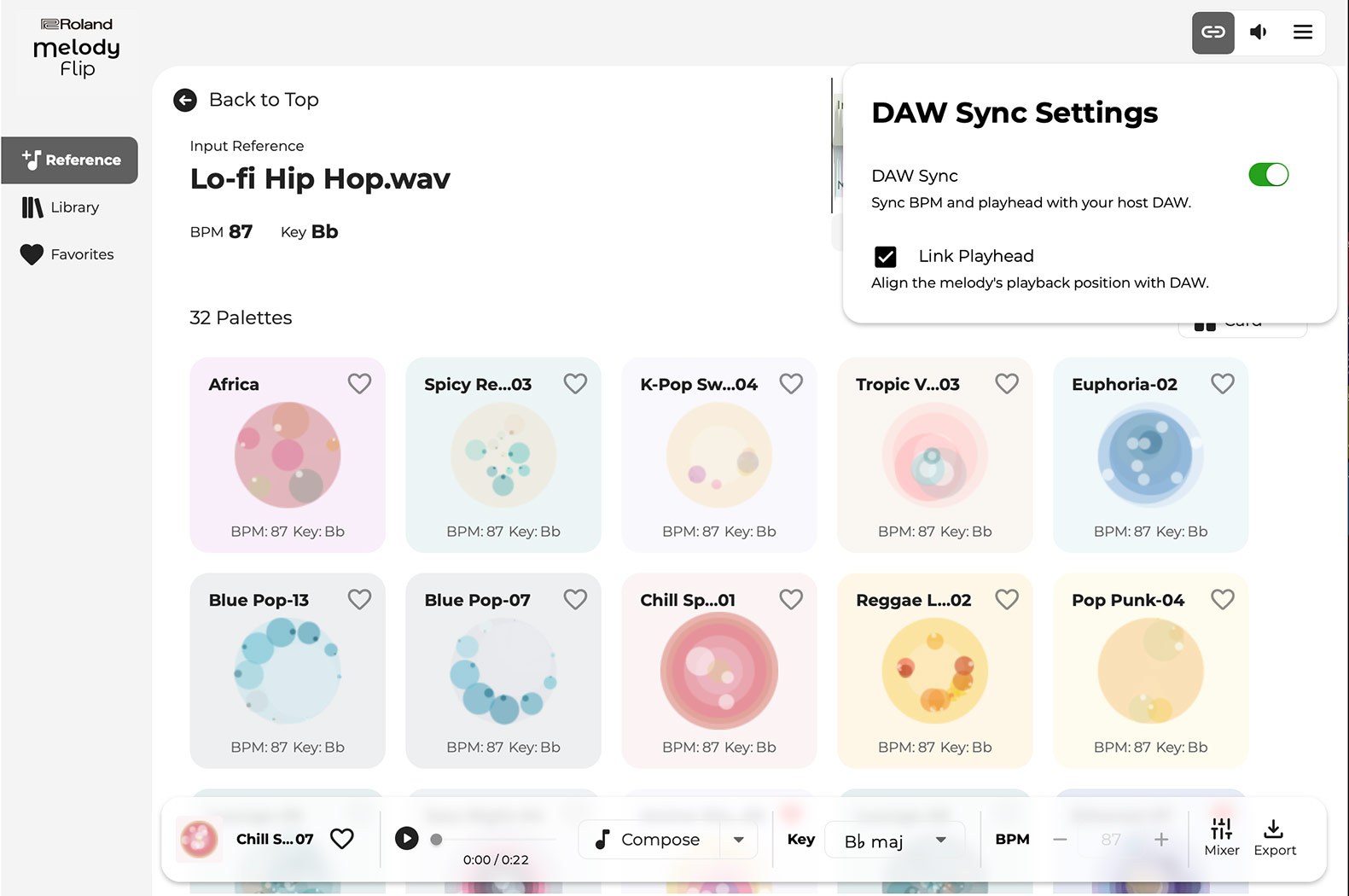
The DAW Sync panel in the corner is the practical part. Melody Flip locks its tempo and playhead to your host session, so what you audition inside the plugin lines up with the arrangement you already have.
How Reference Search matches palettes to your own track
There are two ways in. Browse the library and pick a style, or hand Melody Flip something you already made.
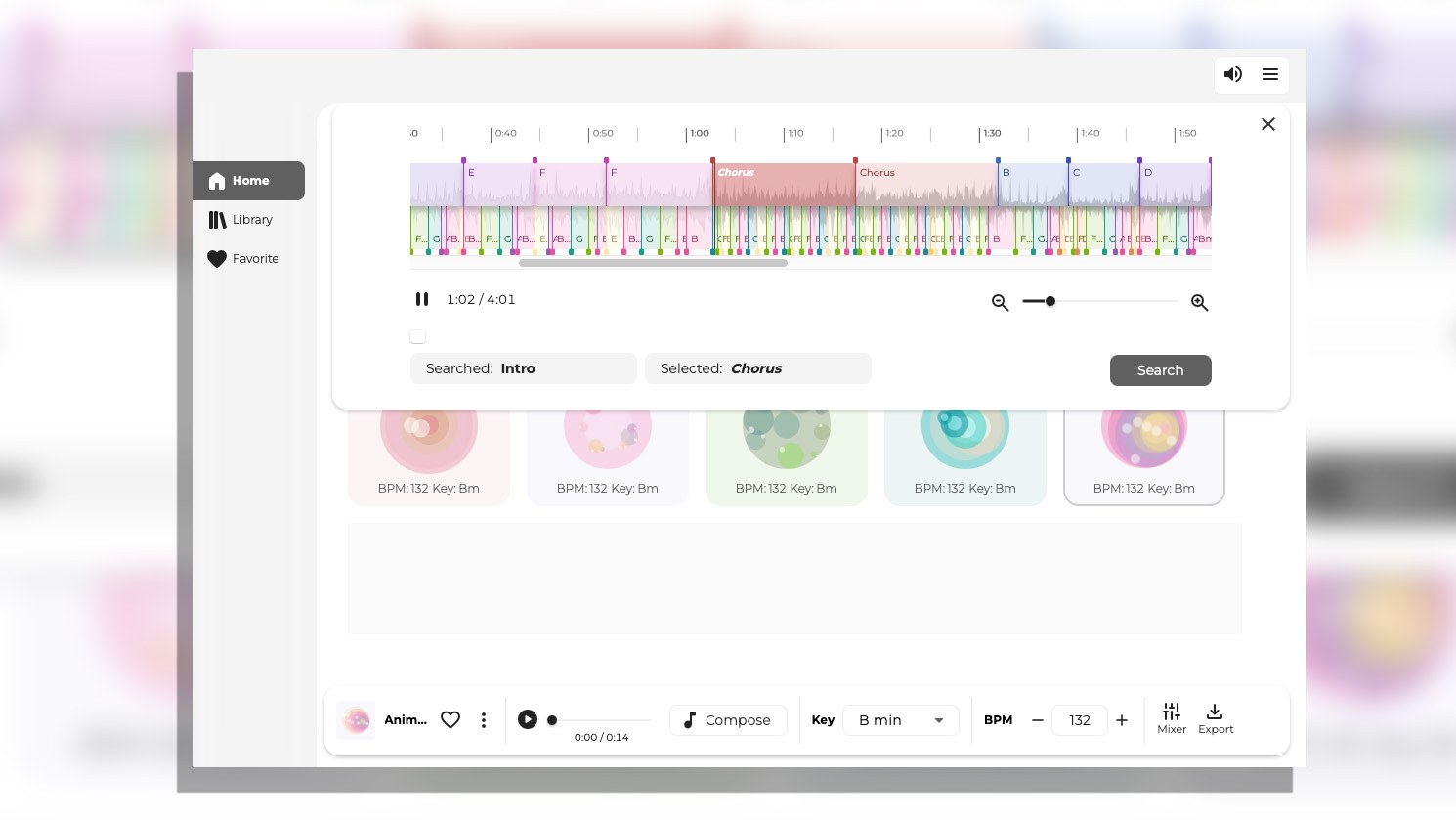
Import a track, a loop, a beat or a half-finished idea and Melody Flip reads its structure, tempo, beat positions, key, chord progression, genre and mood. Then it recommends palettes that sit in the same musical space. In the screenshot above it has parsed a full arrangement, marked the chorus, and used that section as the search input.
Roland says the tool does not copy the melody of whatever you import. It uses the analysis as a reference point and suggests new directions from it. That analysis comes from Sony CSL’s music information retrieval research, which is the part of the partnership doing the heavy lifting.
Roland’s position on AI in music production
Melody Flip arrives in a year when producers have watched a lot of AI arrive uninvited, so Roland spent much of its announcement on framing.
These tools should not replace the artist, but instead amplify them, supporting a workflow where human intent, taste, and creativity remain at the core, with technology acting as a partner or co-creator, rather than a main creator.
The product backs that up in one specific way: Melody Flip never hands you a finished song. It hands you 8 bars and a MIDI export, and the arrangement is still your problem.
How to install Melody Flip and what it runs on
Melody Flip comes through Roland Cloud Manager, version 3.1.23 or later. Every membership level includes it, and that includes the free tier, so you do not need a paid Roland Cloud plan to run it.
Formats are VST3 and AU. It runs on macOS 14, 15 and 26, and on Windows 11.
For a first session, skip the browse-the-library route. Drop in a beat you already have, let Reference Search read it, and compare what comes back against what you would have written yourself. That comparison tells you more in 20 minutes than an afternoon of scrolling palettes, and it is the same test I would apply to any MIDI copilot in a DAW.
Frequently asked questions
When did Roland Melody Flip come out?
Roland released Melody Flip on September 4, 2026, after announcing it in March 2026 and running a free trial from May. The release build is delivered through Roland Cloud Manager version 3.1.23 or later.
How many palettes ship with the Roland Melody Flip release version?
The release version includes roughly 250 palettes covering pop, rock, EDM, R&B, jazz, anime, ambient and other styles. Each palette is a library of musical ideas built from four connected parts, melody, chords, bass and drums, locked to one key and tempo.
How does Roland Melody Flip's Reference Search work?
You import a track, loop, beat or unfinished idea, and Melody Flip analyses its structure, tempo, beat positions, key, chord progression, genre and mood. It then recommends palettes that match that musical character. Roland states the tool does not copy the melody of the imported song.
Which operating systems and plugin formats does Roland Melody Flip support?
Melody Flip runs in VST3 and AU formats on macOS 14, 15 and 26, and on Windows 11. It works as a plugin inside major DAWs, and it can sync tempo and playhead position with the host session.
About the author

Covering AI music tools, industry shifts, and news for music creators and professionals. Twice-weekly newsletter at aimusicpreneur.com.