Lunacy launches NOVA, a cloud instrument platform that runs in your browser and your DAW
My stack My fav 6 tools for AI music after testing 70+
-
 ElevenMusic · Music generation
 -
 Moises · Stem separation
 -
 Controlla · Voice swap & cloning
 -
 Cryo Mix · Mixing + mastering
 -
 Neural Frames · Music videos
 -
 ONCE · Distribution
Some links are affiliate links — I earn a commission at no cost to you. Every tool here is one I run myself and truly believe in. This stack is proven.
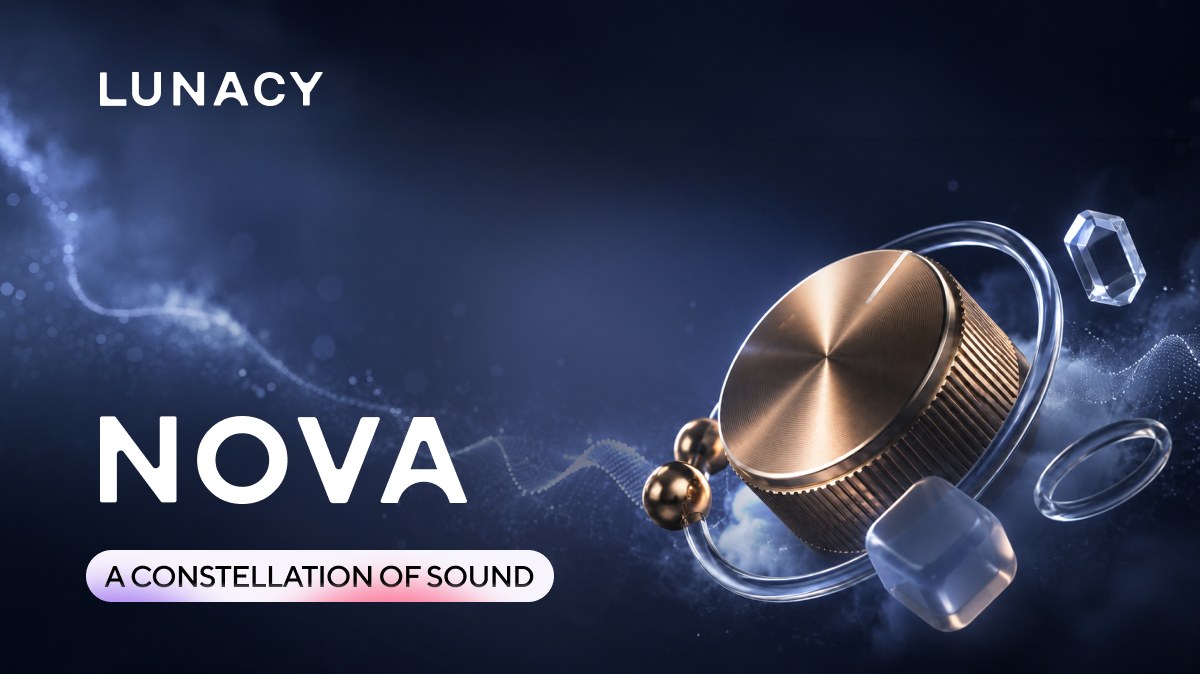
Lunacy Audio, the Los Angeles company behind CUBE and BEAM, opened NOVA on September 17, 2026. It is a library of instruments that live in the cloud, load through a free host plugin in your DAW, and also run straight in a browser with no install at all. The Verge covered it as a development platform, a storefront and a plugin in one, which is three products stacked into a single launch.
What NOVA gives you on day one
The opening collection is instruments, not tools for making instruments. That part comes later.
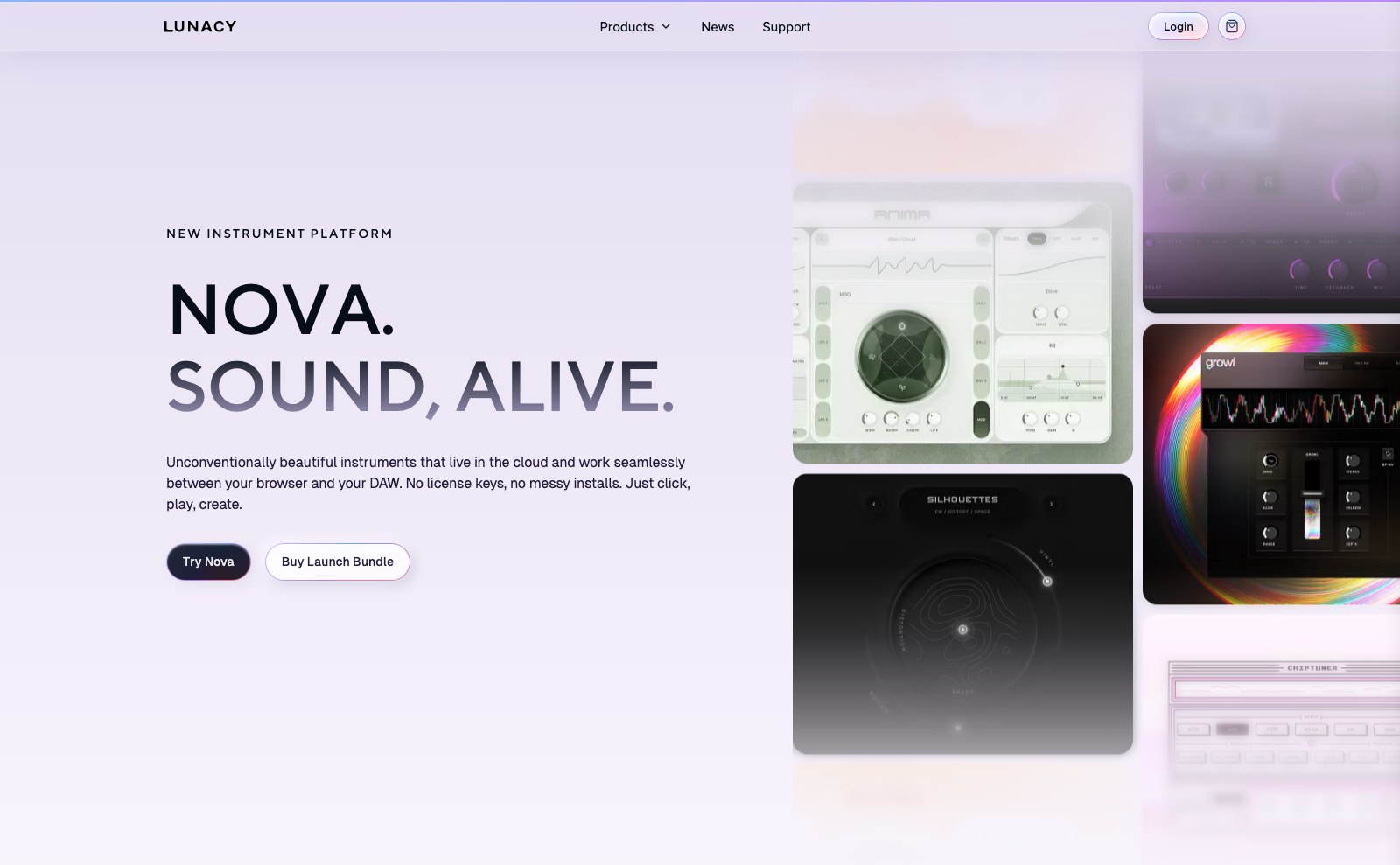
Several are free: Zephyr Strings, a dual-layer arp instrument built from real Budapest Strings recordings with one Intensity macro across dynamics and brightness. Good Vibes, a four-velocity-layer sampled vibraphone. Woodland Piano, a sampled upright with modelled key-release and pedal noise. Silhouettes and Chiptuner round out the free set.
The paid ones are priced like normal plugins rather than a subscription. Swarm, a 16-voice unison synth, is $35 at launch. Anima, an 8-voice phase-distortion synth with a full mod matrix, is also $35. Gleam, a modal resonator with tails up to 20 seconds, is $19.
Compared to the rest of the instrument market that is ordinary pricing, which is worth saying out loud after a year of free-tier launches and subscription tools.
No license keys, no installs, no zip file to email
The friction Lunacy is aiming at is the part of plugin ownership nobody markets: keys, installers, versions, and the moment you send a session to a collaborator who does not own the same instruments.
NOVA instruments stay synchronised between the browser and the DAW, so the session travels rather than the library. That also means the instrument you loaded lives on someone else’s servers, which is the trade you are making.
It is the same direction Audiotool took with its multiplayer DAW, and the opposite of how most plugin companies still ship: an installer, a key, and a folder you back up yourself.
The Builder is the actual bet, and it ships later in 2026
Phase one is a storefront. Phase two is the reason to care: Lunacy says that later this year you will be able to build instruments and effects yourself, then share a finished thing with a link that anyone can open, play and change.
Say someone makes a step sequencer and shares it. You open it and wish you could add a custom shimmer reverb to the end of the signal chain. You can add that, then you can share your new version with a friend, and that friend expands it further. The tools are never fixed; they are always evolving.
Kolb calls the design philosophy soft worldbuilding, and contrasts Lord of the Rings, where every detail is explained, with Spirited Away, where you land somewhere strange and work it out by poking at it. As a pitch for a synth that is either charming or evasive depending on your mood, but it does describe the product.
Whether producers will actually take this
The market Lunacy is walking into has been cold on AI-branded instruments. The Verge points at Endless, which met cautious curiosity at best and open hostility at worst, and that pattern holds across most of the AI plugins I have covered.
Lunacy has built NOVA in public to get ahead of that, posting developer diaries and asking customers what they want while it was still unfinished. It also helps that the launch leads with sampled strings and a vibraphone rather than a generate button.
The comparison worth making is Sonorie’s plugin builder, which also lets people make audio tools without writing code. NOVA adds the part that matters commercially: a storefront, a free host, and a link that opens someone else’s instrument in your session. If the Builder lands as described, the interesting question stops being what Lunacy makes and becomes what its users make on top of it.
Frequently asked questions
What is Lunacy NOVA?
NOVA is an instrument platform from Lunacy Audio, the Los Angeles company behind CUBE and BEAM. The instruments live in the cloud and load through a free host plugin inside your DAW or directly in a browser, with no license keys or separate installs.
Does Lunacy NOVA cost anything to try?
The NOVA Host plugin is free and several launch instruments are free to play, including Zephyr Strings, Good Vibes, Woodland Piano, Silhouettes and Chiptuner. Paid instruments are sold individually, with launch pricing of $35 for Swarm and Anima and $19 for Gleam.
When can you build your own instruments in NOVA?
Lunacy says the Builder features roll out later in 2026. At that point a project can be shared with a single link, opened by anyone, remixed, and used inside their own sessions through the same free host plugin.
Which instruments does NOVA launch with?
The opening collection includes Zephyr Strings, Good Vibes, Woodland Piano, Growl, Gleam, Drift Cassette, Anima, Swarm, Silhouettes and Chiptuner, alongside others from Lunacy and its partners. They span sampled acoustic instruments, modal resonators, lo-fi tape multisamplers and chip synths.
Does NOVA work without a DAW?
Yes. NOVA instruments run directly in a browser, and the free NOVA Host plugin mirrors the same library inside a DAW. Lunacy says the two stay synchronised so a project moves between them.
About the author

Covering AI music tools, industry shifts, and news for music creators and professionals. Twice-weekly newsletter at aimusicpreneur.com.