Uppbeat asked 1,792 creators about AI, and 6.7% accept fully AI-generated work
My stack My fav 6 tools for AI music after testing 70+
-
 ElevenMusic · Music generation
 -
 Moises · Stem separation
 -
 Controlla · Voice swap & cloning
 -
 Cryo Mix · Mixing + mastering
 -
 Neural Frames · Music videos
 -
 ONCE · Distribution
Some links are affiliate links — I earn a commission at no cost to you. Every tool here is one I run myself and truly believe in. This stack is proven.
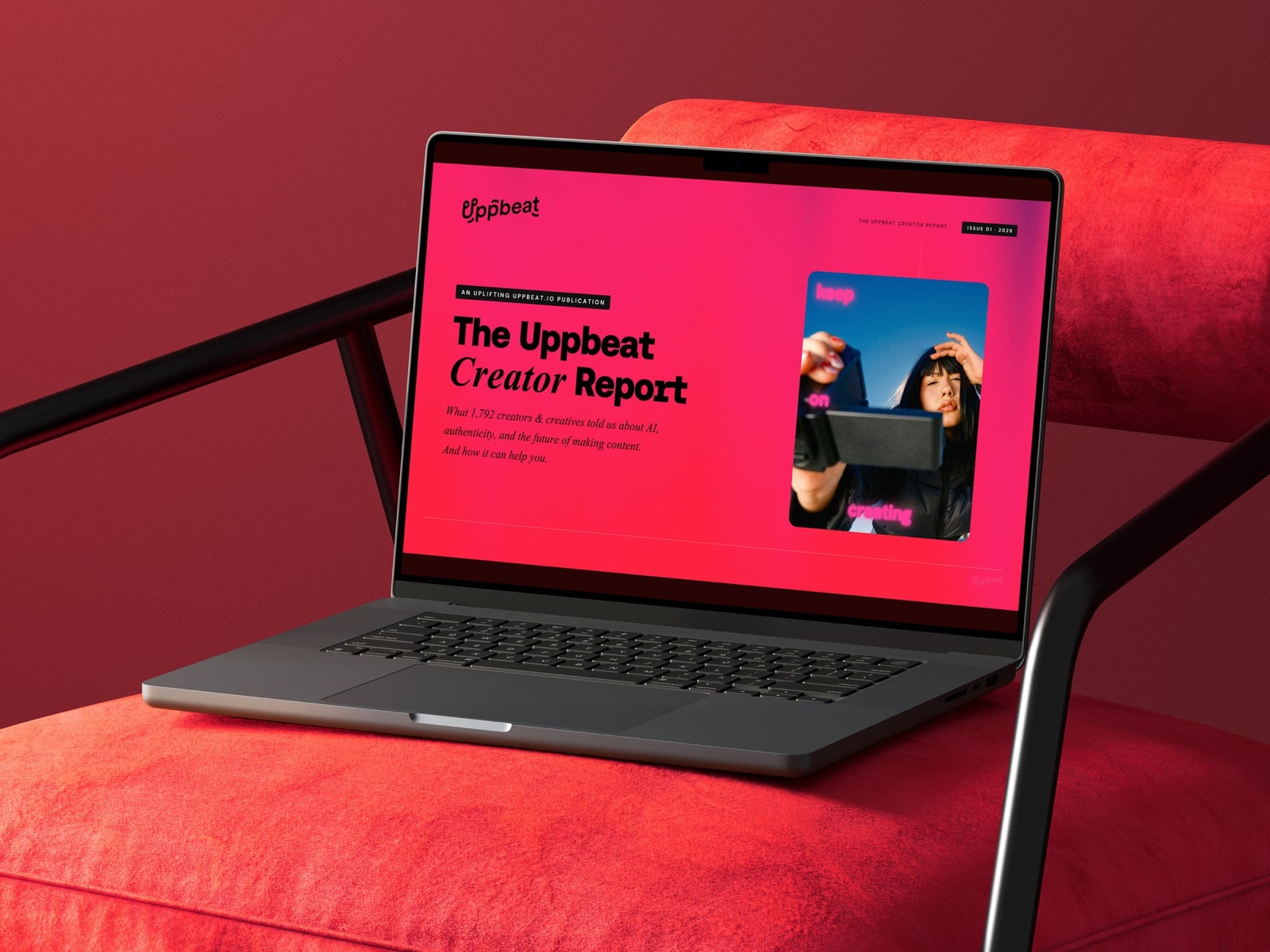
Royalty-free music platform Uppbeat asked 1,792 creative professionals where they stop using AI. The answer sits nowhere near either camp shouting on social media: only 6.7% said fully AI-generated content is acceptable, while close to 60% happily use AI assistance inside their own work.
The Uppbeat Creator Report 2026 ran its survey between February and March 2026, paired it with 13 in-depth interviews, and analysed more than 2,600 open-text answers.
Why 16 to 24 year old creators use the fewest AI tools
The finding that breaks the usual story is generational. Creators aged 16 to 24 were the least likely group in the survey to use AI tools, not the most.
Uppbeat reads it as younger creators deliberately keeping human effort at the centre of their process. There is a simpler reading too: the youngest working creators are the ones competing hardest for attention in feeds already saturated with generated content, so sounding like everyone else costs them the most.
It lines up with what Morgan Stanley found about Gen Z and AI music earlier this year, and it should make anyone building an AI-first content strategy for a young audience check their assumptions.
What “specificity beats volume” means for your next release
Uppbeat’s three themes are aimed at creators rather than platforms, and the first one is the most useful.
Specificity beats volume. With AI making mass production cheap, the creators standing out got narrower rather than louder. More output is the one strategy the machines already win.
Audiences are pushing back quietly. The report describes listeners and viewers rejecting generic automated content and seeking the “messy, emotional, and brilliant” human parts. Quiet rejection is worse than loud rejection, because nobody tells you why the reach dropped.
Authenticity became the scarce good. When synthetic media is unlimited, an individual perspective is the only supply-constrained thing left.
The numbers put a floor under a position musicians have been arguing without evidence. Uploads of AI tracks passed 50% of everything Deezer receives, Spotify started labelling AI personas this week, and Beatport now blocks fully AI-made tracks. Uppbeat’s data explains why platforms keep moving in the same direction: the people making the work already drew this line themselves.
Frequently asked questions
What is the Uppbeat Creator Report 2026?
It is a study published by royalty-free music platform Uppbeat, based on survey responses from 1,792 creative professionals plus 13 in-depth interviews conducted between February and March 2026. It covers which AI tools musicians and video creators use, and which parts of the creative process they refuse to hand over.
How many creators say fully AI-generated content is acceptable?
6.7% of the 1,792 respondents in the Uppbeat Creator Report 2026 said fully AI-generated content is acceptable. Close to 60% said they are happy to use AI assistance inside their own workflow, which puts most creators in the assisted middle rather than at either extreme.
Which age group uses AI tools the least, according to Uppbeat?
Creators aged 16 to 24 were the least likely group in the survey to use AI tools. The finding runs against the assumption that younger creators adopt new technology fastest, and Uppbeat reads it as younger creators protecting human effort in their process.
What are the three main findings of the Uppbeat Creator Report 2026?
Uppbeat analysed over 2,600 open-text responses and named three themes. Specificity beats volume, because mass production is now cheap. Audiences are quietly rejecting overly automated content. And a creator's own perspective is the scarce commodity when synthetic media is unlimited.
About the author

Covering AI music tools, industry shifts, and news for music creators and professionals. Twice-weekly newsletter at aimusicpreneur.com.