Anyone Can Ship an AI Mixing Tool Now. The Real Audio Models Just Got More Valuable.
My stack My fav 6 tools for AI music after testing 70+
-
 ElevenMusic · Music generation
 -
 Moises · Stem separation
 -
 Controlla · Voice swap & cloning
 -
 Cryo Mix · Mixing + mastering
 -
 Neural Frames · Music videos
 -
 ONCE · Distribution
Some links are affiliate links — I earn a commission at no cost to you. Every tool here is one I run myself and truly believe in. This stack is proven.
David Ronan builds AI mixing software for a living, so when the founder and CEO of RoEx says the field is “properly in the era of vibe-coded sh*te” in a post, it lands with some weight. He keeps seeing tools that call themselves AI mixing, then pick EQ and compression straight from the instrument labels in your session. No audio analysis. The model never hears a note.
The easy read is that AI made building these tools trivial, so the whole category is about to commoditize. I read it the other way. The flood of look-alike tools made the companies that process real audio worth more, not less.
Ronan’s bigger point is about cost. Building something that looks like a product has dropped to near zero. Anyone can ship a prototype over a weekend, wrap it in a landing page, and buy the same ad words as a company that spent years on real R&D.
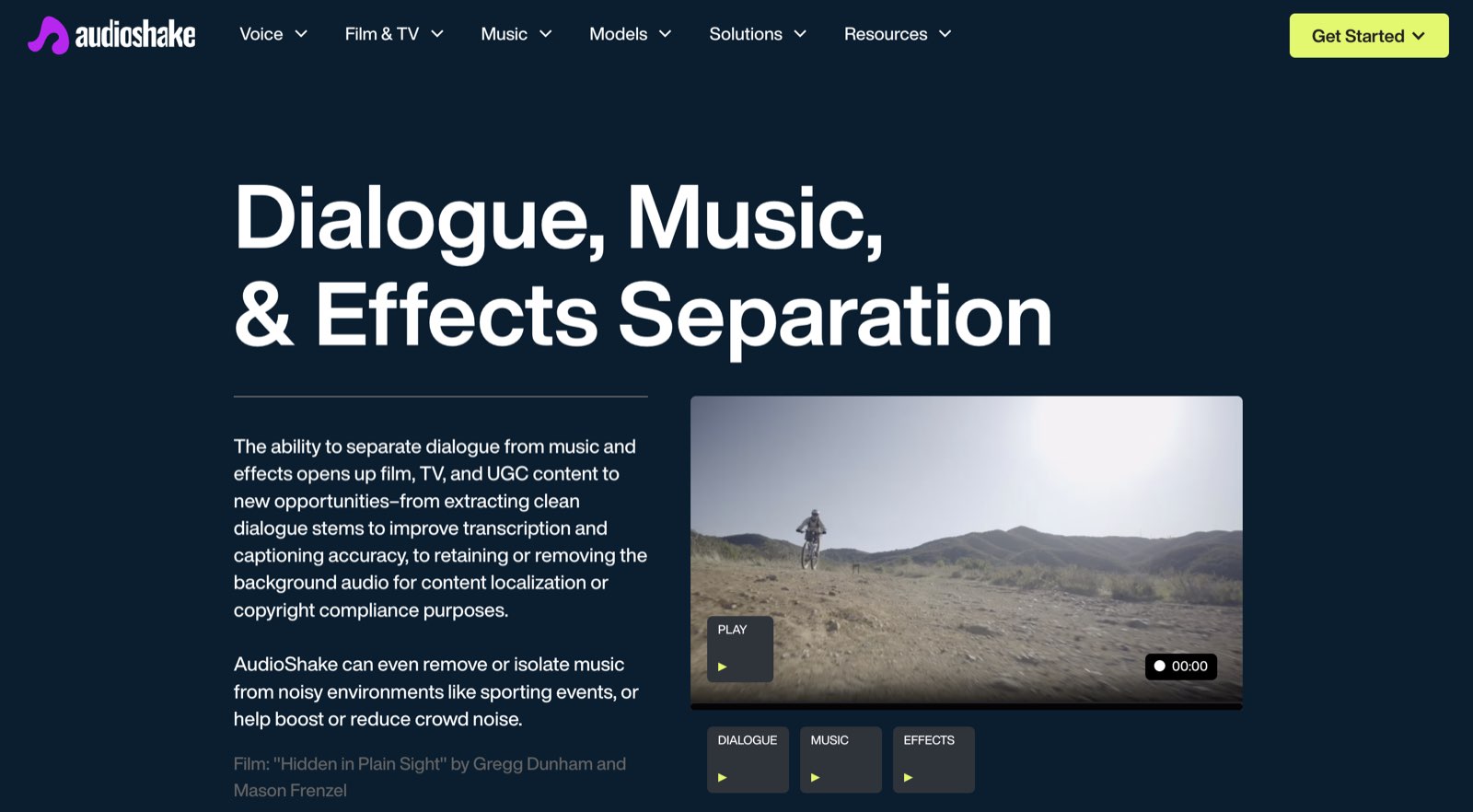
Look at what shipped the same week he posted. AudioShake pulled a clean lead vocal out of a stems-free 1990 mix for the band Push Push, who then rebuilt the song from scratch. Modulate launched a detection API that flags AI vocals and instruments from the audio itself, in 4-second windows. RTM Audio’s UAI detector runs separate vocal and production checks on the signal. Three launches, one thing in common: every one of them listens to the audio. None of them reads a label and guesses.
What a real mixing model knows that a prompt never will
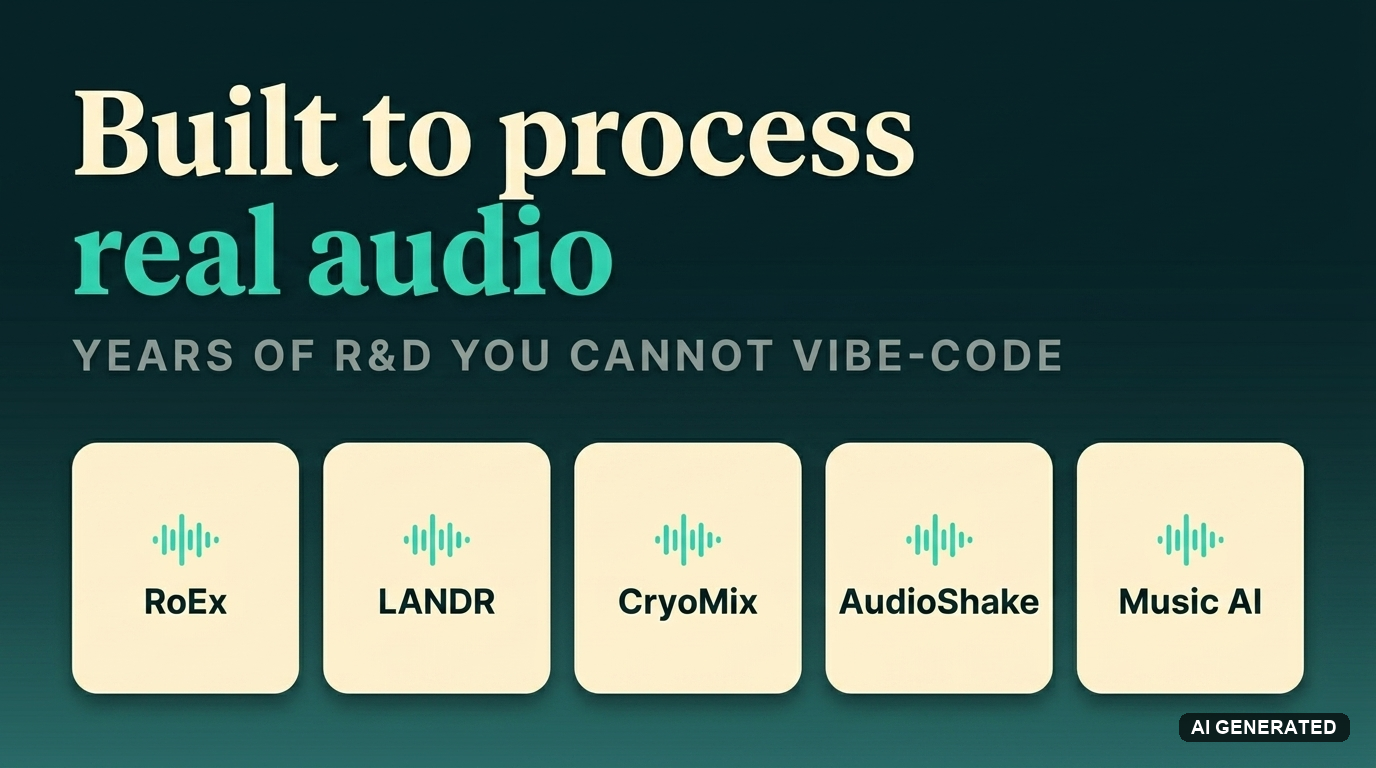
There’s a reason RoEx, LANDR, CryoMix, AudioShake and Music AI pour years and real money into a model that processes audio and hands back a finished mix. A mix is a stack of judgment calls. Knowing how a track should sound, how it should feel, what’s right for metal versus a singer-songwriter demo, lives in the ear, not in the word “bass.”
I learned that in rooms with producers who have worked on records for Slipknot, Machine Head, Robbie Williams and Paloma Faith. Watching them, the call was never “this is a kick, so cut here.” It was “this chorus needs to hit harder, so the kick gives up some low end to the bass.” That decision needs the audio in front of you. A tool that reads “bass” and “kick” off the labels and returns numbers is doing the thing Ronan described: ringing a mix engineer, telling them you have a bass and a kick, and asking how to EQ it, without them ever hearing a note.
That's not mixing. That's a guess with a nice UI.
I use a cockpit-versus-black-box frame in almost everything I write about AI tools. The vibe-coded mixer is the black box at its purest. It isn’t assisting you. It handed every decision to a model that never listened.
Why AudioShake and Music AI lead a space anyone can clone in a weekend
If building looks free, why do the leaders keep pulling ahead? Because the free part was never the value. AudioShake works with Disney Music Group and ESPN, counts more than 40 enterprise customers, and got there because its separation pulls a usable vocal out of a finished record from 1990. Music AI, the company behind Moises, crossed 70 million users on the same kind of real audio analysis, not a prompt wrapper.
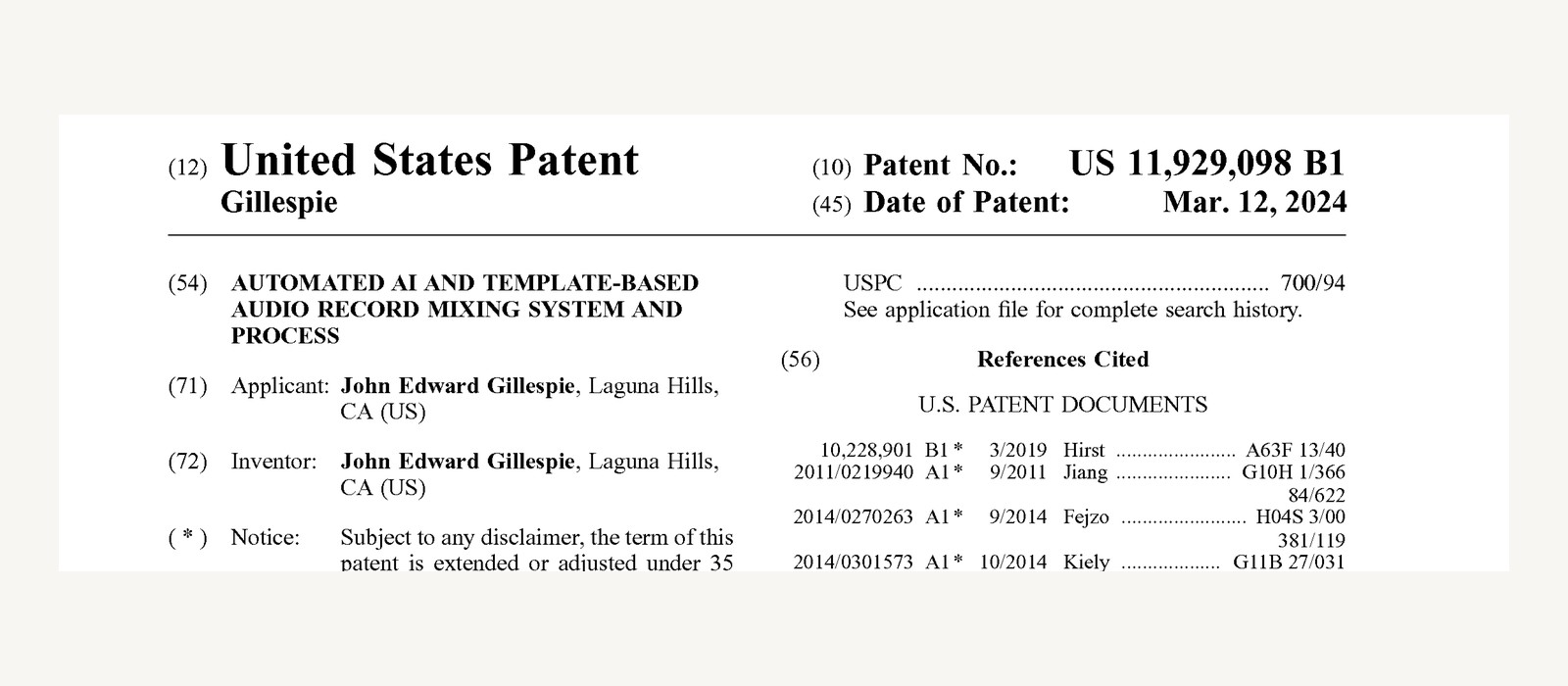
RoEx itself is a Queen Mary University of London spin-out with its mixing systems in the patent process. Ronan did a PhD on intelligent audio production under Josh Reiss, who co-founded LANDR. You cannot vibe-code that. You can’t prompt-engineer a decade of domain expertise, and you can’t vibe-file a patent. When the surface clones for free, the model and the ears behind it become the entire product.
The case for the weekend AI mixing tool
Here’s the fair pushback. Not every tool needs a research lab. A producer who vibe-codes a mixing helper for their own tracks, who already knows the sound they want, gets real use out of it. For a hobbyist messing around on a Sunday, good enough is good enough, and gatekeeping the toolset is the opposite of what I do here. Free and open-source stem splitters are genuinely useful, and I point readers to them often.
The line that matters is whether you are using the tool or selling it. Vibe-code a helper for your own songs and it’s a smart shortcut. Hand a prompt-baked mix to other musicians and creators as a commercial product, and the bar moves. Their tracks span genres, loudness targets and expectations that one prompt template cannot hold. This is why “I built an AI mixing tool for myself” rarely survives contact with paying users.
Where the vibe-coded flood goes from here
My call for the next 6 to 12 months: the app stores and Product Hunt fill with AI mixing and mastering tools, most of them an LLM and a landing page. Then most of them quietly die. Building never got harder. Using them gets disappointing. The first time a clone returns a mix that read the labels and ignored the song, the user hears it, and trust is the one input you cannot prompt.
The companies still standing will be the ones that treated the audio model as the product and the interface as the wrapper: RoEx, AudioShake, Music AI, LANDR. Ronan asked whether IP and patents matter more now than ever. They do, and they are the second moat. The first is the ear, and the years it takes to teach a machine to use one.
About the author

Covering AI music tools, industry shifts, and news for music creators and professionals. Twice-weekly newsletter at aimusicpreneur.com.