RTM Audio launches UAI, an AI music detector that issues a signed certificate per track
My stack My fav 6 tools for AI music after testing 70+
-
 ElevenMusic · Music generation
 -
 Moises · Stem separation
 -
 Controlla · Voice swap & cloning
 -
 Cryo Mix · Mixing + mastering
 -
 Neural Frames · Music videos
 -
 ONCE · Distribution
Some links are affiliate links — I earn a commission at no cost to you. Every tool here is one I run myself and truly believe in. This stack is proven.
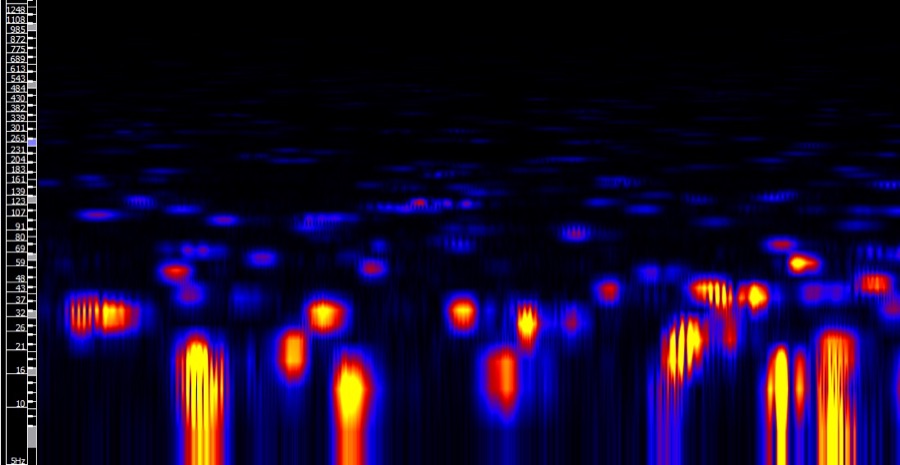
A new Los Angeles startup called RTM Audio launched an AI music detector on June 22, 2026 that hands you a signed certificate, not a percentage. The system, UAI, flags a recording as AI only when two separate checks both agree, and routes anything it’s unsure about to a human instead of forcing a verdict.
The team behind it has studio credentials, according to Music Business Worldwide. CTO Ohad Nissim is a Grammy-nominated mastering engineer, CEO Teezio is a two-time Grammy winner, and COO Calin Enache founded the audio-software company Mixwave. Music attorney Matt Buser rounds out the founding group. The company says four patent applications are in preparation.
How RTM Audio’s UAI decides a track is AI
UAI runs two measurements on every track, one on the production and one on the vocal. It only hard-flags a recording when both signals point the same way. When the system isn’t fully confident, it sends the track to a human reviewer rather than guessing.
Nissim says that design is the point.
The whole point was to build something where a human artist is never accused unless two independent systems both flag the same track, and then you get a certificate, not a confidence score.
The accuracy claim, a 0.06% false-positive rate across 8,236 masters, is RTM Audio’s own internal number. The company says it will commit to that figure in writing in every engagement, recalibrated per catalog. It also points to a 2025 peer-reviewed TISMIR study on the limits of existing detectors as the problem it’s trying to solve.
Why UAI issues a certificate instead of a score
Here’s the real differentiator from every other detector: the output. Each verdict produces a cryptographically signed certificate, bound to a track’s ISRC and verifiable against a published key. RTM Audio formats it for EU AI Act disclosure and DDEX metadata export, and says no other vendor issues a comparable record.
Buser, the attorney, frames why that matters in a courtroom.
“A confidence score is not evidence. When one of these verdicts lands in front of a judge, you need a record the other side can’t wave away.”
That’s a real gap. The Deezer detector and others output a probability. A signed, verifiable certificate is built to survive a dispute, which is a different job than telling a playlist editor a track smells synthetic.
What a binary AI verdict still can’t tell you
A better evidence format doesn’t fix the harder problem. UAI still answers a yes/no question: AI or not. Real catalogs aren’t yes/no. A human song with one AI-generated stem, AI vocals on a live band, a 40-hour production that used an AI tool in the demo phase, all of it gets one of two stamps.
A false-positive fight is the easy case, the kind that wrongly pulled a real artist’s song off Apple Music, and the certificate helps there. The hard case is the track where every signal is true at once, and a binary verdict has nothing useful to say about it, no matter how cryptographically clean the stamp is.
Frequently asked questions
What is RTM Audio's UAI AI music detector?
UAI is an AI music detection system from Los Angeles startup RTM Audio. It runs two separate measurements on each track, one on the production and one on the vocal, and flags a recording as AI only when both agree. Uncertain tracks go to a human reviewer instead of a forced verdict.
How is UAI's signed certificate different from a confidence score?
Every UAI verdict produces a cryptographically signed certificate bound to the track's ISRC and verifiable against a published key. RTM Audio formats it for EU AI Act disclosure and DDEX metadata export, and argues a signed record holds up as evidence in a way a confidence score does not.
How accurate does RTM Audio say UAI is?
RTM Audio reports a 0.06% false-positive rate from internal validation across 8,236 masters, where five tracks were hard-flagged, with a confidence interval at or below 0.14%. The figure is the company's own, not independently audited.
About the author

Covering AI music tools, industry shifts, and news for music creators and professionals. Twice-weekly newsletter at aimusicpreneur.com.