
5 numbers that show Dr. Dre is right about AI in the studio
My stack My fav 6 tools for AI music after testing 70+
-
 ElevenMusic · Music generation
 -
 Moises · Stem separation
 -
 Controlla · Voice swap & cloning
 -
 Cryo Mix · Mixing + mastering
 -
 Neural Frames · Music videos
 -
 ONCE · Distribution
Some links are affiliate links — I earn a commission at no cost to you. Every tool here is one I run myself and truly believe in. This stack is proven.
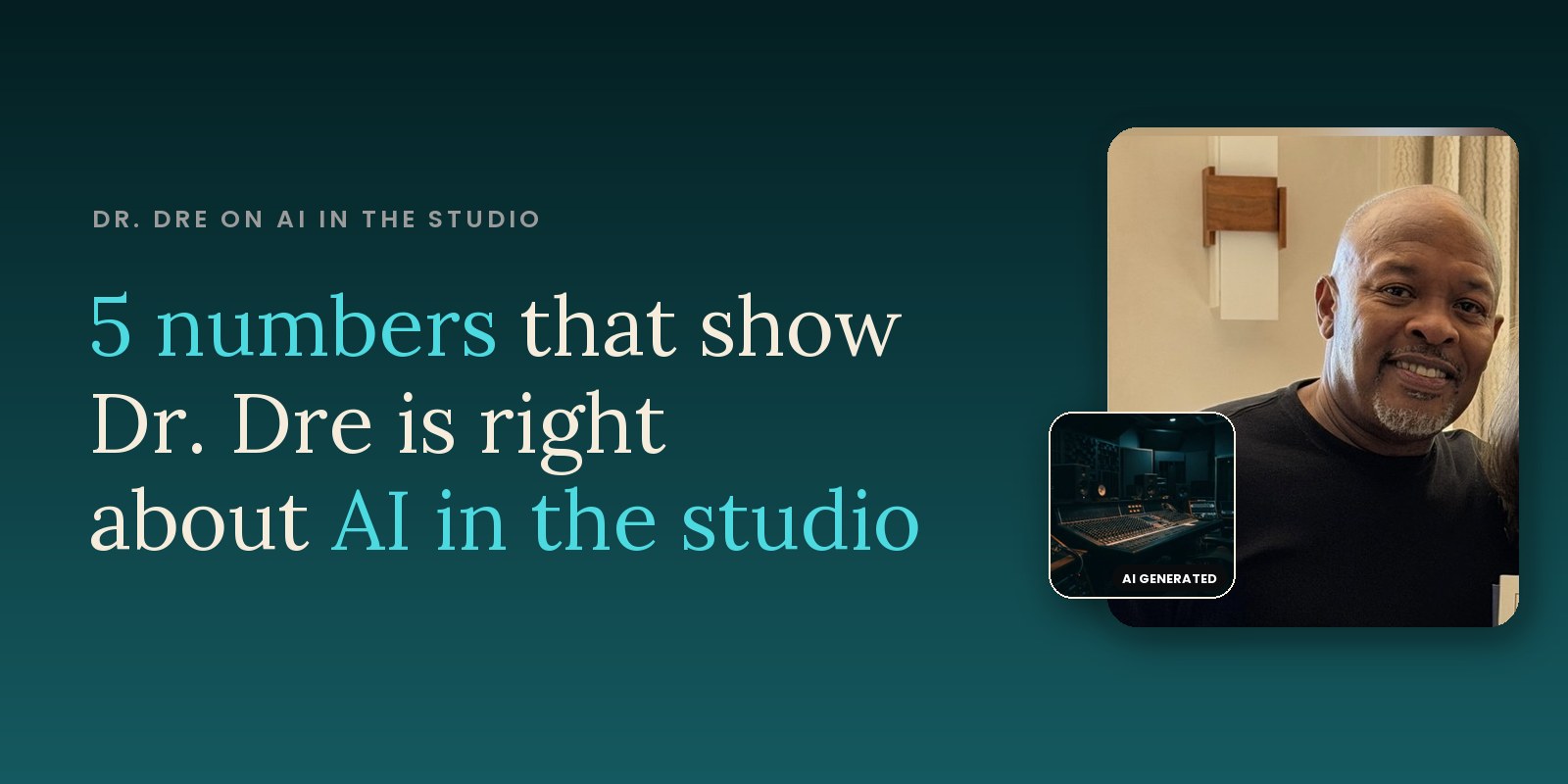
Dr. Dre said he uses AI in the studio, then said the only people who see it as a threat are the people who have trouble creating. The first half of his answer matches every producer survey published since 2024. The second half does not.
The comments ran in The New York Times on August 23, 2026, and the reaction split into applause and calls for him to retire. I wrote up what he actually said the same day. Almost nobody checked whether the data agreed with him.
It does, on the part he got right. Here are 5 numbers that show where Dre is correct about AI in the studio, and the one place his line falls apart.
The 5 numbers behind Dr. Dre’s AI comments
Each number comes from a survey of working musicians or producers, not from a tool company’s launch post. I’ve noted the sample size and the year on every one, because a 2024 number and a 2026 number describe two different rooms.
1. Musicians edit with AI 3 times as often as everyone else
The people closest to the work moved first.
Luminate’s 2026 Midyear Report found the same gap in sentiment: 54% of U.S. musicians feel positive about generative AI tools, against 35% of non-musicians. The group with the most to lose from bad AI music is the group most open to using it.
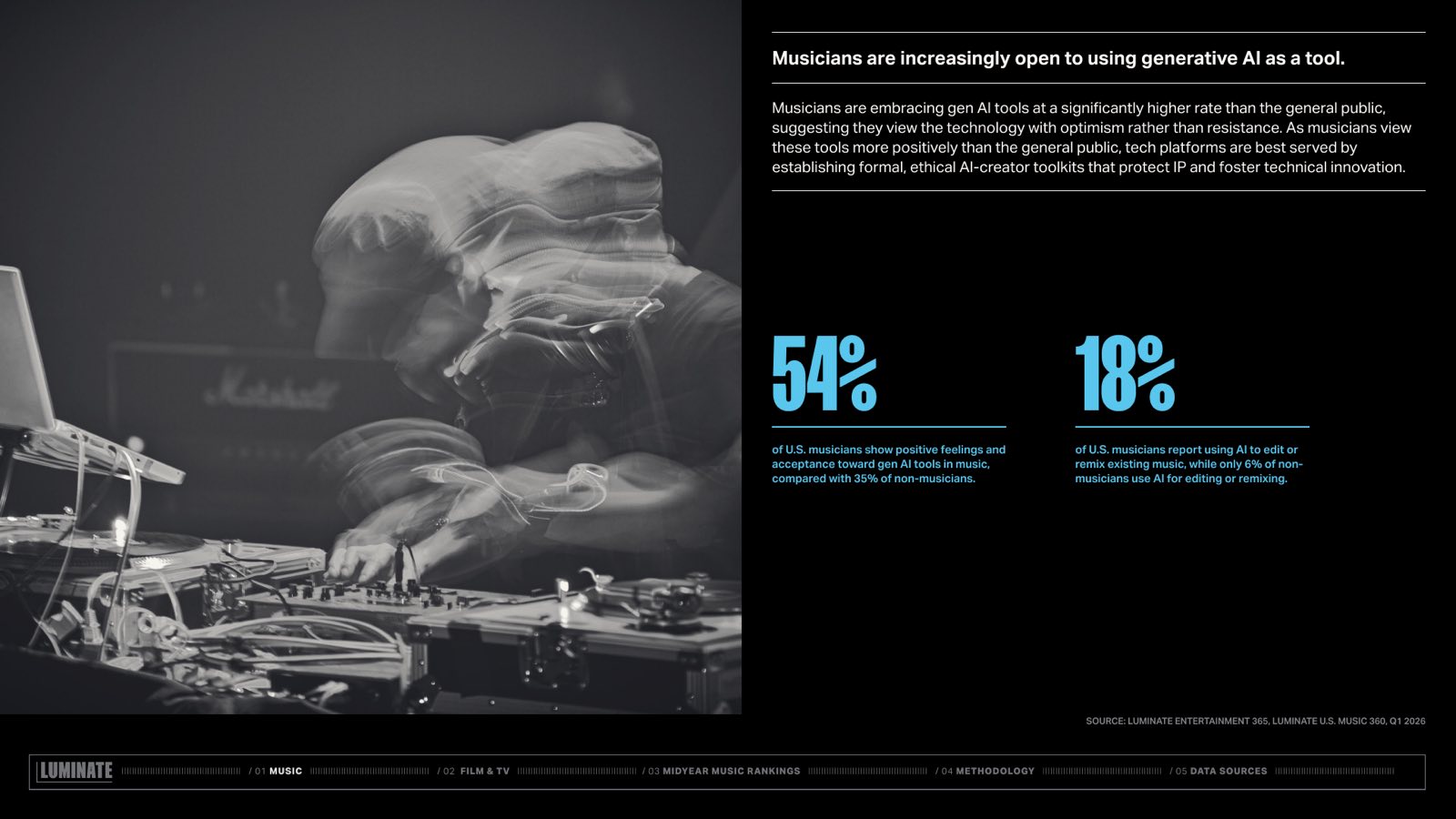
Dre is not an outlier at the top of the industry. He’s describing the majority position among people who make music for a living.
2. Only 3% of the producers using AI build a whole song with it
This is the number the panic never mentions.
Tracklib surveyed producers in 2024 and found 25% using AI in music creation. Of those, 73.9% use it for stem separation, 45.5% for mastering and EQ plugins, and 21.2% for generating elements to drop into a track. 3% use it to create an entire song.
Here’s what producers reach for first:
- Stem separation, to pull a vocal or a drum bus out of a finished file
- Mastering and EQ assistants, to get a reference-level bounce fast
- Element generation, for a pad or a texture inside a session already in progress
Dre described running AI over something he’d already made to hear what it does with it. His workflow sits in the assistive bucket with the 73.9%, not the 3%. If you want the same setup, my roundup of the best AI stem separation tools covers what I use, and Moises is the one I open most.
3. Professionals pay for AI tools twice as often as hobbyists
Money says more than sentiment. Water & Music and Moises surveyed 1,525 musicians between November and December 2025 and published in March 2026.
The study found 78% of professional musicians had used AI for music work in the previous 12 months, against 60% of hobbyists. 21% of pros spend $50 or more a month on AI tools, against 11% of hobbyists.
The income line is the one I keep coming back to. Of the musicians earning from music, 26% said AI raised their earnings and fewer than 4% said it cut them.
4. The drum machine Dre named sold about 12,000 units
Dre told people arguing against AI they sounded like the person who would have been against the drum machine. He picked a good example, and the history is harsher than his version.
Roland built roughly 12,000 TR-808s between 1980 and 1983, got mixed reviews for unrealistic drum sounds, and killed the product when the semiconductors behind that sound ran out. The UK Musicians’ Union spent 1982 pushing a motion to ban drum machines and synthesizers from studios and broadcast.
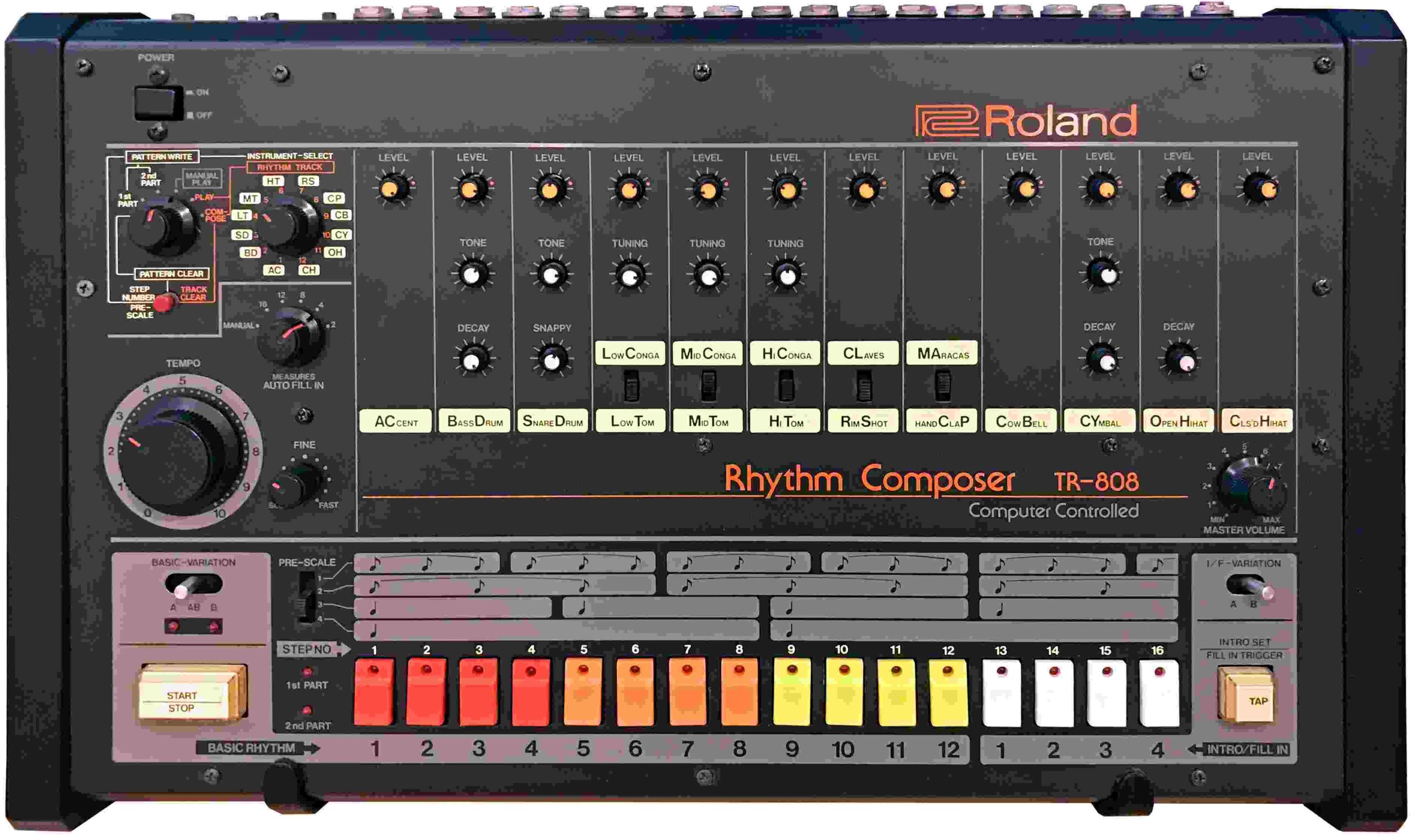
Then Afrika Bambaataa put it on “Planet Rock,” used 808s hit $100 on the second-hand market, and the failed box ended up on more hit records than any drum machine ever built. I’ve written before about how that panic cycle repeats with every new instrument.
5. 57.9% of producers call AI a tool, 8.8% expect full automation
Sonarworks ran a survey of 1,194 music creators with Sound On Sound, published in January 2026. Asked to picture the future of production, 57.9% described AI as a tool under human direction. 8.8% expect full automation.
The same survey names loss of originality as the top concern at 77%, ahead of job displacement at 42%. Producers worry more about music sounding the same than about losing the gig.
Where Dr. Dre’s “trouble creating” line breaks down
I think the only people that see it as a threat are the people who have trouble creating.
The 77% naming originality as their concern are experienced producers, engineers, and songwriters. Their objection is about what happens to music when the floor gets flooded, and no amount of creative ability answers it.
Tracklib’s follow-up study in 2025 covered 1,734 producers. Only 6% use generative tools regularly, 38% are actively against the technology, and 81% want AI-generated music labelled on streaming platforms. 83% want producers to disclose their own use.
Asking for a label is not fear of the desk. It’s a request for the listener to know what they’re hearing, and the producers making it are the same ones running stem separation every week.
Dre also left the harder question untouched. He said nothing about training data, consent, or who gets paid when a model learns from a catalog. Hip hop is the genre pushing back hardest on AI, so his own audience had reason to want that part answered.
What I’d do with these numbers if I produced for a living
The surveys point at one workflow, and it’s the boring one.
Start where the adoption already is:
- Stem separation for cleanup, remixing, and pulling references apart
- Mastering and EQ assistants for a fast reference bounce, then your own ears on the final call
- Generation for elements inside a session, not for the song
Then say what you used. Disclosure is the position 83% of producers already hold, and getting found out later costs more than saying it up front. His business partner Jimmy Iovine says there are closet AI producers all over the industry, and the ones who tell the story themselves come out of it better.
Quick recap of the 5 numbers:
- 18% of U.S. musicians edit or remix with AI, three times the non-musician rate
- 3% of AI-using producers make a whole song with it
- 21% of professionals pay $50 or more a month for AI tools, double the hobbyist rate
- About 12,000 TR-808s were built before Roland pulled the plug
- 57.9% of producers call AI a tool, 8.8% expect full automation
Dre is right about the tool. He’s wrong about the people asking questions, and the survey data shows both at once.
Which of the 5 numbers changes how you work this week?
Frequently asked questions
What do producers actually use AI for in the studio?
Assistive work, not song generation. Tracklib's 2024 producer survey found 73.9% of AI-using producers reach for stem separation and 45.5% for mastering and EQ plugins. Generating elements to drop into a song came in at 21.2%.
How many music producers use AI to create an entire song?
3%. In Tracklib's 2024 survey, a quarter of producers said they used AI at all, and 3% of those used it to make a complete song. Tracklib's follow-up study in 2025 found only 6% of producers use generative tools regularly.
Do professional musicians spend more on AI tools than hobbyists?
Yes, at roughly double the rate. In the Water & Music and Moises survey of 1,525 musicians, 21% of professionals spend $50 or more a month on AI tools against 11% of hobbyists. Among musicians who earn from music, 26% said AI raised their income and fewer than 4% said it cut it.
How many units did the Roland TR-808 sell before Roland discontinued it?
About 12,000, built between 1980 and 1983. Roland pulled the TR-808 once the semiconductors behind its sound became impossible to restock. It went on to appear on more hit records than any other drum machine.
Do music producers want AI-generated music labelled?
Most do. Tracklib's Music Producers & AI 2025 study of 1,734 producers found 81% support clear labelling of AI-generated music on streaming platforms and 83% support producers disclosing their own AI use.
About the author

Covering AI music tools, industry shifts, and news for music creators and professionals. Twice-weekly newsletter at aimusicpreneur.com.