
Rap Fame 2026 report: 75% of underground hip hop artists are rejecting AI
Key highlights
- 75.2% of underground hip hop artists surveyed don’t use AI in their music-making process, with only 2% using generative AI tools regularly
- In every other major genre, 75% of artists DO use AI, according to the Water & Music/Moises 2025 report — hip hop is the outlier
- The rejection isn’t technophobia: 68%+ of the same artists use online tools to find collaborators and structure tracks for TikTok algorithms
Hip hop’s underground is pushing back on AI
You’ve read the headlines. AI adoption in music is accelerating. Every tool company, every industry report, every conference panel says the same thing. But a new survey of 1,500 underground hip hop creators tells a different story.
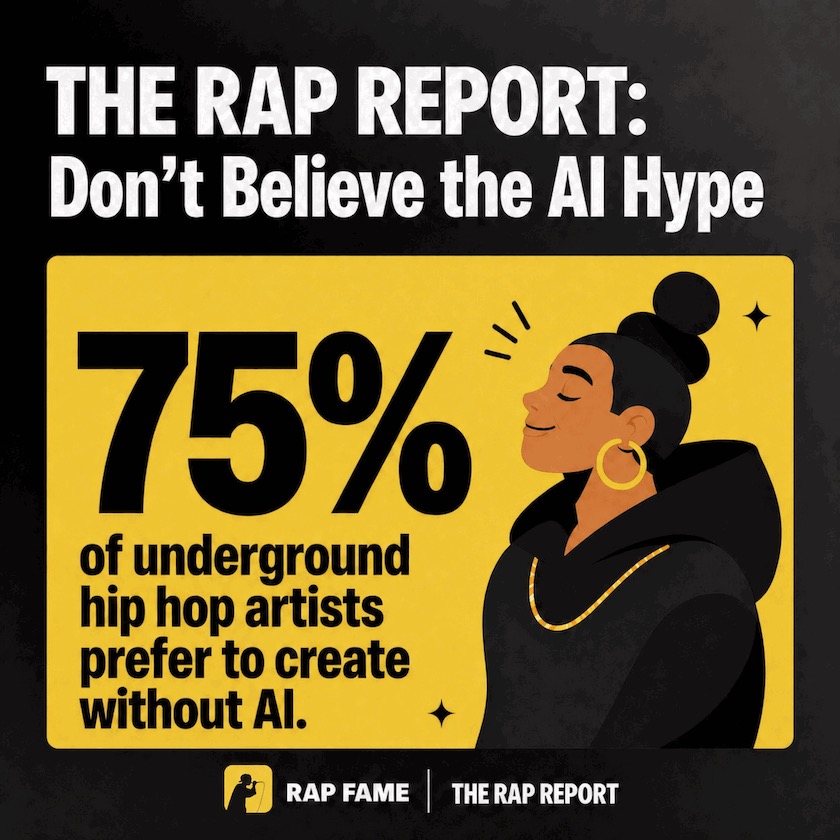
Rap Fame’s 2026 annual report finds that 75.2% of independent hip hop artists on its platform don’t use AI when making music. Only 2% use generative AI tools regularly. Another 18.8% use them sometimes. The rest say no — or aren’t sure.
That’s a striking number on its own. It becomes a different kind of number when you put it next to the Water & Music musician AI report, which found 75% of artists across rock, pop, and jazz DO use AI in their creative process, 78% of professionals, 60% of hobbyists.
Same statistic. Opposite result. Different genre.
What the Rap Fame data actually shows
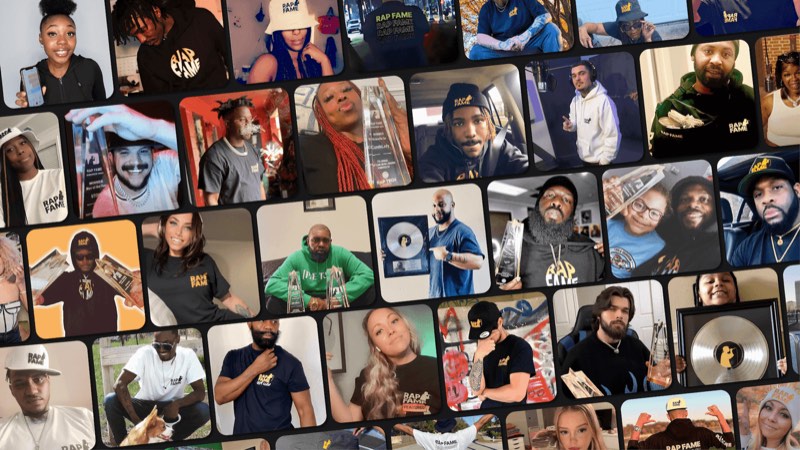
The survey covered ~1,500 creators from Rap Fame’s 1M+ active user base, conducted in early spring 2026. These aren’t passive listeners or hobbyists dabbling once a month. In March 2026 alone, the platform saw 145K tracks shared, one new song every 18 seconds. Track sharing grew 25x since November 2025.
These artists are prolific and digital-native. More than 68% found collaborators online. They front-load hooks, shorten track lengths, and optimize for TikTok virality. Technology is not the problem.
AI specifically is.
The report points to cultural authenticity as the core reason. In hip hop, the process of writing bars and laying beats is how creators process emotions, work through personal struggles, and connect with community. “AI might come in handy for generating art to go along with a single,” the report notes, “but it gets in the way if your goal is sharing your own voice and speaking from the heart.”
30% of Rap Fame users are making sad or emotional beats specifically as an outlet. Multiple creators on the platform cite hip hop as the reason they got sober, managed PTSD, or pulled out of depression. That kind of music doesn’t have an AI shortcut.
The genre gap no AI company is talking about
The takeaway: AI adoption in music is real, but it’s not evenly distributed, and the most culturally resistant genre happens to be the world’s most-streamed one.
The Muse Group 2026 musician survey complicates the “78% open to AI” headline even further: 54% of those musicians only use AI for noise reduction, not generation. The Water & Music survey coverage shows similar nuance, openness and active use aren’t the same thing.
In hip hop, the friction of making music manually is a feature. Authenticity is the genre’s oldest value system. AI generation, by design, removes the friction. That’s exactly why underground hip hop artists don’t want it.
The creator economy serving independent artists is projected to reach $10B by 2030, according to MIDiA Research. A significant chunk of that market is hip hop creators. Any AI tool company counting on uniform adoption across genres is working from the wrong model.
What this means for producers and artists
If you’re a hip hop producer or artist, this data validates something you probably already feel. The resistance to AI in your community isn’t a lag. It’s a stance. And the Rap Fame numbers suggest it’s widespread and deliberate.
If you work in AI music tools, the implication is harder: hip hop’s underground may be structurally resistant to generative AI adoption, not because of ignorance, but because the tools solve the wrong problem. Discovery and promotion remain the real pain point, nearly 70% of Rap Fame artists named it their biggest struggle. An AI that helps with visibility, not with making bars, is a different pitch entirely.
The Suno copyright guardrails story and broader label negotiations don’t help either. Underground hip hop artists who care about voice and ownership have every reason to watch what AI companies do with their music before they hand anything over.
Frequently asked questions
Why do underground hip hop artists reject AI music tools?
The Rap Fame 2026 report points to cultural authenticity as the main driver. In hip hop, writing lyrics and making beats is how artists express themselves and process personal experiences. Generative AI replaces that process rather than supporting it, which conflicts with the genre’s core values around voice and lived experience.
How does hip hop AI usage compare to other music genres?
Hip hop artists are the outlier. The Water & Music/Moises 2025 report found 75% of artists in genres like rock, pop, and jazz use AI in their creative process. The Rap Fame survey found the same percentage — 75.2% — actively not using AI in hip hop. The numbers are nearly identical, but reversed.
Are hip hop artists anti-technology overall?
No. Over 68% of Rap Fame artists found collaborators online and use digital tools to create music together. They also optimize tracks for TikTok algorithms, shortening structures and front-loading hooks. The resistance is specific to generative AI, not technology in general.
What do underground hip hop artists struggle with most?
Discovery and promotion. Nearly 70% of Rap Fame survey respondents identified it as their biggest challenge as independent artists. That’s where AI tools targeting this audience would find more genuine demand than in the music-generation space.
About the author

Covering AI music tools, industry shifts, and news for music creators and professionals. Twice-weekly newsletter at aimusicpreneur.com.


