Suno copyright guardrails bypassed with Audacity speed trick, The Verge finds
My stack My fav 6 tools for AI music after testing 70+
-
 ElevenMusic · Music generation
 -
 Moises · Stem separation
 -
 Controlla · Voice swap & cloning
 -
 Cryo Mix · Mixing + mastering
 -
 Neural Frames · Music videos
 -
 ONCE · Distribution
Some links are affiliate links — I earn a commission at no cost to you. Every tool here is one I run myself and truly believe in. This stack is proven.

Key highlights
- Slowing a track to half-speed or speeding it to double in Audacity bypasses Suno’s copyright filter; adding white noise to start and end makes it near-consistent
- Pasting copyrighted lyrics past Suno’s guardrails also works; The Verge verified with Beyoncé’s ‘Freedom’ and Black Sabbath’s ‘Paranoid’
- The resulting AI tracks can be uploaded directly to streaming platforms, creating a pipeline from copyrighted source to distributed output
Suno’s copyright filters fall apart under basic manipulation
Suno built copyright detection into its audio upload feature to screen for copyrighted material before it can seed new AI music. The Verge tested it and found a free audio editor breaks it. Slow a track to half-speed or speed it to double tempo in Audacity before uploading, and the filter often misses it. Add white noise bursts at the start and end, and The Verge reported it “basically guarantees success.” Restore the original speed and trim the noise inside Suno Studio: the copyrighted song is now seeding a new AI track.
Lyric detection has the same gap. The Verge pasted in lyrics from Beyoncé’s ‘Freedom’ and Black Sabbath’s ‘Paranoid’, both passed, and the output was distributable to streaming platforms.
What the source reported
The Verge’s investigation focused on the audio upload feature Suno frames as a tool for musicians to edit or cover their own original material. The copyright detection layer is supposed to enforce that boundary. According to the report, it doesn’t survive a 10-minute Audacity session. The Music Ally report on the findings notes that label lawyers are likely to read the investigation closely: Suno settled with Warner Music Group in 2026 but remains in active litigation with Universal Music Group and Sony Music Entertainment.
Suno’s CEO previously acknowledged the company trained on copyrighted material. The upload feature was added as a production tool. Whether its copyright detection counts as a genuine compliance measure or a token guardrail is now the question in front of the remaining label plaintiffs.
Why it matters for producers using Suno
Streaming platforms have been tightening AI music policies since 2025. Spotify, Deezer, and TikTok SoundOn all have detection systems on the receiving end. Suno’s gap is on the sending end.
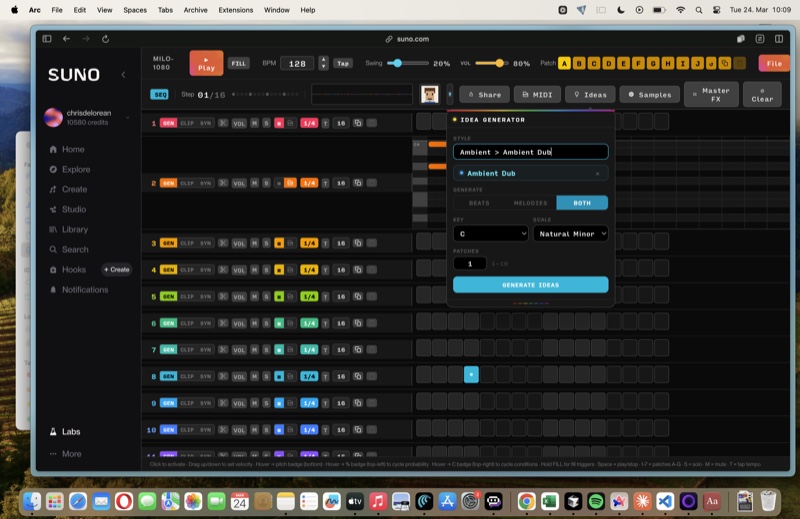
For producers using Suno’s upload features legitimately: the same pipeline that lets you work from your own stems is the one The Verge showed routing copyrighted material through. The MILO-1080 step sequencer launched in March 2026, positioning Suno toward professional producers. That ambition makes the guardrail gap harder to dismiss.
Frequently asked questions
How did The Verge bypass Suno’s copyright detection?
By slowing a copyrighted track to half-speed or speeding it to double tempo in Audacity before uploading to Suno Studio. Adding white noise to the start and end of the file made bypassing the filter nearly consistent.
Can Suno-generated music from copyrighted seeds be uploaded to Spotify?
According to The Verge’s investigation, yes. Once the manipulated upload passes Suno’s filter and generates a new track, that output can be distributed to streaming services.
Does this affect Suno’s ongoing lawsuits?
Suno settled with Warner Music Group but remains in litigation with Universal and Sony. The Verge’s findings document a specific technical weakness in Suno’s stated compliance measures, which label attorneys are likely to reference.
Is the audio upload feature part of Suno’s paid plans?
The audio upload and editing feature in Suno Studio is available to paid subscribers. The Voices feature, which captures a singing voice for AI generation, is Pro and Premier only.
About the author

Covering AI music tools, industry shifts, and news for music creators and professionals. Twice-weekly newsletter at aimusicpreneur.com.