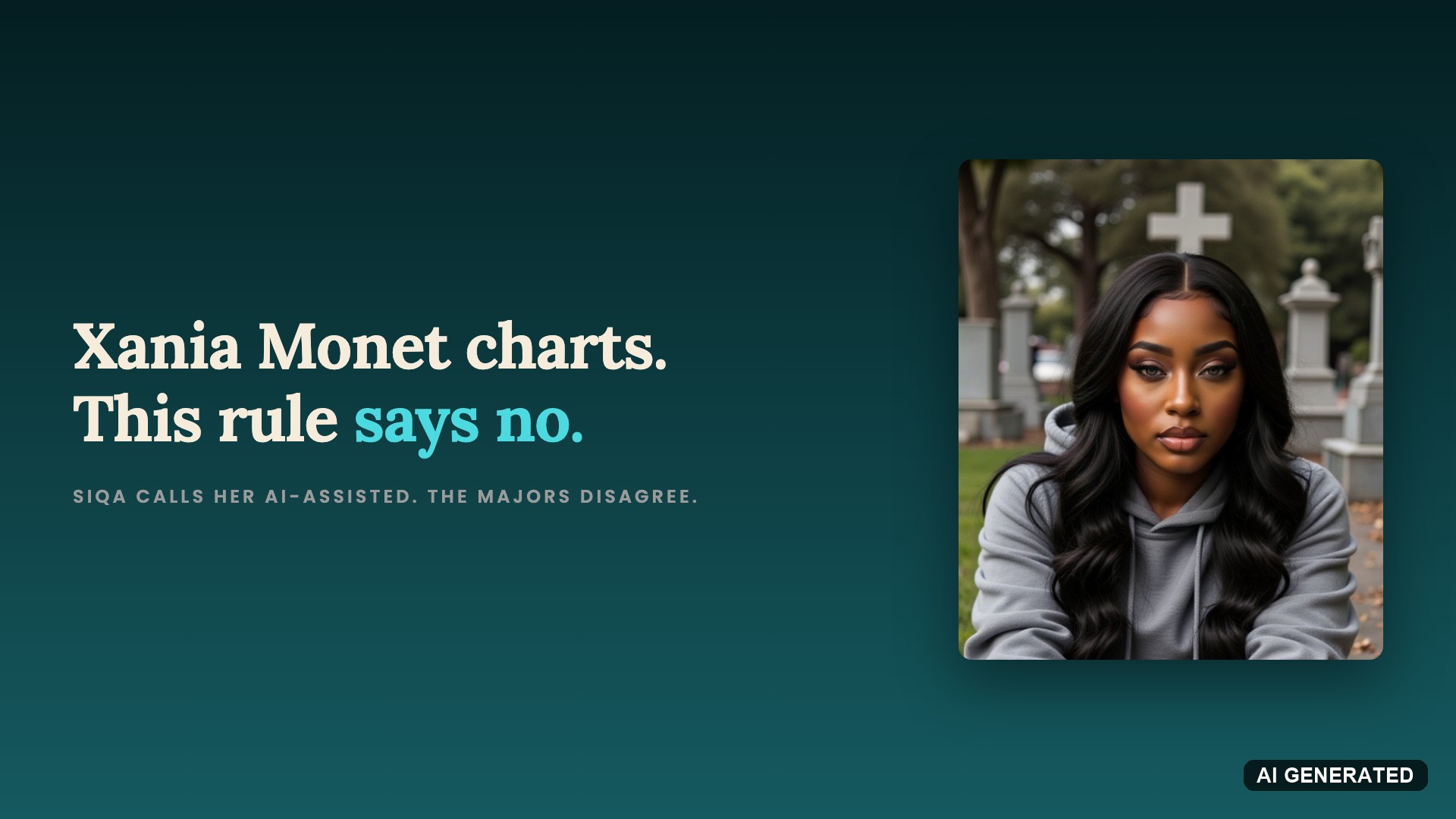
ARIA's AI chart ban is now live, and enforcement is the hard part
My stack My fav 6 tools for AI music after testing 70+
-
 ElevenMusic · Music generation
 -
 Moises · Stem separation
 -
 Controlla · Voice swap & cloning
 -
 Cryo Mix · Mixing + mastering
 -
 Neural Frames · Music videos
 -
 ONCE · Distribution
Some links are affiliate links — I earn a commission at no cost to you. Every tool here is one I run myself and truly believe in. This stack is proven.
Australia’s AI chart ban is no longer an announcement. With the chart dated August 31, 2026, recordings generated wholly or primarily by AI are ineligible for the ARIA Charts under the updated Charts Code. I covered the ban itself when ARIA announced it. This piece is about the part that starts now: making it stick.
The rule sounds clean. A recording that used generative AI stays eligible only when it is substantially human-made and raises no stream or chart manipulation concerns. Drawing that line on a Tuesday, on a real track, with real chart positions and real money attached, is where it gets messy.
How ARIA decides what counts as AI-generated
ARIA will apply the definitions from the AI labelling standard the global music industry announced on July 10, 2026, the same framework behind the chart eligibility principles the major labels proposed in July. ARIA says it will keep the Code under review as the technology develops.
ARIA CEO Annabelle Herd frames the intent as protecting human artistry without freezing out artists who use AI tools:
Artists already use AI tools in their work, the Charts can and should evolve to keep room for that, but music generated wholesale by services built on artists' recordings is a different matter.
The rule got a live test before it even existed. Queensland DJ Josh Fawaz’s cover of Madonna’s “Like a Prayer” became Australia’s most-played song on radio and reached number 4 on two ARIA charts in July, while questions swirled about its production. Fawaz later added Spotify credits identifying generative AI vocals and AI drums.
Under the new Code, a track like that gets judged on whether it is substantially human-made. The song stayed at number 4 on the Australian Singles Chart as of the August 24 chart, so ARIA’s answer, at least for this one, appears to be yes.
Why enforcing the ARIA AI ban is harder than writing it
Here’s the enforcement problem in one sentence: the Code regulates a process, but a chart body only ever sees the finished file. Detection tools read audio. They can’t see whether a human spent 40 hours arranging around one AI stem or 10 seconds on a text prompt. So the system leans on declarations, the AI transparency metadata that labels and distributors attach upstream, and on a committee’s judgment when declarations and reality drift apart.
Con Raso, co-founder of streaming infrastructure company Tuned Global, made this point in a Hypebot expert roundup published August 31: “What matters is transparency. Listeners, platforms and rights holders need to understand how a piece of music was created, who contributed to it and what rights sit behind it. Clear attribution and metadata will become increasingly important as AI-generated and AI-assisted music grows.”
Raso also warns against rules that “inadvertently discourage artists from experimenting with new technology.” The scale of what platforms have to sort is already visible: Deezer detects tens of thousands of fully AI tracks arriving daily, and Luminate is bolting an AI-generated flag onto the industry’s measurement layer.
And Australia isn’t alone anymore. IFPI Finland shut its official chart to AI music the same week, with a stricter twist: eligible tracks must also be made with properly licensed AI tools. Two national charts drew their lines within days of each other. More will follow, and each one inherits the same enforcement question.
Frequently asked questions
How will ARIA enforce its ban on AI-generated music in the charts?
ARIA applies the definitions from the AI labelling standard announced by the global music industry on July 10, 2026 to separate AI-generated from AI-assisted recordings, and says it will keep the Charts Code under review as AI technology develops. The system leans on labels and distributors declaring how a track was made, since finished audio rarely proves its own process.
Which countries ban AI music from their official charts in 2026?
Australia and Finland. ARIA's ban on wholly or primarily AI-generated recordings took effect with the chart dated August 31, 2026, and IFPI Finland updated the Official Finnish Chart rules the same week to exclude AI-generated recordings unless they are predominantly human-made with licensed tools.
What did Con Raso of Tuned Global say about the ARIA AI chart ban?
Raso called ARIA's move an understandable attempt to protect human artistry but said chart eligibility is only one part of a bigger issue. He argues platforms need mechanisms to identify AI content, manage its rights and royalties, and that clear attribution and metadata matter more than any single ban.
Does the ARIA chart ban stop AI music from streaming in Australia?
No. The ban only affects eligibility for the ARIA Charts. AI-generated tracks can still be distributed, streamed, and monetized on Spotify, Apple Music, and every other platform operating in Australia. The Code controls the scoreboard, not the market.
About the author

Covering AI music tools, industry shifts, and news for music creators and professionals. Twice-weekly newsletter at aimusicpreneur.com.