






Vocal Enhancers
A vocal enhancer cleans and polishes a vocal you already recorded, cutting noise and room, evening out level, and applying EQ and compression toward a finished sound. An AI vocal enhancer rescues a usable take from an untreated room, though nothing recovers a clipped one. This directory tracks the tools I follow and what each costs.
Tools for this job
Learn: guides to do it yourself
No guides match these filters yet. Reset a filter to see more.
Vocal Enhancers: common questions
What does a vocal enhancer do?
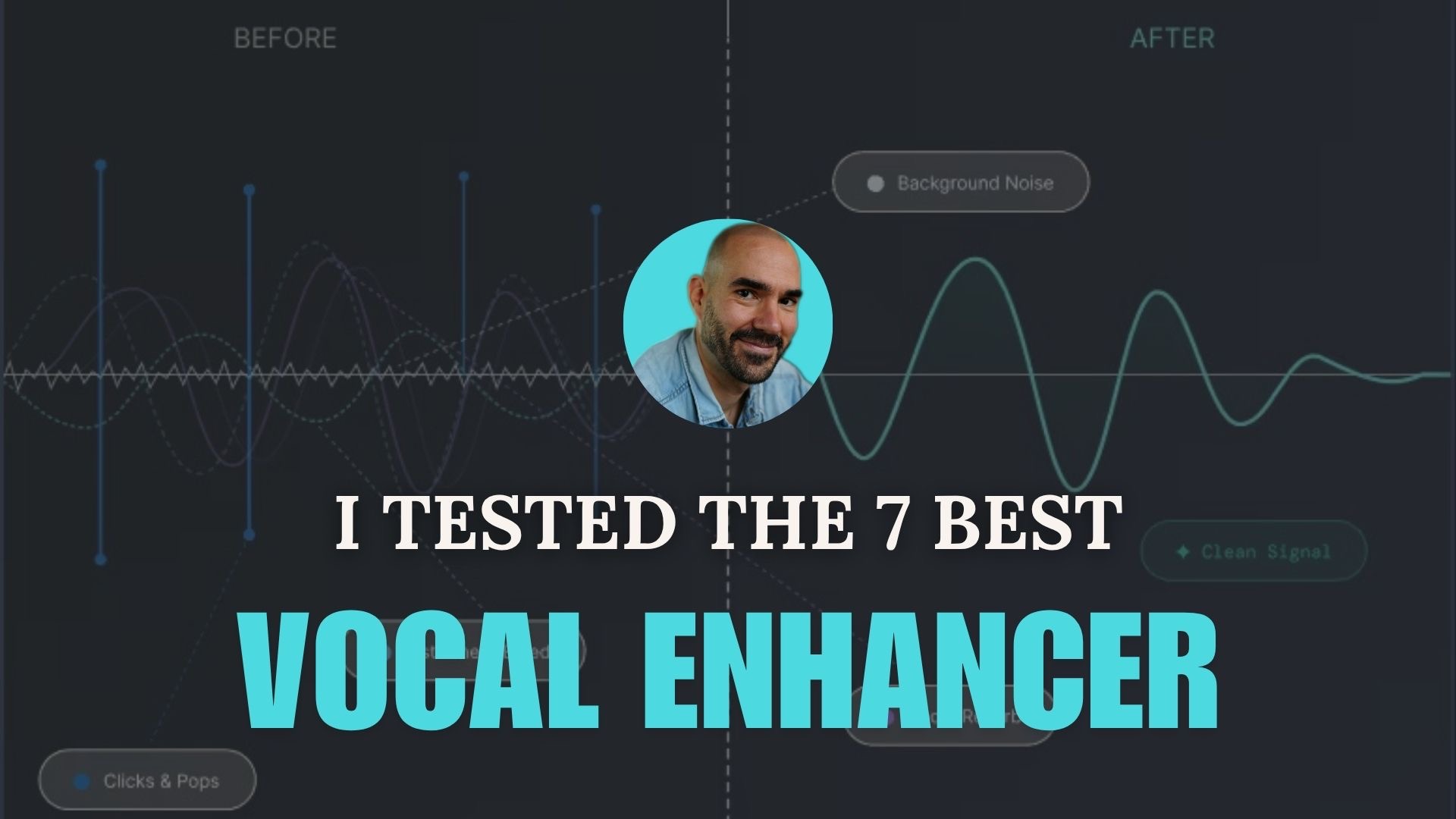
It cleans and polishes a recorded vocal: reducing noise and room, evening out level, and applying EQ and compression toward a finished sound. It improves a take you already have rather than generating one. I tested the field in the 7 best vocal enhancers roundup.
Can a vocal enhancer fix a bad recording?
It can rescue a usable take recorded in a poor room. It cannot recover a distorted, clipped, or badly performed one. Room reflections and background noise are treatable; a clipped waveform has lost information nothing puts back.
Is a vocal enhancer the same as AI mixing?
No. A vocal enhancer treats one track. AI mixing balances every stem against each other. Enhance the vocal first, then mix.
Do you still need a good microphone if you use a vocal enhancer?
Yes, and more than most people expect. These tools scale with input quality: a clean take through a modest microphone in a treated corner beats an expensive microphone in a reflective room every time.