SeatGeek builds Ask SeatGeek into its search bar instead of bolting on a chatbot
My stack My fav 6 tools for AI music after testing 70+
-
 ElevenMusic · Music generation
 -
 Moises · Stem separation
 -
 Controlla · Voice swap & cloning
 -
 Cryo Mix · Mixing + mastering
 -
 Neural Frames · Music videos
 -
 ONCE · Distribution
Some links are affiliate links — I earn a commission at no cost to you. Every tool here is one I run myself and truly believe in. This stack is proven.
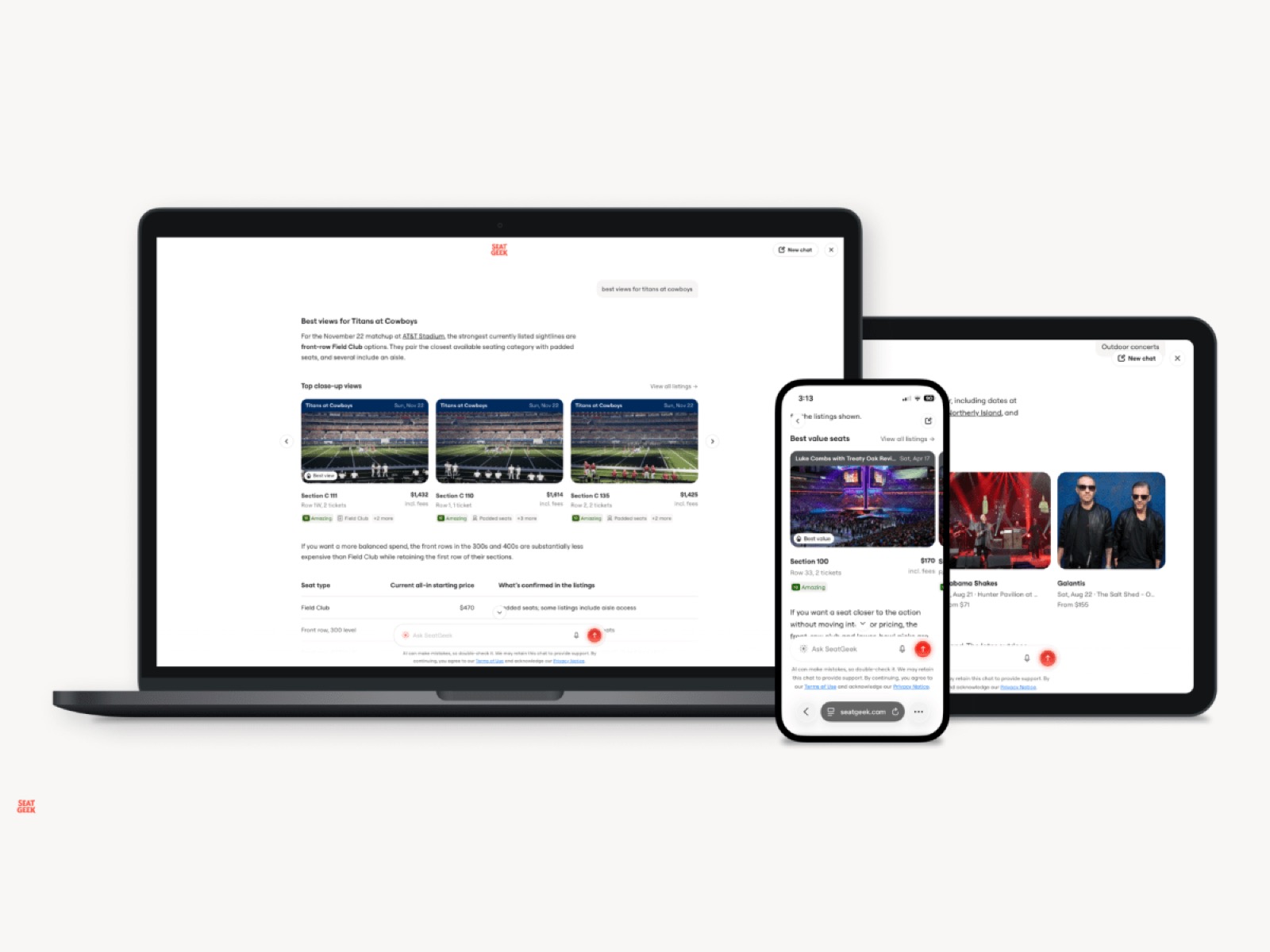
SeatGeek launched Ask SeatGeek, a conversational AI search that lives inside the marketplace’s existing search bar. The company calls it “a conversational AI search experience,” and the placement is the detail worth reading twice: it sits in the search field “rather than sitting off to the side as a separate chatbot,” Music Ally reported.
You type what you want the way you would say it out loud. No date pickers, no price sliders.
Fans can now turn search into a conversation, describing what they're looking for the way they'd describe it to a friend.
Why putting AI search in the search bar matters more than it sounds
A chatbot in a corner is a feature people have to decide to open. A search bar is the thing everyone already uses.
Most ticketing AI so far has gone the other way. Rival services connect through Claude, ChatGPT and Gemini, or integrate with Alexa+ and smart speakers, which hands the conversation to someone else’s assistant. SeatGeek did that too: it launched inside ChatGPT in March 2026, alongside Ticketmaster and Spotify chasing the same lane.
What SeatGeek is promising event promoters
The pitch to promoters is that a conversation sells better than a filter. SeatGeek says events surface with “the full context fans need to buy confidently, well beyond a price and a section.”
That framing matters for anyone selling tickets to their own shows. A fan asking for something loose, a good show near them next month under a certain price, is a fan who has not decided yet. Search results that answer in that register reach people before they have picked the artist.
What Ask SeatGeek means if you are booking your own shows
Nothing changes in how you list a show. What changes is what a fan’s search can match against.
Structured search rewards the artists people already know by name. Conversational search rewards descriptions, so venue, genre, date range and the feel of the night start doing work that only an artist name used to do. If your event listings carry thin detail, they have less to match on.
Whether any of that converts is unproven. SeatGeek has not published data on how Ask SeatGeek performs against its standard search, and the industry-wide question of how much ticketing actually moves to AI agents is still open.
Frequently asked questions
What is Ask SeatGeek and how does it work?
Ask SeatGeek is a conversational AI search feature built into the SeatGeek marketplace. Instead of filtering by date and price, you describe what you want in plain language, the way you would tell a friend. SeatGeek launched it in August 2026 and placed it inside the existing search bar rather than in a separate chat window.
How is Ask SeatGeek different from SeatGeek's ChatGPT integration?
The ChatGPT integration puts SeatGeek inventory inside someone else's assistant, so the conversation happens on OpenAI's surface. Ask SeatGeek runs on SeatGeek's own site and app, which means SeatGeek keeps the customer relationship and the data from the search.
What does SeatGeek say Ask SeatGeek does for event promoters?
SeatGeek is telling promoters that natural-language conversations can lift sales because events surface with fuller context than a price and a section number. The company says fans get the information they need to buy confidently at the moment they are describing what they want.
About the author

Covering AI music tools, industry shifts, and news for music creators and professionals. Twice-weekly newsletter at aimusicpreneur.com.