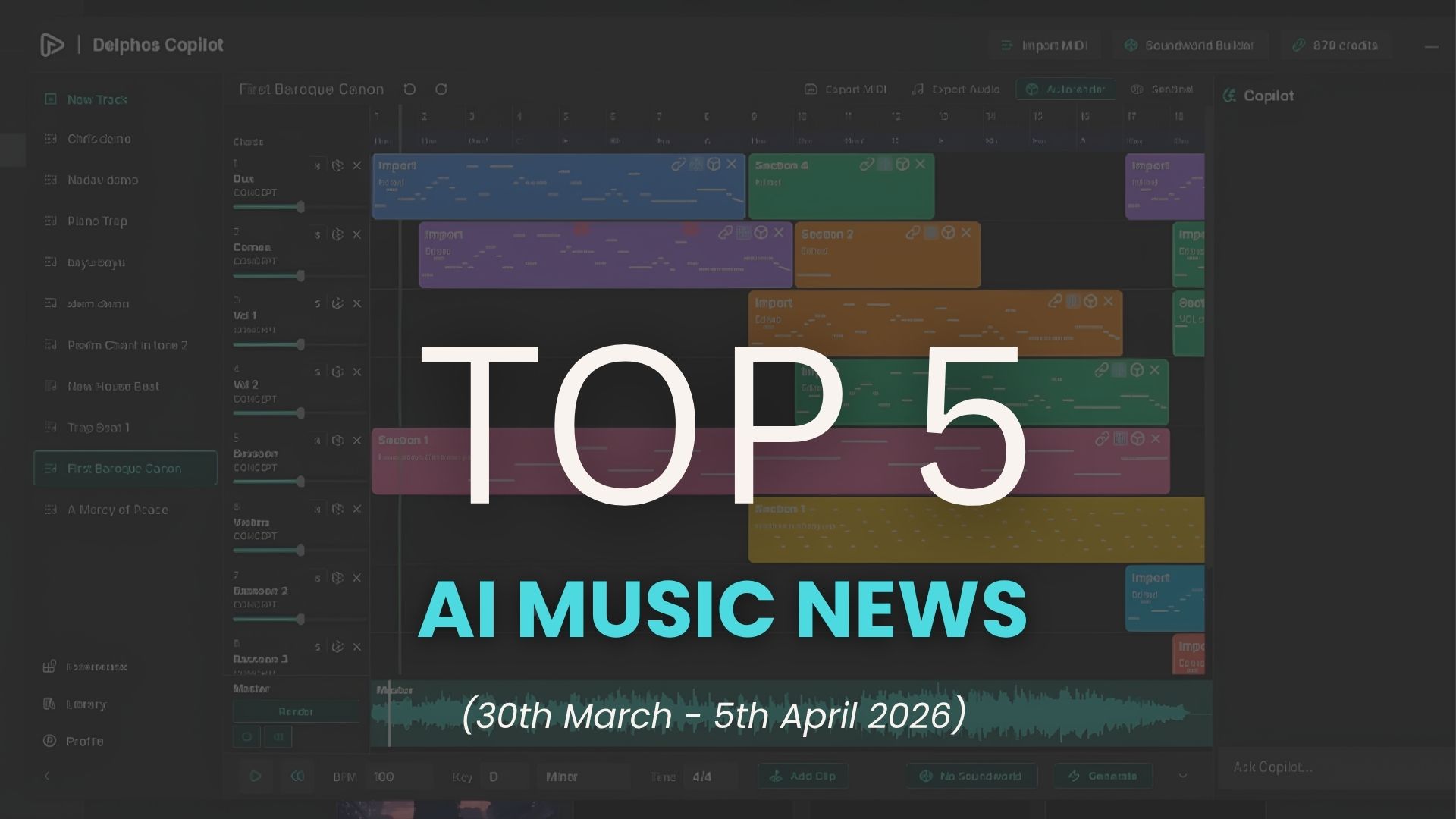
Top 5 AI Music News (Mar 30th – Apr 5th 2026)
My stack My fav 6 tools for AI music after testing 70+
-
 ElevenMusic · Music generation
 -
 Moises · Stem separation
 -
 Controlla · Voice swap & cloning
 -
 Cryo Mix · Mixing + mastering
 -
 Neural Frames · Music videos
 -
 ONCE · Distribution
Some links are affiliate links — I earn a commission at no cost to you. Every tool here is one I run myself and truly believe in. This stack is proven.
1. Delphos Co-Pilot generates MIDI and audio you can edit note by note
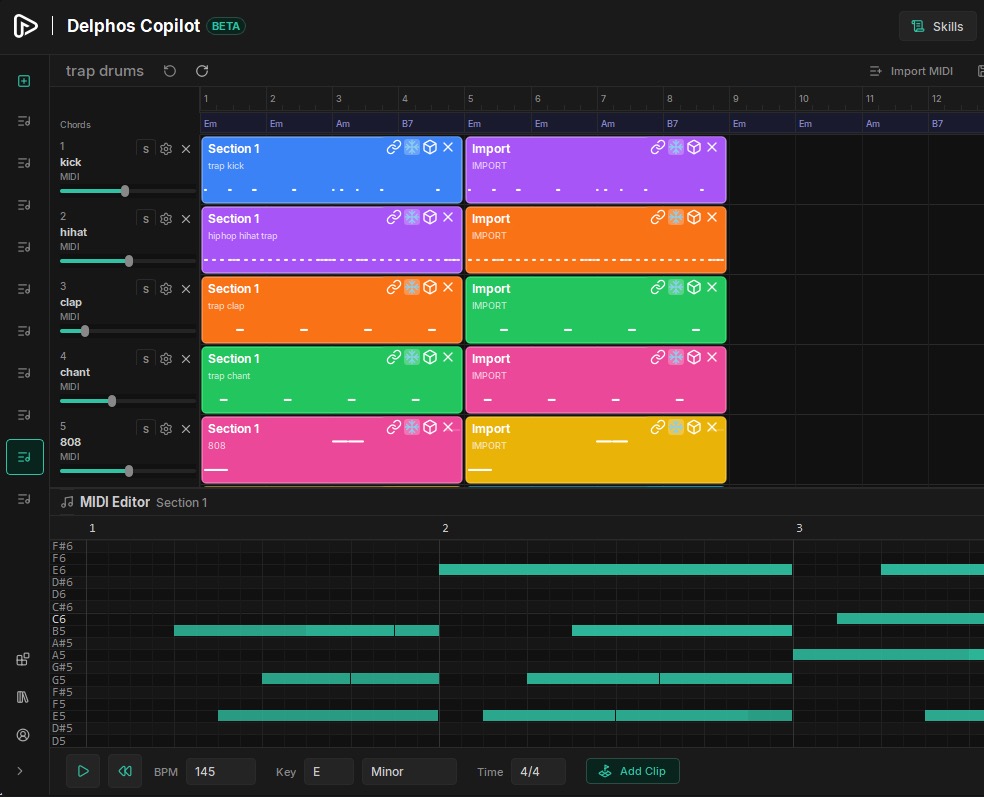
Most AI music tools spit out finished audio you can’t edit. Delphos Co-Pilot does the opposite. It generates MIDI from text prompts, gives you note-level control in a piano roll, and renders professional audio stems — or push the MIDI to your DAW when you’re ready.
The workflow is clip by clip. Place a clip on the timeline, describe what you want (a jazzy bassline, a chord progression in D minor, a driving hi-hat pattern), and hit Generate. The Copilot agent converses with you before executing: it detects the key, offers you alternatives, and waits for your answer. Composition decisions stay with you.
CEO Ilya Tolchenov described a proprietary “Structured Thinking” layer where Delphos’s own musical logic handles what general-purpose AI can’t: theory, voicing rules, genre conventions. The AI handles execution. The musical intelligence is built in-house. Delphos debuted in October 2024 with coverage from Music Business Worldwide and Music Ally.
The Enterprise tier includes Soundworld Builder, which lets you train a custom model on your own compositions and retain full copyright over the output. No scraped datasets, no fair-use debate. A Sonarworks survey of 1,194 creators found 77% fear loss of creativity from AI tools, while only 21% use AI for composition. Co-Pilot is built for both groups. The free Windows app is live now. Credits cost $0.05 each. The AI music copyright question gets simpler when the training data is yours.
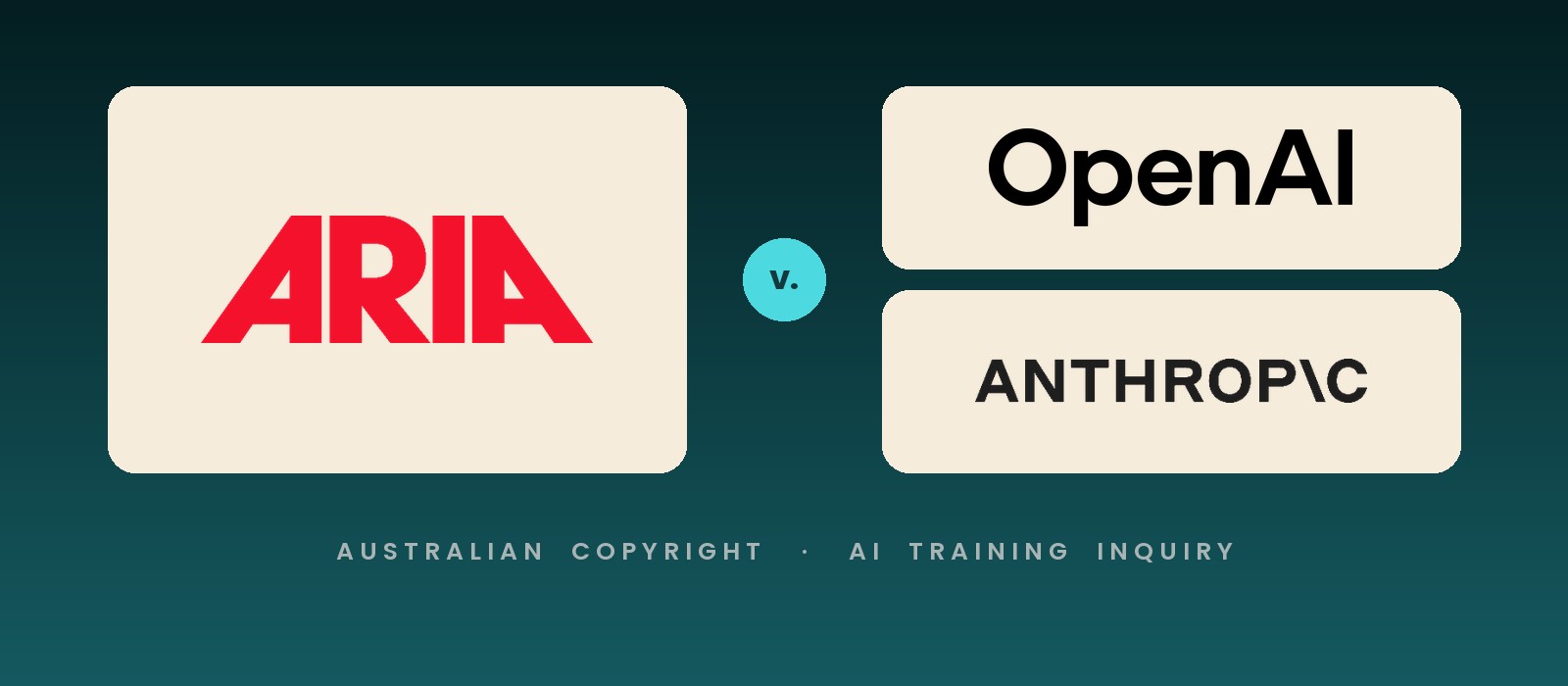
2. RIAA, NMPA and Six Music Bodies File Brief Against Anthropic Over AI Lyrics

Eight US music organizations filed an amicus brief on April 2, 2026, backing publishers UMG, Concord, and ABKCO in their copyright lawsuit against Anthropic. The filers: RIAA, NMPA, A2IM, SONA, Black Music Action Coalition, Music Artists Coalition, Artist Rights Alliance, and SoundExchange. That coalition spans rights holders, indie label representatives, and artist advocacy groups.
The central argument: AI lyric generation substitutes for human-authored lyrics in the market, failing the fourth prong of the fair use doctrine. The brief states that “”Claude and other AI systems can generate lyrics for thousands of songs in the span of time that it takes a human author to write the lyrics to just one song.”” This sidesteps the transformative use debate entirely. Even if Claude’s output does not reproduce training data verbatim, if it displaces demand for licensed human-written lyrics, fair use fails. Music Business Worldwide reports the brief also argues a functioning AI licensing market already exists, meaning Anthropic had a path to license and chose not to. Coverage of the original music publishers lawsuit gives the full case background.
The RIAA used market harm arguments successfully in Napster (2001) and Grokster (2005). The same fourth-prong logic that shut down file-sharing networks is now being applied to AI training. If the publishers win partial summary judgment on market substitution grounds, every AI company that trained on text containing song lyrics faces retroactive licensing exposure. The Trump AI framework defends AI fair use with no licensing mandate. The UK copyright opt-out collapsed after 11,500 responses pushed back. The GEMA ruling against Suno gives the music industry a win in Germany. A ruling in the Anthropic case is expected within 3 to 6 months. If you are building any AI tool that generates or processes lyrics, this is your watchpoint. AI and copyright guidance from the US Copyright Office is still evolving.
3. SeatGeek, Ticketmaster and Spotify Race to Own AI Concert Discovery
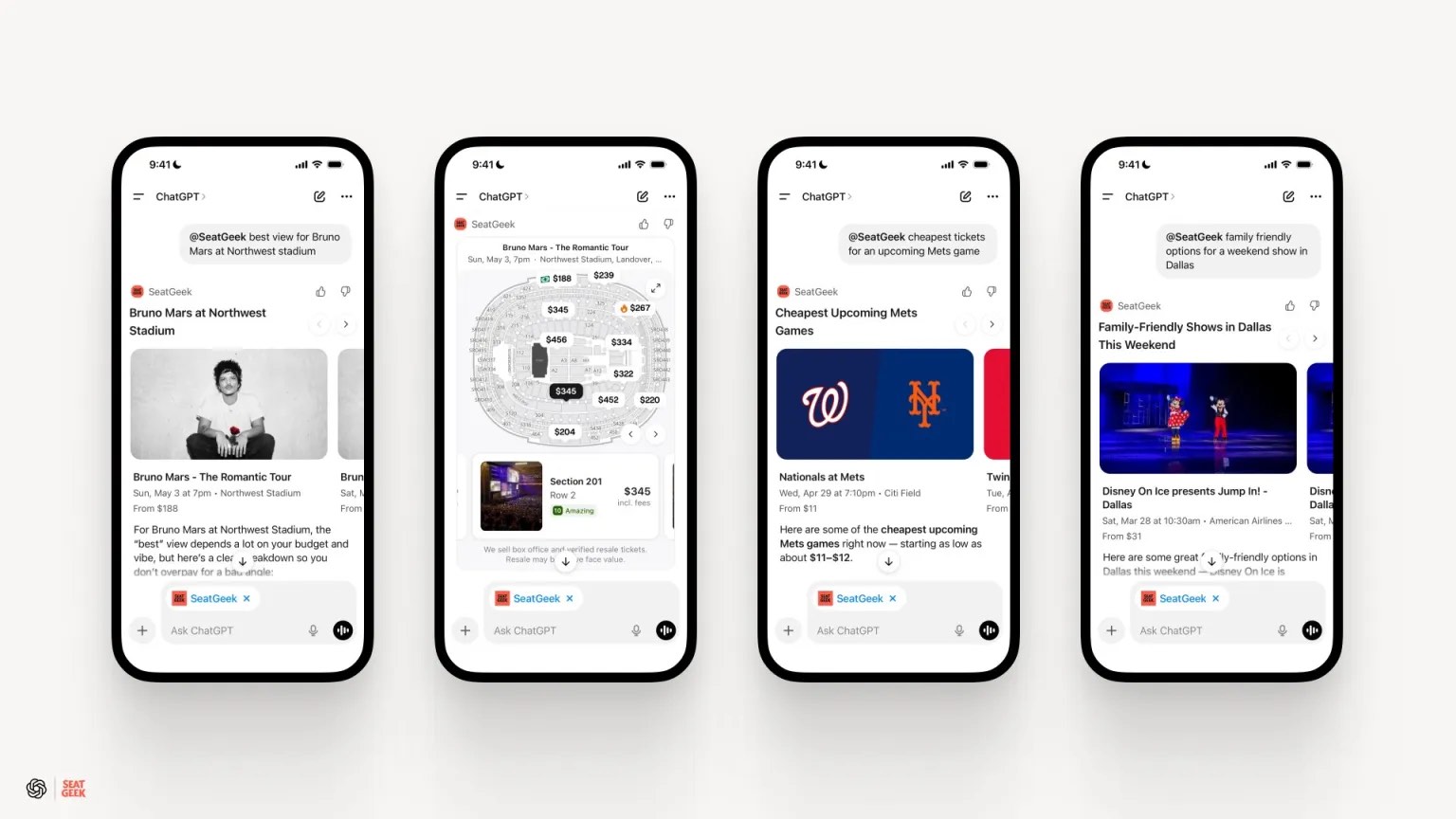
SeatGeek launched inside ChatGPT on March 31, 2026, becoming the first ticketing platform to offer blended primary and resale inventory in a single AI search experience. You search for concerts using natural language, browse both primary and resale tickets, and complete the purchase on SeatGeek’s platform. Rivals Vivid Seats and Gametime already had ChatGPT apps, but neither offered blended primary and resale inventory.
SeatGeek has been building across AI surfaces since December 2025. It joined Google’s agentic AI search pilot alongside Ticketmaster that month. In February 2026, SeatGeek launched primary ticketing inside Spotify across 15 major US venue partners, reaching 751M+ monthly active users. Ticketmaster is running a parallel path. Its partnership with Google’s agentic AI search lets users ask queries like “”Find me two tickets to Shaboozey this weekend”” and receive real-time inventory with direct checkout.
The financial stakes are large. Edgar Dunn & Company projects £2.4 billion in UK ticket sales through AI agents by 2028, equivalent to 37% of total UK ticket sales. Mark Cuban described live events as “”the anti-AI bet”” at SXSW 2026. That bet now depends on AI distribution to reach fans.
If you manage your own ticketing through platforms like Bandcamp, Seated, or direct channels, the AI discovery layer is now a real gap. If your show is not surfaced in ChatGPT, Google AI Mode, or Spotify’s AI-powered interfaces, it is invisible to the growing share of casual fans who book on impulse from a chatbot prompt. Ticket Fairy’s parallel move into AI-powered event financing signals how broadly AI is reshaping live event infrastructure beyond discovery.
4. Moises Nominated for 2026 Webby Awards People’s Voice
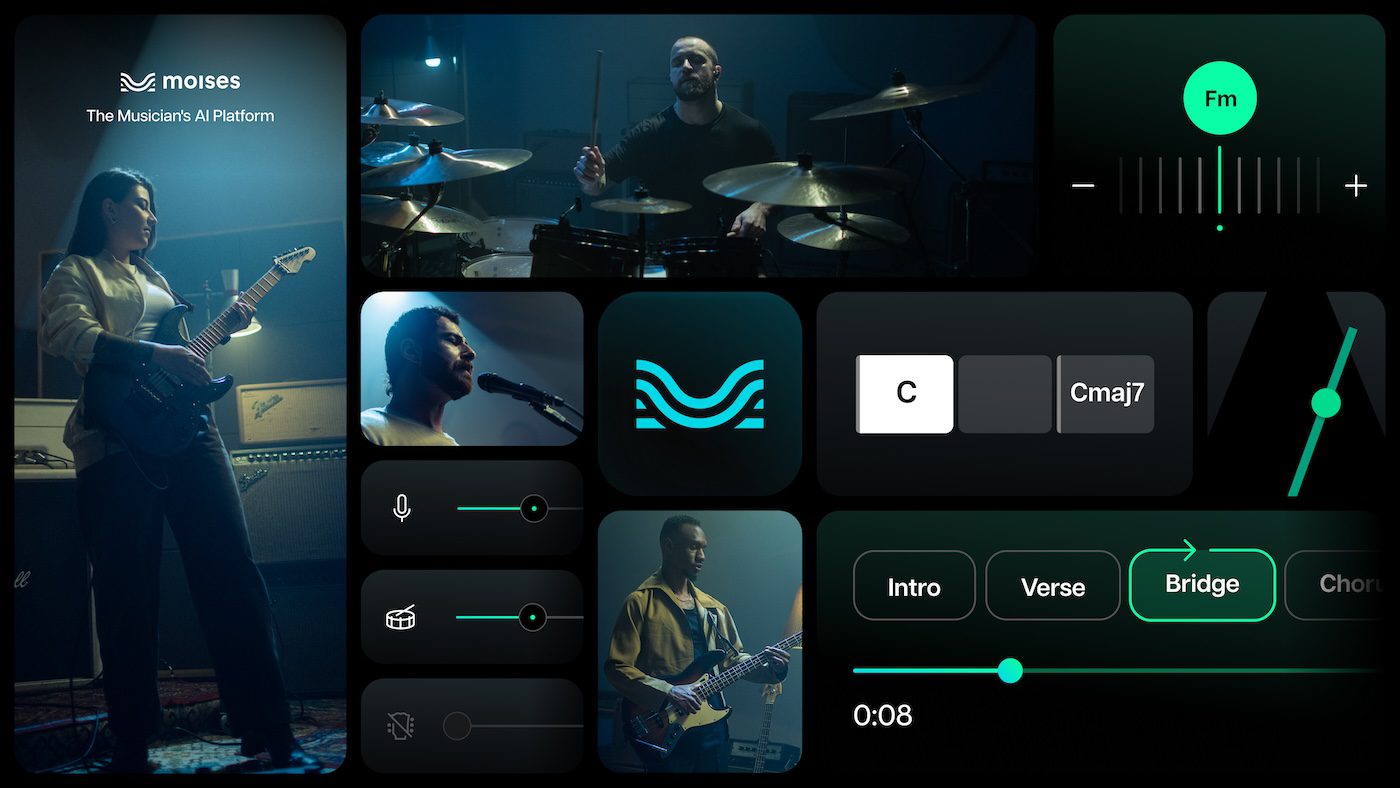
Moises, the AI-powered stem separation and practice tool used by 69 million artists, earned a nomination for the 30th Annual Webby Awards People’s Voice in the Creator, Creative, and Media Tools category. Public voting closes April 16, 2026.
The nomination comes at a moment when AI music tools face sustained legal and regulatory pressure. Moises sits outside that bucket. It uses AI to analyze and separate existing recordings, not to generate new material from training data. That distinction is why Charlie Puth joined Moises as Chief Music Officer, and why it won iPad App of the Year from Apple in 2024 and became an Apple Design Awards Finalist in 2025.
The Webby Awards are presented by IADAS, a 3,000-member organization widely considered the internet’s highest honor. A win would signal that AI-assisted music tools hold public legitimacy at a moment when AI-generated content is losing it. The LALAL.AI VST plugin and AI stem separation hardware have both expanded this category. If you use Moises for practice, live performance prep, or stem work, cast your vote at the People’s Voice ballot before April 16.
5. TikTok’s SoundOn Adds AI Fraud Detection Before Distribution
TikTok’s music distribution platform SoundOn integrated ACRCloud‘s Derivative Works Detection tool on April 2, 2026. The system uses audio fingerprinting to identify copyrighted recordings even when significantly altered through speed or pitch shifting. Flagged content goes to human review before reaching Spotify, Apple Music, and Amazon Music. SoundOn also now requires photo ID verification from all uploaders.
This inverts the standard DMCA model. DMCA notice-and-takedown gives platforms immunity in exchange for acting on infringement reports after the fact. Pre-distribution screening means the distributor acts first, without any rights holder complaint. SoundOn has 1.1 million registered artists. The scale of the problem: Deezer’s detection tool receives roughly 60,000 AI-generated tracks daily, with up to 85% of streams on fraudulent AI content demonetized. The Michael Smith fraud case, where $8 million was stolen via AI-generated songs and bot accounts, established the criminal stakes.
There is a chilling effect risk worth watching. ACRCloud’s system targets manipulated audio, but there is no published threshold distinguishing fraudulent pitch-shifting from legitimate creative transformation. Producers using pitch-shift creatively could get flagged by the same system targeting Spotify AI crackdown evasion tactics. Expect DistroKid and TuneCore to make similar moves within 12 months. The AI music streaming rules that govern AI uploads at the destination level are now being enforced upstream, at the distributor layer, before your music goes live.”
About the author

Covering AI music tools, industry shifts, and news for music creators and professionals. Twice-weekly newsletter at aimusicpreneur.com.