Recorded Music NZ says Australia's AI training proposal would put New Zealand songs at risk too

Black Friday deal · ends Nov 30 My #1 AI music video tool is up to 50% off until Nov 30
Music videos made with Neural Frames
- 50% off when you go yearly
- 25% off monthly plans and credit top-ups
Back to full price after Nov 30. Affiliate link: I earn a commission at no cost to you.
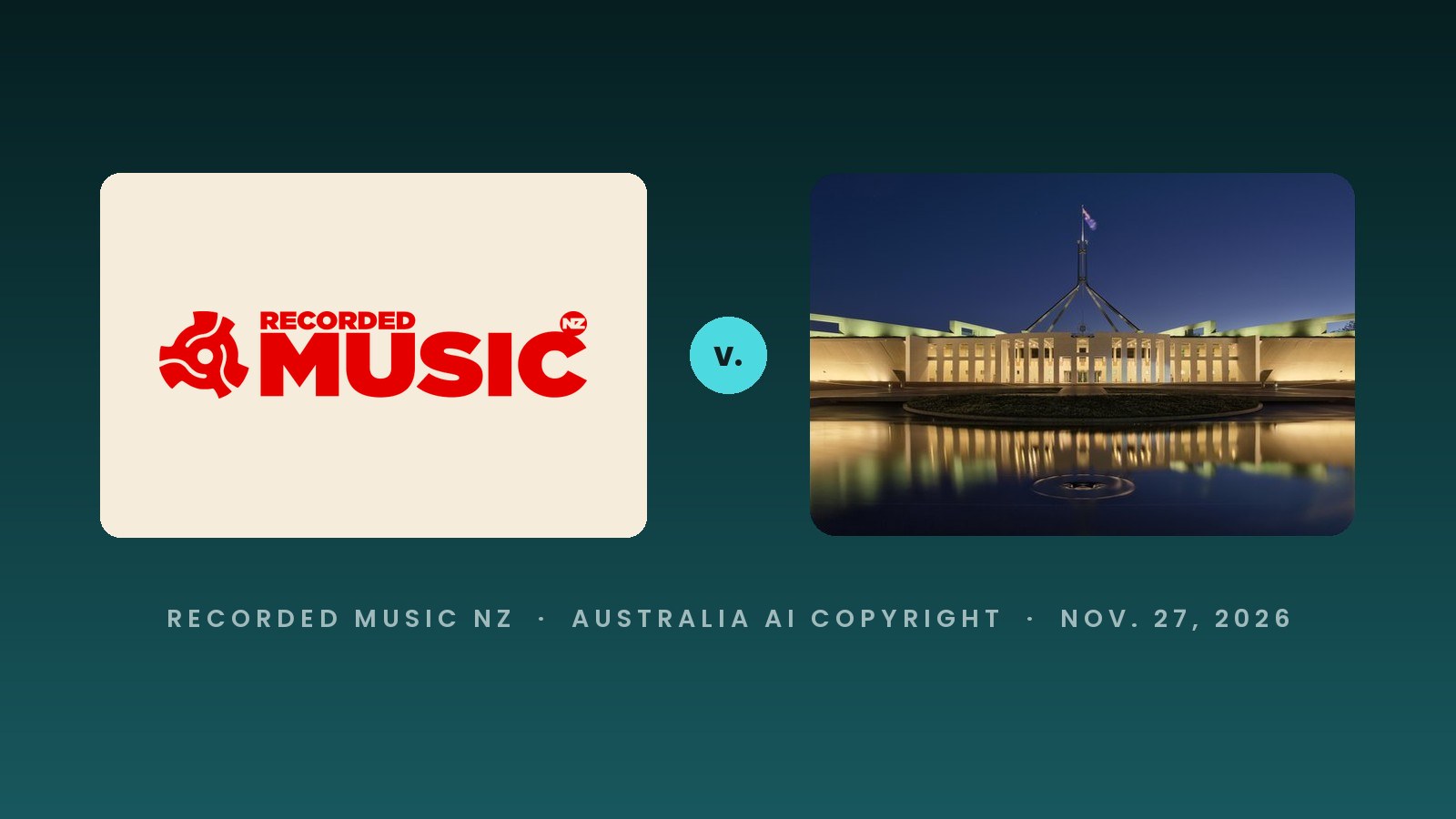
Australia’s AI copyright fight reaches New Zealand too. Recorded Music NZ chief executive Jo Oliver told RNZ on November 27, 2026 that the proposal Canberra is weighing “would include the world’s content. So it’s not just Australian content,” which means “the New Zealand sector is also at risk here.”
So if you’re a New Zealand artist with songs on Spotify or YouTube, an Australian training licence could reach your catalogue too. Oliver admitted the details are not entirely clear yet. But the opt-out, as Recorded Music NZ understands it, would put the work on you: a digital marker on every copy of your music on the internet, saying it’s not to be trained on.
What Jo Oliver told RNZ about Australia’s AI training proposal
The Australian government is considering a licence that lets AI companies train on copyrighted work and pay into a central pot, with an opt-out for rights holders. That’s the model the AI committee’s November 24 report could be used to justify. Oliver’s read is that overseas AI companies want a cheaper, easier place to train, and asked Australia to change its copyright law to get it. She called that “a weakening of copyright law” that takes away artists’ basic right to control their work.
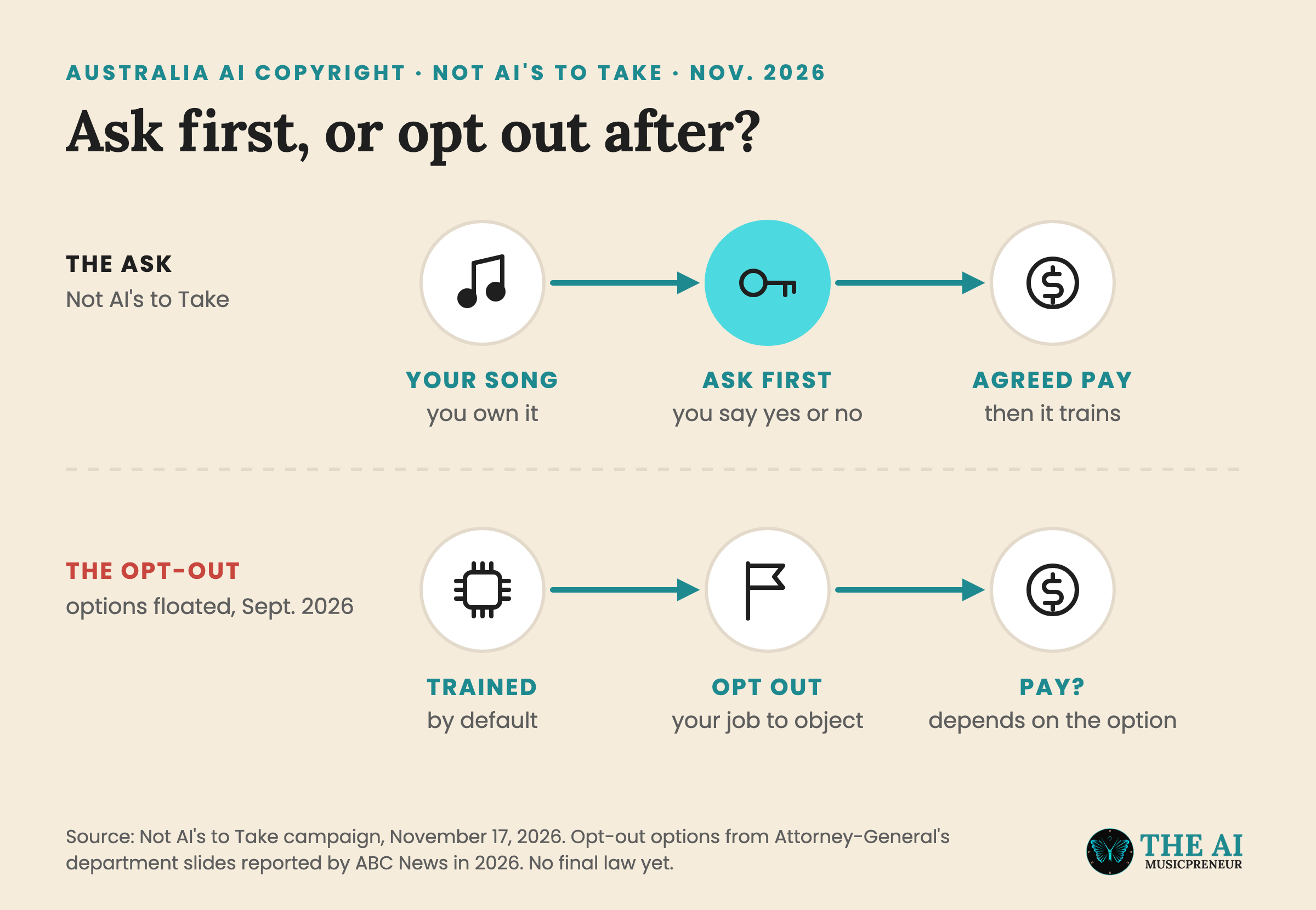
RNZ asked whether some money from AI companies beats nothing, since artists get paid nothing today. “No, not really,” Oliver said, adding that some have described that pitch as gaslighting. That’s the word ARIA CEO Annabelle Herd used when the committee report came out.
Asked whether New Zealand recordings have already been used to train AI, Oliver said “absolutely” and pointed to published material on it: “there’s no doubt there’s mass infringement taking place.” In her view, the gap is enforcing the copyright law that already exists.
What Recorded Music NZ wants New Zealand’s government to do about AI
New Zealand has its own deadline. Cabinet asked Minister Cameron Brewer to report back in March 2027 on a possible copyright framework for generative AI, Recorded Music NZ said in a July 2026 update.
Asked what that government should do, Oliver told RNZ her first ask is to hold firm on copyright law. Her second is transparency about training data, because right now there isn’t any, and without it rights holders can’t enforce their rights or negotiate a licence.
AI companies don't want to come to the table and talk about a license. They want the material for free.
Recorded Music NZ’s written position goes further: no new copyright exceptions for AI training, records of training data shared with rights holders on request, and labels on AI-generated content. On labels, Oliver pointed to platforms already moving, like Tidal banning fully AI-generated music, and said fans should know whether they’re listening to a human or something else.
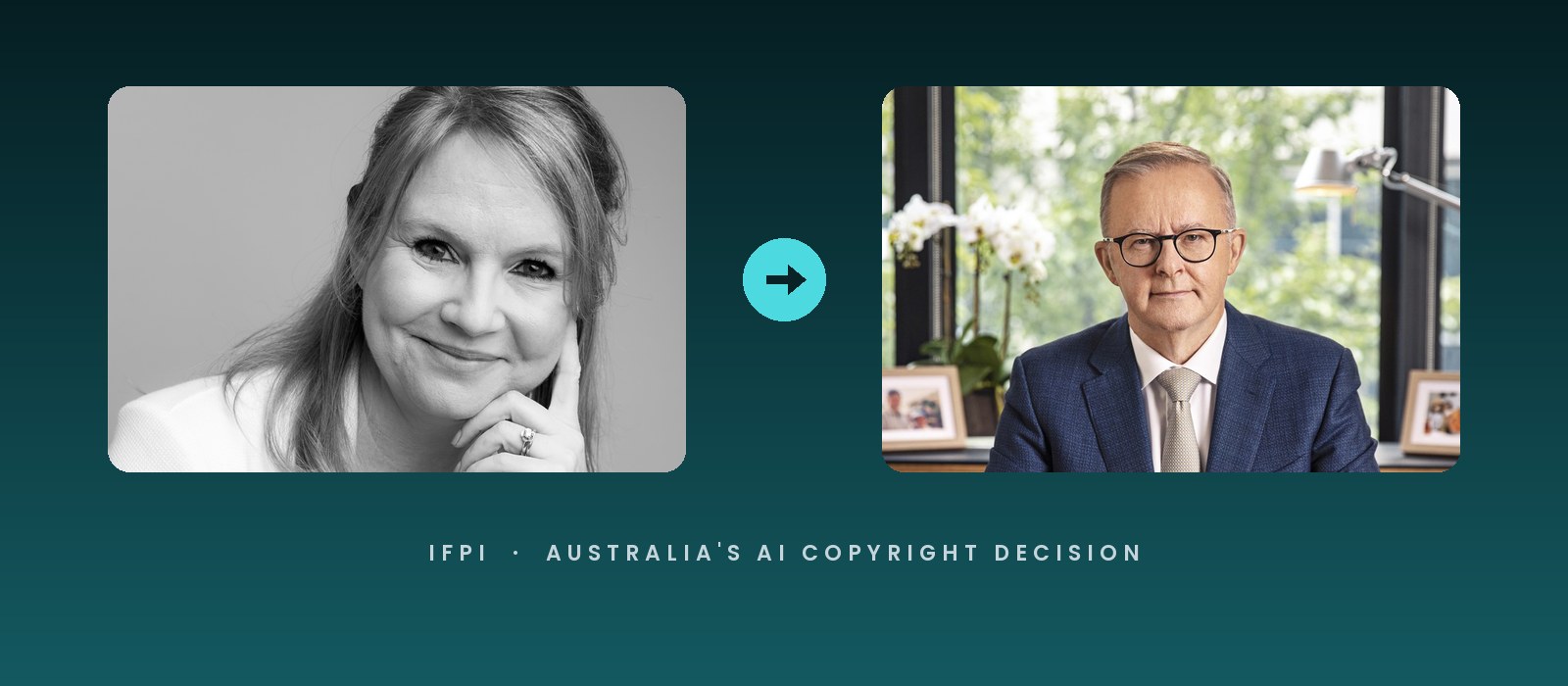
The same “weakest link” worry has come up before, when IFPI’s Victoria Oakley warned that one cheap training route exposes music from everywhere. Australia’s creative industries are pushing the same line through the Not AI’s to Take campaign.
The next dates are Australia’s draft AI laws, which the ABC expects early in 2027, and New Zealand’s Cabinet report-back in March 2027.
Frequently asked questions
What did Recorded Music NZ's Jo Oliver tell RNZ about Australia's AI training proposal?
On November 27, 2026, Jo Oliver told RNZ the Australian proposal would weaken copyright and take away artists' basic right to control their work. She said it would include the world's content, so New Zealand music is also at risk.
Would Australia's AI training proposal cover songs by New Zealand artists?
Recorded Music NZ says yes. Jo Oliver told RNZ the details are not entirely clear yet, but that the Australian proposal would include the world's content, not only Australian recordings.
When will New Zealand's government report on a copyright framework for generative AI?
Cabinet asked Minister Cameron Brewer to report back in March 2027 on a possible copyright framework for generative AI, according to a Recorded Music NZ update from July 22, 2026. No framework has been published yet.
What does Recorded Music NZ want New Zealand to do about AI and copyright?
It wants no new copyright exceptions for AI training, rules that make AI companies keep records of what they train on and share them with rights holders on request, and labels on AI-generated content.
About the author
Covering AI music tools, industry shifts, and news for music creators and professionals. Twice-weekly newsletter at aimusicpreneur.com.