AFM tells the court Article 21(a) is ambiguous, and that alone should keep its AI case alive
My stack My fav 6 tools for AI music after testing 70+
-
 ElevenMusic · Music generation
 -
 Moises · Stem separation
 -
 Controlla · Voice swap & cloning
 -
 Cryo Mix · Mixing + mastering
 -
 Neural Frames · Music videos
 -
 ONCE · Distribution
Some links are affiliate links — I earn a commission at no cost to you. Every tool here is one I run myself and truly believe in. This stack is proven.
The American Federation of Musicians has filed its opposition to Universal Music and Warner Music’s motions to dismiss, and its central argument is narrower than the headline fight. The union told the New York court that Article 21(a) of its labour contract “is reasonably susceptible to more than one interpretation” and that its own reading is plausible, which at this stage is all it needs. Digital Music News reported the filing in case 1:26-cv-04760 on September 8, 2026.
At this stage, the AFM need not show that its interpretation is the most persuasive; it need only show that the contract is ambiguous and its reading is plausible.
What Article 21(a) says and why both sides read it differently
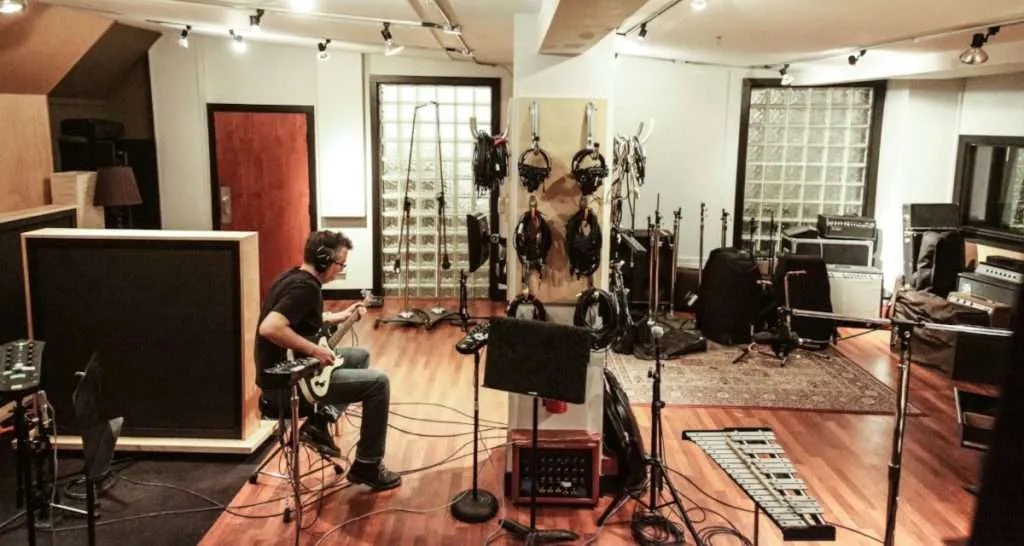
Article 21(a) sits inside the Sound Recording Labor Agreement, the union contract that sets pay for session musicians, meaning the hired players on a record rather than the featured artist.
The clause says that when a recording gets used “for a purpose not covered by this Agreement,” the company “shall pay to those musicians who rendered services in the recording” an amount equal to the payments that would be required under the AFM agreement in effect if the recording had originally been made for that purpose.
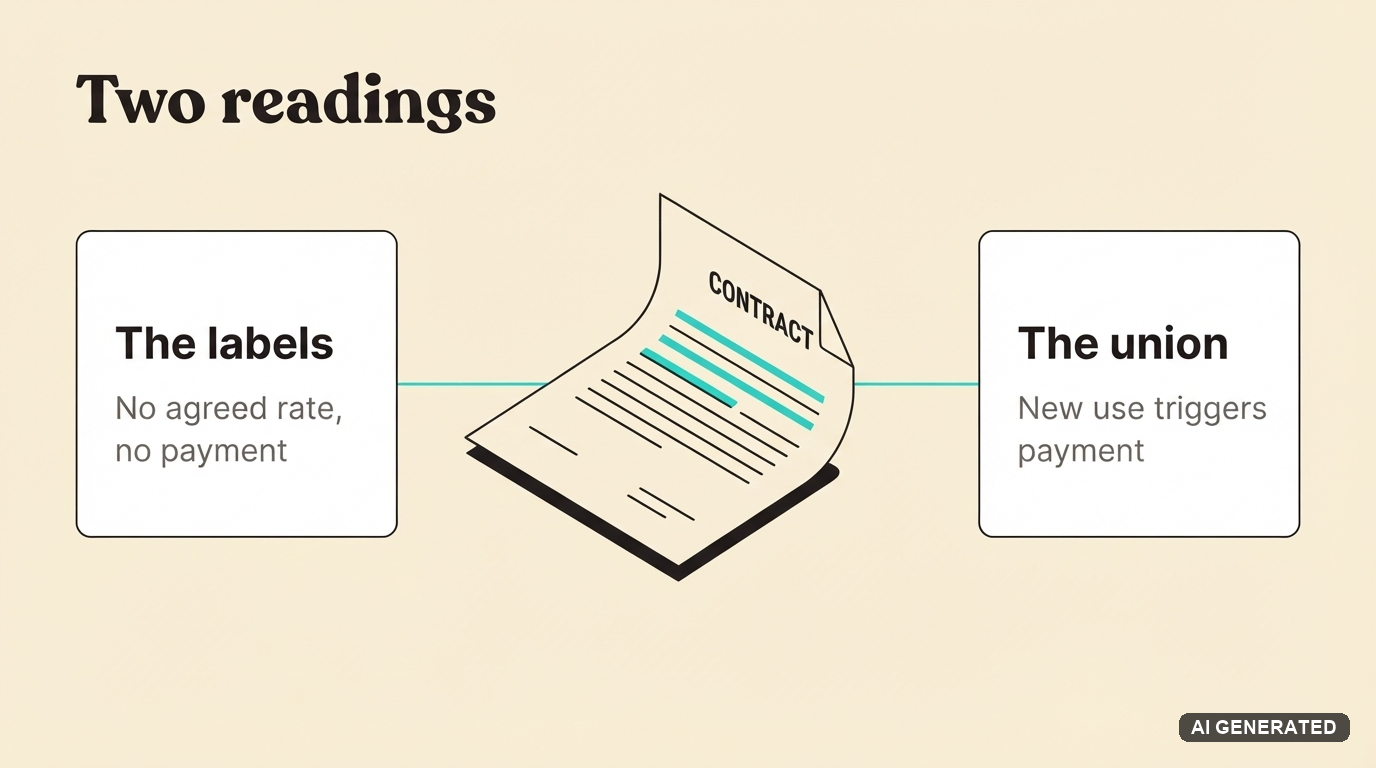
The majors read the second half as the trap. If no AFM agreement sets a rate for AI training, no number exists, so nothing is owed. The union reads the same words as a payment duty triggered by the new use itself.
The concession the AFM made on purpose
The interesting move in this brief is that the union gave ground. It told the court the labels’ reading is “possible”.
That sounds like a loss and works as the opposite. A motion to dismiss fails when a contract can be read two ways, so conceding that the other side’s reading exists is how you prove the clause is ambiguous.
“Article 21(a) can plausibly be read to impose a payment obligation triggered by the new use and to use existing AFM rates, or, at minimum, to leave the amount for later determination.”
The union then closed the gap the labels opened. It argued the second “purpose” in the clause can point to the agreement that sets the rate for the work, not the agreement covering the platform where the music ends up.
The AFM’s phonograph record argument
The strongest passage in the brief is the one that keeps a 2023 contract attached to a 2026 technology.
“A recording made for an AI platform’s use would still be a ‘phonograph record’ under the SRLA, and the musician who made it would still be covered. The SRLA therefore qualifies as ‘the AFM agreement that would then be effective’ for the musician’s work, even if no separate agreement governs the AI platform.”
If that lands, the missing-rate defence collapses. The SRLA supplies its own rate, and the absence of a separate AI agreement stops mattering.

How the AFM case reached this filing
Each step has narrowed the question. The fight started as a claim about who owns AI settlement money and has become an argument about one sentence and whether a judge finds it clear.
Full background sits in my tracker for the AFM case, and the previous round of briefing is covered in the union’s July reply and Universal’s August dismissal motion.
What session musicians should watch next
Nothing is decided. Judge Edgardo Ramos still has both dismissal motions in front of him, and no ruling schedule exists.
The number that matters to a player is zero: no AI licensing money has reached session musicians from any major-label deal so far. If the case survives dismissal, discovery starts, and discovery is where the union finally gets the list of recordings the majors handed to Suno and Udio.
If it does not survive, the reading that wins is the one where a contract signed before these platforms existed covers none of the money they generate. That outcome sets the default for every AI deal signed after it, which is why a fight over one ambiguous sentence is worth this much briefing.
Frequently asked questions
What did the AFM argue in its September 2026 opposition brief?
The union argued that Article 21(a) of the Sound Recording Labor Agreement is "reasonably susceptible to more than one interpretation" and that its own reading is plausible. At the motion-to-dismiss stage it does not have to prove its interpretation is the most persuasive one, only that the contract is ambiguous and its reading is credible.
What does Article 21(a) of the Sound Recording Labor Agreement say?
Article 21(a) states that when a recording is used for a purpose not covered by the agreement, the company shall pay the musicians who performed on it an amount equal to the payments that would be required under the AFM agreement in effect if the recording had originally been made for that purpose. The dispute turns on which agreement supplies that rate.
Why do Universal and Warner say no payment is owed for AI licensing?
The majors argue Article 21(a) depends on a separate agreement to supply a rate for each new use. Because no AFM agreement sets a rate for training generative AI, they say no figure exists and therefore nothing is owed. The AFM concedes that reading is possible while arguing an alternative reading is equally available.
How does the AFM say the SRLA covers AI platform uses?
The union told the court that a recording made for an AI platform's use would still qualify as a phonograph record under the Sound Recording Labor Agreement, and the musician who played on it would still be covered by it. On that reading the SRLA itself is the agreement that supplies the rate, even with no separate AI agreement in place.
About the author

Covering AI music tools, industry shifts, and news for music creators and professionals. Twice-weekly newsletter at aimusicpreneur.com.