The AI Music Briefing #6: Riffle is the Figma moment for songwriters
The week of June 8–14, 2026: Warner bought Sureel AI to give every song an AI fingerprint, the musicians' union sued Universal and Warner over withheld Suno and Udio money, and Riffle put the whole songwriting room on one shared canvas. Here's the full briefing.
My stack My fav 6 tools for AI music after testing 70+
-
 ElevenMusic · Music generation
 -
 Moises · Stem separation
 -
 Controlla · Voice swap & cloning
 -
 Cryo Mix · Mixing + mastering
 -
 Neural Frames · Music videos
 -
 ONCE · Distribution
Some links are affiliate links — I earn a commission at no cost to you. Every tool here is one I run myself and truly believe in. This stack is proven.
Issue #6 · the week of June 8–14, 2026 · ~7 min read. The Friday read on the week’s AI music news, for music industry professionals working at the intersection of AI and the traditional music business. Curated by Christopher Wieduwilt.
Warner bought the pipes, and the union wants receipts
This week the AI money question got specific: who gets paid, and who can prove it.
Warner Music bought Sureel AI, the startup that traces how AI models use an artist’s work. The American Federation of Musicians sued Universal and Warner for keeping Suno and Udio settlement money from session players. 227 rights societies pressed France to make AI firms prove what they trained on. And a Bangalore startup gave songwriters something designers have had for a decade: an infinite canvas.
This issue is sponsored by Riffle, the browser studio in this week’s Top Story. The story itself is my editorial read, formed over weeks of conversations with the team.
What’s in store:
- Warner buys Sureel, the attribution startup giving every song an “AI DNA”
- A 4th case enters the Lawsuit Tracker: the musicians’ union sues UMG and Warner
- Moises lands inside Fender Studio Pro, no plugin needed
- Top Story: Riffle, and what Figma’s 2016 launch says about it
High Signal News: Warner buys Sureel, France’s training-data bill, and Moises in Fender Studio
Warner Music buys Sureel AI, the startup that gives every song an “AI DNA”
Warner Music agreed on June 10 to acquire Sureel AI, whose patented technology breaks a track into component parts and traces how AI models use them in training and generation. The registry already holds millions of music assets. Sureel keeps running as a standalone platform serving rival rights holders and AI firms. Terms undisclosed.
What this means for you → Licensing decides who may train. Attribution decides who gets paid when they do. A major label now owns a piece of both sides of the trade.
227 rights groups press France to make AI firms prove their training data
CISAC’s member societies urged France’s National Assembly on June 8 to pass the Darcos bill, which presumes AI providers trained on copyrighted work unless they prove otherwise. The Senate passed it unanimously in April and the Council of State cleared it, but the lower house left it off the June agenda.
What this means for you → Today a creator has to prove scraping. Under the bill, the AI company has to prove it didn’t. The evidence sits with whoever built the model.
Moises lands inside Fender Studio Pro 8.1
Stem separation, backing track creation, and vocal transformation across 40 artist-built, paid voices now run inside Fender Studio Pro 8.1, with no plugin to install. It’s the first DAW integration for Moises, which claims 70 million users. The features run in the cloud, so you’ll need an internet connection.
Lucian Grainge compares “responsible AI” to sampling
Accepting Northeastern’s first Global Entrepreneur Award at BAFTA in London, the UMG chief said responsible AI can help the creative process the way sampling did, citing Soft Cell, Human League, and Depeche Mode. The history is sharper than the soundbite: sampling became legitimate after courts forced clearance and payment.
Sega puts Tupac in Stranger Than Heaven with estate permission and no AI
At Summer Game Fest, Sega and RGG Studio revealed Tupac Shakur as the character Amaru, built from archival footage with the permission and ongoing supervision of his estate, and without AI. Snoop Dogg presented the reveal and plays a character. Out January 15, 2027. The consent-first counterexample to the deepfake wave.
Neural Frames launches Short-Form Studio for vertical AI music videos
Neural Frames’ new Short-Form Studio mode ships 9 audioreactive templates built for vertical video. You upload a track, pick a 10 to 60 second section, and set a character and environment, or let the tool generate both from the song’s mood. Output drops straight into TikTok, Reels, and Shorts. The platform has produced 2 million+ videos for 40,000+ artists.
Abbey Road REDD shows seven music-tech startups at SXSW London
Abbey Road’s REDD cohort included Chaos (a workspace for sessions, splits, files, and contacts), Forte (audio workflow automation), and Musical Beings (the wooden instrument Tembo). None of the named pitches led with generation. The practical wins keep landing in admin and workflow.
Top Story: Riffle wants to do for songwriters what Figma did for designers
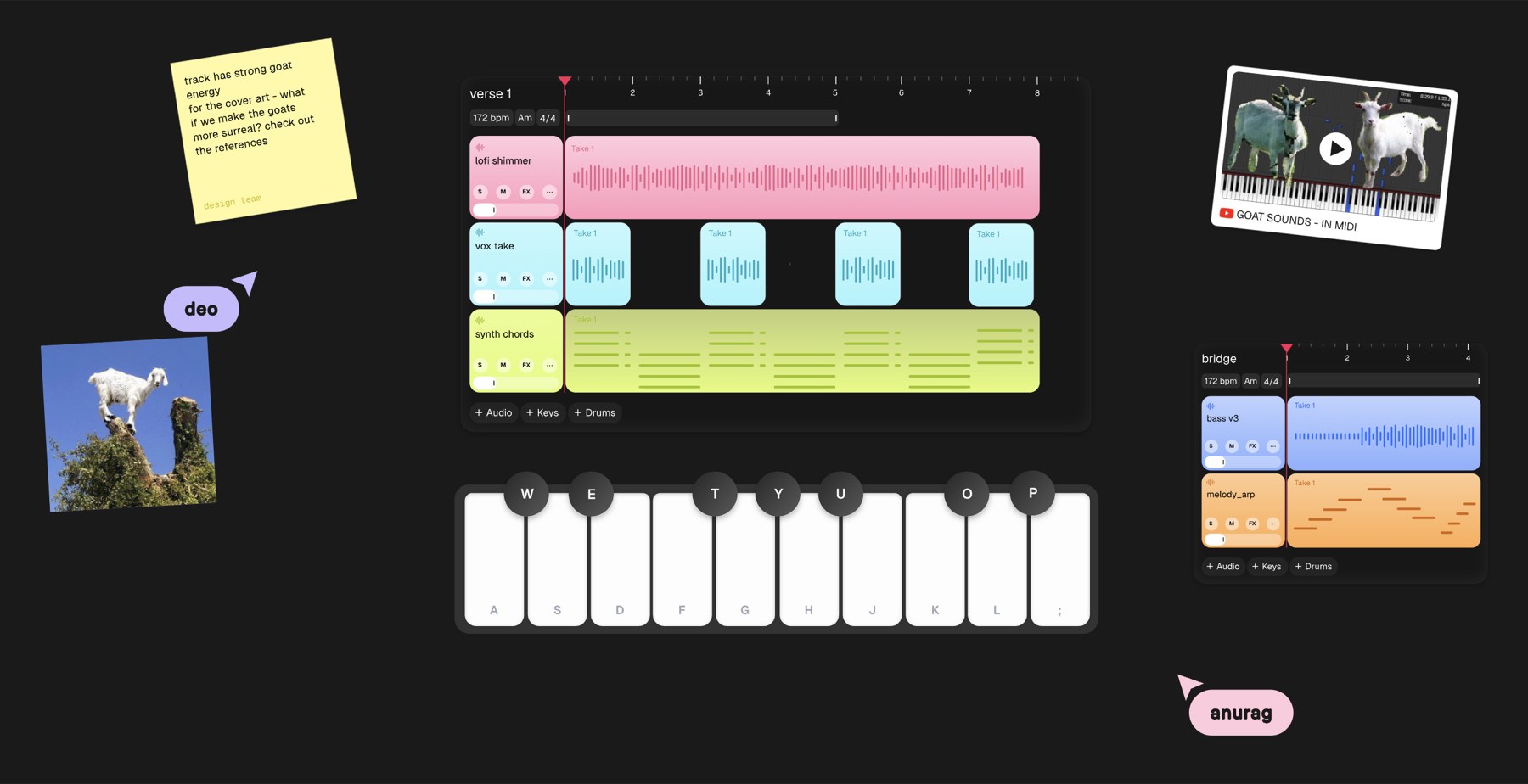
Riffle, a browser-based music studio built in Bangalore, has done something no music software has attempted: an infinite canvas for songwriting, with live multiplayer and an AI assistant scoped to pieces, never full songs. It’s free during beta, counts 3,000+ users, and has raised over $1 million. (Riffle sponsors this issue. This story is my editorial read, formed over weeks of conversations with the team.)
In 2016, designers worked alone in desktop apps, emailed files around, and drowned in versions named “final_v2_FINAL.” Figma moved design into the browser and added real-time multiplayer, a feature no design tool had shipped before. A team could finally think on the same surface.
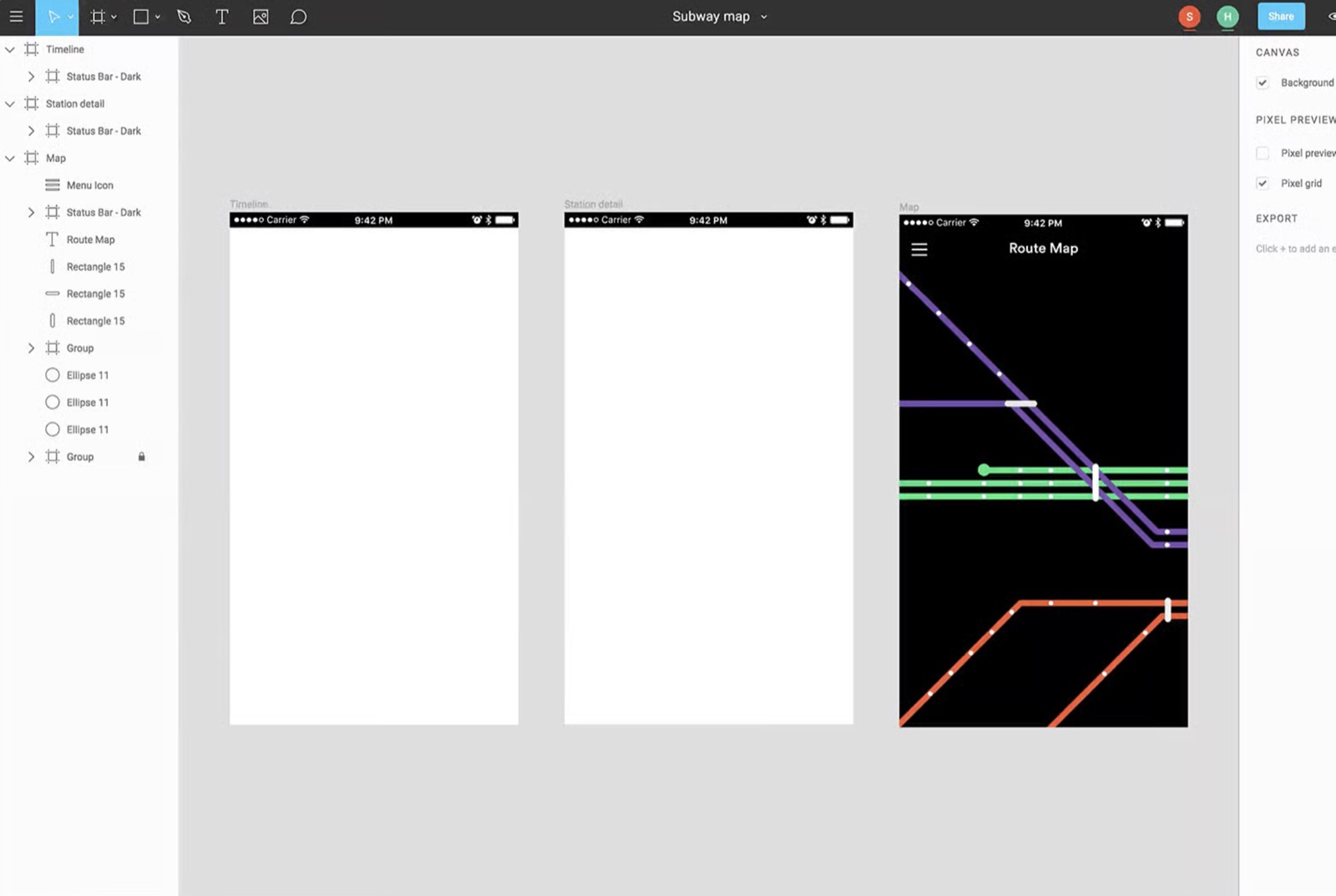
Today Figma is a public company worth around $10 billion. Songwriters in 2026 work the way designers did in 2016: ideas scattered across voice notes, one arrangement per file, collaboration by bouncing files. Riffle is the first tool to put the whole songwriting room on one shared canvas.
Boards hold an infinite canvas, and stacks are parallel arrangements living side by side. Stack 1 carries the lofi direction, stack 2 the boom-bap version. You develop both, drop the weaker one, and lose nothing. Collaborators edit in real time and pin Google-Docs-style comments to a specific part of the canvas.
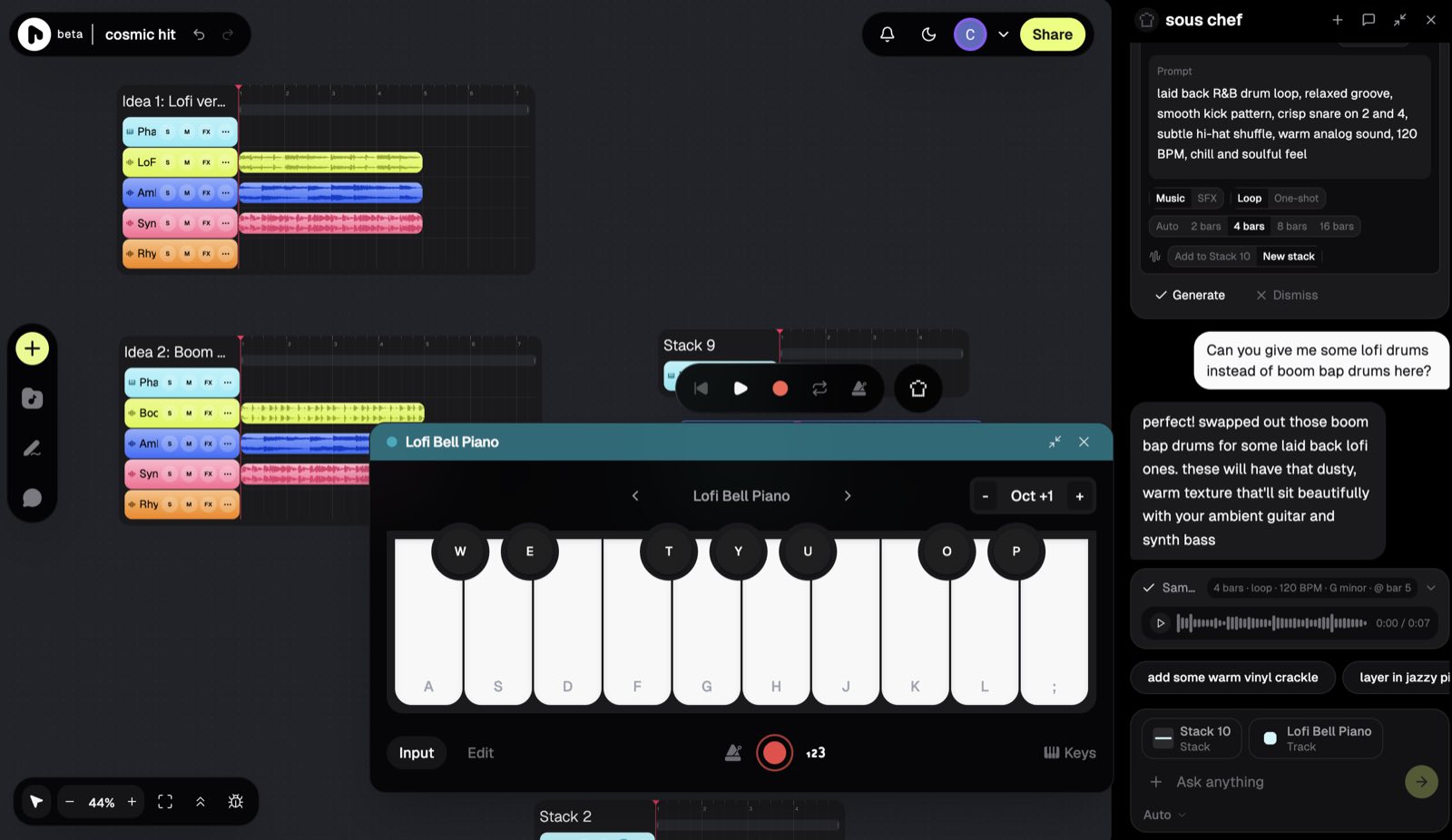
- Each stack runs its own BPM, time signature, and audio, MIDI, and drum tracks.
- Share options: invite collaborators to edit live, publish a playable link, or export per-stack stems to .wav.
Riffle’s resident co-producer takes natural-language requests (“give me a boom bap beat, 4 bars”) and returns 5 to 10 second pieces matched to your stack’s tempo and key: drum loops, chord progressions with theory notes, honest feedback on a muddy mix. By design it never returns a full song. You start by playing, recording, or sampling; the assistant fills the gaps you point it at. There’s no mixing, mastering, or automation; you export stems and finish in your DAW.
“if you’ve used Suno, this is nothing like that. way more control, way more fun,” Caleb Friesen, early tester, wrote on X.
Will Riffle matter the way Figma came to matter? I have no idea, and in 2016 almost no designer predicted a $10 billion company in a browser tab. New surfaces reveal their worth years after launch, and they rarely look like headlines on day one. Suno’s funding rounds eat the AI music news cycle while this launch, from a team that has raised $1 million so far, barely registered. The near-term question is pricing: a Pro tier comes after beta, and nothing is confirmed.
A place to catch a song idea the second it hits, and shape it with the people you’d call anyway. Riffle is the first credible attempt at that for music.
Music Intelligence: Deezer’s AI flood, the 2026 AIMS summit, and the infinite canvas
Deezer flags over 70% of new “World Cup 2026” tracks as AI-generated
Deezer counted more than 270 tracks named “World Cup 2026” in its catalog and flagged over 70% as AI-generated, on a detection system already labeling around 60,000 fully AI tracks a day. The insight worth keeping: 270 is a count of files, and the cost of making one rounds down to zero. Event spikes now measure generation cost, while listening barely enters the math.
AudioShake CEO Jessica Powell on the 2026 AIMS summit
At the 2026 AIMS: AI Music Summit, Berklee students protested outside with “No AI Music” signs while, inside, researcher Richard Cave showed how AudioShake and ElevenLabs restored the singing voice of an ALS patient so he could perform with his band again. On the CEO panel, the shared read was: users never ask for “AI,” they ask for a tedious or impossible task to be cleared. “You can dislike something and still be fascinated by it. Be wary but still be curious,” Powell wrote on LinkedIn.
My read: the sign outside and the restored voice inside describe the same tool. Whether it helps or takes comes down to who is holding it, not the tech.
The infinite canvas as a music UX primitive
Figma made parallel ideas the default for design teams. Music software still assumes one arrangement per file, so every alternate version costs a “final_v2_FINAL” export. Once songwriters can hold 5 versions side by side, the file stops being the unit of a song and the idea takes its place. Watch which DAW copies the canvas first.
AI Music Lawsuit Tracker
Every active AI music copyright lawsuit, with this week’s status: RIAA v. Suno, RIAA v. Udio, GEMA v. Suno, and the new AFM v. Universal & Warner.
RIAA v. Suno: partly settled, Sony and Universal expanding to 61,026 recordings
RIAA v. Suno: Partly settled. Warner settled in November 2025; Sony and Universal are still litigating and moving to expand the case to 61,026 recordings.
This week: No change this week.
RIAA v. Udio: mostly settled, Sony alone still litigating the DMCA claim
RIAA v. Udio: Mostly settled. Universal and Warner settled in late 2025; Sony alone is still litigating, and a judge let its DMCA claim proceed.
This week: No change this week.
GEMA v. Suno: Munich verdict expected July 31
GEMA v. Suno: Awaiting verdict. The Munich Regional Court rules July 31, 2026.
This week: No change this week. Verdict still expected July 31.
AFM v. Universal & Warner: union sues over withheld Suno and Udio settlement money
New case. AFM v. Universal & Warner: Freshly filed. The AFM sued on June 5, 2026, and Universal and Warner have not yet responded in court.
This week: The case joins the Tracker. The American Federation of Musicians filed a breach-of-contract suit in New York federal court, alleging the labels kept Suno and Udio settlement and licensing money without paying the session musicians whose recordings were copied. The claim rests on the “new use” clause in the union’s labor agreement with the majors. Sony isn’t named; it hasn’t settled with either AI company. The complaint says the labels “failed to share in the settlement proceeds, despite their self-congratulatory claims of protecting those same artists.”
→ Full case files and timelines
Artist Index: Grimes
Grimes open-licensed her voice for a 50% master-royalty split
New to the Index. Grimes: the Canadian artist who open-licensed her voice in 2023. Elf.Tech transforms any vocal into the GrimesAI-1 voiceprint, in exchange for a 50% master-royalty split on commercial releases. SIQA classification: Human + AI Hybrid.
→ Browse the full Artist Index
My Take: I’ll believe the plumbing got fixed when a session player gets paid

Two stories ran this week that belong together. Warner bought Sureel, an attribution startup that promises to trace how AI uses your work. Days earlier, the musicians’ union sued Warner and Universal because the Suno and Udio money never reached the session players who played on the records.
Hold those next to each other. One says the industry is finally building the machine to pay creators. The other says the machine already exists, the deals were signed, and the money still stopped at the catalog.
I sat on a GEMA panel this year and made the same point: the willingness to pay creators is rarely the problem. The plumbing is. Credits go missing, royalties sit unmatched, and the people on the recording are the last to get found.
So I’ll hold my applause for “AI DNA.” Attribution tech still breaks under real use, and a major label now owns the pipe the rest of us are supposed to trust. Show me the session player who gets paid. Then I’ll believe the plumbing got fixed.
One thing to do this weekend: open a Riffle board and dump 3 song ideas
Riffle is free during beta and monetization is coming, so test the canvas before pricing lands. Drop 3 fragments into separate stacks: the riff, the hook, the half-written lyric. Then share the board link with one collaborator and let them comment on the part they’d change. You’ll know within 20 minutes whether parallel stacks change how you write.
About The AI Music Briefing
The AI Music Briefing is a weekly Friday read for music industry professionals working at the intersection of AI and the traditional music business. Curated and written by Christopher Wieduwilt, founder of The AI Musicpreneur. Browse every issue of the briefing.
Got a tip, a story, or a partnership idea? Reach out any time. Every message lands directly in my inbox.
Always rooting for you,
Christopher
About the author
Covering AI music tools, industry shifts, and news for music creators and professionals. Twice-weekly newsletter at aimusicpreneur.com.