Dreamtonics' Instrument X models breath pressure and bow friction instead of triggering samples
My stack My fav 6 tools for AI music after testing 70+
-
 ElevenMusic · Music generation
 -
 Moises · Stem separation
 -
 Controlla · Voice swap & cloning
 -
 Cryo Mix · Mixing + mastering
 -
 Neural Frames · Music videos
 -
 ONCE · Distribution
Some links are affiliate links — I earn a commission at no cost to you. Every tool here is one I run myself and truly believe in. This stack is proven.
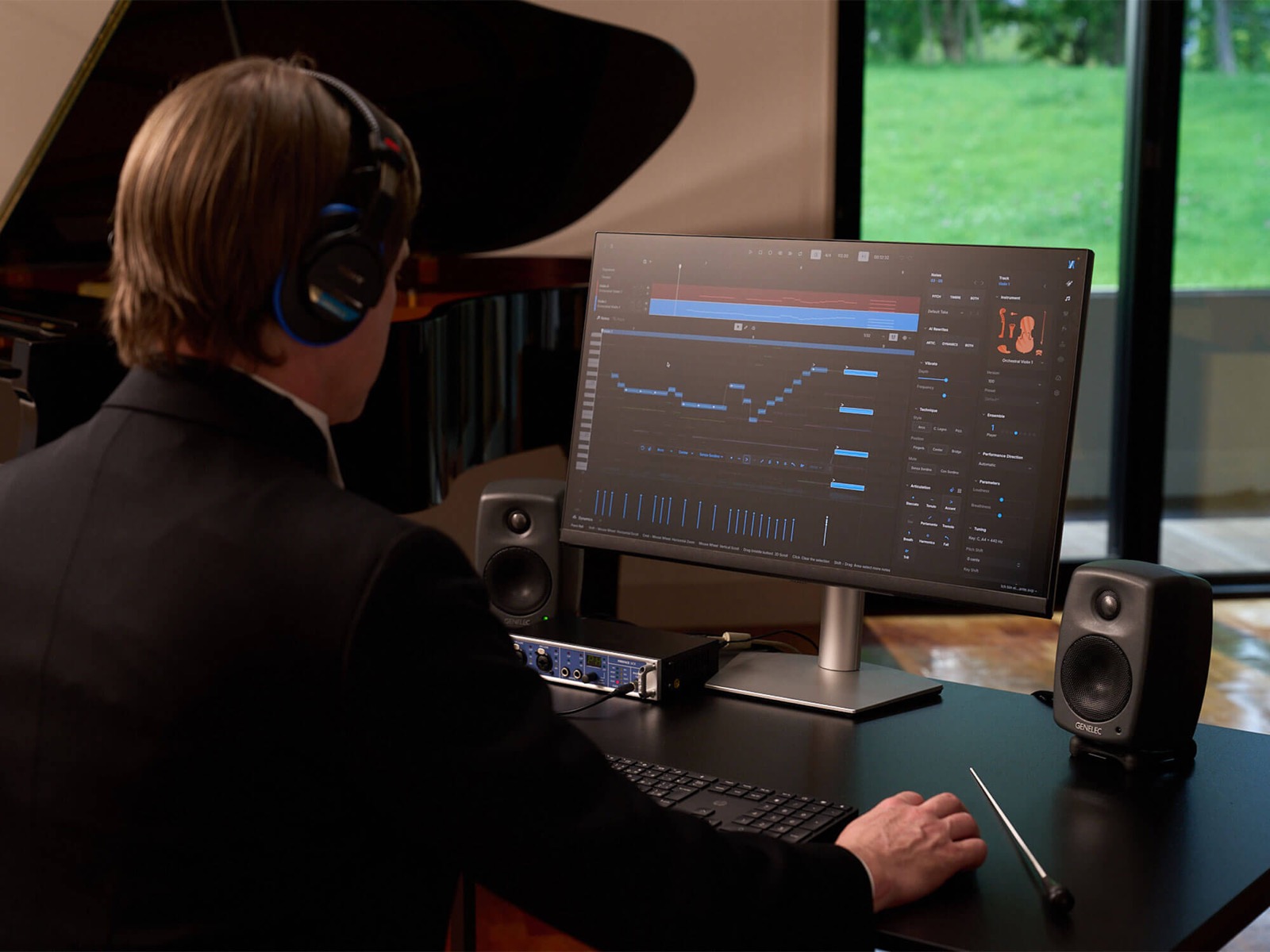
Dreamtonics announced Instrument X, an orchestral plugin that uses AI to control how an instrument is physically played. Breath pressure on the winds. Bow friction on the strings. The company calls the approach “Neural Acoustics Modelling,” MusicTech reported.
Dreamtonics is the Japanese developer behind Synthesizer V, its AI vocal software. Instrument X points the same idea at orchestras instead of voices.
How Instrument X differs from a sample library
A sample library plays back recordings. Push the dynamics and you are switching to a louder recording, or turning one up, which is why sampled brass and strings tend to get louder without changing character.
Instrument X models the behaviour that makes the sound instead. Blow harder into a real trumpet and the tone gets brighter and edgier, not just louder. Dreamtonics says its modelling produces that kind of contrast rather than volume changes with effects layered on top.
What 3D Sound-Field Control does with microphone placement
Instrument X also carries a feature Dreamtonics calls 3D Sound-Field Control, which puts instruments into mockups of different microphone configurations: spot mics, a Decca Tree, ambient pairs.
Those are the standard ways an orchestra gets recorded. A spot mic sits close to one section. A Decca Tree is a three-microphone array hung over the ensemble to capture the whole room. Choosing between them decides how close and how wide the result sounds, which is normally locked in at the recording session and not something you can change later in a sample library.
Dreamtonics on why the AI part is not the hard problem
The company’s framing of the engineering is worth noting, because it cuts against how most AI music tools get marketed.
While it may sound incredibly difficult to transcend the static constraints of traditional sample playback to achieve a fluid, organic performance, the 'AI-driven' synthesis is actually the straightforward part.
What Instrument X would change for producers writing orchestral parts
If you write orchestral parts in a DAW, the tell has always been the dynamics. Sampled strings sit flat under a vocal because the crescendo is a volume ramp, not a player leaning in, and no amount of automation fixes a recording that was captured at one intensity.
Modelling the playing itself is the fix for that specific problem, and it removes the sample-library workaround of stacking articulations across separate tracks.
Dreamtonics has not published pricing, a release date, or the list of instruments included. I have not tested it, and a demo of modelled strings is not the same as modelled strings holding up in a mix.
Frequently asked questions
What is Dreamtonics Instrument X?
Instrument X is an orchestral instrument plugin announced by Dreamtonics in August 2026. It uses AI to control the physical elements of how an instrument is played, including breath pressure on winds and bow friction on strings, aiming for the dynamic variation of a live player rather than the fixed character of a recorded sample.
What is Neural Acoustics Modelling in Dreamtonics Instrument X?
Neural Acoustics Modelling is the name Dreamtonics gives to its synthesis approach in Instrument X. Rather than playing back recorded audio and adjusting volume or effects on top, it models the physical behaviour that produces the sound, so changes in playing intensity alter the tone itself the way they would on a real instrument.
What does 3D Sound-Field Control do in Instrument X?
It places instruments inside mockups of different microphone configurations, including spot mics, a Decca Tree and ambient pairs. Those are standard setups for recording an orchestra, so the feature is aimed at getting a room and a position rather than a dry signal needing reverb added afterwards.
Who is Dreamtonics, the company behind Instrument X?
Dreamtonics is a Japanese music software developer, best known for Synthesizer V, its AI vocal synthesis software. Instrument X applies a similar modelling approach to orchestral instruments instead of voices.
About the author

Covering AI music tools, industry shifts, and news for music creators and professionals. Twice-weekly newsletter at aimusicpreneur.com.