How to sell music on Shopify with Lovable and Single
My stack My fav 6 tools for AI music after testing 70+
-
 ElevenMusic · Music generation
 -
 Moises · Stem separation
 -
 Controlla · Voice swap & cloning
 -
 Cryo Mix · Mixing + mastering
 -
 Neural Frames · Music videos
 -
 ONCE · Distribution
Some links are affiliate links — I earn a commission at no cost to you. Every tool here is one I run myself and truly believe in. This stack is proven.
Your music lives on Spotify’s domain. Your fans live on Instagram’s servers. Your Linktree points at both. If any of them changes the rules tomorrow, you start from zero.
I had 500K plays on Myspace when the platform collapsed. Every one of them vanished overnight.
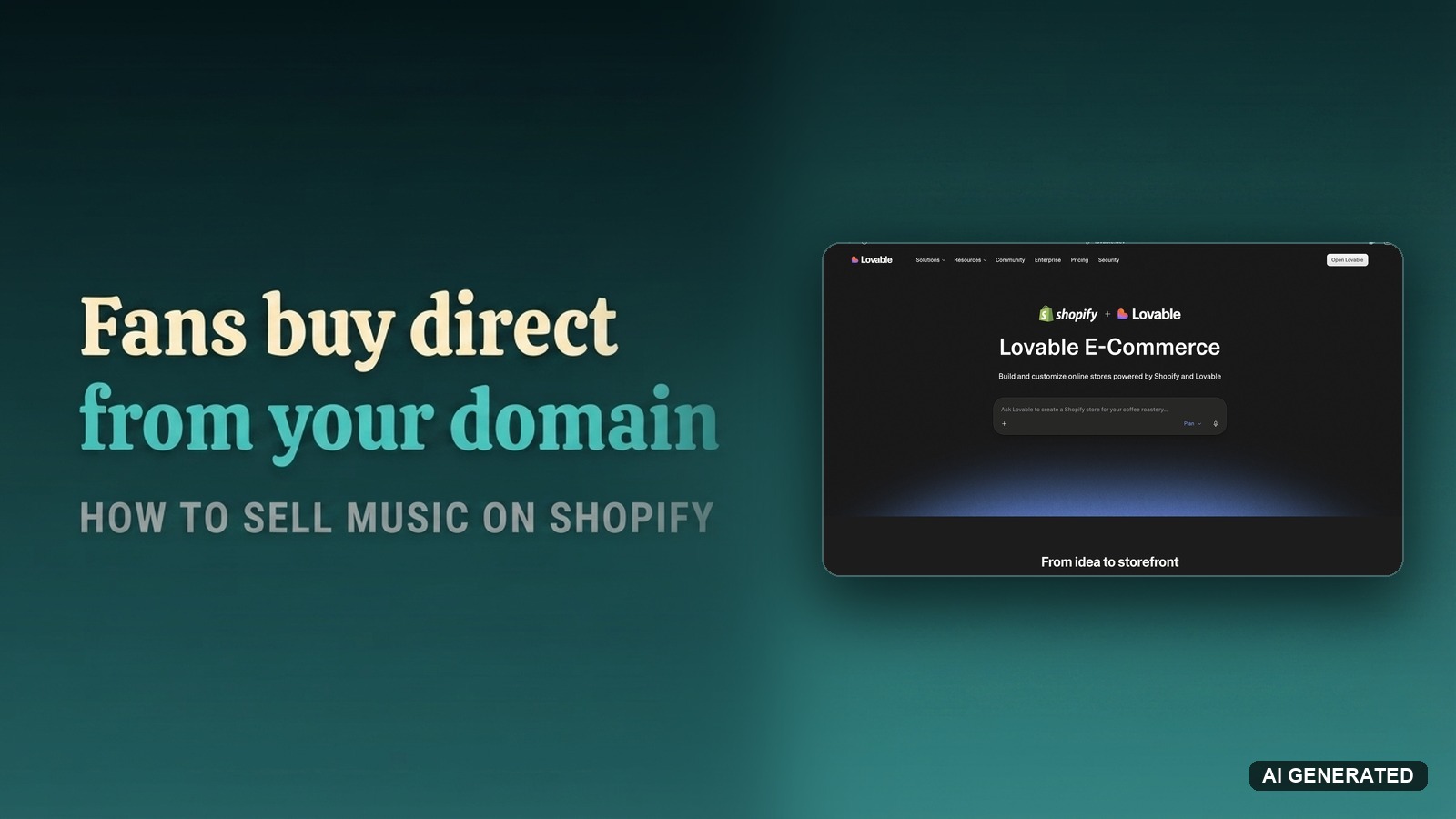
Three tools fix this in a weekend, with no code and no agency invoice. Lovable builds the storefront from a written prompt. Shopify runs the checkout and your domain. The Single app adds the music.
This guide walks you through all 5 links in the chain. You will leave with a store on a domain you own, your track for sale on it, and an email list you can sell the next release to.
What you need before you start
- One finished, mastered release you have the rights to sell
- Some social traction, even 500 followers, so there is someone to sell to
- A logo, 2 hex codes, and 2 fonts (headline and body)
- A card for the domain, roughly $15 a year
- A free weekend
If you have zero songs out, this is the wrong week for it. Put the first single on streaming first, then come back. My 30-day single release plan covers the order.
Why sell music on Shopify instead of Bandcamp or a Linktree
Bandcamp hosts your page on its domain and brings its own browsing audience. Linktree hands visitors to whoever pays for the click. Both rent you the relationship.
Single runs inside your Shopify store. Fans land on your URL, check out with you, and their email addresses export to a CSV whenever you want. Payouts land in your Shopify account.
The chart reporting is the part most artists miss. Eligible sales through Single report daily to Billboard, OCC, ARIA, and FIMI. Jelly Roll ran a live preorder event on Shopify for Whitsitt Chapel and the record hit No. 1.
What the Shopify music stack costs
| Link | Free tier | Paid |
|---|---|---|
| Lovable | 5 build credits a day, up to 30 a month | Pro $25 a month, 100 credits |
| Shopify | Sandbox store free, then a 120-day trial after you claim | Basic $39 a month, or $29 a month billed annually |
| Single | Starter, $0 a month plus fees | Bronze $20, Silver $49, Gold $119 a month |
| Domain | none | roughly $15 a year |
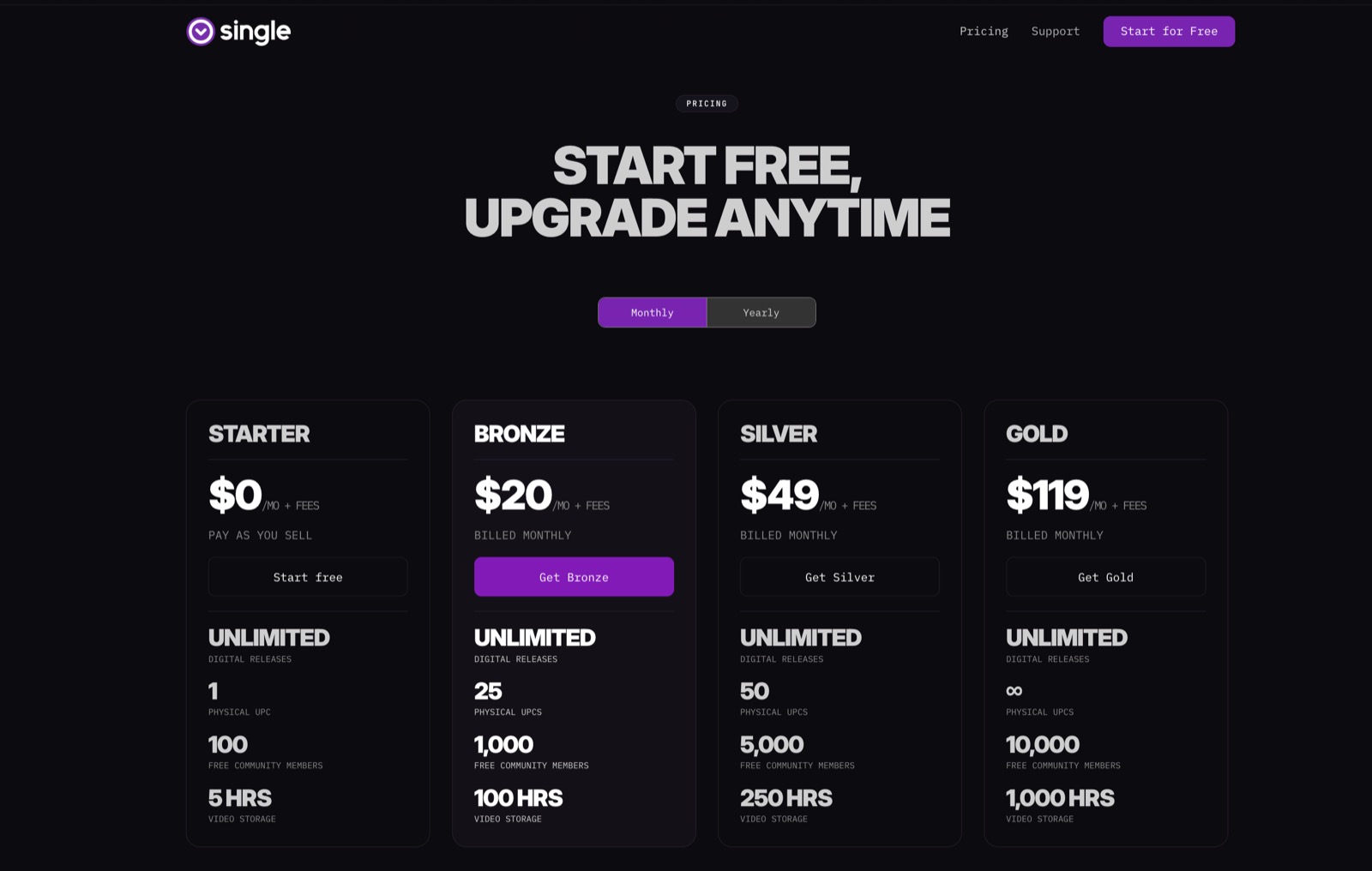
Read the free Starter column carefully, because it decides whether you ever need to upgrade. Digital releases are unlimited on every tier, including the free one. You can sell your entire catalogue on Starter and pay nothing monthly.
What Starter caps is everything around the music: 1 physical UPC, 100 free community members, and 5 hours of video storage. Hit 101 fan club members and you’re on Bronze at $20.
Note the ”+ fees” next to all 4 prices, free tier included. Single takes a cut of sales on top of the monthly number, which is how a $0 plan pays for itself.
Building the whole thing costs $0. The bill starts when the trials end, and the floor after that is $29 a month for Shopify Basic on annual billing with Single sitting on free Starter.
Step 1: Build the storefront in Lovable
Go to lovable.dev/shopify, sign in, and start a new project with the Shopify integration.
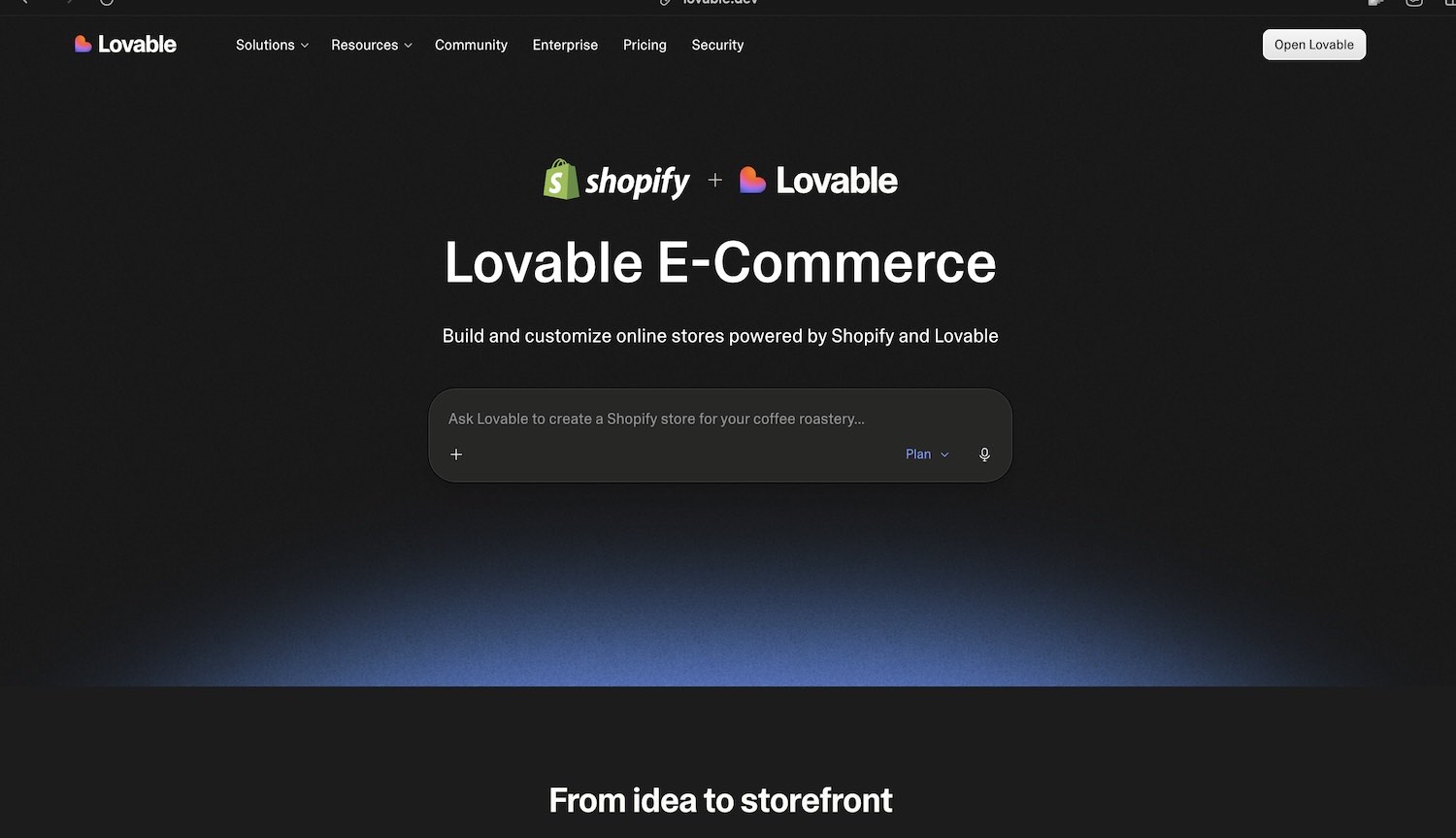
Lovable then asks one question that decides the rest of your weekend.
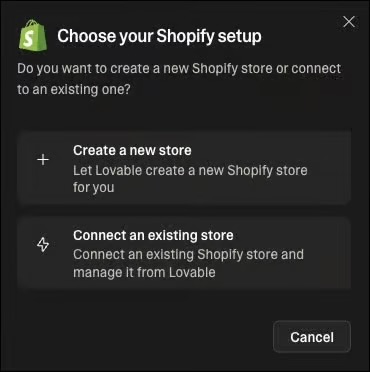
Pick Create a new store and Lovable spins up a sandbox development store at no Shopify cost. Pick Connect an existing store if you already sell merch on Shopify, and Lovable rebuilds the storefront on top of the products, orders, and customers you already have. The steps below assume a new store.
- Upload your brand assets: logo, hex codes, fonts, press photos, and screenshots of any site whose layout you want to borrow.
- Paste the prompt below with your own details filled in.
- Iterate with follow-up prompts like “make the header black” or “move the email signup above the fold”.
Build an online store for [artist name], a [genre] artist.
Pages: a home page featuring my release [release name], a music page,
a fan club page, and merch. Add an email signup section offering
[freebie] as a free download in exchange for an email address.
Use the brand assets I uploaded: my logo, the colors [hex codes],
and the fonts [font names]. Follow the layout of the screenshots
I attached. Mobile first.
Feed it your styleguide, never your cover art. Artwork changes with every release. The site has to hold all of them, so build on the assets which stay put: logo, colors, fonts.
No styleguide yet? Pick 2 hex codes, 1 headline font, and 1 body font, then commit. You now have a styleguide.
One honest caveat: the sandbox can’t take real payments, and Shopify deletes development stores left unclaimed for 30 days. Claim yours inside the window or the weekend was wasted.
You walk away with a finished storefront on a preview URL, wired to a sandbox Shopify backend.
Step 2: Claim the Shopify store and turn on payments
- When Lovable prompts you, claim the store. Claiming migrates it to your Shopify account, makes you the owner, and starts a separate 120-day free trial.
- Activate Shopify Payments in settings so checkout takes real cards.
- Buy your domain (or connect one you own) under Settings, then Domains.
Don’t confuse the two windows. The 30-day one decides whether you keep the store. The 120-day one is the free trial, and it only starts after you claim.
One honest caveat: a paid Shopify plan kicks in when the 120 days run out. Shopify bills it directly, separate from anything you pay Lovable.
You walk away with real checkout on your own domain.
Step 3: Install Single and upload your first digital release
- Install Single from the Shopify App Store. Installing is free.
- Open Digital Releases and create a new release: cover art, title, artist name, release date, price, genre.
- Upload your lossless WAV. Publish the release as its own product, or attach the files to a merch bundle.
- Set a preorder date if the record is still upcoming.
Single launched in January 2018 and holds a 4.5 rating across 54 reviews on the Shopify App Store. The Single team’s own walkthrough runs 3 minutes and 21 seconds and covers the upload screen if you want to watch it once before doing it.
One honest caveat: usage fees and content limits apply on every tier, including the free one. Read the pricing page at single.xyz before a big drop.
You walk away with your track for sale on your domain, chart-eligible, with payouts landing in your Shopify account.
Step 4: Turn buyers into a fan club with Single memberships
Single’s membership feature runs free or paid tiers with gated content, email notifications, presale codes, unreleased cuts, vinyl subscriptions, and a group chat on your URL.
Single’s demo store shows the shape a fan club should take:
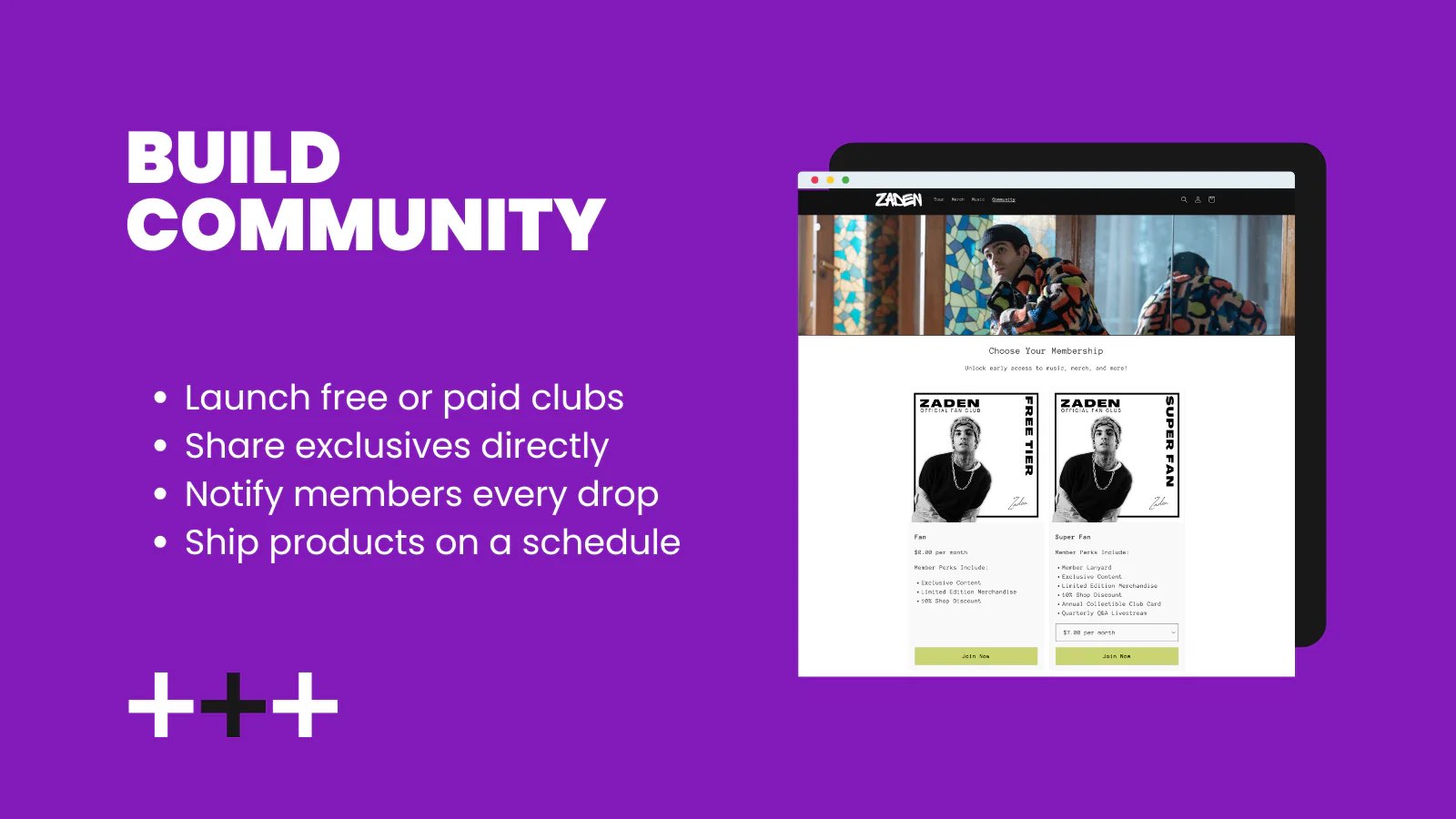
The free Fan tier still lists real perks: exclusive content, limited edition merchandise, and a 10% shop discount. The paid Super Fan tier sits at $7 a month and adds a collectible club card and a quarterly Q&A livestream. That gap is the whole design. The free tier costs a fan nothing but an email address, so it does the work of a mailing list signup while feeling like a club.
Single sells video the same way, with ticketed livestreams and rentals that put live chat and your products inside the player:
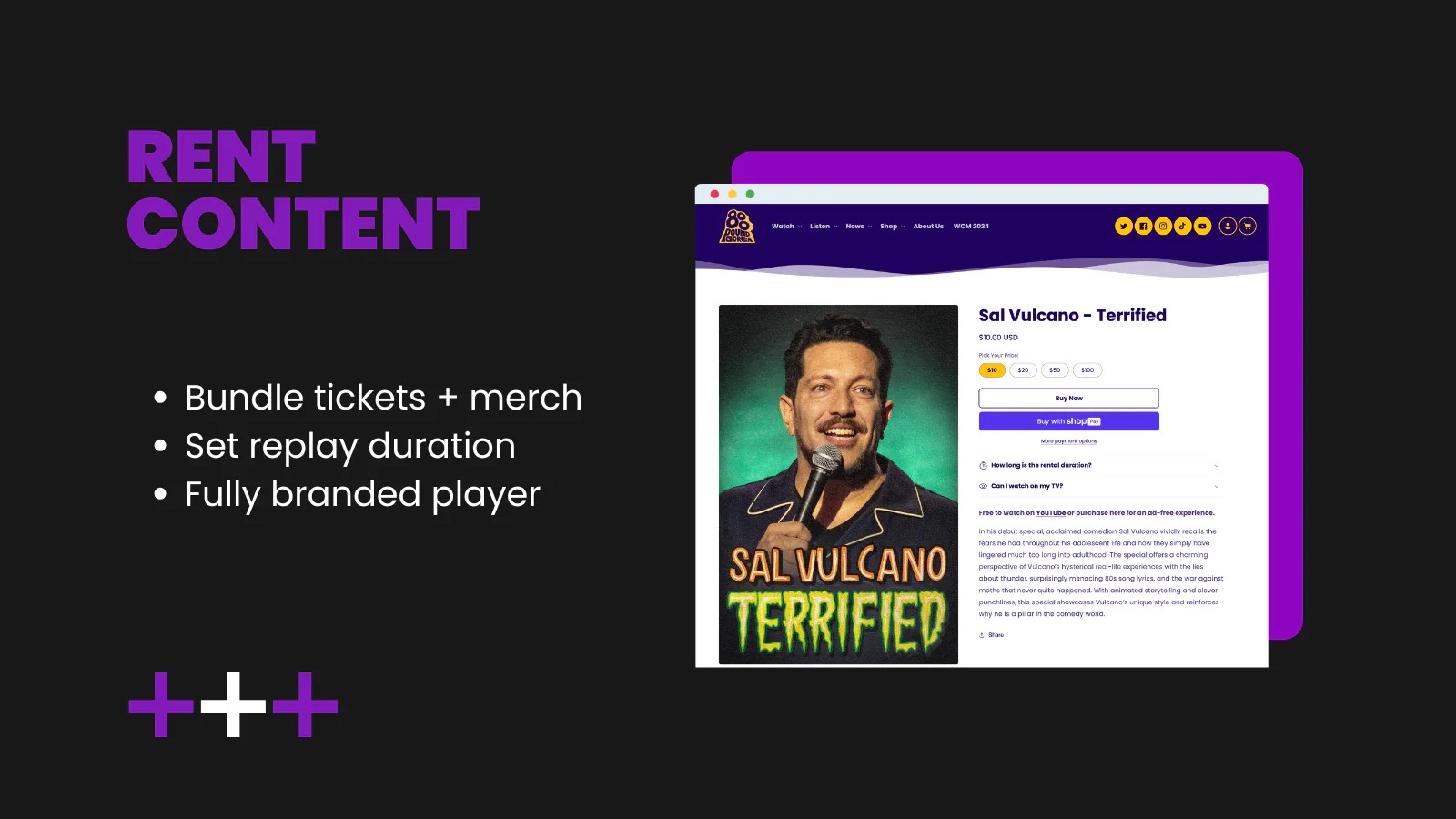
The Sal Vulcano rental runs $10, and the pick-your-price row above the buy button offers the same rental at $20, $50, or $100. Fans who want to pay you more can, without you building a second product.
A store fans visit once a year is a merch table. A club with a pulse brings them back. Here’s how to give it one:
- Pick one repeatable ritual you can sustain: a demo every Friday, or first dibs on tickets.
- Put the ritual behind the free tier, so joining costs an email address.
- Save one bigger exclusive (stems, a monthly livestream) for the paid tier, and price it near $7 rather than $25.
One honest caveat: only gate what you can feed. A group chat with tumbleweeds reads worse than no chat. Watch the ceiling too: Single’s free Starter tier stops at 100 community members and 5 hours of video storage, so a fan club that works pushes you onto Bronze at $20 a month.
You walk away with a members area running one weekly ritual and an exportable email list.
Step 5: Launch to your email list before streaming
This link stays human. What to gate, what to charge, and what to say to fans is your call.
Swap every social bio link from your Linktree to the freebie page. Post like normal, and each post now feeds the list. Two weeks before release day, open the preorder on your store and email the list first. Your true fans buy the deluxe edition from you at full price before Spotify streams it for fractions of a cent.
Skip pre-save links. A pre-save nudges an algorithm once and loses the fan. A freebie captures an email address you can use for every release after this one. My guide to email marketing for musicians covers the welcome sequence.
Single connects to Klaviyo and Laylo for email and ShipStation for fulfillment, so the addresses you collect flow into whatever you already send from.
A stream rents you a listener for 3 minutes. A store on your domain earns you a fan with an email address.
You walk away with a release-day machine you own end to end.
The weekend build, hour by hour
Say you make dark synthwave, you have 900 Instagram followers, and one finished EP. Your freebie is an unreleased B-side, your paid exclusive is the stems of the title track, and success in month 1 looks like 50 emails and 10 direct sales.
Saturday morning: prompt the storefront in Lovable and iterate, 2 to 3 hours. Saturday afternoon: claim the store, switch on payments, connect the domain, about 1 hour plus DNS waiting. Sunday: install Single and upload the EP with a preorder date, 1 hour. Build the free tier with the B-side behind an email gate, 1 hour. Swap your bio links, 15 minutes.
First run: a weekend. The second release reuses every link, so budget 2 hours.
One to watch: CNKT
Tommy Danvers sent me his new project while I was writing this. He produced records with Kylie Minogue, Janet Jackson, Beyoncé, and Adele, and he ran the Credit Where Credit Is Due campaign for crediting music professionals, so I read the pitch properly.
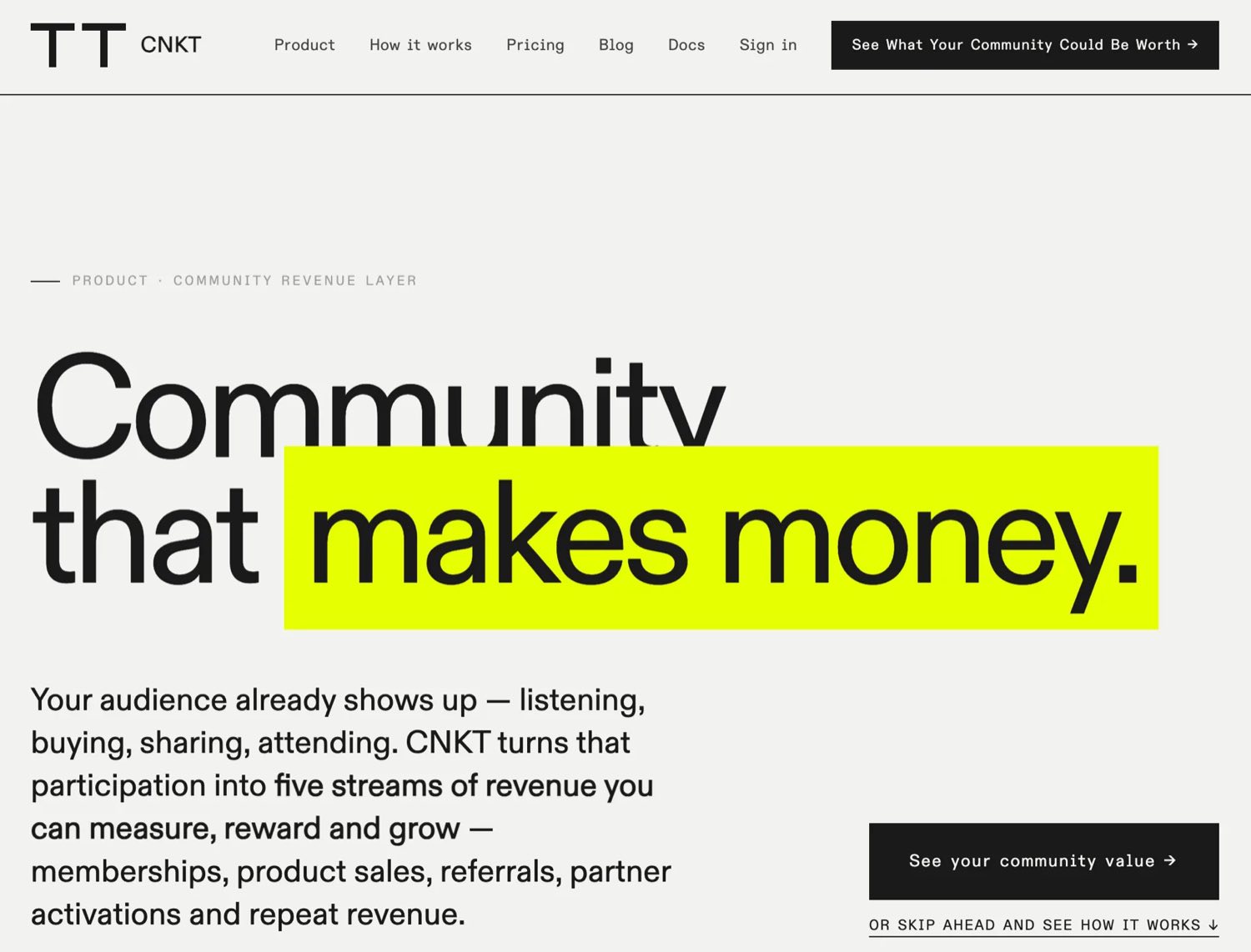
CNKT connects to your Shopify store and lets you vibe-code a direct-to-fan storefront with AI (Claude runs the build). The site pitches itself as a community revenue layer across 5 streams, including memberships, product sales, and referrals.
The part Tommy flagged to me: every product you create lives on the blockchain. When an artist stops releasing and the site goes dark, fans normally lose whatever they bought. On CNKT a digital collectible stays in the fan’s hands with or without the website.
I haven’t tested it, and the persistence claim comes from Tommy rather than from anything I’ve verified. Build on Single today. Keep CNKT on the list.
Where this stack falls short
It converts attention. It doesn’t create any. If nobody sees your content, this weekend won’t fix your month, and the top of the funnel is the job to do first. My music promotion strategies guide covers that half.
The costs stack too. Shopify Basic, Single’s Bronze tier, and a Lovable Pro subscription together run about $84 a month if you take all 3, and Single’s usage fees come off the top of every sale. That’s real money against 10 sales at $12. Start on the free tiers and upgrade only when the sales pay for it.
AI gets the store roughly 80% done. Taste and fan relationships stay your job.
Pick link 1 and run it today. Open lovable.dev/shopify, write the prompt, and look at your first storefront before bed. The rest can wait for the weekend.
Frequently asked questions
Can you sell music on Shopify?
Yes. Shopify handles checkout and payouts, and the Single app adds the music layer on top: lossless downloads, preorders, deluxe bundles, and fan memberships. Single is free to install from the Shopify App Store and is used by more than 30,000 artists.
What is the Single app on Shopify?
Single is a Shopify app built by Single, Inc. in Nashville and launched in January 2018. It sells digital music, pay-per-view video, livestreams, and content memberships inside your own Shopify store, and it reports eligible sales to the charts. It holds a 4.5 rating across 54 reviews on the Shopify App Store.
Does Single report music sales to the Billboard charts?
Eligible sales made through Single report daily to Billboard, OCC, ARIA, and FIMI. Jelly Roll used a live preorder event on Shopify for Whitsitt Chapel and took the record to No. 1.
How much does it cost to sell music on Shopify with Lovable and Single?
Building costs $0: Lovable's free plan grants 5 build credits a day and the Shopify sandbox store is free. Claiming the store starts a 120-day Shopify trial. After that, Shopify Basic runs $39 a month billed monthly or $29 a month on annual billing. Single installs free on its Starter tier, which allows unlimited digital releases and caps community members at 100; Bronze is $20 a month, Silver $49, and Gold $119. Every Single tier adds usage fees on sales.
Do I need to code to build an artist store with Lovable?
No. You describe the store in plain language and Lovable builds the pages. Design changes happen through follow-up prompts like "make the header black" or "move the email signup above the fold".
Can Lovable connect to a Shopify store I already have?
Yes. Lovable's setup dialog offers "Create a new store" or "Connect an existing store". Connecting keeps the products, orders, and customers already in your Shopify account and rebuilds the storefront around them, so artists already selling merch don't start over. The 30-day claim window and the 120-day trial only apply to newly created stores.
How much does a Single fan club membership cost fans?
You set the price. In Single's own demo the free Fan tier costs an email address and still carries perks like exclusive content and a 10% shop discount, while the Super Fan tier runs $7 a month and adds a collectible club card and a quarterly Q&A livestream. Single also supports pick-your-price on video rentals, where the same rental is offered at $10 up to $100.
How long does the Lovable Shopify sandbox store last?
Shopify deletes development stores left unclaimed for 30 days after creation. Claim yours inside that window or the build is gone. Claiming is a separate thing from the 120-day free trial, which only starts once you claim.
Can I sell lossless WAV files on Shopify?
Yes. Single's Digital Releases feature hosts lossless audio and delivers the download after checkout. You can publish the release as its own product or attach the files to a merch bundle.
Is Single better than Bandcamp for selling music direct?
They solve the problem differently. Bandcamp hosts your page on its domain and brings its own browsing audience. Single runs inside your Shopify store, so fans land on your URL, you export their emails, and payouts go to your Shopify account. Bandcamp is easier to start; Single gives you the customer list.
Does Single work with Klaviyo or Laylo for email?
Yes. Single connects to Klaviyo and Laylo for email, plus ShipStation for fulfillment, so the fan emails you collect flow into the tool you already send from.
What percentage does Shopify take from music sales?
Shopify charges a card processing rate per transaction through Shopify Payments on top of your monthly plan, and Single applies usage fees and content limits on every tier. Check the current numbers on Shopify's pricing page and at single.xyz before a big drop.
About the author

Covering AI music tools, industry shifts, and news for music creators and professionals. Twice-weekly newsletter at aimusicpreneur.com.