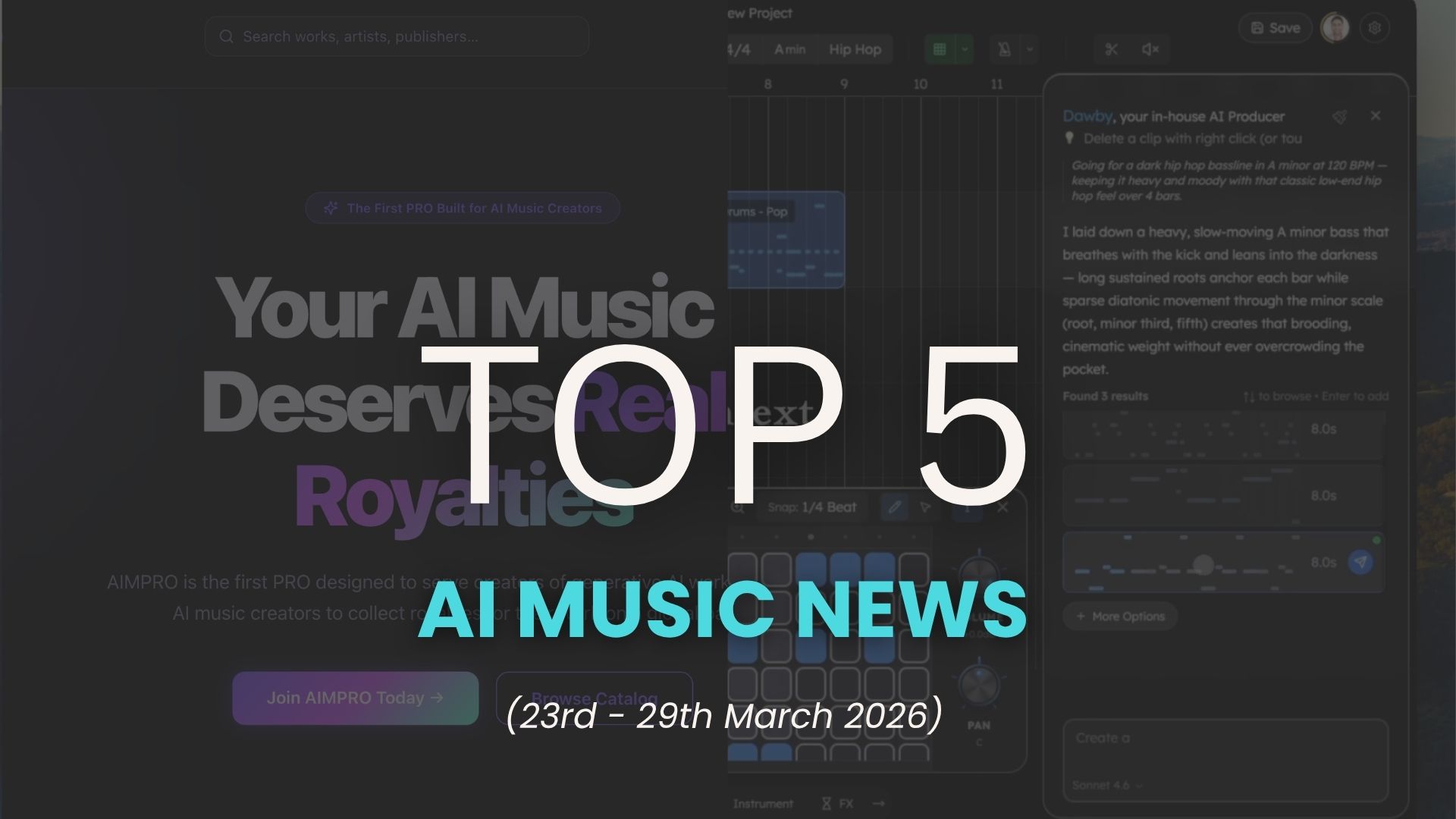
Top 5 AI Music News (March 23rd – 29th 2026)
My stack My fav 6 tools for AI music after testing 70+
-
 ElevenMusic · Music generation
 -
 Moises · Stem separation
 -
 Controlla · Voice swap & cloning
 -
 Cryo Mix · Mixing + mastering
 -
 Neural Frames · Music videos
 -
 ONCE · Distribution
Some links are affiliate links — I earn a commission at no cost to you. Every tool here is one I run myself and truly believe in. This stack is proven.
1. Veena launches CoProducer: An AI copilot that builds your song layer by layer
DAWs have always demanded technical knowledge that stops most beginners cold. Veena, an LA-based startup, released Co-Producer, a browser-based AI copilot that builds music productions layer by layer inside a multitrack editor.
You describe your idea in plain English. CoProducer generates beats, basslines, chords, melody, and SFX step by step. It applies FX chains and designs tone to match your vibe. The key detail: it does not make musical decisions for you. It generates options and lets you choose. If nothing fits, you refine your prompt or record your own layers directly in the DAW.
“Veena’s philosophy is to reduce every single point of friction in the process of music production,” said founder Palaash Agrawal. The platform runs entirely in your browser at $10/month with no download required. For aspiring producers who quit because the learning curve felt impossible, CoProducer removes the technical barriers and lets you focus on creative direction. Veena aims to expand beyond beginners and become a standard tool for musicians at all levels.
2. AIMPRO launches as the First PRO built for AI music creators
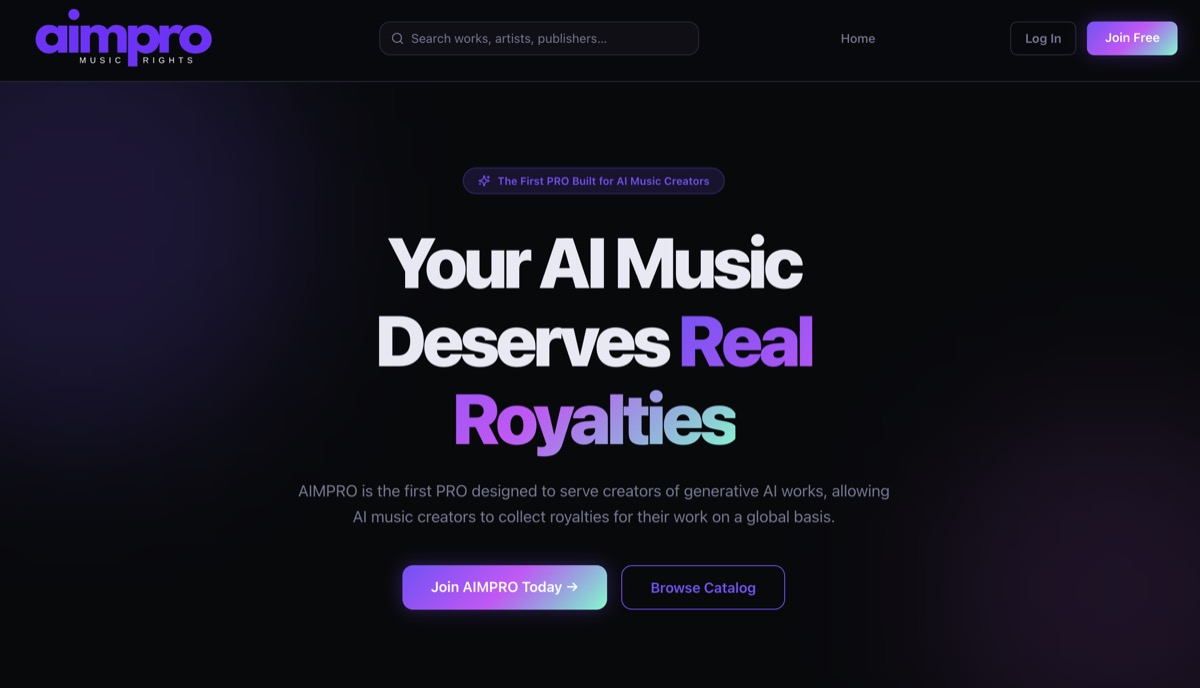
Traditional performance rights organizations like ASCAP, BMI, and SESAC require human authorship. If you make music with AI, you’ve had no clear path to collect performance royalties. AIMPRO wants to change that.
AIMPRO launched as the first PRO designed specifically for creators of AI-generated music. The platform lets you register your works, collect royalties from streaming, sync, and public performances, and track earnings through a real-time dashboard. Membership is open to AI model operators, developers, and anyone generating music with AI tools.
AIMPRO promises monthly payouts, compared to the 12-18 month distribution cycles common at traditional PROs. The organization was announced at a US conference this week. Details are still thin. No information on licensing agreements with platforms or venues has surfaced yet. If you’re earning from AI music, keep an eye on this one, but wait for more clarity before expecting real royalty checks.
3. ElevenLabs Flows lets you build AI audio-visual pipelines with drag-and-drop nodes
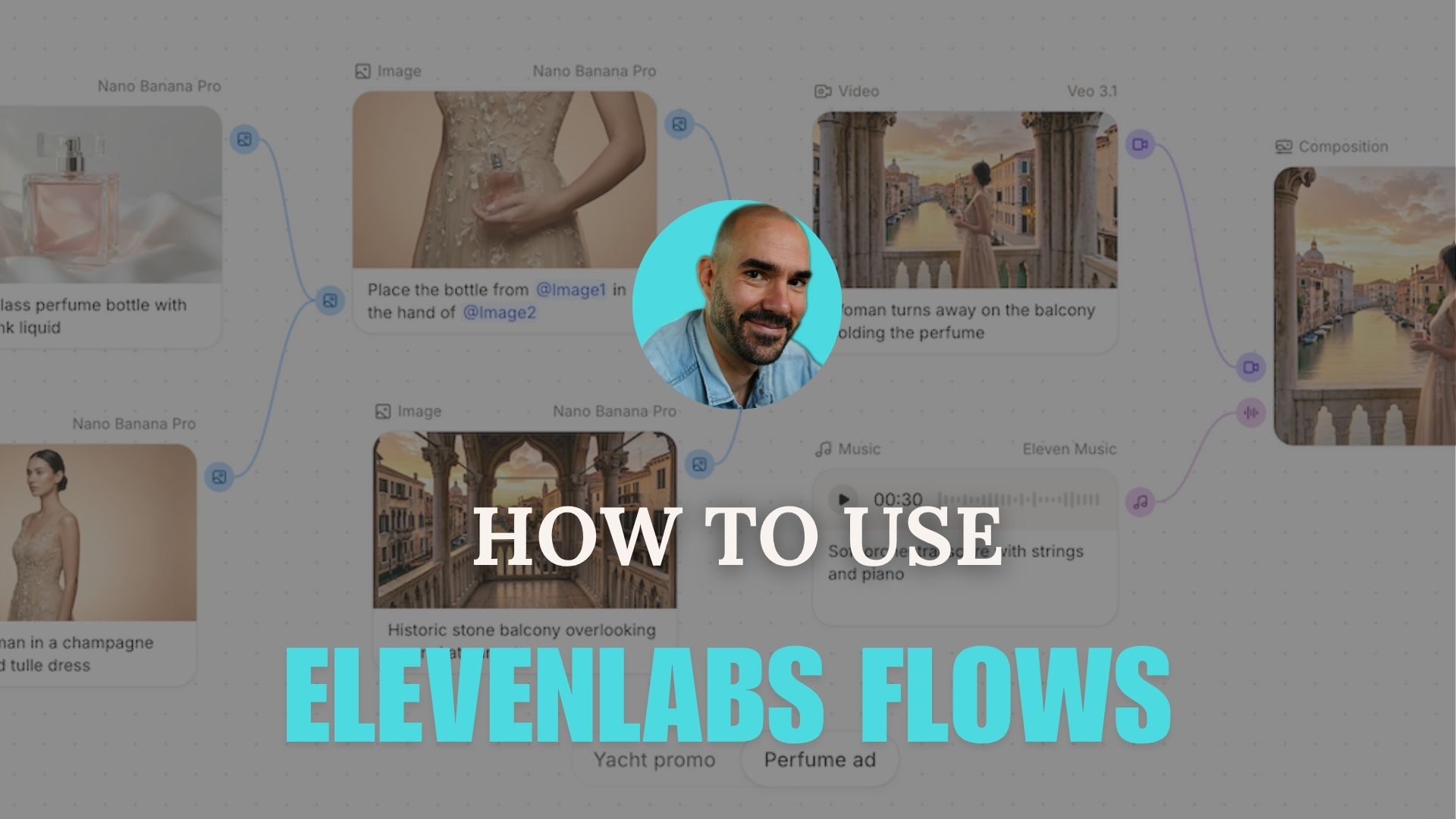
ElevenLabs released Flows, a node-based workspace inside ElevenCreative that lets you chain AI voice, SFX, music, and video models on an infinite canvas. The tool connects 35+ image and video models to the native audio suite through drag-and-drop nodes. You build reusable pipelines for tasks like multi-language dubbing, SFX scoring, and video ad creation.
Ten node types are available at launch: Image Generation, Video Generation, Text to Speech, Sound Effects, Music (via ElevenMusic), Composition, Text, Upload Media, Lipsync Generation, and Upscale. The workspace supports non-destructive iteration. Tweak one node and re-run it without regenerating the entire pipeline. This saves time and credits.
For music producers, the standout workflow is the music video storyboard engine. Upload your finished track, feed scene descriptions into image and video generation nodes, and build a full visual package without leaving the platform. Flows runs on paid ElevenLabs plans using per-node credits. API access is planned for a future release.
4. Suno v5.5 lets you sing with AI using your own voice
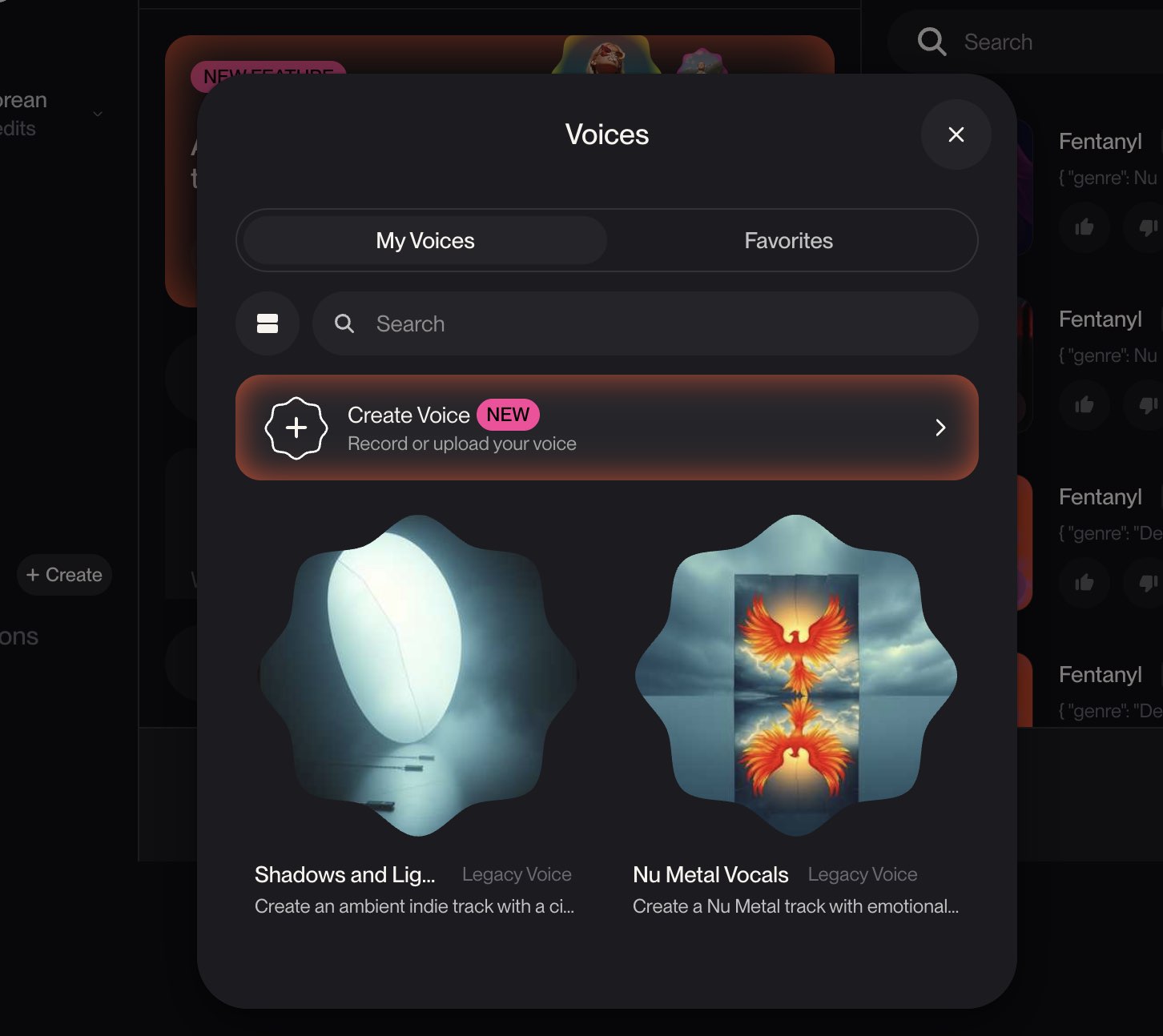
Suno launched v5.5 on March 26, 2026, adding its most requested feature: Voices. Pro and Premier subscribers upload 30 seconds to 4 minutes of singing audio and generate AI songs using their own vocal characteristics. The feature costs 4 credits per creation during beta.
You record or upload a sample, trim it, verify your identity by speaking a random phrase, and save your voice profile. An audio Influence slider (0-100) controls how much of your vocal identity appears in the output. Testing at 85% produced roughly 70% voice resemblance. The limiting factor is sample quality. Showcase your full vocal range for the best results.
One detail to note: a consent checkbox grants Suno permission to use your voice data to “train, develop, fine-tune or otherwise improve” their AI models. You cannot skip this step.
The update also includes Custom Models, which let you upload 6+ original tracks to create a personalized version of v5.5, and My Taste, which learns your preferred genres and moods over time. If you want to demo song ideas with your own voice without a full recording setup, this is the most accessible option available right now.
5. Timbaland’s AI Artist TaTa Taktumi signs record deal at 2,200 monthly Spotify listeners

TaTa Taktumi, the AI artist created by Timbaland’s entertainment company Stage Zero, signed with Ne-Yo’s Pacific Music Group (PMG) as worldwide label and exclusive Asia manager. The deal came nine months after launch with under 2,200 monthly Spotify listeners and roughly 45,000 streams.
PMG’s announcement revealed something new: a real person of Filipino heritage performs behind the AI persona, though their identity stays private. CEO Jonathan Serbin called it “”a homecoming”” and framed the Filipino heritage reveal as a strategic bridge into Asian markets. The signing bets on AI artist infrastructure and producer credibility over current streaming numbers.
The deal carries legal exposure that no press materials addressed. TaTa’s music is generated on Suno, and Timbaland serves as Suno’s strategic advisor. Suno faces a GEMA lawsuit in Germany with a ruling due June 12, 2026, plus separate RIAA lawsuits from Sony, UMG, and Warner. Any adverse ruling could affect the legal standing of content generated on the platform. For comparison, AI artists like Velvet Sundown reached 550,000 monthly listeners in 30 days. If you are building an AI artist project, the Suno litigation timeline is the signal to watch closely.”
About the author

Covering AI music tools, industry shifts, and news for music creators and professionals. Twice-weekly newsletter at aimusicpreneur.com.