GEMA just sued Suno AI for using hits like Mambo No. 5 without paying royalties
KEY TAKEAWAYS
- GEMA files a lawsuit against Suno Inc. for using copyrighted songs in its AI music tool without paying royalties.
- The AI tool generates audio content similar to hits like Forever Young and Mambo No. 5.
- This lawsuit highlights the growing tension between AI companies and creators over fair compensation.
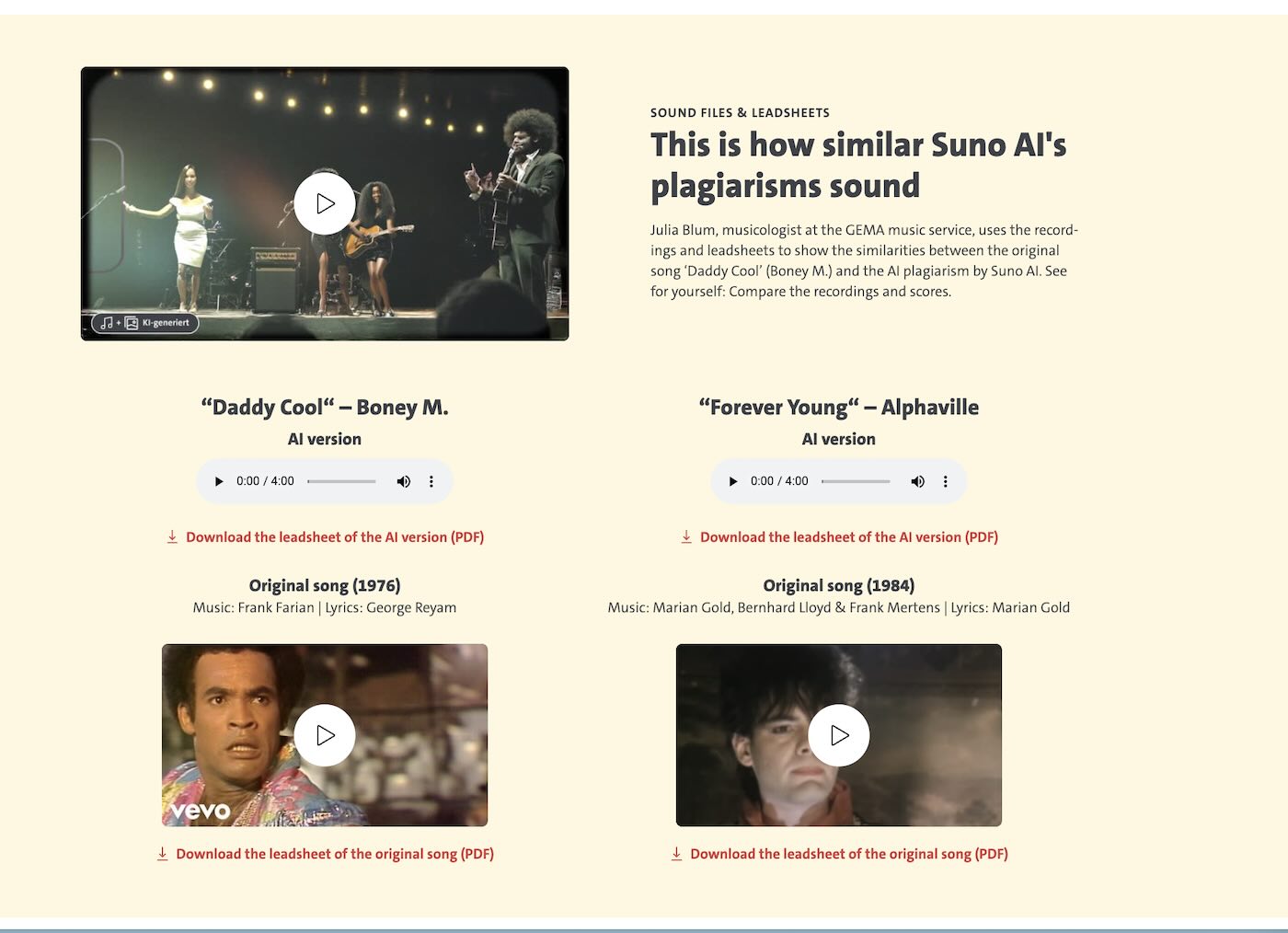
On January 21, 2025, GEMA, a major music rights organization, sued Suno Inc., an American AI company, in Munich Regional Court. This follows GEMA’s recent work to create fair rules for AI music. GEMA says Suno’s AI tool uses songs from its catalog without permission, making new songs that sound like Cheri Cheri Lady and Daddy Cool.
Why This Matters Now
AI tools like Suno’s can make music in seconds by learning from existing songs. GEMA, which represents over 95,000 creators, says this practice harms artists by cutting into their earnings. This lawsuit follows GEMA’s earlier case against OpenAI in November 2024, showing the group’s push to protect musicians in the AI era.
Universal Music’s CEO Lucian Grainge has also taken a strong stand against unauthorized AI use.
What GEMA says:
Dr. Tobias Holzmüller, CEO of GEMA:
“Human creativity is the basis of all generative AI. But this market has so far lacked basic principles such as transparency, fairness, and respect.”
Dr. Ralf Weigand, Chairman of GEMA’s Supervisory Board:
“If we don’t want to do without man-made music in the future, we urgently need a legal framework that guarantees authors an appropriate share of the value created by AI providers.”
Dr. Kai Welp, General Counsel of GEMA:
“Providers of generative AI must respect copyright law and remunerate authors for their creative work. Unfortunately, many AI providers have deliberately ignored this matter in the past.”
What’s next:
The lawsuit could set new rules for how AI companies use copyrighted music. New tools like SpaceHeater could soon help artists track and get paid for AI use of their songs. Major labels are also taking action to protect their artists’ rights.
If GEMA wins, it may force AI providers to pay royalties or get licenses, ensuring artists are compensated. This case is part of a larger global debate about AI, creativity, and copyright.
Frequently asked questions about the Gema vs Suno lawsuit:
Frequently asked questions
1. Why is GEMA taking legal action against Suno and OpenAI?
GEMA supports AI innovation but insists that creators must be fairly paid when their works are used to train AI systems. Suno’s tool generates music strikingly similar to GEMA’s repertoire, infringing reproduction and public performance rights. Similarly, OpenAI’s ChatGPT reproduces song lyrics without proper licensing or payment. GEMA aims to ensure fair compensation for creators while allowing AI tools to operate within legal boundaries.
2. Was Suno trained with works to which GEMA holds the rights?
Yes. Suno has used a vast amount of music available online, including GEMA-protected works. GEMA has evidence, including audio examples, showing that Suno’s outputs closely mimic original songs in melody, rhythm, and even vocal tone. These similarities prove that GEMA’s repertoire was used to train the AI.
3. What does GEMA hope to achieve with these lawsuits?
GEMA wants to secure fair compensation for creators when their works are used by AI systems. The lawsuits aim to challenge the claim that AI training and output generation don’t require licenses or payments. GEMA is pushing for a licensing model that covers AI training, content generation, and further use of AI outputs.
4. Which copyright infringements are involved in the Suno lawsuit?
GEMA found that Suno’s tool generates audio content nearly identical to original works, violating reproduction and public performance rights. These processes require licenses, which Suno failed to obtain. GEMA has selected specific examples of infringing content to support its case.
5. Is GEMA trying to stop AI from using music altogether?
No. GEMA supports AI as a creative tool but insists on fair rules. The goal is to ensure creators are compensated when their works are used, not to block AI development entirely.
About the author

Covering AI music tools, industry shifts, and news for music creators and professionals. Twice-weekly newsletter at aimusicpreneur.com.