Qobuz hits 1.2 million users with anti-AI pledge and human curation
My stack My fav 6 tools for AI music after testing 70+
-
 ElevenMusic · Music generation
 -
 Moises · Stem separation
 -
 Controlla · Voice swap & cloning
 -
 Cryo Mix · Mixing + mastering
 -
 Neural Frames · Music videos
 -
 ONCE · Distribution
Some links are affiliate links — I earn a commission at no cost to you. Every tool here is one I run myself and truly believe in. This stack is proven.
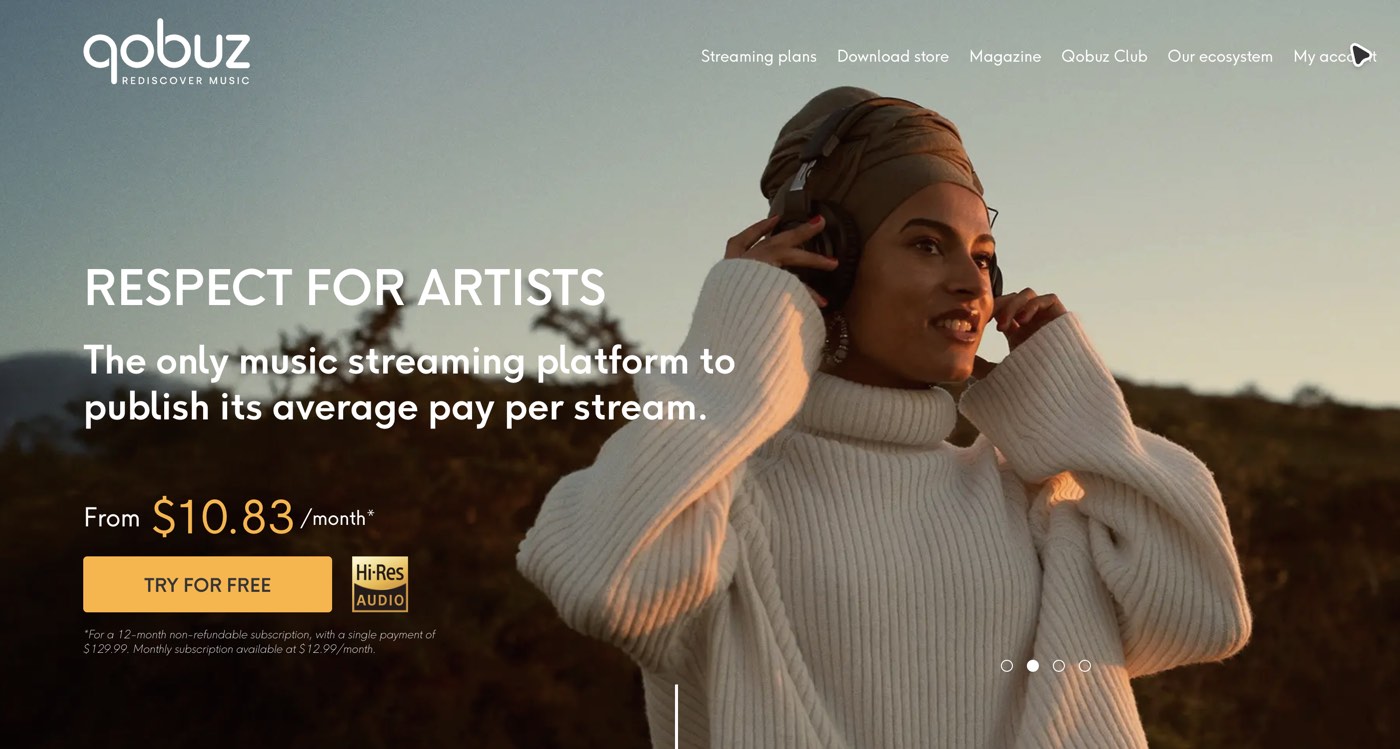
Qobuz, the independently-owned, music-exclusive hi-res streaming and download service, has crossed 1.2 million monthly active users and now sits as the second fastest-growing music and media app in the US for 2025, per SimilarWeb’s Digital 100 report. The platform also ranked third in the UK. Qobuz confirmed the number to Digital Music News on May 26, 2026, alongside what the company describes as a sharp spike in paid subscribers.
The growth runs against the wider streaming trend, and Qobuz is staking the next phase on a hard anti-AI position.
The pledge is the product
CEO Dan Mackta is explicit. Qobuz will not generate audio content, will not replace human curation with AI, and will not use customer data to train external AI models. AI-generated uploads get tagged and either kept out of editorial recommendations or removed outright, mirroring what Deezer’s detection tool already does at higher volume. Playlists and Albums of the Week are picked by human editors.
It's almost so quaint; 'Wow, humans picking music.' Well, it turns out a lot of people love that.
The brand surprise is who showed up. Qobuz expected audiophiles. The 2025 surge brought Chelsea Handler, Christina Hendricks, and a wave of BTS fans buying lossless and hi-res downloads at scale. K-pop superfans are now driving the same retro-tech buying pattern that pushed Stationhead activity. Qobuz is also pairing the digital service with physical retail, launching a tech integration with Rough Trade to add a digital layer to in-store sales, the kind of partnership that maps to the indie 1,000-true-fans economy.
What it means for independent artists and labels
If you release lossless masters, Qobuz is now one of the few platforms where audio fidelity is a marketing argument and not just a setting. The Hi-Res download store is a direct sale, not a fractional-cent stream, and the K-pop wave shows fan communities will actually buy. If you also care about the AI-slop signal-to-noise problem, the editorial-curation pledge is a different kind of distribution opportunity. Pitch the human editors. Spotify still has no AI music filter, and listeners increasingly notice the gap.
Frequently asked questions
How many users does Qobuz have in 2026?
Qobuz confirmed to Digital Music News that it has officially surpassed 1.2 million monthly active users (MAUs) and is seeing what the company describes as a massive spike in paid subscribers. SimilarWeb ranked Qobuz the second fastest-growing music and media app in the United States in 2025 and the third fastest-growing in the United Kingdom.
What is Qobuz's policy on AI-generated music?
Qobuz is identifying and tagging AI-generated tracks, keeping them out of editorial recommendations or removing them entirely from the platform. The company has also pledged not to generate its own audio content, not to replace human curation with AI, and not to use customer data to train external AI models.
Why is Qobuz growing in 2026?
Qobuz CEO Dan Mackta credits a mix of audiophile-first product positioning, 100% human-led curation, and a broader consumer shift toward intentional listening. Hi-res download sales are pulling in K-pop and BTS fan communities, and a new retail integration with Rough Trade is adding a digital component to physical music shops.
About the author

Covering AI music tools, industry shifts, and news for music creators and professionals. Twice-weekly newsletter at aimusicpreneur.com.