BBC asks why Spotify still has no AI music filter while Deezer lets users toggle one off
My stack My fav 6 tools for AI music after testing 70+
-
 ElevenMusic · Music generation
 -
 Moises · Stem separation
 -
 Controlla · Voice swap & cloning
 -
 Cryo Mix · Mixing + mastering
 -
 Neural Frames · Music videos
 -
 ONCE · Distribution
Some links are affiliate links — I earn a commission at no cost to you. Every tool here is one I run myself and truly believe in. This stack is proven.
Key highlights
- Deezer detects 75,000 AI-generated tracks per day (44% of all uploads) and gives listeners a toggle to filter them out. Spotify, with 600 million users, offers no equivalent control.
- 85% of AI music streams on Deezer are flagged as fraudulent and demonetized. Spotify’s voluntary DDEX disclosure system leaves classification to labels.
- The EU AI Act’s content-labeling provisions enter enforcement in August 2026, which could force Spotify’s hand in Europe before consumer demand does.
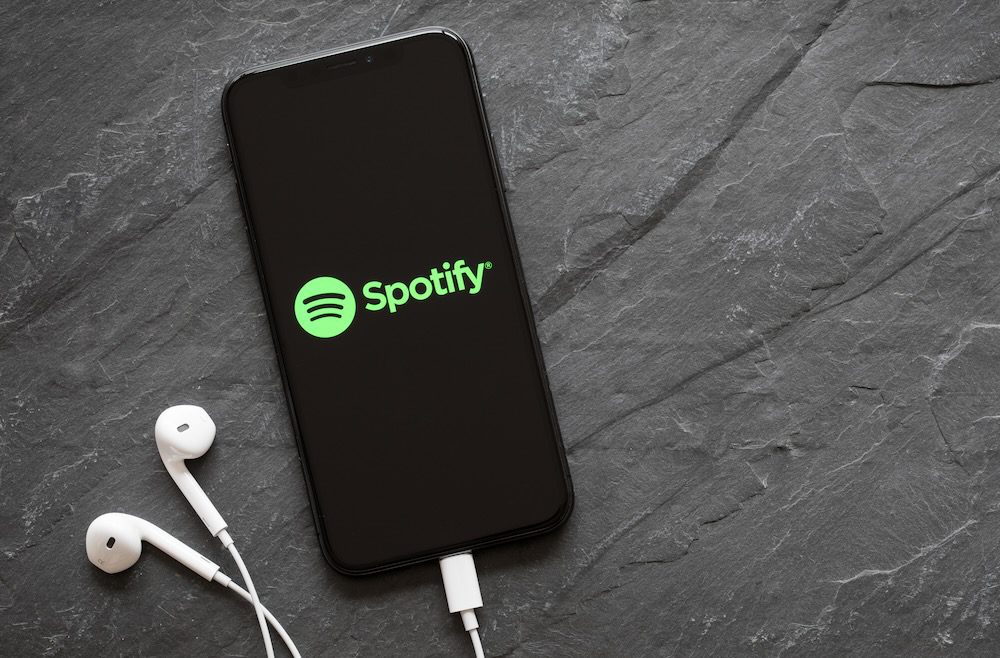
Spotify has 600 million users and no AI filter
A BBC News investigation published April 27 asked the obvious question: if Deezer can give its listeners a switch to filter out AI-generated music, why can’t Spotify?
The gap is real. Deezer AI music rolled out a patent-pending detection tool on January 24, 2025. By April 2026, that tool was identifying 75,000 fully AI-generated tracks per day, roughly 44% of all daily uploads. Listeners on Deezer can toggle those tracks out of their experience. Spotify, with 32% global market share and 600 million users, offers no such control.
In April 2026, Spotify launched a test feature showing AI usage disclosures in song credits. It adopted DDEX AI metadata standards in September 2025. But those are label-side tools. Listeners don’t get a switch.
Deezer’s data makes Spotify’s inaction harder to defend
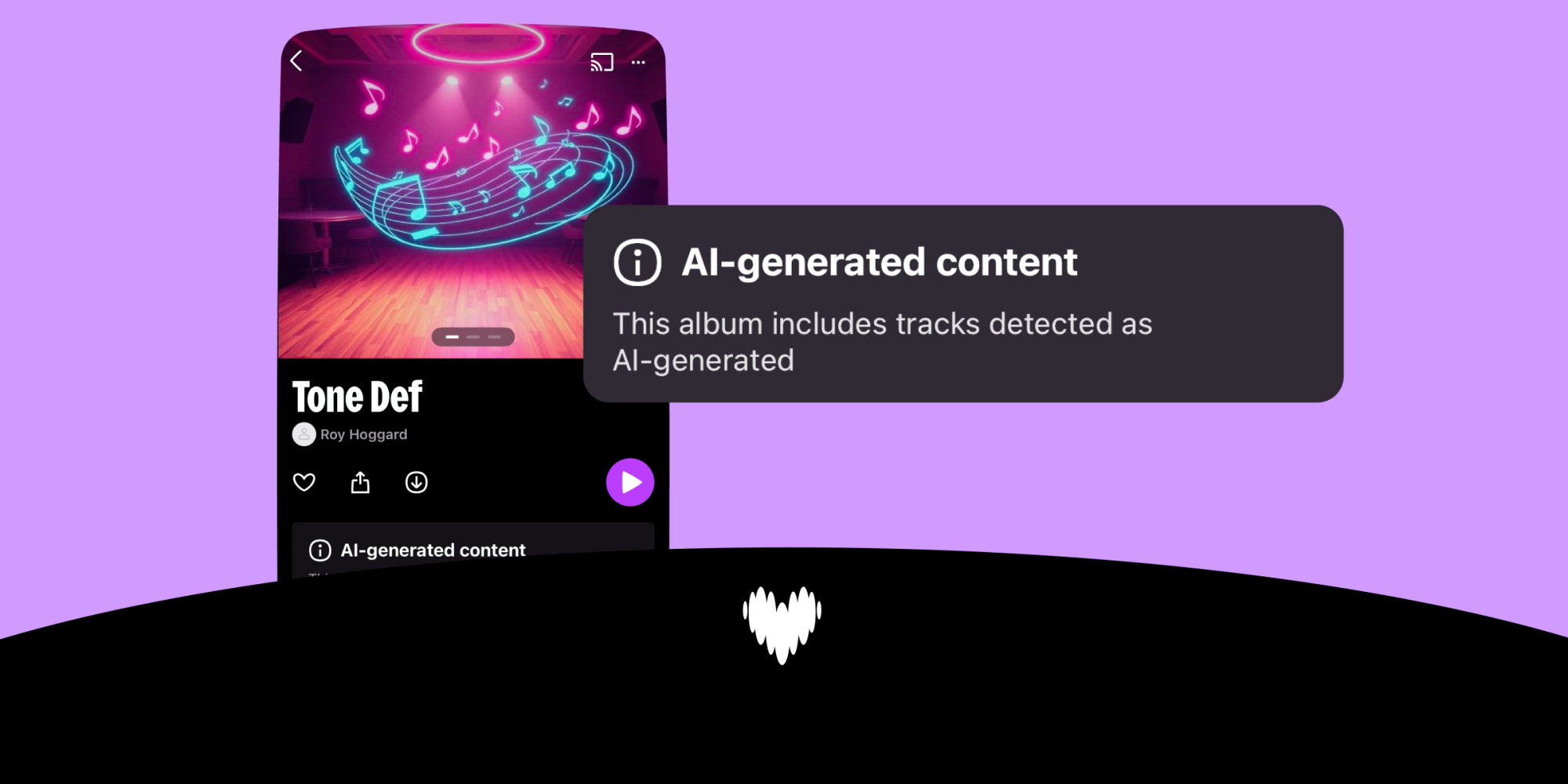
Deezer CEO Alexis Lanternier has been specific about the numbers. The platform tagged more than 13.4 million AI tracks in 2025. Of the AI music that does get streamed, 85% of those streams are detected as fraudulent and demonetized. A Deezer-Ipsos survey found 80% of listeners believe AI music should be labeled, and 97% couldn’t distinguish AI tracks from human-made ones without help.
The scale matters for streaming fraud AI: AI-generated tracks don’t just compete for algorithmic placement, they dilute the royalty pool. Every fraudulent stream that gets demonetized is a stream that wasn’t paying a human artist. Deezer stops storing hi-res versions of AI tracks entirely, treating the issue as both a cataloging problem and a trust problem.
Cedrik Sixtus, a software developer in Leipzig, built a third-party Spotify AI Blocker after finding suspected AI tracks appearing in his playlists. The tool filters a list of 4,700+ suspected AI artists. Hundreds of users have downloaded it. The demand exists. Spotify hasn’t built the supply.
Spotify’s spectrum argument may be a liability
The takeaway: Spotify’s public position is that AI use in music sits on a spectrum, and a binary filter misrepresents how artists actually work with AI tools.
That framing lets Spotify avoid building infrastructure. It also delays a harder conversation: if Spotify AI songs are already being deliberately excluded from certain editorial surfaces, the spectrum argument is already being applied selectively. The BPI AI labeling push from the UK recorded music industry adds more pressure: industry bodies want mandatory disclosure, not voluntary credit fields.
The EU AI Act changes the calculation. Its content-labeling provisions apply to AI-generated content consumed within Europe, regardless of where the platform operates. Enforcement starts August 2026. If Spotify has to build a labeling and disclosure system for European compliance, a listener-facing filter becomes a much shorter step. Deezer’s detection technology is already being licensed to third parties, including Hungary’s Bureau for the Protection of Performers’ Rights, which positions Deezer as a potential infrastructure provider if Spotify decides to license rather than build.
What this means for artists and producers
If you’re distributing music, your distributor’s AI disclosure metadata is about to matter more. Platforms are building classification systems off that data. Tracks incorrectly tagged or missing tags could be caught in AI filters even if they’re human-made. Check what your distributor sends downstream.
The more immediate question for working artists is royalty pool dilution. Deezer’s 85% fraudulent stream figure is the clearest signal yet that AI music is not a neutral addition to streaming catalogs. Every demonetized stream removed from the fraudulent pool is one that could have paid a real artist. Spotify’s inaction on filtering keeps that dilution active on its platform.
Frequently asked questions
Does Spotify label AI-generated music?
Spotify launched a credit-level AI disclosure test in April 2026, showing listeners how artists used AI in vocals, instrumentation, or post-production. It doesn’t offer a user-facing filter to remove AI music from playlists or recommendations.
How does Deezer detect AI-generated music?
Deezer uses a patent-pending detection tool it launched in January 2025. By April 2026 the tool was identifying 75,000 AI-generated tracks per day. Deezer flags 85% of the resulting streams as fraudulent and demonetizes them.
Will the EU AI Act force Spotify to label AI music?
The EU AI Act’s content-labeling provisions enter enforcement in August 2026. They require transparency about AI-generated content for consumers in the EU. Spotify may need to build a compliance mechanism for European listeners, which could become the foundation for a broader filter feature.
Can you filter AI music on Spotify right now?
Not natively. A third-party tool called Spotify AI Blocker, built by Leipzig developer Cedrik Sixtus, filters a list of 4,700+ suspected AI artists. It’s a workaround, not a Spotify feature.
About the author

Covering AI music tools, industry shifts, and news for music creators and professionals. Twice-weekly newsletter at aimusicpreneur.com.