Viberate launches an official MCP server, opening its music data to ChatGPT, Claude, and Gemini
My stack My fav 6 tools for AI music after testing 70+
-
 ElevenMusic · Music generation
 -
 Moises · Stem separation
 -
 Controlla · Voice swap & cloning
 -
 Cryo Mix · Mixing + mastering
 -
 Neural Frames · Music videos
 -
 ONCE · Distribution
Some links are affiliate links — I earn a commission at no cost to you. Every tool here is one I run myself and truly believe in. This stack is proven.
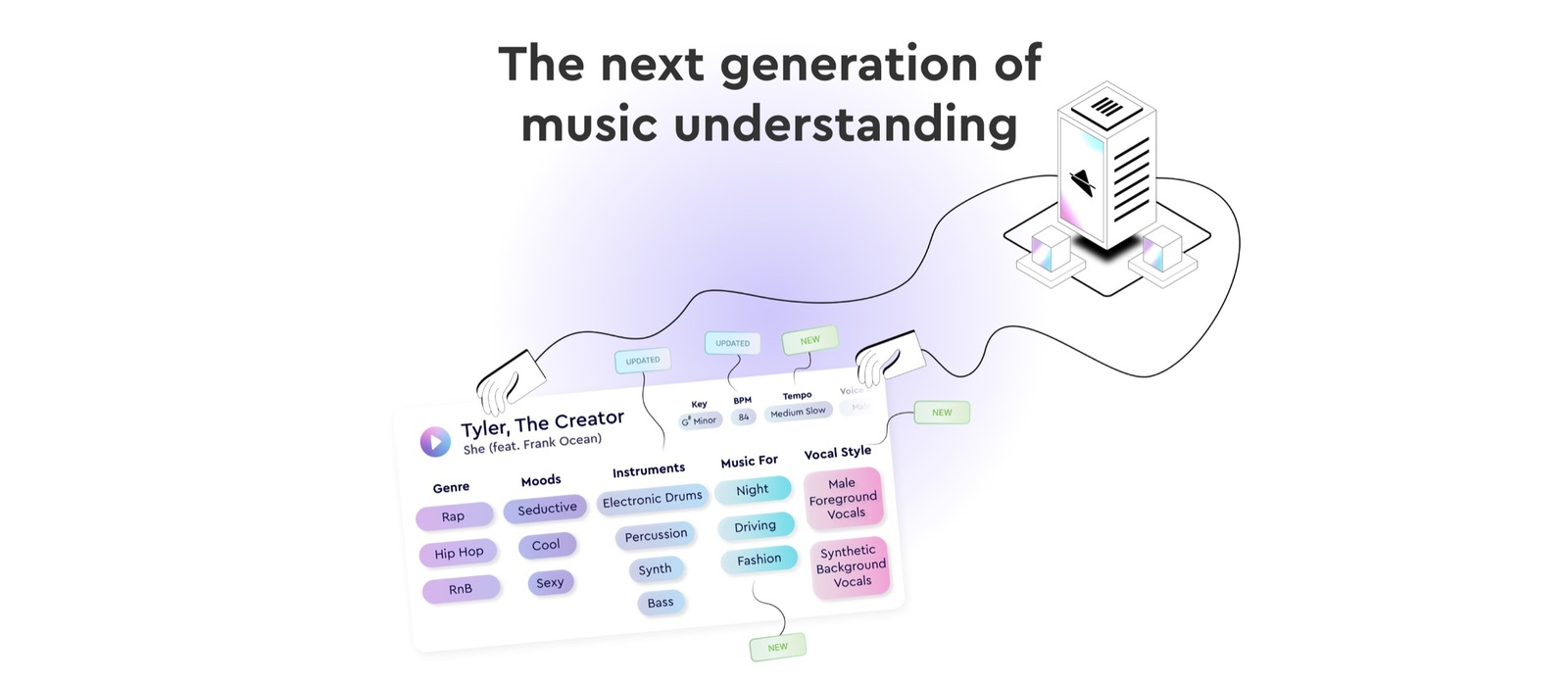
Viberate launched an official MCP server on July 1, 2026, so users of Claude, ChatGPT, Gemini, and Grok can query its music data by typing plain-language questions. The analytics company tracks more than 11 million artists, and it thinks most people will soon read those numbers inside an AI assistant instead of on Viberate’s own dashboards.
What Viberate’s MCP server actually does
The Model Context Protocol is an open standard Anthropic introduced and the rest of the AI industry adopted, including OpenAI, Google, and xAI. Viberate calls it a “USB-C for AI,” a single bridge that lets any compatible assistant plug into an outside database without a custom integration.
Connect the server once and you can ask an assistant to compare two artists, suggest a festival lineup, or draft a marketing plan, and it pulls straight from Viberate’s numbers: 100 million songs, 19 million playlists, 160,000 labels, and 7,000 festivals. Setup “takes seconds,” the company says. A free tier covers basic access, and a paid plan unlocks more than 20 advanced tools, with a 20% founding discount for the first three months that stays locked in for as long as you keep the subscription.
Until now it was a big advantage if you knew your way around numbers to be a good A&R, manager, or promoter. Now the only differentiator is the size of your imagination and how well you can translate that into questions.
Why Viberate is calling this an AI-first pivot
Viberate, founded in Slovenia in 2015 by Vasja Veber, Matej Gregoričič, and techno DJ UMEK, frames the MCP server as step one in an “AI-first” shift, the company told Music Business Worldwide. It is also building standalone AI apps in private beta, each trained on a client’s own data, where you enter an artist or track name instead of writing prompts.
The bet is that data providers become the layer AI systems run on, not a place you log in to. Viberate first showed the tool in June, and it lands the same month Openstage started connecting fan data to AI assistants.
What Viberate’s MCP server changes for A&Rs and marketers
If your edge was knowing how to read a dashboard, that edge narrows. The skill shifts from navigating charts to asking sharp questions. Good news if you never had time to learn the analytics, and a nudge if data-reading was your moat.
One caution: an assistant answering in plain language still answers from Viberate’s numbers, so the output is only as clean as the source. The same song-credit gaps that stall royalties can quietly skew a confident-sounding AI summary. Ask it to show its numbers, not only its conclusion.
What Viberate’s bet on AI assistants signals
The interesting part is not the chatbot. It is Viberate saying out loud that more people will use its data inside Claude or ChatGPT than on its own product, and pricing a founding discount to pull you there. If that prediction holds, the dashboard becomes plumbing and the question you ask becomes the skill worth building.
Frequently asked questions
What is Viberate's MCP server?
Viberate's MCP server is an official connector that lets AI assistants pull data straight from Viberate's music analytics database. You connect it once, then ask questions in plain language and the assistant answers using Viberate's numbers on artists, songs, playlists, labels, and festivals.
Does Viberate's MCP server work with ChatGPT and Claude?
Yes. Viberate's MCP server works with any assistant that supports the Model Context Protocol, including Anthropic's Claude, OpenAI's ChatGPT, Google's Gemini, and xAI's Grok. MCP is an open standard, so more compatible tools can plug in without a custom build.
How much does Viberate's MCP server cost?
Viberate offers a free tier for basic access and a paid plan that unlocks more than 20 advanced tools. For the first three months after launch, the paid plan carries a 20% founding discount that stays locked in for as long as you keep the subscription.
About the author

Covering AI music tools, industry shifts, and news for music creators and professionals. Twice-weekly newsletter at aimusicpreneur.com.