Veteran DJ launches patent-pending AI co-pilot that reads crowd energy in real time
My stack My fav 6 tools for AI music after testing 70+
-
 ElevenMusic · Music generation
 -
 Moises · Stem separation
 -
 Controlla · Voice swap & cloning
 -
 Cryo Mix · Mixing + mastering
 -
 Neural Frames · Music videos
 -
 ONCE · Distribution
Some links are affiliate links — I earn a commission at no cost to you. Every tool here is one I run myself and truly believe in. This stack is proven.
Key highlights
- djOS is a patent-pending AI platform that reads crowd energy via camera and ambient mic inputs during live sets and suggests real-time track swaps to keep energy optimized.
- Created by Cory Poccia, a working DJ since 2002, the system uses optical flow analysis for crowd movement detection with no facial recognition and no stored personal data.
- The platform integrates with existing DJ software rather than replacing it, following the same augmentation path sync buttons and auto-BPM matching took in the 2000s.
A working DJ built the AI co-pilot he wished existed
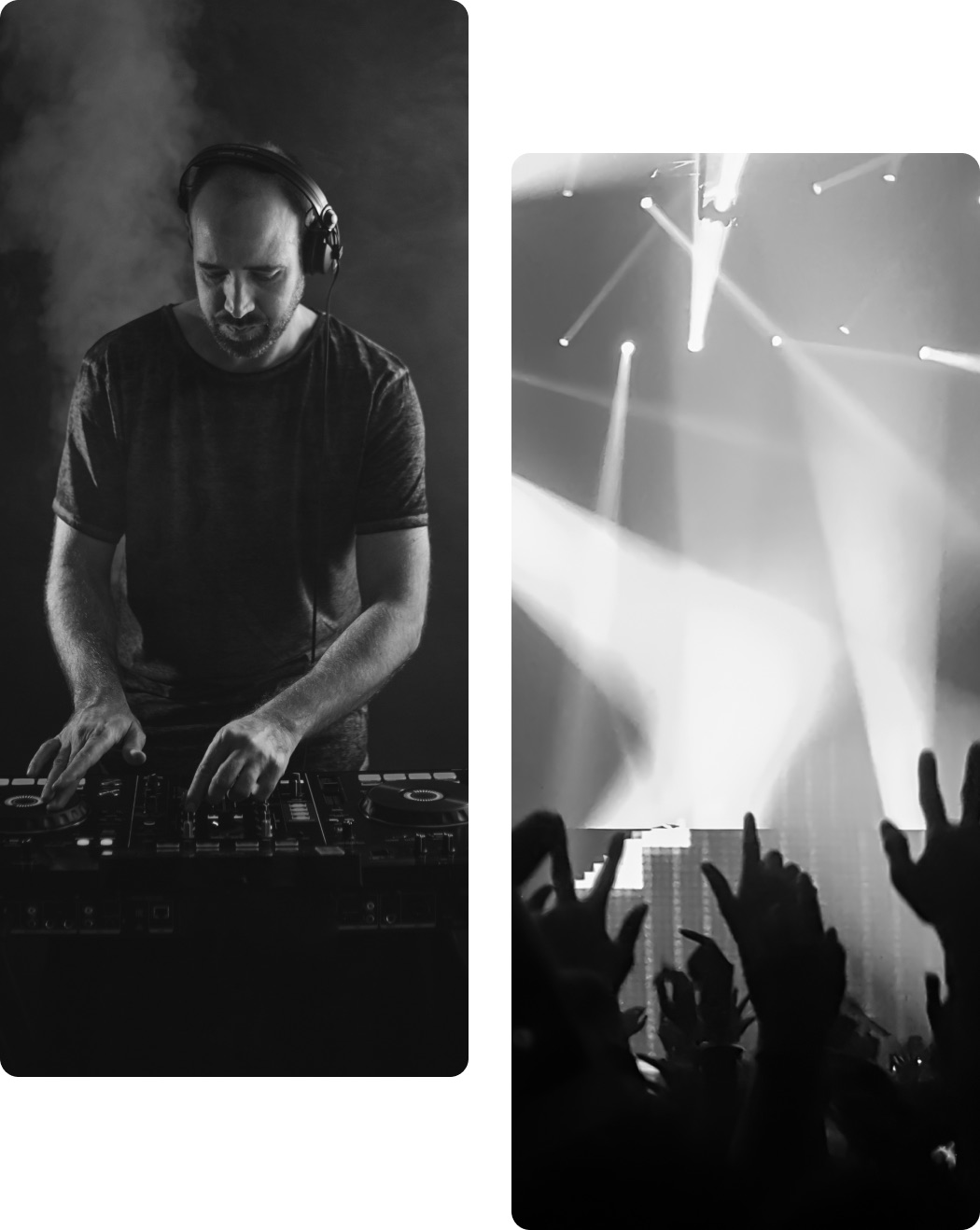
Mainstream Entertainment Group announced djOS on April 27, a patent-pending AI platform that acts as a real-time co-pilot for live DJ performance. Cory Poccia, its founder and a nightclub DJ since 2002 who has performed alongside Flo Rida and T-Pain, built it to solve problems he lived through on the job.
The core function: djOS reads the crowd during a live set and suggests track swaps when energy drops. It does this using optical flow analysis to measure crowd movement patterns and source separation of ambient audio, and it runs entirely within the DJ’s existing platform. No new hardware required. No replacing Pioneer DJ or Serato. It integrates on top.
Poccia describes it as “AI for DJs, but not without the DJ.” That distinction is the product’s entire positioning.
Three-phase architecture runs before, during, and after the set
djOS operates across 3 phases per performance. Before the event, it ingests the DJ’s music library, historical data, and event parameters including must-play and do-not-play lists, and generates an optimized setlist. During the performance, it monitors crowd movement via optical flow and ambient audio via source separation, then suggests harmonically compatible track swaps in real time when energy diverges from the expected curve. Post-event analytics feed back into the next setlist.
The privacy approach is notable. Optical flow measures movement patterns, not faces. No biometric data is captured, and no personal data is stored. For AI VST plugins and production tools, privacy hasn’t been a primary design constraint. For a live venue tool with cameras pointed at crowds, it matters.
This mirrors how tools like Nova Cryo Mix apply AI analysis to studio production without removing the producer from decisions. djOS applies the same logic to the live context.
Sync buttons caused the same debate in 2004
The introduction of sync buttons and auto-BPM matching in Traktor and Serato sparked identical debates about whether AI was “cheating.” DJs who embraced those tools redirected their attention to creative selection. The mechanical layer was handled by software. djOS follows that path: it automates the reactive, analytical work (crowd energy monitoring, harmonic matching) while leaving creative decisions to the human.
The EIN Presswire announcement notes patents covering US and international jurisdictions. Expect Roland AI plugin and Pioneer DJ to be watching this closely. The AI mixing tools market has already shown that once one credible product proves the category, larger incumbents move fast.
For DJs doing residencies where consistent crowd engagement is a measurable KPI, a co-pilot that fills data gaps in real time is a competitive tool. The question is whether the setlist suggestions hold up under the pressure of a real Friday night.
Frequently asked questions
What does djOS actually do during a live DJ set?
djOS monitors crowd energy in real time using optical flow camera analysis and ambient microphone input. When the crowd’s energy diverges from the expected curve, it suggests harmonically compatible track swaps from the DJ’s library. The DJ decides whether to follow the suggestion or not.
Does djOS replace DJ software like Serato or Traktor?
No. djOS is described as an operating system layer that integrates with existing DJ platforms. It runs alongside the DJ’s current setup rather than replacing it.
How does djOS protect crowd privacy?
djOS uses optical flow analysis, which measures crowd movement patterns rather than capturing faces or biometric data. No personal data is stored. This makes it distinct from facial recognition-based audience analysis tools.
Who built djOS?
Cory Poccia, founder of Mainstream Entertainment Group, created djOS. Poccia has been a working nightclub DJ since 2002 and has performed with artists including Flo Rida and T-Pain. The patent-pending system covers US and international jurisdictions.
About the author

Covering AI music tools, industry shifts, and news for music creators and professionals. Twice-weekly newsletter at aimusicpreneur.com.