1. AI Artist China Styles Charts at Billboard #2 Using Suno

China Styles landed at #2 on Billboard R&B Digital Song Sales with “”I Love Me, LOUD,”” sitting between Bruno Mars and Justin Bieber. The faceless artist behind the project is Margaret Binham, a former Mississippi nail technician who creates songs using Suno.
Binham turns childhood diary entries into lyrics through ChatGPT, then generates tracks with Suno’s AI music generator. She built 22 million independent streams and 900,000 monthly Spotify listeners before signing with Hallwood Media’s AI roster. Six labels including Sony pursued her. Timbaland contacted her personally.
She holds 10,000 songs in her Suno account and generates 500+ songs per album cycle. Your competition now includes creators who bypass studios, session musicians, and production costs entirely.
2. Booking-Agent.io launches AI-verified venue contact database:
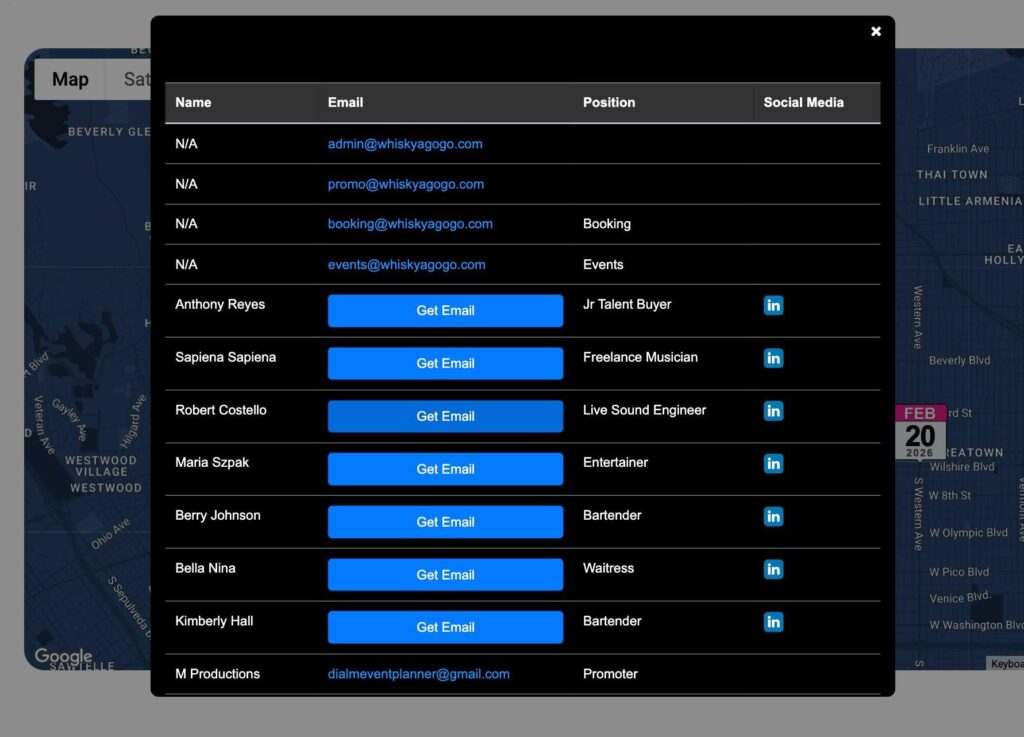
There are 3 reasons you’re not booking 10x more shows in 2026. Manual research takes weeks. Talent buyer emails are constantly outdated. And tools with real data cost thousands per year.
A new platform helps your booking emails reach the right talent buyers. Booking-Agent.io, from the creators of PlaylistSupply, offers AI-verified venue contacts at $24.99 biweekly for 50 contacts.
The service positions itself as an affordable alternative to expensive industry databases like Pollstar. You can search venues by similar artists or filter by city and genre. The platform verifies email validity and matches LinkedIn data before releasing contact information.
3. Suno Reaches 2 Million Subscribers and $300M Revenue

Suno hit 2 million paid subscribers and $300 million in annual recurring revenue. Users pay roughly $12.50 monthly for unlimited song creation.
The growth signals AI music generation has moved from novelty to mainstream consumer behavior. The platform now competes directly with streaming services for user attention and spending. Production music libraries face the most immediate threat from this scale.
3. Google Acquires Producer.AI and Integrates Lyria 3
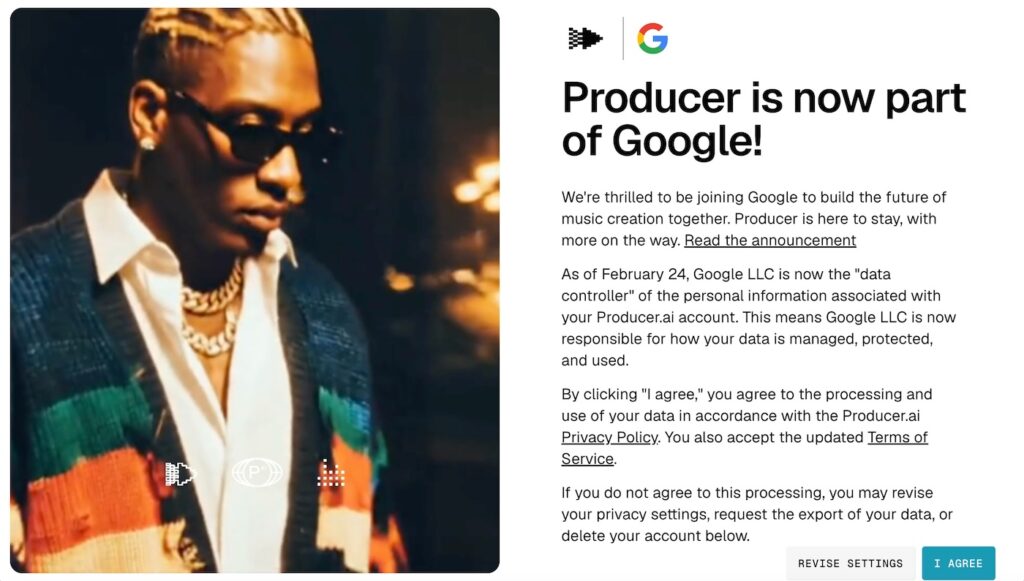
Google acquired Producer.ai and moved the 13-person team into Google Labs. The platform now runs on Lyria 3, Google DeepMind’s newest professional-grade music model.
The tool offers granular controls over tempo, arrangement, and time-aligned lyrics. A feature called “Spaces” lets you create custom instruments through natural language in a node-based modular environment. Grammy-winning rapper Lecrae and The Chainsmokers already use the platform.
The platform now operates in 250+ countries with free and paid tiers. All outputs include SynthID watermarking to identify AI-generated content. Your competitive edge now requires mastering hybrid workflows between AI tools and human arrangement.
5. RoEx Launches Adaptive AI Mixing with DAW Export
RoEx CEO David Ronan announced a major upgrade to their AI mixing platform rolling out in coming weeks. The new system uses adaptive automation instead of static parameters.
The technology dynamically adjusts gain, EQ, and compression throughout your tracks based on which elements need prominence at each moment. It works across music, dialogue, and foley. You get full project export to Ableton Live, Bitwig, and Fender Studio for manual editing. This gives you AI-assisted starting points with complete control over final adjustments.