Top 5 AI Music News (May 4th – May 10th 2026)
My stack My fav 6 tools for AI music after testing 70+
-
 ElevenMusic · Music generation
 -
 Moises · Stem separation
 -
 Controlla · Voice swap & cloning
 -
 Cryo Mix · Mixing + mastering
 -
 Neural Frames · Music videos
 -
 ONCE · Distribution
Some links are affiliate links — I earn a commission at no cost to you. Every tool here is one I run myself and truly believe in. This stack is proven.
1. OpenPlay Quietly Launches an AI Operating System for Labels
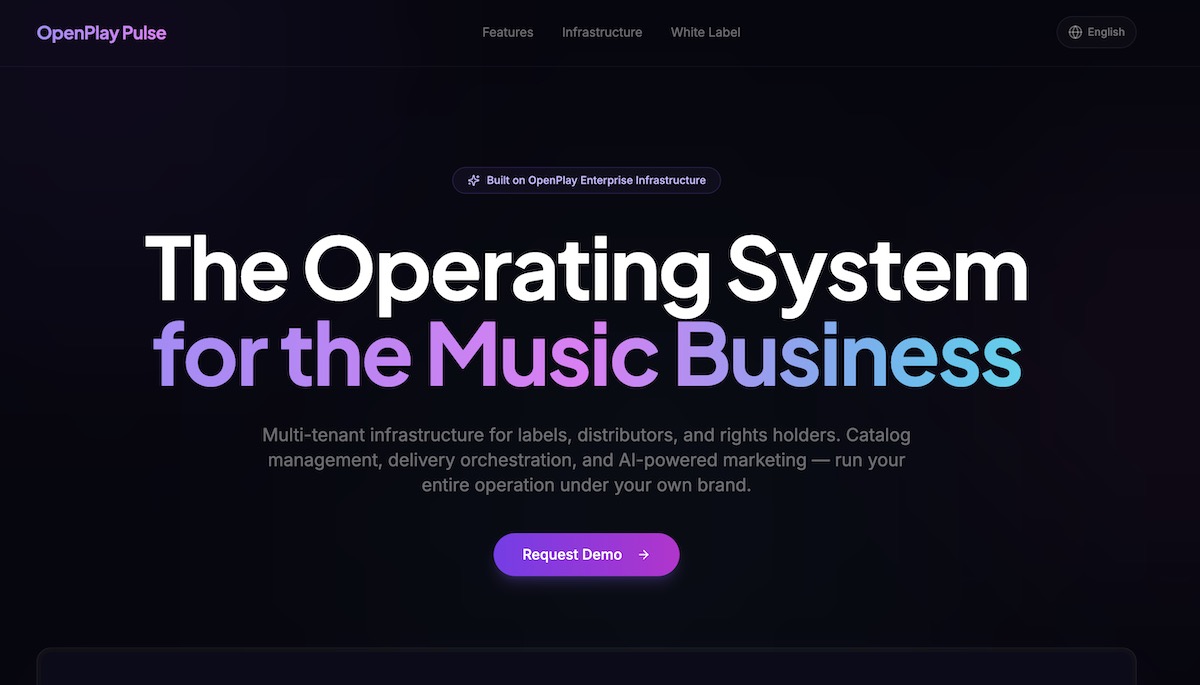
OpenPlay Pulse launched this week with first demos at Music Biz 2026 in Atlanta (May 11–14). No big press tour, no announcement campaign. For a product targeting labels, distributors, publishers, and rights holders, that’s deliberate.
Pulse is built as an AI-native layer on top of OpenPlay’s existing infrastructure — the same stack already running DDEX and metadata workflows inside major labels. It adds AI agents across catalog ops, marketing, analytics, and creative generation, all inside systems labels are already using.
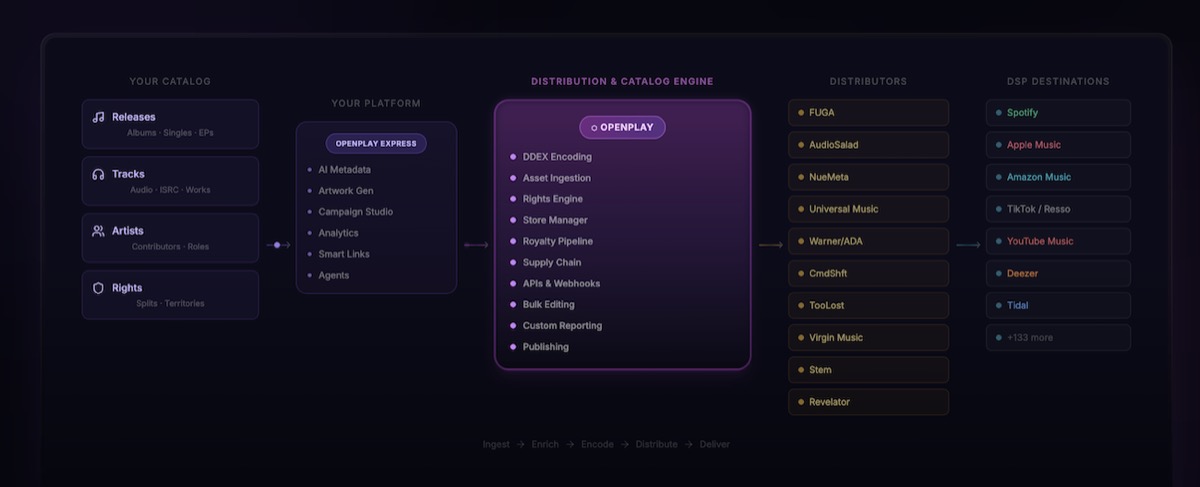
The part worth watching: OpenPlay didn’t bolt AI onto a legacy product. They built Pulse as a separate OS on top of a proven data foundation. That’s a different approach from most AI music tools pitching labels from the outside. If your distributor or label runs on OpenPlay, Pulse is coming to your stack whether you asked for it or not.
2. JamBase Just Made 5 Million Live Performances Queryable by AI
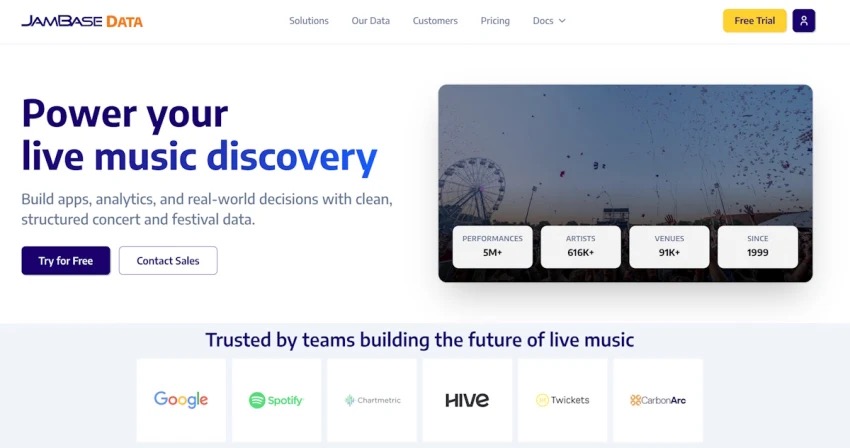
JamBase’s data platform launched this week with a Model Context Protocol server — one of the first in the music industry — putting 5 million performances, 600,000 artists, 90,000 venues, and 20,000 festivals directly inside AI agent workflows. Claude, ChatGPT, and any other MCP-compatible agent can now query live tour data in natural language without scraping or hallucinating dates.
The database is already trusted by Google and Spotify. The MCP server takes it further: instead of an API call, an agent can answer “when are Vampire Weekend playing near Chicago next?” from real, normalized data in real time.
For artists and managers, this is infrastructure. Your tour data is now part of the AI layer that fans, media, and industry tools are building on. If your live data isn’t in JamBase, it’s invisible to any agent querying it.
3. Suno at $5B, ElevenLabs at $11B: Two Very Different Bets on AI Music
Suno is raising at a $5 billion valuation — double its November 2025 round — on $300M ARR and 7 million songs generated daily. ElevenLabs closed at $11 billion with $500M ARR, investors including BlackRock and Jamie Foxx, and licensing deals already in place with Merlin, Kobalt, and Believe.
These aren’t two versions of the same story. Suno is betting on volume: generate everything, sort out rights later. ElevenLabs is betting on legitimacy: pay for training data, build the licensing infrastructure first, scale second. The Suno prior funding history tells you how fast that valuation has moved — $500M to $2.45B to $5B in under 18 months.
The detail that cuts through the noise: Suno’s investor list includes former senior UMG executives, the same UMG still actively suing Suno in court. The ElevenLabs music marketplace already pays out to creators. Suno does not. At $5B, that legal exposure is your problem too if you’re building on their platform.
4. Apple Music Knows Exactly Which AI Model Made Your Track

Apple Music VP Oliver Schusser revealed this week that roughly 1 in 3 new submissions to Apple Music are now AI-generated — but under 0.05% of actual listening is AI music. The full Apple Music AI breakdown is worth reading, because the fraud enforcement detail is the real story.
Apple built in-house detection tools capable of identifying not just whether a track is AI-generated, but which specific AI model produced it. No other DSP has publicly claimed this. Fraud penalties were doubled to 10–50% of earned royalties, and Apple now removes fraudulent streams entirely and redistributes withheld royalties to legitimate artists. A 60% reduction in fraud followed.
If you’re a working artist, the supply vs. demand gap tells you everything: 33% of uploads, under 0.05% of listening. The flood is a supply-side problem, not a demand one. Apple’s approach — detect, penalise, redistribute — is the enforcement model the streaming platform AI rules debate has been missing. The AI streaming fraud case that cost one operator $8M shows where this enforcement leads when platforms get serious.
5. Neural Frames Ships Autopilot 2.5 and Moves Into AI Music Generation
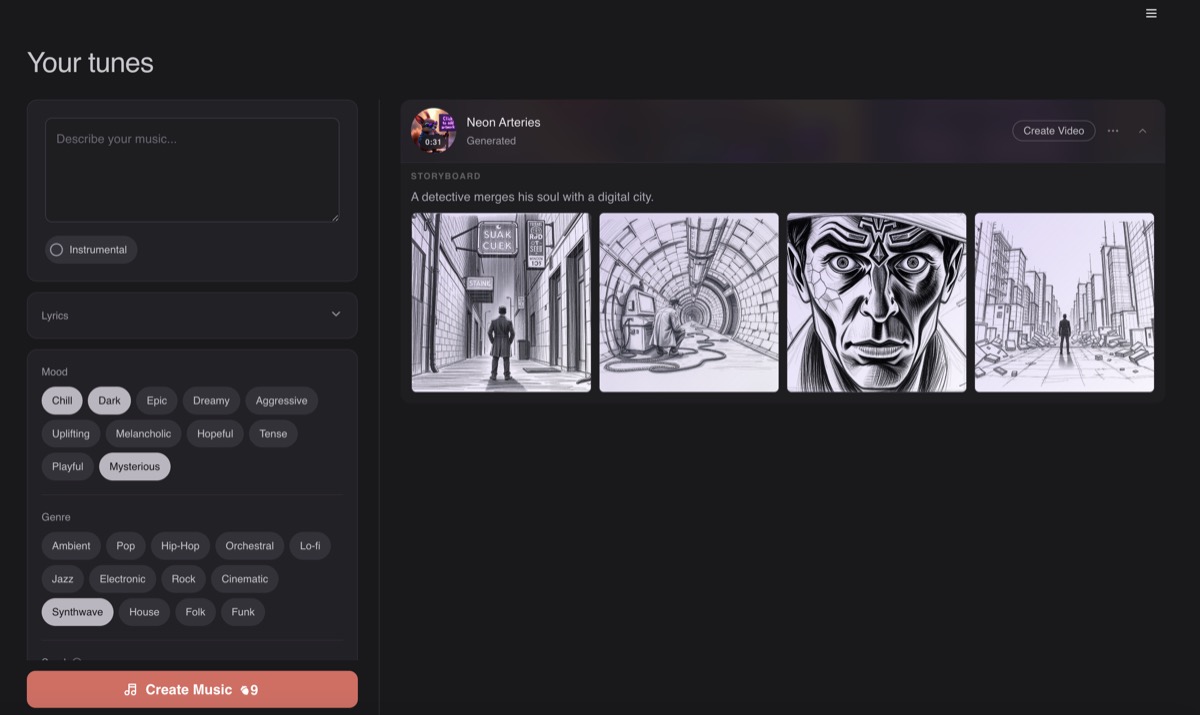
Neural Frames — 100,000+ monthly users, bootstrapped out of Berlin — shipped Autopilot 2.5 this week alongside Neural Tunes, a new AI music generation product. The update adds chat-based video editing (natural language replaces prompt engineering), a Vibe-Story slider, full edit history with rollback, and Blend transitions between clips.
Neural Tunes lets you generate a track from text prompts with BPM, length, genre, and mood controls, write your own lyrics or build around them, then pipe the result straight into a music video. The full pipeline — song to finished video — without switching tools.
The competitive implication is direct: Neural Frames is now going head-to-head with Suno and Udio on music generation, while keeping its advantage on video. Check the Neural Frames review if you want to see how Autopilot performs in practice, or the best AI music video generators roundup for where it sits against the field.
About the author

Covering AI music tools, industry shifts, and news for music creators and professionals. Twice-weekly newsletter at aimusicpreneur.com.