The CLEAR Act would force AI companies to reveal every copyrighted work they trained on, or face $5,000 fines
My stack My fav 6 tools for AI music after testing 70+
-
 ElevenMusic · Music generation
 -
 Moises · Stem separation
 -
 Controlla · Voice swap & cloning
 -
 Cryo Mix · Mixing + mastering
 -
 Neural Frames · Music videos
 -
 ONCE · Distribution
Some links are affiliate links — I earn a commission at no cost to you. Every tool here is one I run myself and truly believe in. This stack is proven.
Key Highlights:
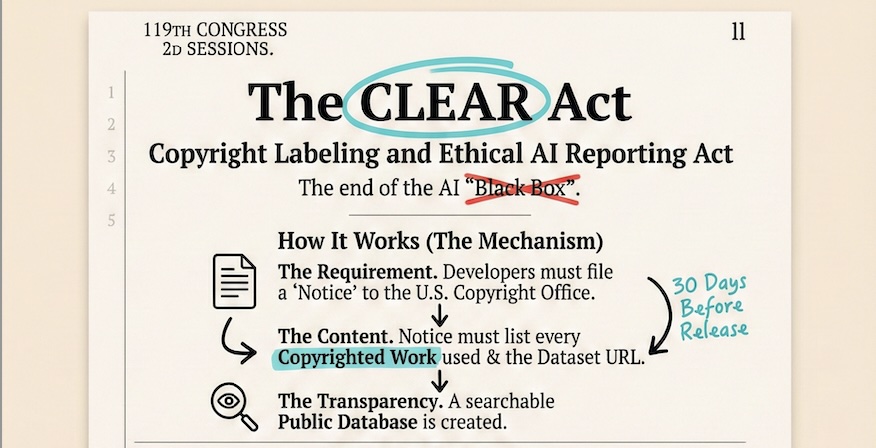
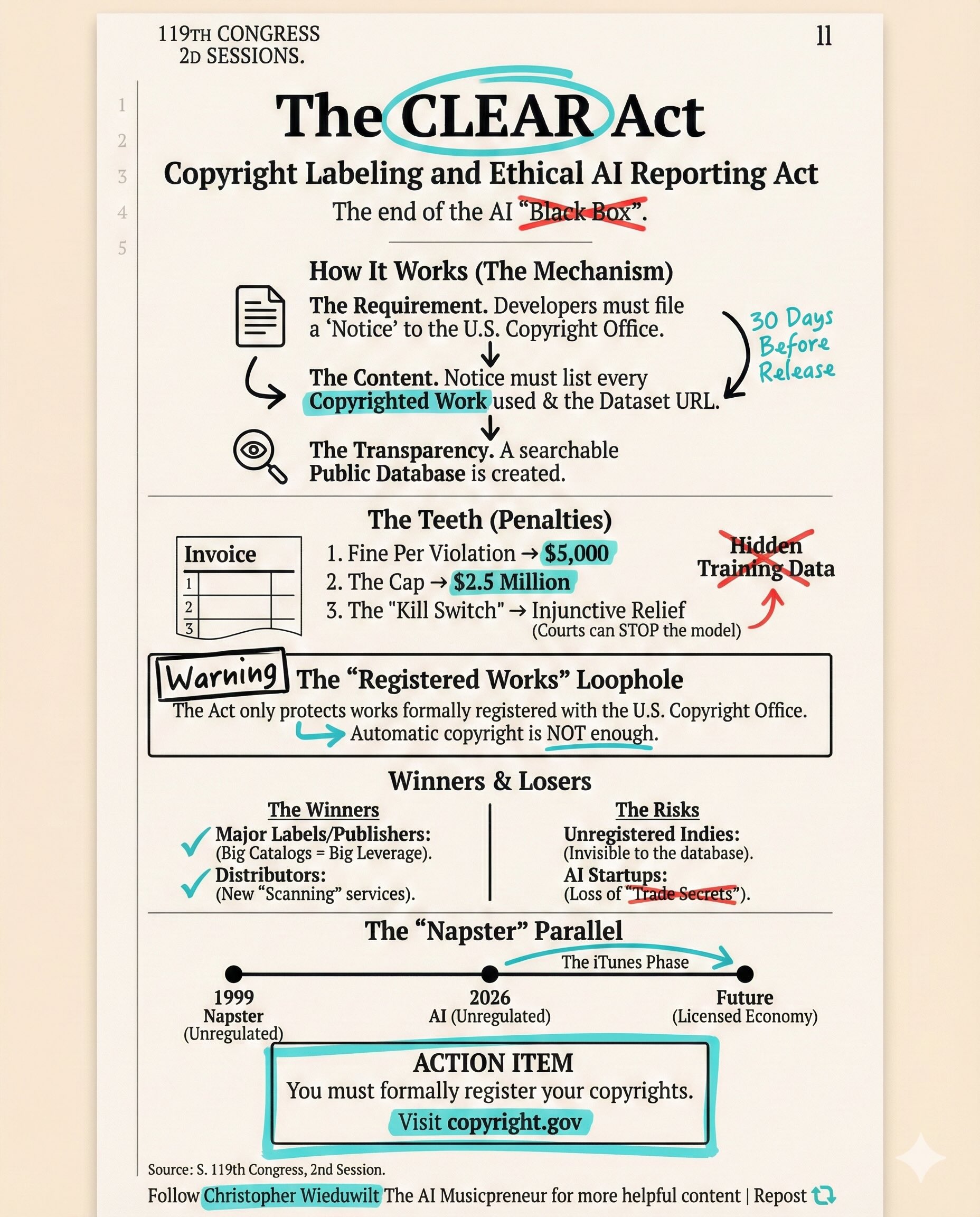
- Bipartisan bill requires AI companies to file detailed notices with the U.S. Copyright Office listing every copyrighted work used in training datasets
- Violations carry $5,000 penalties per undisclosed work, with courts able to shut down non-compliant AI models
- Only formally registered copyrights qualify for protection, leaving most independent artists outside the law’s scope
Bipartisan Bill Targets AI Training Data Secrecy
The AI industry’s “black box” defense faces its biggest legislative threat yet. Senators Adam Schiff (D-CA) and John Curtis (R-UT) introduced the CLEAR Act on February 10, requiring generative AI developers to disclose copyrighted works used in training before commercial release.
The bill mandates companies submit detailed summaries to the Copyright Office at least 30 days before launching any AI model. This includes internal corporate use. The Register of Copyrights would maintain a public database of all disclosed training materials.
Penalties Include Model Shutdowns and $2.5M Caps
Copyright owners gain a new private cause of action under the bill. Courts can impose $5,000 fines per undisclosed work and issue injunctions forcing AI companies to stop using models until they cure disclosure defects.
Senator Curtis stated the legislation “will help build public trust for emerging technologies and foster the best of American creativity.” Annual penalties cap at $2.5 million, but injunctive relief carries no limit. The Copyright Office’s recent guidance confirms that training on copyrighted works implicates owners’ exclusive rights, supporting the bill’s legal foundation.
The EU AI Act already requires similar transparency measures, and the Copyright Alliance has pushed for comparable U.S. legislation.
Registration Requirement Creates Gap for Indie Creators
You need to understand one critical limitation. The CLEAR Act only protects works formally registered with the Copyright Office under 17 U.S.C. § 408. Your automatic copyright upon creation won’t qualify.
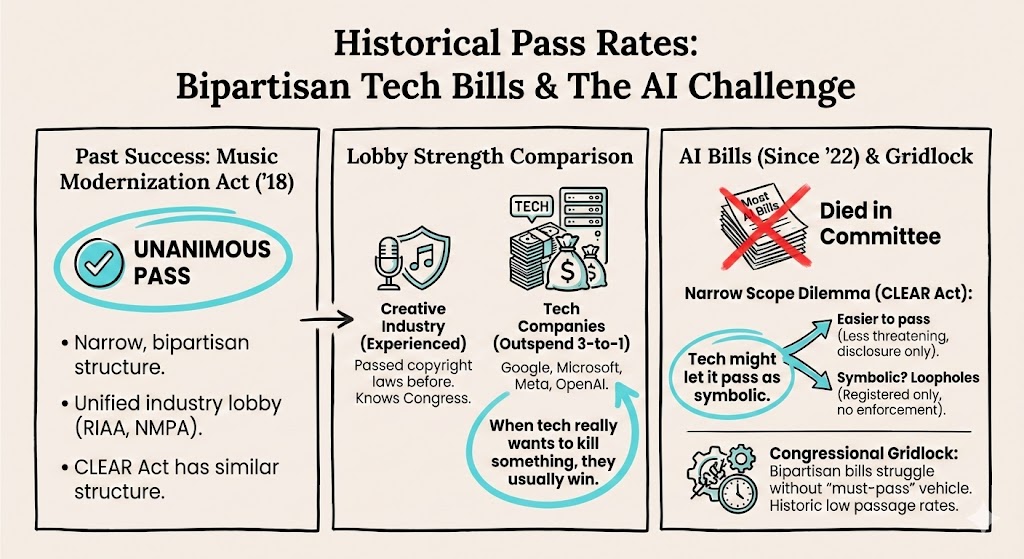
This means major label licensing deals and RIAA copyright lawsuits gain powerful new ammunition. But indie artist disputes like those against Suno won’t benefit unless creators register their catalogs. ASCAP’s position on fair use and GEMA’s fair AI licensing model show the industry moving toward formal frameworks. The CLEAR Act accelerates this shift, but only for those with registered works.
Make copyright registration part of your release budget now. If you’re not in the system, you won’t appear on disclosure lists or have leverage to demand compensation.
About the author

Covering AI music tools, industry shifts, and news for music creators and professionals. Twice-weekly newsletter at aimusicpreneur.com.