CISAC's Paris Commitment asks policymakers to protect human creativity from AI
My stack My fav 6 tools for AI music after testing 70+
-
 ElevenMusic · Music generation
 -
 Moises · Stem separation
 -
 Controlla · Voice swap & cloning
 -
 Cryo Mix · Mixing + mastering
 -
 Neural Frames · Music videos
 -
 ONCE · Distribution
Some links are affiliate links — I earn a commission at no cost to you. Every tool here is one I run myself and truly believe in. This stack is proven.
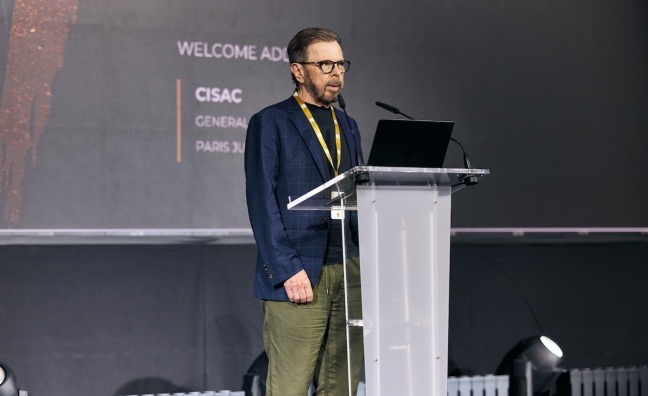
CISAC, the global network of authors’ societies, used its General Assembly in Paris on June 4 to launch a new declaration called the Paris Commitment. It asks policymakers and the wider industry to make sure human creativity stays “protected, respected and sustained” as AI tools get better and more widely used.
The body represents the collecting societies that pay songwriters and composers, so this is the people who track your royalties drawing a line. The launch landed on CISAC’s 100th anniversary, and AI was the main topic of the week.
What the Paris Commitment actually says
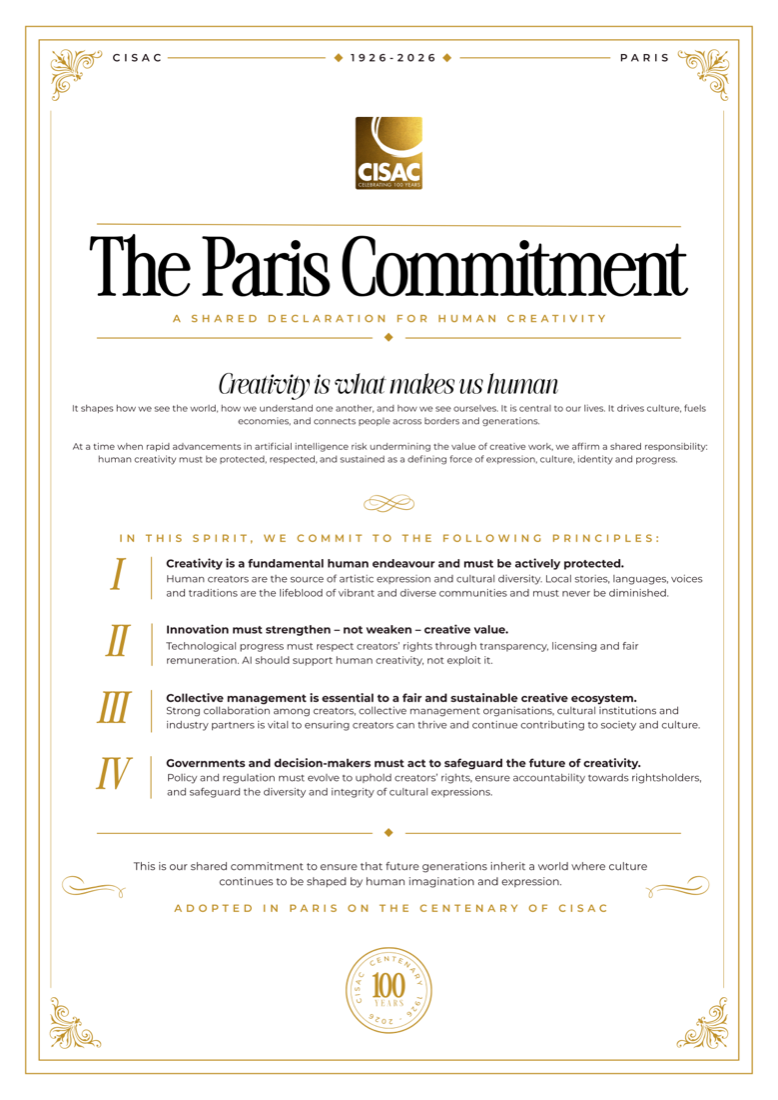
The declaration opens with a shared claim, that “at a time when rapid advancements in AI risk undermining the value of creative work, we affirm a shared responsibility: human creativity must be protected, respected and sustained.” Creators around the world are being urged to sign it.
From there it sets out four principles for policymakers and the industry to deliver:
- The protection of human creativity and cultural diversity.
- Transparency, licensing, and fair remuneration in AI systems.
- The role of collective management in sustaining creative ecosystems.
- Government action to safeguard creators’ rights and cultural expression.
Why Bjorn Ulvaeus framed it as a fight
In his opening address, CISAC President and ABBA co-founder Bjorn Ulvaeus did not pretend AI music is bad. He admitted he uses AI in his own process, and he conceded the output is getting close. He cited a study where AI-generated music triggered stronger emotional responses than human-composed music, and people called it more exciting.
“In a blind test, the machine wins,” he said. His argument for why human work still matters was not about skill.
I believe it does, not because humans can arrange sounds more cleverly, but because we arrange them having lived.
What the Paris Commitment means for working artists
A declaration is not a law. It carries no penalty, and an AI company can ignore it. The four principles read like a wish list aimed at the people writing the actual rules.
The value is leverage. Right now the copyright fights are unresolved while generative models get more lucrative, and platforms like Suno raise money at a $5.4 billion valuation. A coordinated statement from the societies that represent 5 million creators gives regulators cover to demand transparency and licensing, the same demands trade bodies are pushing as they fight pro-AI copyright reform in other markets.
For you, the practical read is simple. Watch whether the licensing and fair-pay language in principle two turns into real rules, because that is the part that decides if AI training ever pays creators. You can read the full launch coverage at CMU and Music Ally.
Frequently asked questions
What is the CISAC Paris Commitment?
The Paris Commitment is a declaration adopted at CISAC's General Assembly in Paris on June 4, 2026. It calls on policymakers and the music industry to ensure human creativity is protected, respected, and sustained as AI advances.
Who is behind the CISAC Paris Commitment?
CISAC, the international body of authors' collecting societies, launched it on its 100th anniversary. CISAC represents over 5 million songwriters, composers, and other creators, and its president is ABBA co-founder Bjorn Ulvaeus.
What does the CISAC Paris Commitment ask for?
It sets four principles, the protection of human creativity and cultural diversity, transparency and fair pay in AI systems, the role of collective management, and government action to safeguard creators' rights.
About the author
Covering AI music tools, industry shifts, and news for music creators and professionals. Twice-weekly newsletter at aimusicpreneur.com.