Key Highlights:
- SIQA debuts the Top 100 AI Songs and Top 100 AI Cover Songs on January 30, 2026, creating the first standardized tracking system for AI-generated music.
- Chart eligibility requires transparent creation, proper attribution, and a strict ban on cloned voices of real public figures.
- The launch signals the music industry’s shift from fighting AI to organizing it into a parallel creative economy.
AI music now has its own Billboard. The Sonic Intelligence Academy (SIQA) launches two weekly charts on January 30, 2026, marking the first industry-wide attempt to measure and legitimize AI-generated music.
This arrives at a critical moment. AI artist Breaking Rust recently hit No. 1 on Billboard’s Country Digital Song Sales chart with roughly 3,000 units sold. That $3,000 investment generated millions in earned media and converted a data anomaly into a cultural moment.
SIQA operates independently of major labels, DSPs, and AI companies. The organization was founded by artists, technologists, designers, and developers to create what the industry lacked: a trusted framework for this emerging creative category.
What SIQA Announced
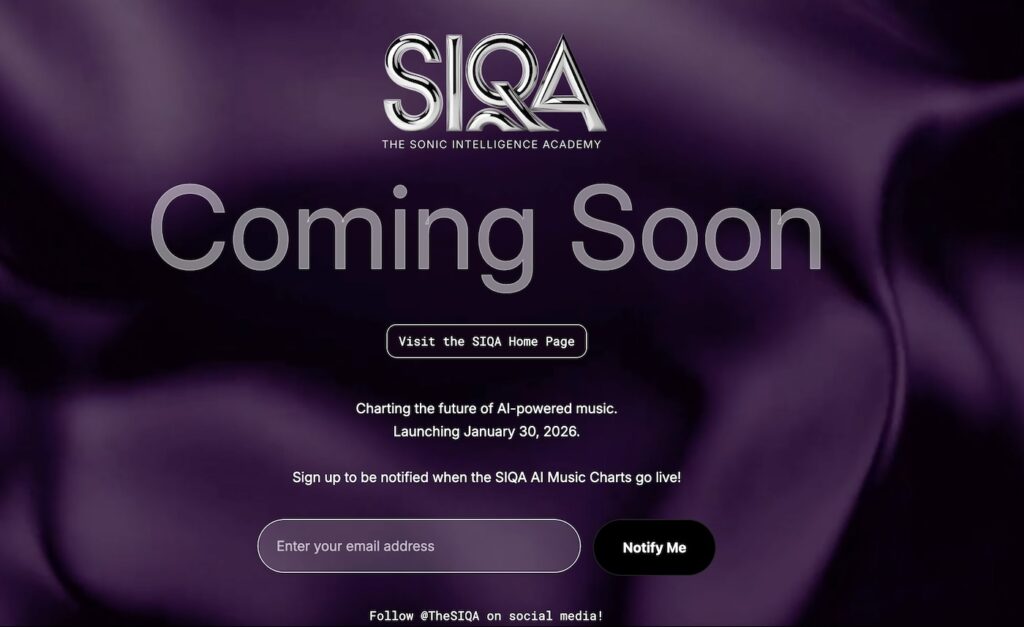 Screenshot
The SIQA AI Music Top 100 (Top 100 AI Songs) and Top 100 AI Covers will track AI songs gaining traction across streaming, video, social platforms, and airplay. Creators submit eligible releases through SIQA’s submission system, similar to traditional chart consideration.
SIQA describes itself as “a neutral, standards-focused institution for one of the fastest-developing parts of the music business.”
Three rules govern chart eligibility:
- Tracks must disclose the specific generative tools and models used.
- Submissions must credit human inputs alongside machine outputs.
- No cloned or simulated voices of real public figures, living or deceased.
The NO FAKES Act protects artists from unauthorized voice clones. SIQA’s rules align with this federal push to establish voice and likeness rights.
Beyond rankings, SIQA plans education, research, partnerships, and cultural initiatives focused on ethical AI music creation.
Beyond the Headlines
The takeaway: Charts create artificial scarcity in an ecosystem defined by infinite supply.
When 50,000 AI tracks upload daily to services like Deezer, individual track value approaches zero. A “Top 100” list manufactures hierarchy and allows synthetic stars to emerge.
The economics tell the story. Traditional recording costs thousands per song. AI generation through the best AI music generators costs roughly $0.015 per track. That 1000x cost differential makes human musicians uncompetitive in functional music markets.
Major labels noticed. Universal, Sony, and Warner signed landmark licensing deals with KLAY Vision. The Universal Music Group x KLAY partnership turns back catalogs into generative assets earning revenue from AI training.
The “cyborg” model shows commercial viability. Xania Monet’s Billboard chart success reached No. 30 on Adult R&B Airplay. Creator Telisha Jones writes lyrics and directs vision while Suno generates audio. Her reveal on CBS Mornings demonstrated that synthetic avatars command real capital.
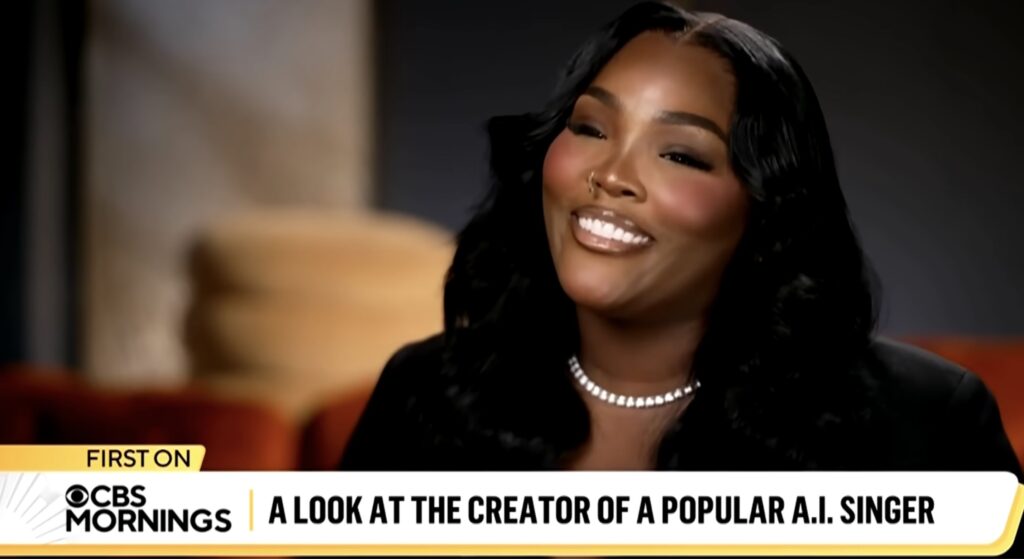 Credit: YT Screenshot CBS Mornings Interview
Ethical AI music tools that pay artists contrast sharply with unlicensed competitors facing lawsuits. SIQA’s verification protocol creates a “whitelist” of compliant content.
What This Means for You

The industry is bifurcating. Human artists compete on brand, narrative, and live experience. AI dominates utility music at near-zero cost.
If you create AI music, register AI-assisted music with ASCAP and document human authorship. The U.S. Copyright Office AI guidance establishes that works need meaningful human contribution for protection.
China Styles’ healing through AI proves authentic emotion transmits through synthetic delivery. Her 22 million streams came from turning painful diary entries into gospel songs.
Research shows 97% of listeners cannot distinguish AI music from human music in blind tests. Authenticity has shifted from biological performance to emotional truth.
Your imperfections are now your watermark. AI cannot tour, sign vinyl, or look fans in the eye. The winners of 2026 will wield the machine with distinct human intent.