
How to use FL Studio’s new chord progression tool
My stack My fav 6 tools for AI music after testing 70+
-
 ElevenMusic · Music generation
 -
 Moises · Stem separation
 -
 Controlla · Voice swap & cloning
 -
 Cryo Mix · Mixing + mastering
 -
 Neural Frames · Music videos
 -
 ONCE · Distribution
Some links are affiliate links — I earn a commission at no cost to you. Every tool here is one I run myself and truly believe in. This stack is proven.
🎧 Hear it as a podcast (Yes, this is AI):
FL Studio has just unveiled a powerful new feature in its 2024 update that’s set to revolutionize the way producers create music. The AI-powered chord progression generator is designed to inspire creativity and streamline the songwriting process for producers of all skill levels.
Constantin Koehncke, Image-Line’s CEO, summed it up perfectly: “We’ve been busy… adding a 🎼 Chord Progression Generator… and 🛠️ tons of workflow improvements.” And boy, did they deliver!
This innovation comes at a time when the AI music market is expected to hit $3 billion by 2028, highlighting the growing importance of AI in music production.
Let’s dive into how this innovative tool can spice up your tracks and transform your workflow:

Everything you need to know:
✓ Generate instant chord progressions with a single click
✓ Customize progressions with genre-specific options and advanced settings
✓ Seamlessly integrate generated chords into your existing workflow
Table of Contents
Getting started with FL Studio’s chord progression generator
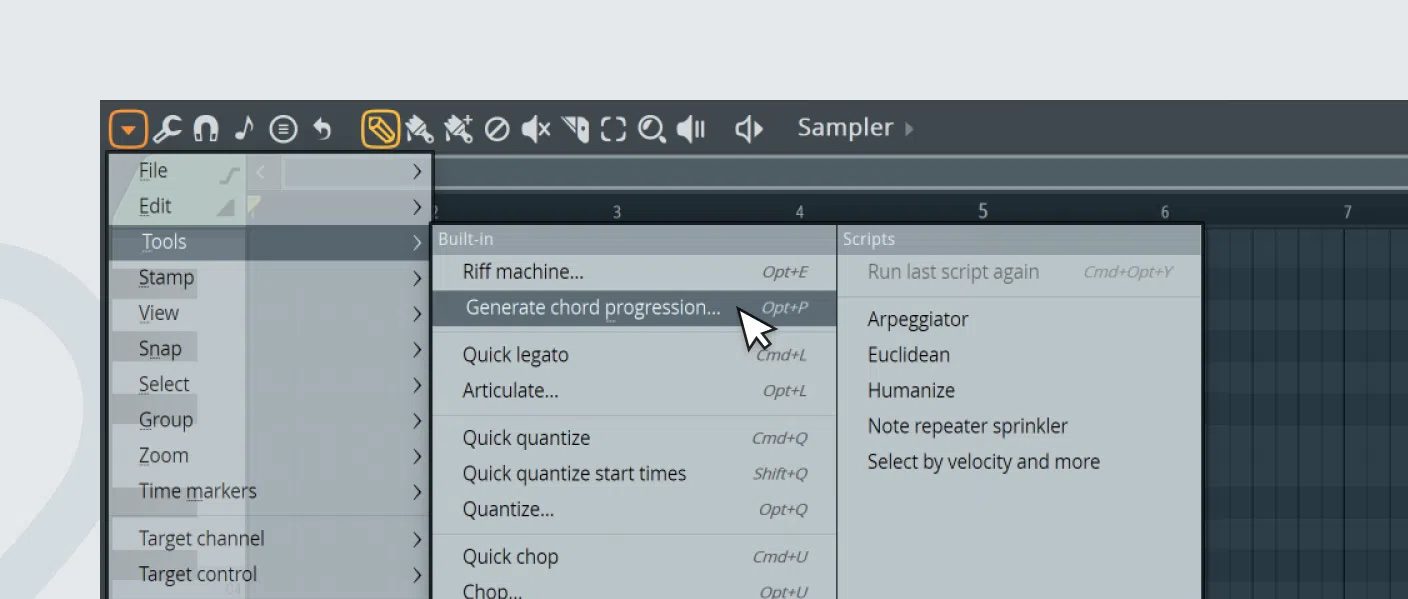
To harness the power of this new tool, you’ll need the latest version of FL Studio 2024. Once installed, accessing the chord progression generator is straightforward and intuitive. Here’s how to get started:
- Open your project in FL Studio 2024.
- Navigate to the piano roll of the instrument you want to add chords to.
- Click on the “Tools” menu at the top of the piano roll.
- From the dropdown, select “Generate chord progression…” (or use the shortcut Alt+P).
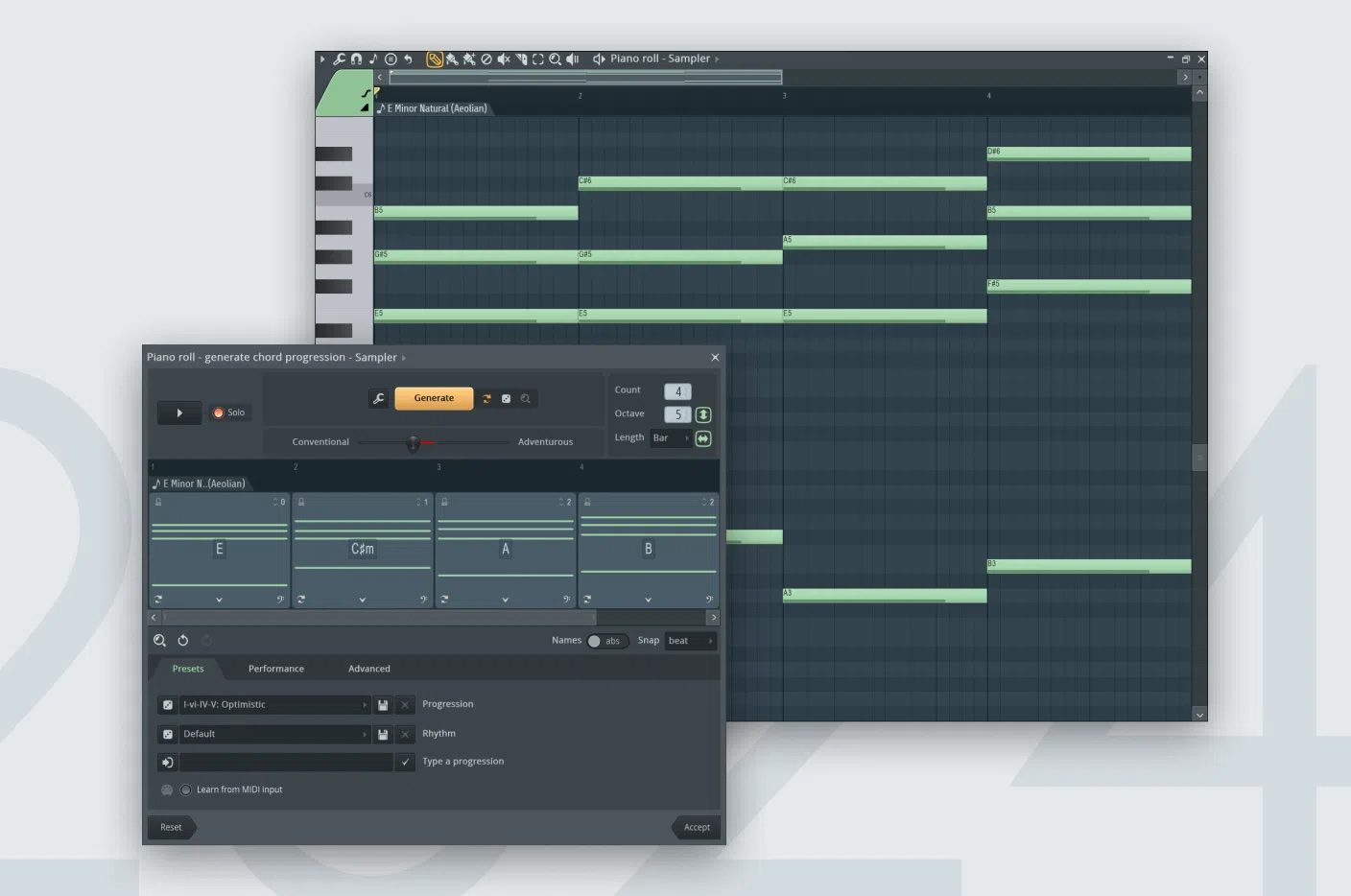
The chord progression generator interface will now appear, offering a range of options to craft your perfect progression. This user-friendly design makes it easy for both beginners and experienced producers to quickly generate inspiring chord sequences.
Key features and how to use them
The chord progression generator comes packed with features that allow for both quick inspiration and deep customization.
Here are some of the standout capabilities:
- Generate button: Instantly create new chord progressions with a single click.
- Conventional vs. Adventurous Slider: Adjust between safe, familiar chord structures and more experimental ones.
- Chord count: Choose the number of chords in your progression, from simple to complex sequences.
- Length: Set the duration of each chord in your progression.
- Chord manipulation: Edit individual chords or groups, including inversions and voicings.
- Preview: Listen to your progression in real-time as you make adjustments.
- Analyze: Use AI to find the best matching chord sequence for existing notes in your project.
These features provide a powerful toolkit for both inspiration and fine-tuning, allowing you to craft the perfect chord progression for your track quickly and efficiently.
Pro tips for using the chord progression generator
To make the most of this new tool, consider incorporating these strategies into your workflow:
- Use it as a starting point: Generate multiple progressions and combine or modify them to create something unique.
- Experiment with genres: Try different genre presets to break out of your comfort zone and discover new ideas. You can even use AI stem separation tools to analyze and recreate chord progressions from your favorite tracks.
- Layer progressions: Generate separate progressions for different instruments to create rich, complex harmonies.
- Combine with manual editing: Use the generator as a foundation, then manually adjust to perfect your progression.
By integrating these tips into your process, you can leverage the full potential of the chord progression generator while maintaining your creative voice. And once you’ve crafted your perfect progression, don’t forget to polish your track with the best AI mixing and mastering tools.
Experiment by using stem splitters & the chord progression tool
Let me clarify the relationship and explain how they can work together in the music production process:
Analyzing existing tracks:
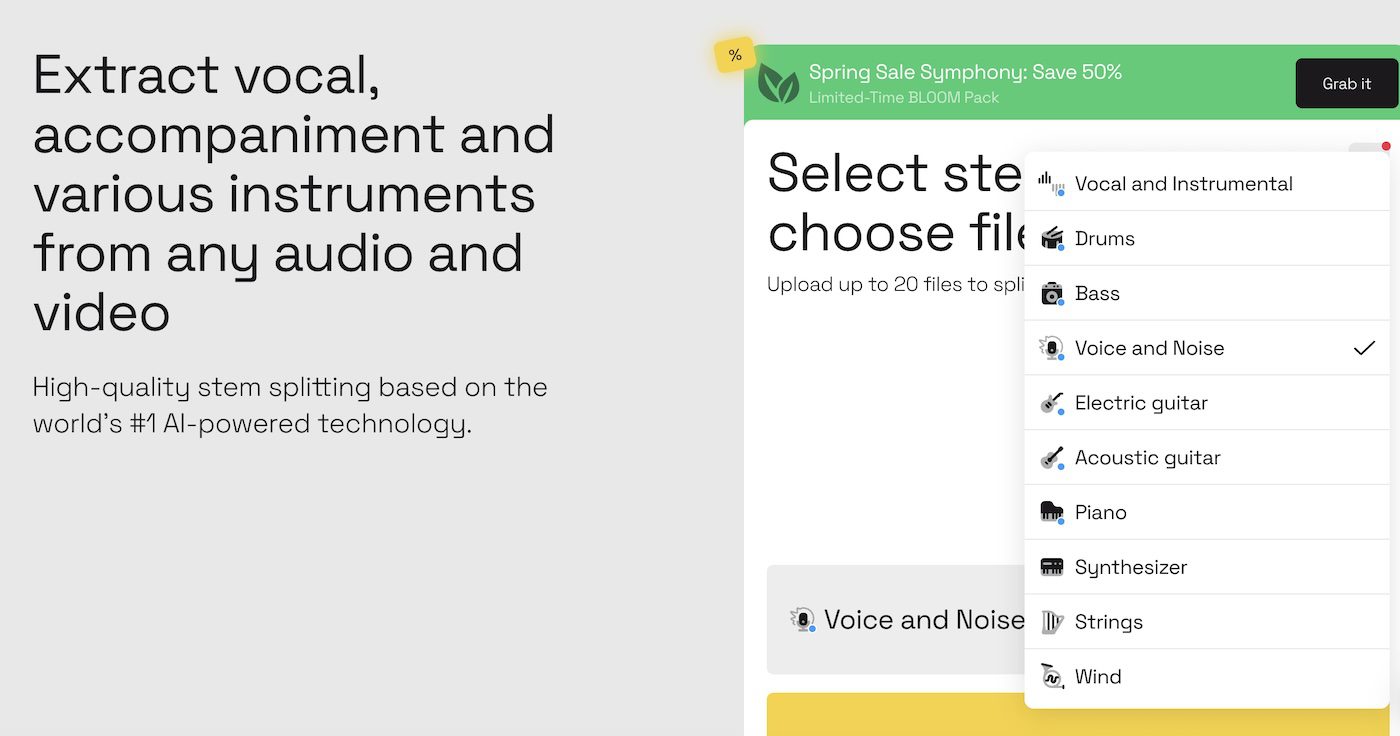
Stem separation tools like lalal.ai allow you to isolate individual elements of a song, such as the instrumental backing track. This can help you more clearly hear and analyze the chord progressions used in your favorite songs. By separating the instruments, you can focus on specific elements like the piano or guitar parts that often carry the chord progression.
Recreating chord progressions:
Once you’ve isolated the instrumental stems, you can more easily identify and recreate the chord progressions used in the original track. This process can inform your use of the AI chord progression generator in FL Studio, allowing you to input similar progressions or use them as a starting point for your own compositions.
Inspiration and learning:
By combining stem separation with the chord progression generator, you can study how professional tracks are structured and then experiment with similar progressions in your own music. This can help you break out of your comfort zone by understanding and emulating chord structures from different genres.
Remixing and reharmonization:
After separating stems, you can use the AI chord progression generator to create new harmonic structures for existing tracks. This allows for creative remixing possibilities, where you keep certain elements of the original song (like vocals) but generate new chord progressions to accompany them.
Complementary workflow:
While stem separation and chord progression generation are distinct processes, they can be complementary in a music production workflow. Stem separation helps in analysis and deconstruction, while the chord progression generator aids in creation and experimentation.
In summary, while stem separation tools don’t directly generate chord progressions, they can be used in conjunction with AI chord progression generators to enhance your understanding of song structure, provide inspiration, and open up new creative possibilities in music production.
Wrapping up
FL Studio’s new chord progression generator is more than just a cool feature – it’s a powerful tool that can help spark creativity and speed up your workflow. Whether you’re a beginner looking for a starting point or a pro seeking fresh ideas, this tool has something to offer everyone in the music production community. As AI continues to play a larger role in creative processes, tools like this represent the cutting edge of music production technology.
While some may feel apprehensive about AI in music, it’s important to remember that these tools are designed to enhance human creativity, not replace it. By embracing these innovations, producers can push the boundaries of their creativity while streamlining their workflow.
If you’re interested in exploring more AI-powered music tools, sign up to the newsletter:
I built a free AI prompt library that big labels & major artists are using.
It lets you create TikTok scripts, write a music bio, newsletters & more—all in one place.
Join 1,000+ users to turn followers into loyal fans. It’s free!
About the author

Covering AI music tools, industry shifts, and news for music creators and professionals. Twice-weekly newsletter at aimusicpreneur.com.
