Audiotool’s new Nexus API gives AI tools full access to your DAW sessions in real time
My stack My fav 6 tools for AI music after testing 70+
-
 ElevenMusic · Music generation
 -
 Moises · Stem separation
 -
 Controlla · Voice swap & cloning
 -
 Cryo Mix · Mixing + mastering
 -
 Neural Frames · Music videos
 -
 ONCE · Distribution
Some links are affiliate links — I earn a commission at no cost to you. Every tool here is one I run myself and truly believe in. This stack is proven.
Key Highlights
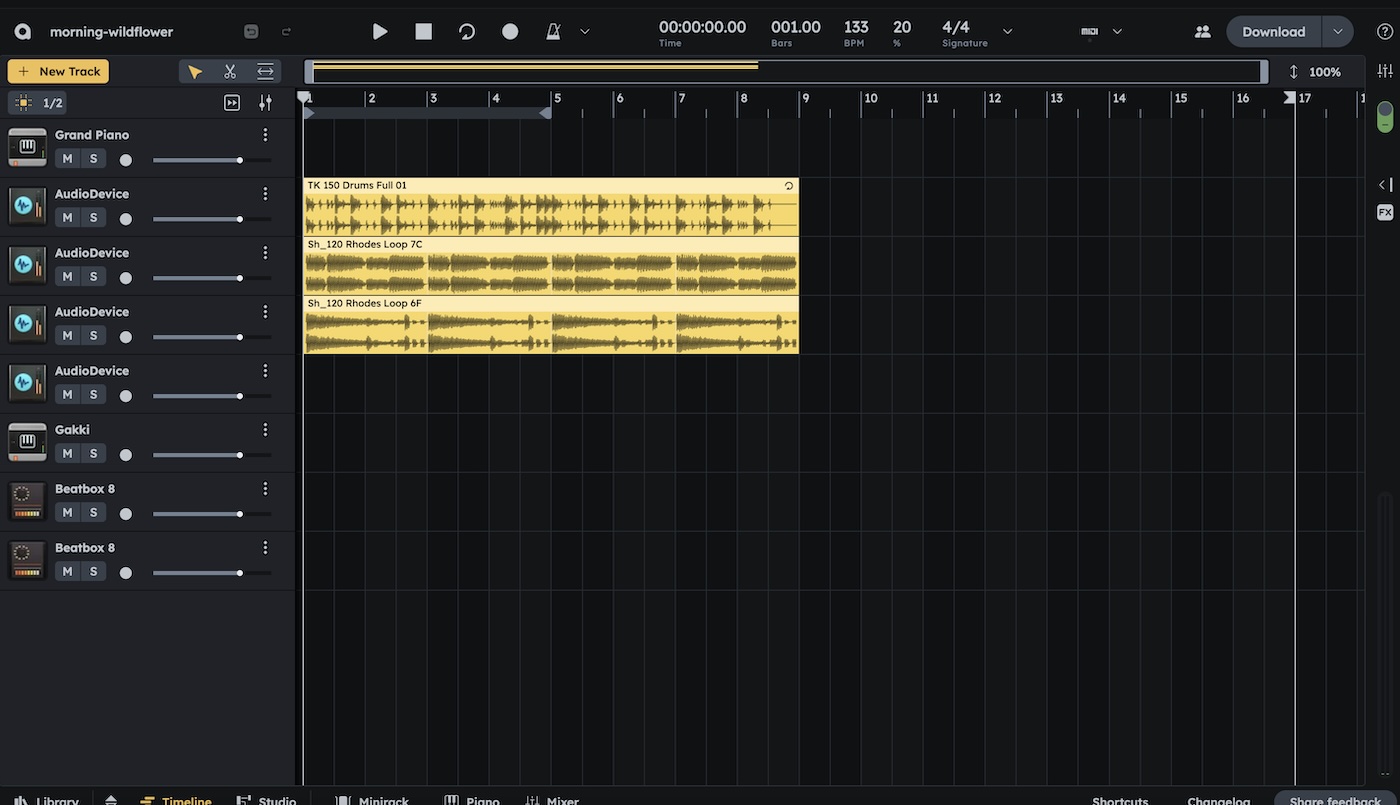
- Audiotool’s Nexus API gives external apps the same project access as the DAW itself, enabling real-time reading and writing of devices, MIDI, automation, and signal routing
- The free browser-based DAW includes 37 built-in plugins, Spitfire LABS support, and access to over 1 million user-made tracks and 200,000 presets
- Developers can build web apps, native tools, or AI integrations using JavaScript, Python, Go, or Rust through Protocol Buffers
Audiotool opened its beta, introducing Nexus, an API that exposes the DAW’s entire project state to external applications. Built with Fraunhofer, DAACI, and Spitfire Audio, the platform runs entirely in your browser with real-time collaboration. The Nexus API uses Protocol Buffers for efficient data serialization, letting developers create tools that read and write every element of a session, from synth parameters to mixer routing.
Here are 7 potential ways Audiotool’s Nexus API could be used:
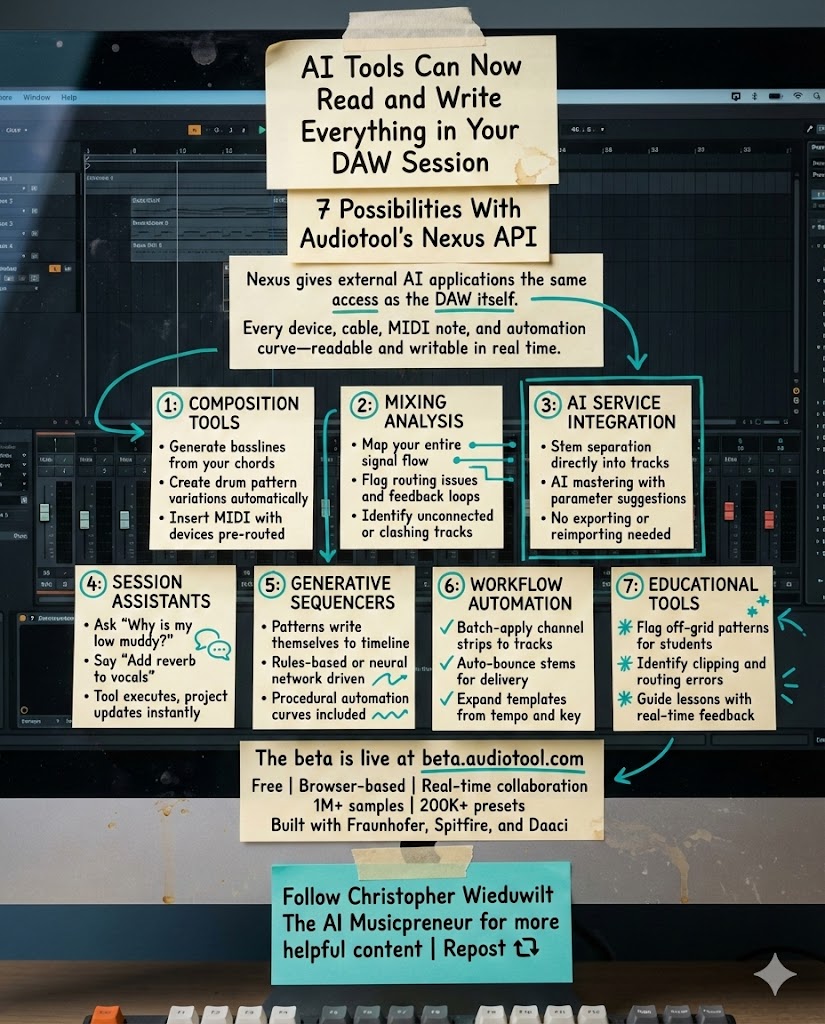
Daniel Rowland explained the approach: “External tools get the same level of access as the application’s own interface.” The developer dashboard offers starter templates in TypeScript, Svelte, and React. Showcase apps already include a Harmony Editor that generates full arrangements from chord progressions. Developers can integrate AI mixing tools, stem separation services, or AI sample finders directly into live sessions.
Traditional DAWs treat plugins as sandboxed guests. Audiotool treats the project as a shared workspace where AI agents, automation scripts, and human collaborators connect as peers. This architecture mirrors how platforms like Sesh approach collaboration but extends it to third-party development. For producers exploring AI VST plugins, Nexus removes the export-import cycle entirely. AI tools can now participate in sessions with full context, suggesting changes that appear instantly for all collaborators.”
About the author

Covering AI music tools, industry shifts, and news for music creators and professionals. Twice-weekly newsletter at aimusicpreneur.com.