I’ve just sifted through an insightful interview between Imogen Heap and The Guardian’s Katie Hawthorne, and trust me, it’s packed with revelations you won’t want to miss.
Many of you might remember Imogen Heap’s hauntingly beautiful song “Hide and Seek.” It was also my introduction to her incredible artistry, and to this day, it’s one of the most captivating pieces I’ve ever heard.
If you’ve ever been intrigued by the fusion of music and cutting-edge tech, you’re in for a treat.
Let’s dive into the most eye-opening moments from her recent interview:
A chat with The Guardian: Unveiling Mogen

During a lively video call with journalist Katie Hawthorne, Imogen Heap couldn’t contain her excitement about her latest project. She introduced a sleek black device named Plaud Note, a ChatGPT-powered voice recorder. Grinning, she exclaimed, “It’s going to change your life!” But this gadget does more than record—it transcribes conversations and summarizes thoughts.
Here’s the twist: Every recorded interaction becomes training data for Mogen, Imogen’s all-encompassing AI assistant. “Anything I’ve ever said or done, I want Mogen to have access to that,” she shared enthusiastically.
From fan app to creative companion: What Is Mogen?
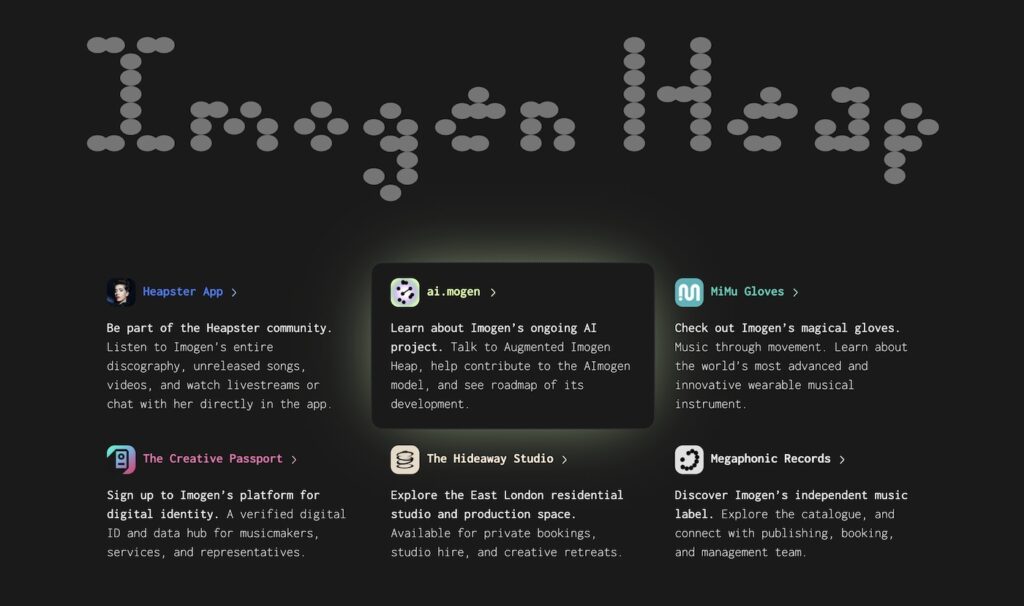
Originally, Mogen was a premium feature on Imogen’s fan app, giving “Heapsters” access to her thoughts and feelings on various topics. But her vision has expanded dramatically. She now sees Mogen as an “all-knowing connection” that can:
- Streamline her workflow
- Deepen her creative process in the studio
- Collaborate live on stage
Imagine attending a concert where Mogen analyzes real-time data to enhance the performance, creating a hyper-real experience for the audience. “I want to create these wide, orchestral pieces, or these angular drums, with a diversity and richness that you can’t get in real time with off-the-shelf equipment,” Imogen explained.
Life-Altering Experiences Fueling Innovation
Imogen’s journey toward this ambitious project was sparked by profound personal events:
- ADHD Diagnosis: During the pandemic, she discovered she had ADHD shortly after her sister’s passing.
- Reclaiming Time: Realizing that “we are using our most precious resource, which is time, to do these banal things,” she hired a studio assistant to minimize distractions.
- Exploring Presence: She delved into understanding the essence of being present, calling it “the immaterial fizz of no time and space.”
Her exploration led her to practices like the Wim Hof breathing method and immersive experiences with music by noise artist Prurient. These influenced her desire to create tools that prioritize creativity and human connection over profit.
Embracing Technology while acknowledging risks
Despite her tech-forward mindset, Imogen acknowledges potential risks associated with AI. She speculated that society might “go through this period of running away” from dangerous AI but remains optimistic about the future.
- On Progress: “You can’t stop progress,” she stated, dismissing some fears as “very simplistic” and “based out of fear.”
- Ethical Collaboration: Her upcoming 14-minute track, “What Have You Done to Me,” aims to demonstrate ethical collaboration between artist, AI, and fans. Released via The Living Song platform, users can chat with Mogen and even remix the song.
- Giving Back: One-third of the profits will be donated to Brian Eno’s climate foundation, EarthPercent.
“It’s about empowering the song to have the tools to go and collaborate, to go and make love with different people,” she said. “I don’t want to keep it locked in the basement; I’ve never felt protective or possessive over my music.”
Rethinking ownership and creativity
Imogen’s open approach challenges traditional views on music ownership:
- “Hide and Seek” Legacy: Her iconic song has been sampled and reimagined multiple times, including by Jason Derulo and in various cultural contexts.
- Sampling vs. Generative AI: She sees parallels between unauthorized sampling and AI-generated music using existing works without credit.
- Advocating for credit: Citing instances where her unreleased tracks were used without acknowledgment, she emphasizes the need for artists to set rules for interaction and collaboration.
Final Thoughts: Crafting the future of music
Imogen Heap’s work with Mogen isn’t just a personal project; it’s a bold statement about the future of music and technology. By creating a digital twin rooted in her past and designed to enhance her present, she’s pushing boundaries and inviting us all to rethink creativity.
So, what’s your next move? Perhaps it’s time to explore how technology can amplify your own creative endeavors. Take inspiration from Imogen: be adventurous, stay curious, and don’t hesitate to redefine what’s possible.