Key highlights
- 85% of AI music streams on Deezer were fraudulent in 2025, up from 70% the prior year
- 69% of consumers across five countries oppose AI companies using music without payment or permission
- Sony, UMG, WMG, Merlin, and Believe joined Spotify in the broadest AI licensing coalition in the industry’s history
The IFPI 2026 press release confirmed global recorded music revenues crossed $31.7 billion for the first time. Behind that headline number, the report contains seven AI-specific findings that directly affect how much money lands in your pocket from streaming. Here is what to do with them.
The IFPI represents over 8,000 record companies worldwide. The IFPI Global Music Report 2026 dedicates two full sections to AI: one on licensing strategy, one on streaming fraud. Both sections contain data most artists have not seen yet.
1. 85% of AI music streams were fraudulent in 2025
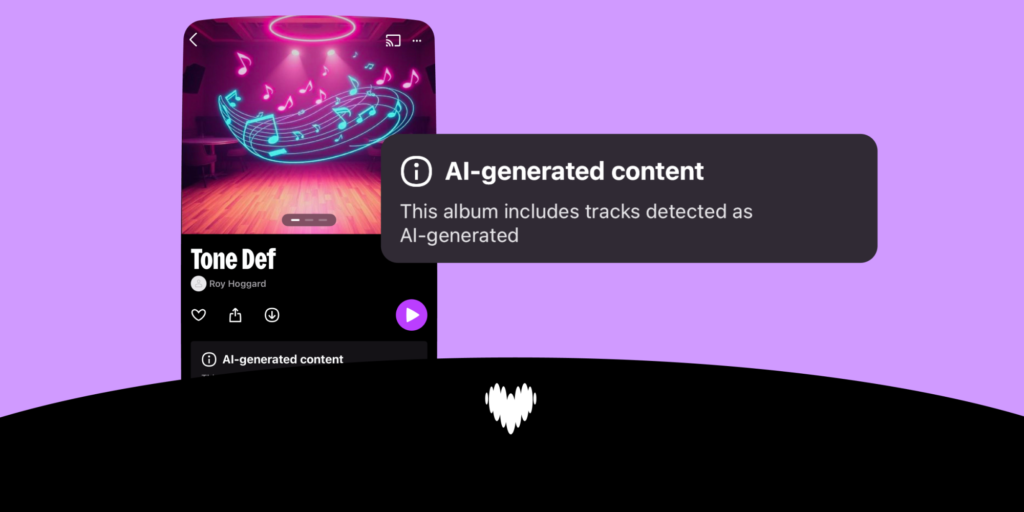
Deezer’s AI fraud report showed 85% of streams on AI-generated music were fraudulent last year, up from 70% in 2024. The platform received more than 60,000 fully AI-generated tracks every single day in January 2026.
Streaming pays artists from a finite pool divided across all streams. This is the pro-rata royalty model. Every fraudulent stream takes a share of that pool without producing legitimate listening. When fraud grows 15 percentage points in a single year, your per-stream rate shrinks.
Check your distributor’s fraud detection policy. Deezer is now licensing its detection technology to other DSPs, so more fraudulent streams are likely to be flagged — and the pool is likely to recover as removal rates increase.
2. Generative AI put streaming fraud on an industrial scale
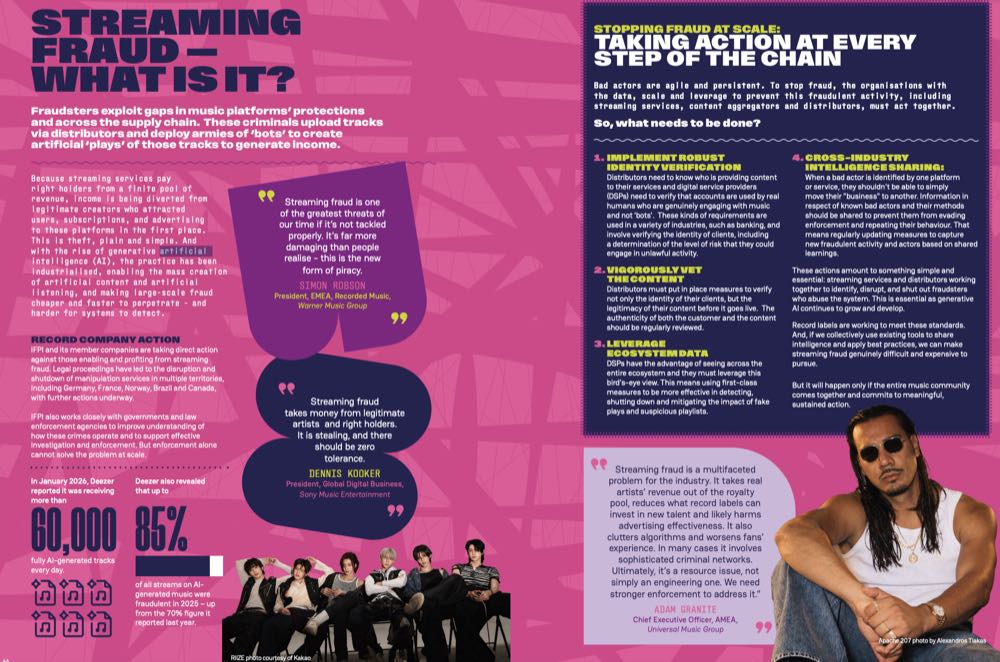
IFPI describes the practice as being “industrialized” by generative AI. Creating mass volumes of fake tracks and fake listens is now automated, cheap, and fast enough to outpace most detection systems.
WMG President EMEA Simon Robson called it “the new form of piracy.” The critical difference from the Napster era: this fraud operates inside the distribution system.
 Source Digital Music News
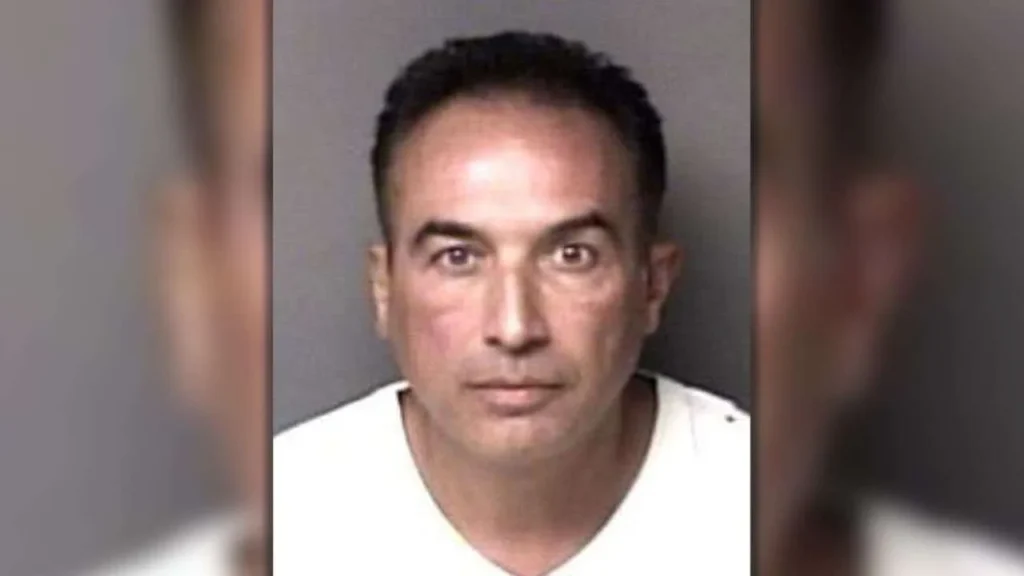
The Michael Smith streaming fraud case showed how one person stole $8 million over seven years using 1,040 bot accounts and AI-generated songs, all uploaded through a legitimate distributor.
Your per-stream rate is affected whether you use Spotify, Apple Music, or any other DSP running the pro-rata model. There is no platform to move to with full insulation from this problem.
3. 69% of fans oppose unauthorized AI training globally
IFPI commissioned a survey of approximately 10,000 people across the UK, France, Brazil, South Korea, and India in November 2025. In every country, the majority opposed AI companies using creative works without authorization or payment.
Support for government transparency rules on AI training data by country:
- India: 70%
- Brazil: 67%
- UK: 67%
- France: 65%
- South Korea: 63%
This is the first large-scale, cross-market consumer dataset on AI attitudes the industry has published. It directly undercuts the AI industry’s claim that the public is indifferent to training data practices. When your collecting society says it is negotiating on your behalf, ask what terms are on the table. Public pressure is real and it moves negotiations.
4. IFPI’s demand: authorization before any AI training
IFPI’s 2026 policy manifesto sets three demands for AI developers. First, they must get authorization from right holders before training on music. Second, they must keep records of every work used and disclose those on request. Third, all AI-generated content must be labeled for consumers.
IFPI also opposes statutory licensing and mandatory collective management. These schemes would strip artists of exclusive rights by removing their ability to choose who uses their work. The AI music copyright implications for unrepresented artists are real — without a label, your collecting society has limited leverage in AI negotiations today.
Find out whether your distributor or collecting society has a published position on AI licensing.
5. The largest AI licensing coalition in music history just formed
Sony Music, UMG, WMG, Merlin, and Believe partnered with Spotify on what they call “Artist-First AI Music Products.” The official Spotify announcement describes it as a foundation for AI tools built around artist interests. Separately, AI platform KLAY signed licensing deals simultaneously with all three major labels and their publishing arms — the first time all three majors agreed terms with a single AI company at once.
IFPI frames this as “streaming 2.0” — the same licensing model that converted Spotify from a legal threat into the industry’s biggest revenue driver. See how streaming platform AI rules are diverging across individual DSPs as these deals take shape.
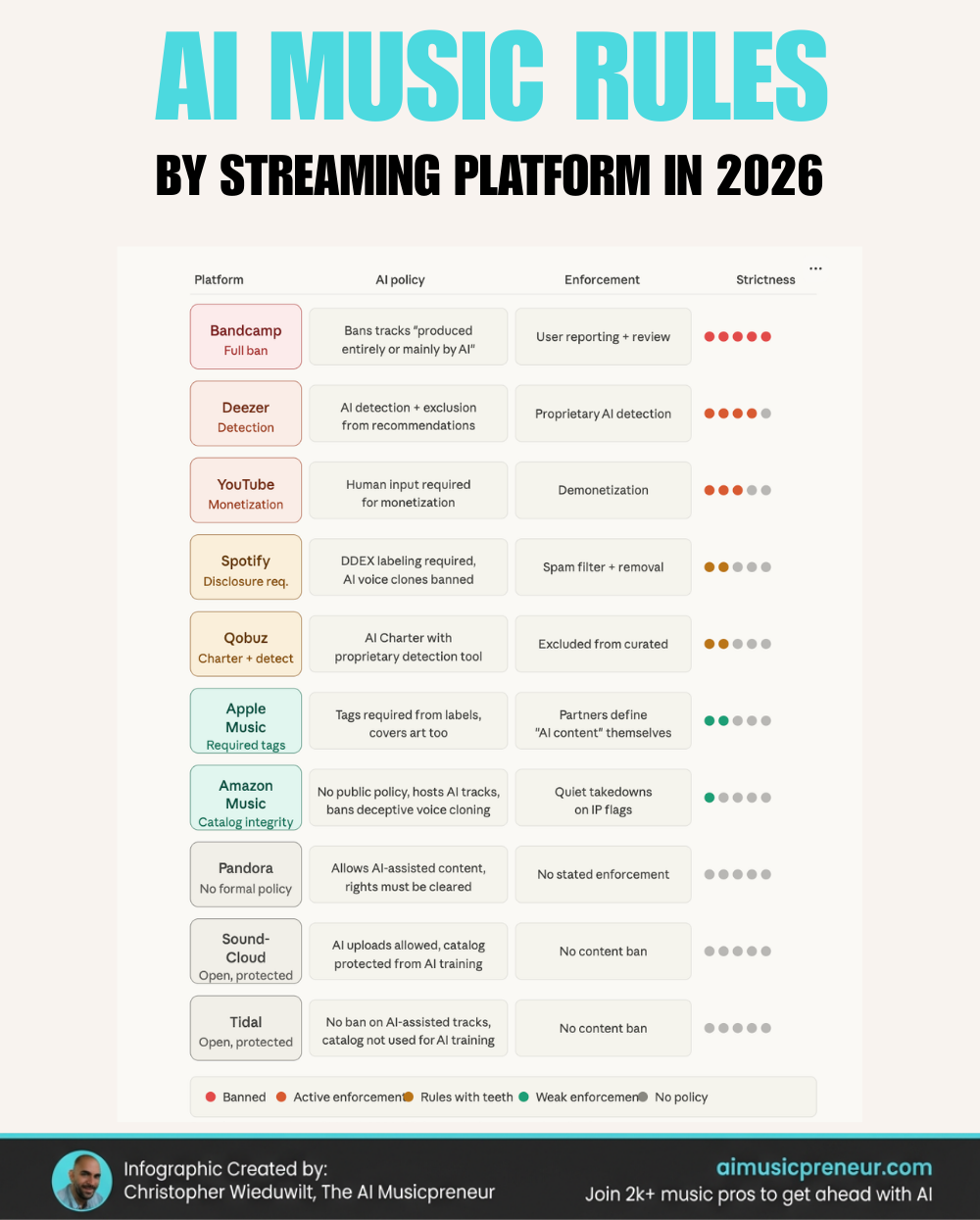
The terms being agreed now will define the AI royalty framework for years. Watch how artist participation and revenue share are structured in each deal.
6. AI free riding damages AI quality, not just creators
IFPI cited a 2025 Compass Lexecon study with a counterintuitive finding. AI companies free riding on copyrighted music harm more than just artists. If musicians stop investing in high-quality work because AI erodes their income, the training data pool degrades over time. Future AI models built on lower-quality inputs produce lower-quality outputs.
The Compass Lexecon AI study states the argument for free AI access to music “does not stand up to scrutiny.” The full economic analysis PDF is publicly available and provides economic data rather than moral arguments.
Use this when responding to government consultations or writing to lawmakers. The creator-rights position now has economic backing.
7. The industry has financial leverage it lacked in 2000
Global revenues crossed $31.7 billion in 2025, the 11th consecutive year of growth. UMG AMEA CEO Adam Granite said AI’s positive impact is still largely unrealized, but added: “Models that want to train on our artists’ repertoire need a licence, and outputs need to be transparent so artists whose works were used are compensated properly.”
In 2000, the industry tried to contain Napster from a position of financial weakness. Today it negotiates AI licensing from record revenue. AI artists’ Spotify earnings show what happens when AI content flows unrestricted into the royalty pool: high earners on one side, diluted rates on the other.
The framework being built in 2025 and 2026 will determine how much of AI’s revenue reaches working artists. Understanding who represents your interests at these negotiations is the most important step a musician or producer takes right now.
Both fights are running at the same time
The IFPI Global Music Report 2026 is not a crisis document. Revenue is growing, licensing deals are being signed, and consumer support for artist rights is documented across five countries. But the 85% fraud rate tells a different story at the distribution layer. Licensing solves the copyright problem. It does not solve the fraud problem.
For a fuller picture of how streaming royalties work and why fraud affects every artist, read how music royalties are calculated and how Deezer’s AI detection system is setting the standard other platforms are now following.
Frequently asked questions
What does the IFPI Global Music Report 2026 say about AI and streaming royalties?
The IFPI Global Music Report 2026 found that 85% of AI music streams on Deezer were fraudulent in 2025, up from 70% the prior year. The report also confirmed that Sony, UMG, WMG, Merlin, and Believe have partnered with Spotify on AI licensing, and published cross-market consumer data showing 69% of fans oppose unauthorized AI training.
How does streaming fraud affect my per-stream royalty rate?
Streaming platforms pay royalties from a shared pool divided by total streams. When fraudulent AI tracks accumulate billions of fake streams, every legitimate artist’s per-stream rate drops. The fraud does not need to target you directly to reduce your income — it dilutes the pool for everyone.
Are record labels licensing music to AI companies?
Yes. Sony Music, UMG, WMG, Merlin, and Believe have all partnered with Spotify on “Artist-First AI Music Products.” AI platform KLAY signed licensing deals with all three major labels and their publishing arms. IFPI has explicitly framed this as the same model used to build the streaming market.
What percentage of music fans oppose AI companies training on music without permission?
An IFPI-commissioned survey of approximately 10,000 respondents across the UK, France, Brazil, South Korea, and India in November 2025 found 69% opposed AI companies using creative works without authorization or payment. Majorities in all five countries supported mandatory government transparency rules for AI training data.