Key highlights
- Roland Melody Flip imports an audio file, extracts key, tempo, and chord data, and exports new melody ideas as editable MIDI covering chord, bass, melody, and drum components
- The plugin is built on peer-reviewed AI research from Sony CSL Paris, specifically the Diff-A-Riff latent diffusion model presented at ISMIR 2024
- A free trial launches in May 2026 through Roland Cloud Manager for macOS and Windows
Roland has announced Melody Flip, an AI melody generation plugin developed with Sony Computer Science Laboratories Paris. Import an audio file, and the plugin extracts its key, tempo, chord progression, genre, and mood, then outputs new melody variations as MIDI into your session. Here are five things to know before the free trial opens in May.
Melody Flip is Roland’s first dedicated AI software product and the first practical test of the Roland and UMG AI principles framework the company co-published with Universal Music Group in 2024.

The framework commits Roland to protecting human-created works in its AI tools.
1. How the audio-to-MIDI pipeline works
Melody Flip follows a three-step process: import audio, match against creative palettes, export stems. The plugin reads your file’s structure and matches it against approximately 300 predefined palettes to generate melody ideas. The Roland Melody Flip announcement confirms exports in both audio and MIDI format covering chord, bass, melody, and drum components.
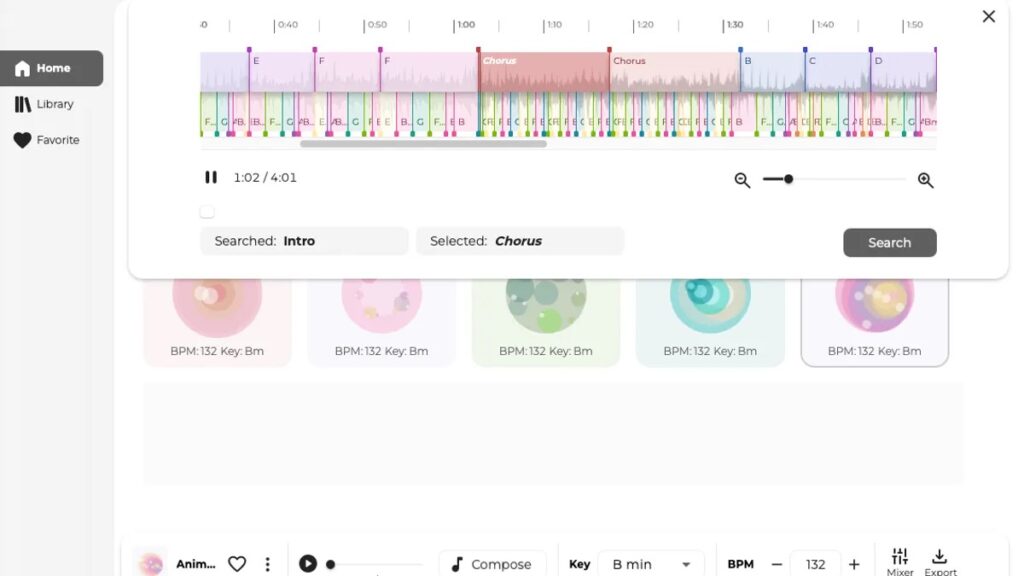
Every output lands in your DAW as editable MIDI. You shape it from there.
Treat every generated MIDI as a rough sketch, not a finished part. Edit before committing to a direction.
2. Roland Cloud membership is required
Melody Flip is distributed through Roland Cloud Manager for macOS and Windows. Like other AI VST plugins built for local DAW processing, audio processing runs inside your session rather than on an external server. But accessing the plugin requires a Roland Cloud membership.
A free trial launches in May 2026. Paid tier pricing is not yet confirmed.
Create or verify your Roland Cloud account now so the trial is ready to install on day one.
3. Sony CSL Paris built the AI science behind it
The generation engine draws from Sony CSL music team research, specifically the work behind Diff-A-Riff, a latent diffusion model for accompaniment co-creation. The Diff-A-Riff research paper was peer-reviewed at ISMIR 2024, and generated examples are available on the Diff-A-Riff companion demos page.
This is published academic research, not a proprietary black box. The transparency matters for understanding what the model was designed to generate and what data informed it.
Listen to the Diff-A-Riff demos before the trial to set realistic expectations for output quality.
4. What 300 creative palettes means in practice
Creative palettes are predefined style and mood profiles constraining what Melody Flip generates. They work like the genre presets in FL Studio’s chord progression tool, but with a larger library and an audio analysis layer driving the match. Among the best AI VST plugins available today, 300 palettes is a substantial starting library for style variation.
In palette-based systems, popular genres tend to get over-represented. Less common styles return fewer and lower-quality matches.
Test palettes outside your normal genre during the trial to find unexpected melodic directions.
5. Uploading copyrighted audio is an open question
Melody Flip lets you import any audio file for analysis. Roland has not published a content policy for user-uploaded audio. The mechanism differs from generative AI training, where training data directly shapes the model, but the fundamental question is the same: whose music shapes your output, and is the use covered?
Roland’s AI framework with UMG addresses model training, not runtime audio input. This gap has not been addressed publicly.
Use only audio you own outright as input until Roland clarifies its content policy.
Roland entering AI software with a research-backed plugin is a meaningful strategic move. Hardware brands now see AI tools as a distribution channel, and Roland has Sony CSL’s academic output to set itself apart from standalone AI music startups. The Yamaha Creator Pass launched the same week with a different approach: a broad tool bundle rather than a focused plugin.
 Credit Yamaha Creators Website
For producers building an AI toolkit now, Jamu AI for Ableton covers AI co-production in your DAW. Melody Flip is worth benchmarking directly against it when the May trial opens.
Frequently asked questions
What is Roland Melody Flip?
Roland Melody Flip is an AI melody generation DAW plugin developed in collaboration with Sony Computer Science Laboratories Paris. It analyzes an imported audio file and generates new melody ideas exportable as MIDI for chord, bass, melody, and drum components. A free trial launches in May 2026 through Roland Cloud Manager.
How does Roland Melody Flip generate melodies?
The plugin extracts musical characteristics from your audio file including key, tempo, chord progression, genre, and mood. It matches these against approximately 300 predefined creative palettes and generates new melodic variations. The underlying technology is based on Sony CSL’s Diff-A-Riff latent diffusion research, peer-reviewed at ISMIR 2024.
Does Roland Melody Flip export MIDI?
Yes. Melody Flip exports generated melody ideas as both audio and MIDI. MIDI exports cover chord, bass, melody, and drum components, giving you fully editable stems to modify in your DAW session.
Do I need a Roland Cloud subscription to use Melody Flip?
Melody Flip is distributed through Roland Cloud Manager and requires a Roland Cloud membership. A complimentary trial starts in May 2026. Paid tier pricing has not been confirmed by Roland at the time of writing.
Is it safe to upload copyrighted tracks to Roland Melody Flip?
Roland has not published a content policy for audio files uploaded to Melody Flip. Until the company clarifies its policy, use original recordings and stems you own as input to avoid any ambiguity around third-party content.