Traditional music mentorship costs between $5,000 and $22,000 per year. Boutique coaches charge $100 to $300 per hour. Artist development programs demand equity stakes or royalty percentages. For independent musicians and producers, these prices create a barrier between where you are and where you need to be.
The music industry mentorship landscape shifted in 2026. Document-grounded AI tools now synthesize expert knowledge from hundreds of hours of free YouTube content into personalized advisory systems. Two free tools make this possible: NotebookLM and Instant Data Scraper. Together, they transform public expert content into your private, searchable knowledge base.
This guide shows you how to build a personalized music mentorship board in under 30 minutes. No coaching fees required.
Jump links:
Why Traditional Music Mentorship Is Becoming Obsolete
 Screenshot
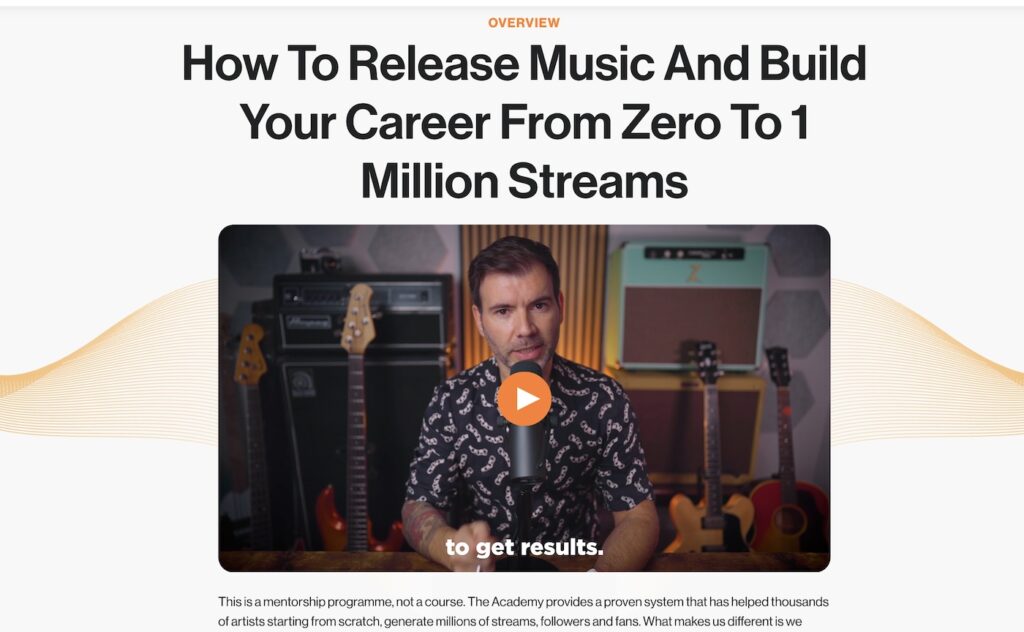
The cost structure of music education has remained steep for years. Three-month intensive programs run $5,000. Twelve-month comprehensive mentorship reaches $15,000 to $22,000. Subscription academies like the Damian Keyes Music Business Academy offer a more accessible entry at $19.99 per month, but still lack the personalized direct access of high-ticket coaching.
Here is the uncomfortable truth about music mentors online: 90% of expert advice is already free on YouTube. Mentors must share their strategies publicly to build the trust necessary to sell premium services. The “exclusive” playbooks behind $5,000 paywalls often mirror what these same experts post for free.
This does not mean all mentors will disappear. Educators like Atlanta Cobb, Damien Keyes, Nic D, Jesse Cannon, and Nick Ruffalo offer real skills worth the investment. Their personalized feedback and accountability have genuine value. But quick advice, workflows, and step-by-step plans are available if you tap into the right knowledge base. Music mentors in the future will likely build their own AI coaches with their expertise as the brain, allowing artists to get advice around the clock.
The music industry disruption history shows this pattern repeating. Each technological shift democratizes access while elevating the value of human connection.
Two free tools form the foundation of your synthetic advisory board. One collects expert content. The other transforms it into an interactive knowledge base you query like a personal mentor.
This workflow addresses music producer mentorship needs alongside general career strategy. Producers seeking advice on beat production, mixing decisions, or release timing benefit from the same system.
NotebookLM is Google’s document-grounded research tool. Unlike standard chatbots that draw from a generalized internet corpus, NotebookLM pulls insights directly from the specific sources you provide.
Upload YouTube transcripts, documents, or URLs from your chosen mentors. The system creates a searchable, interactive knowledge base grounded in their actual advice. No hallucinations. No generic responses.
The Audio Overview feature generates synthetic podcasts that debate and summarize your source material. Hundreds of hours of mentor content become a ten-minute conversational briefing tailored to your questions.
Tool #2: Instant Data Scraper: Harvesting Expert Content
The Instant Data Scraper Chrome extension automates extraction of video URLs and metadata from YouTube channels. Navigate to a mentor’s channel, activate the extension, and harvest their entire video library in seconds.
Export the data as a CSV file. Feed those URLs into NotebookLM. The system ingests transcripts and content from each video, building your personalized music mentorship database.
Pro tip: Focus on channels with transparent, actionable playbooks. Vague motivational content produces vague AI responses.
Step-by-Step Workflow: Building Your $0 Mentorship Board
This five-step process takes under 30 minutes. You need a Chrome browser, a Google account, and a clear idea of what strategic questions you want answered.
If you’d like to discover more AI tools for indie musicians, I have put together a guide.
Curating Your Mentor Sources
 Screenshot
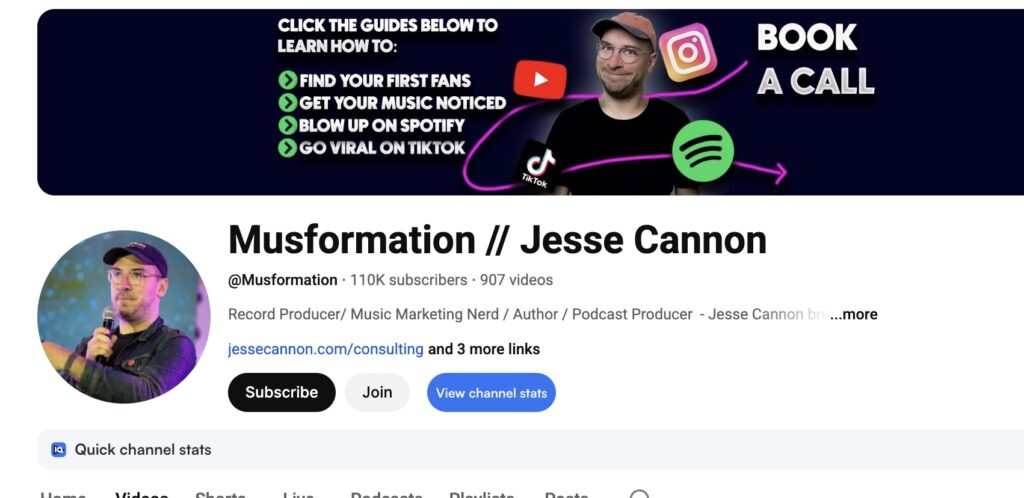
Start by identifying three to five proven mentors in your niche. Selection criteria matter for quality output:
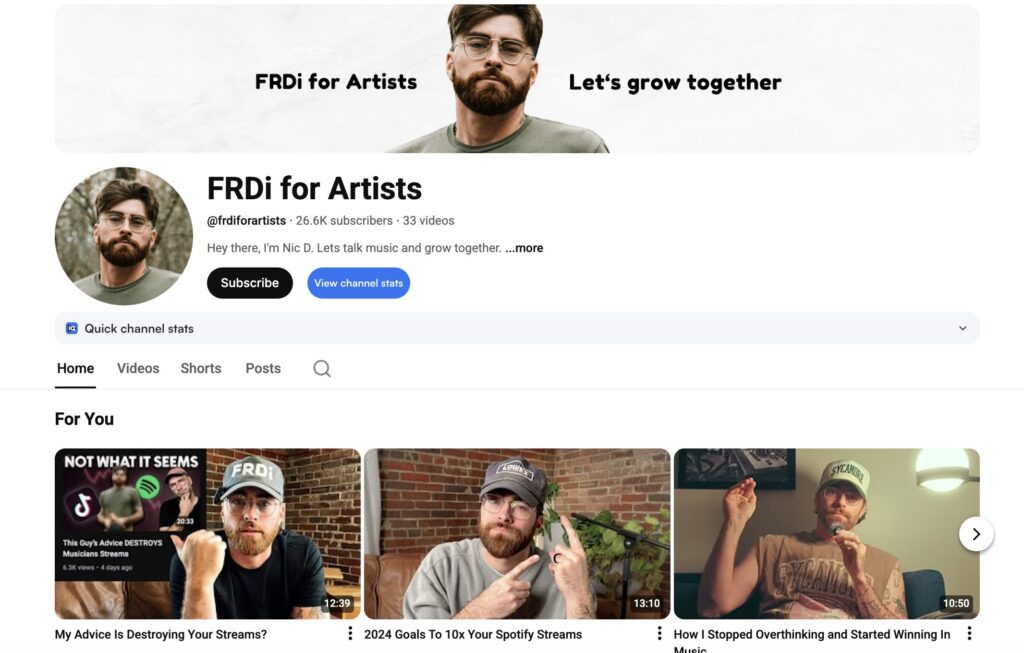
- Nic D: Business strategy, lean production budgets, data-driven release schedules
- Damien Keyes: Social media marketing, audience building, content strategy
- Jesse Cannon: Fanbase development, independent distribution, industry contracts
Look for educators who share transparent playbooks with proven track records. Avoid channels heavy on motivation but light on tactics.
How to Extract YouTube Videos for NotebookLM
Follow these steps to build your advisory board:
Step 1: Install the Tool
Download and install Instant Data Scraper from the Chrome Web Store.
Step 2: Navigate to Your Mentor’s Channel
Go to your chosen creator’s YouTube channel (e.g. Nic D, Damien Keyes) and click on their “Videos” tab to display their full video library.
 Screenshot
Step 3: Extract the Video URLs
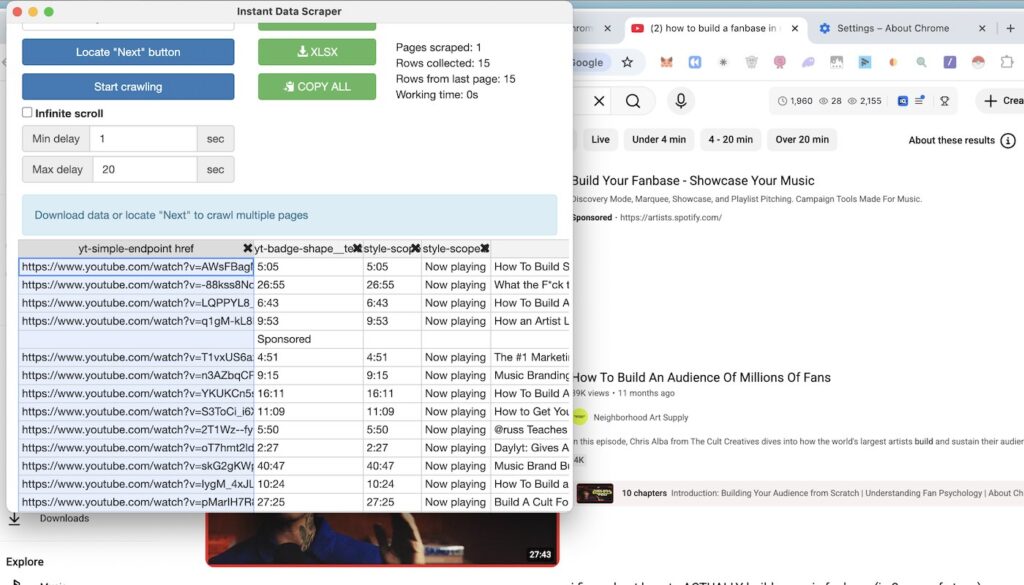
Click the Instant Data Scraper extension icon, let it detect the data pattern on the page, then click “Start crawling” to extract all video URLs.
 Screenshot
Step 4: Copy the URLs
Once the scrape is complete, copy the video URLs directly from Instant Data Scraper (no need to export a CSV).
Step 5: Add to NotebookLM
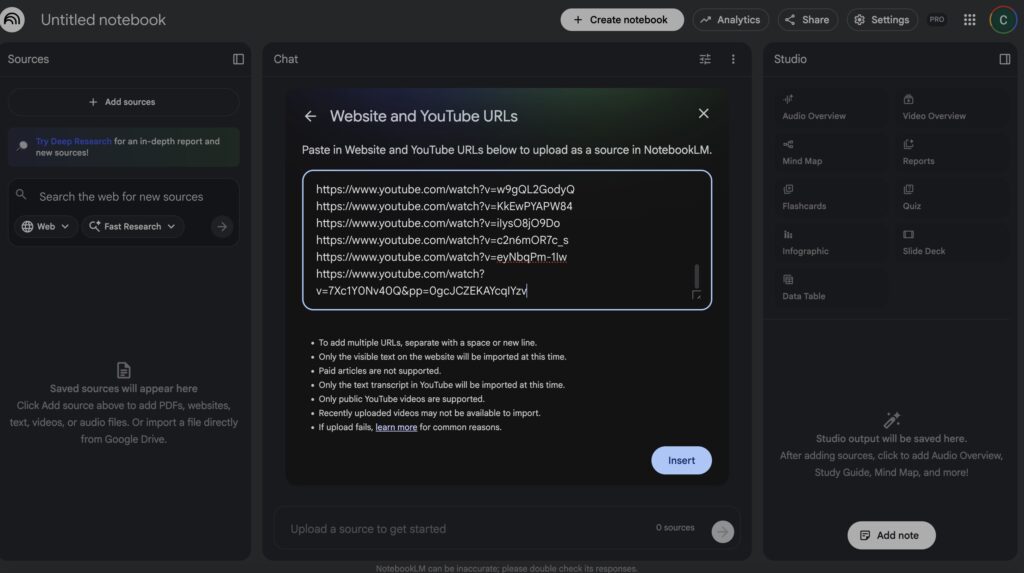
Open NotebookLM, create a new notebook, paste your video URLs as sources, and wait for it to process and index the content.
 Screenshot
Success check: You should see your sources listed in the NotebookLM sidebar with a green checkmark indicating successful ingestion.
Now ask specific, situational questions. “How do I release a drill single in 2026 with a $500 budget?” or “What are the common pitfalls in independent distribution contracts according to Jesse Cannon?”
Real-world application: The Nic D Practical Model
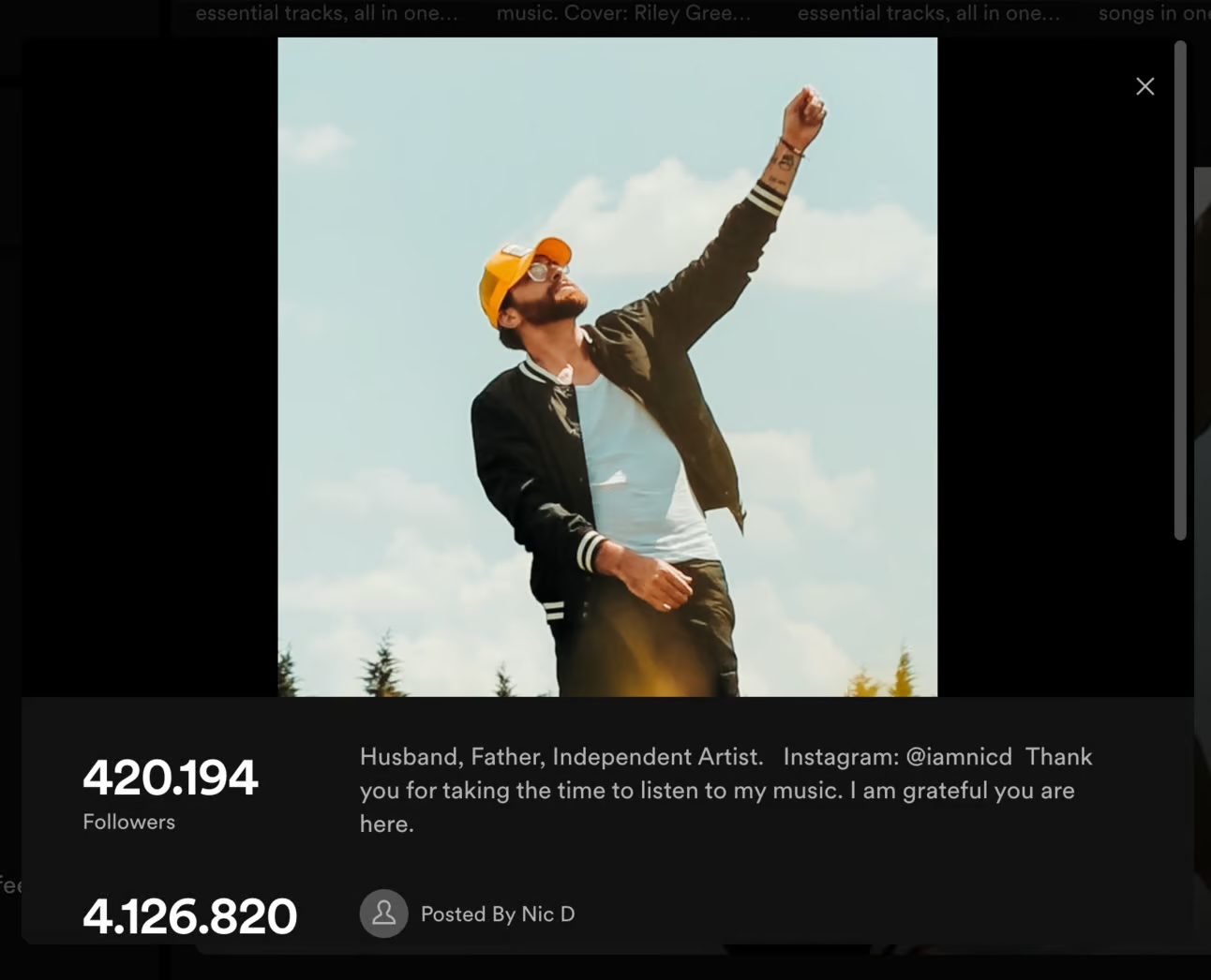
Nic D is a case study in what’s possible as an indie artist, he even wrote a music marketing book about it. He’s surpassed 1.5 billion streams while maintaining 1 million streams per day, without a manager or label. Alongside artists like Connor Price, he’s proof that “making it” independently is not a fantasy. And by “making it,” I mean the real definition: actually living from your music.
His operational model is ruthlessly lean. Total monthly costs for production, marketing, and ads run under $1,000. His per-song release budget targets $250, covering production, mixing, and mastering. He records vocals in his minivan to avoid studio fees.
This enables a high-frequency release schedule, one song every week or two. Each release collects data on audience behavior. Failed content prompts iteration on the angle, not the art. Low burn rate, consistent output, data-driven decisions.
Here’s what this means for you: Nic D shares his entire playbook on YouTube. Hours of raw, tactical knowledge on building a fanbase, creating engaging content, and sustaining a career. Now imagine feeding that content into an AI mentorship board, extracting his strategies, adapting them to your brand, and getting direct, personalized advice based on how he built it.
That’s what this guide enables.
So will this replace a Music mentorship in the future?
The $0 mentorship model has limitations.
AI does not replace music industry mentorship. AI augments mentorship. Your coach won’t answer your 3am sync licensing question. Your coach won’t be there when you spiral over a rejected playlist pitch. An AI knowledge base trained on your coach’s PDFs, manuals, and videos will be.
This won’t guarantee virality. This won’t 10x your fanbase. You still do the work. The AI doesn’t make the music, build the relationships, or show up at the venue. AI democratizes access to world-class strategic knowledge. Knowledge previously locked behind $5,000 paywalls or years of trial and error.
The real skill isn’t having the tools. Build the right knowledge bases with the right source material. Ask the right questions. 10x outputs come from how deliberately you direct the AI.
NotebookLM combined with Instant Data Scraper offers $0 access to synthesized expert advice. Traditional platforms like DKMBA charge $20 to $50 per month. The AI model provides personalized queries without subscription fees. The Spotify 2025 payouts report confirms the economic pressure driving artists toward free alternatives.
How to Find a Professional Music Mentor Near Me (Online)
Reframe “near me” as “online mentors in my niche.” Research YouTube channels in your genre. Check social media communities and industry podcasts. Use Instant Data Scraper to identify high-value creators with consistent, actionable content. Vet credibility by examining their track record and transparency.
Top Apps for Connecting with Music Mentors
NotebookLM and Instant Data Scraper form the core stack. Supplement with Claude for follow-up questions and Gemini for deep research. The grounded AI advantage means responses come from your specific mentor sources, not generic internet data.
Affordable Music Mentorship Services for Beginners
The AI model costs $0. Subscription academies run $20 to $50 per month. Hourly coaching ranges from $100 to $300. The ROI on free access to hundreds of hours of expert content makes the AI approach the most affordable option for beginners following the Nic D practical framework.
AI mentorship boards work best for business and strategy. Technical vocal coaching requires real-time human feedback. Use a hybrid approach: AI for career strategy, human mentors for technical skills. NotebookLM synthesizes vocal training advice from YouTube experts, but execution requires practice with qualified instructors.
Benefits of Enrolling in Music Mentorship Courses Online
Key benefits of the AI approach include:
- Cost savings: $0 versus $5,000 or more
- 24/7 access: Query anytime without scheduling
- Personalized queries: Ask specific questions about your situation
- Speed: Ten-minute Audio Overviews summarize hundreds of hours
- Flexibility: Learn at your own pace and iterate based on results
Music Mentorship Programs That Offer Certification
AI mentorship boards do not offer formal certification. Platforms like DKMBA and MIM Silver provide certificates for completion. Real-world results serve as the best credential. Streams, fanbase growth, and revenue demonstrate competence more effectively than certificates.
Where to Book One-on-One Music Mentorship Lessons
AI mentorship is not one-on-one in the traditional sense. NotebookLM provides a personalized experience through tailored queries and specific advice, but it does offer an audio overview to generate a conversation that you can join to ask questions. Pretty neat feature. For accountability and human connection, occasional sessions with human mentors supplement the AI system. This indie artist budget allocation guide helps determine cost-benefit tradeoffs.
Comparing Subscription Options for Music Mentorship Apps
Cost comparison for music mentorship options:
- NotebookLM: Free
- Instant Data Scraper: Free
- DKMBA: $19.99 per month
- MIM Silver: $20 to $50 per month
Subscription academies offer community features AI boards lack. Use both: AI for strategy, subscriptions for community support.
The AI workflow is a permanent free option with no paywall. Traditional platforms often offer free trials. Test the NotebookLM and Instant Data Scraper workflow first before investing in paid platforms. Zero risk, immediate access.
Best Companies Offering Personalized Music Mentorship
NotebookLM combined with Instant Data Scraper offers the most personalized free option. Boutique coaches and labels provide premium alternatives with direct access. Vet mentors by their track record and transparency. The RIAA music industry revenue 2025 report provides context on industry economics driving these choices.
How to Choose the Right Music Mentorship Program for Producers
AI mentorship handles business and strategy well. Human mentors excel at technical production skills. Use NotebookLM to synthesize producer-specific advice on beat production, mixing, and mastering. The Nic D model emphasizes “good enough” production and data-driven iteration over perfectionism.
AI mentorship boards lack community features. Supplement with platforms like DKMBA or MIM Silver for community engagement. The hybrid approach combines AI for strategy with communities for accountability and networking. Human connection remains valuable in the 2026 music economy.
Top-Rated Music Mentorship Websites for Beginners
The AI workflow requires no prior knowledge. Start with Nic D’s YouTube channel as a mentor source. Beginner-friendly platforms include DKMBA, MIM Silver, and YouTube-based educators. The AI model levels the playing field for artists in any market.
Music Mentorship Programs That Focus on Songwriting Skills
AI mentorship works best for business and strategy. Creative songwriting requires human judgment and feedback. Use a hybrid approach: AI for career strategy, human mentors for songwriting craft. NotebookLM synthesizes songwriting advice from YouTube experts, but creative decisions remain yours.
AI mentorship is not ideal for performance coaching. Real-time feedback from human instructors remains essential for technique development. Use AI for career and business strategy. NotebookLM synthesizes performance tips from YouTube educators, but execution requires practice and qualified instruction.
The Future of Music Mentorship: 2026 to 2031
The next five years will reshape the relationship between artists and mentorship.
By 2027, the market will saturate with artists using tools like NotebookLM. Platforms will respond with stricter authenticity filters. AI-driven strategies will see diminishing returns as audiences seek human connection.
By 2028, advisory boards will evolve into agentic AI teammates. These agents will act autonomously: pitching to playlists, managing social DMs, coordinating with venue bookers. Successful artists will manage teams of 10 to 15 AI agents while maintaining independence.
By 2031, technical execution becomes a zero-cost commodity. The competitive differentiator shifts entirely to human judgment and lived experience. Mentorship will focus on emotional resilience and community building rather than tactical execution.
Key Takeaways: Actionable Insights for 2026
Apply these principles to maximize your AI mentorship board:
- Transition from doer to director: Manage AI agents instead of performing automatable tasks
- Build a grounded knowledge base: Use the NotebookLM workflow with high-quality mentor sources
- Prioritize human-in-the-loop decisions: AI advises, you decide
- Invest in connection architecture: Use AI for noise, save your time for genuine human engagement
- Audit for authenticity: Maintain human-made signals to avoid platform detection flags