In a recent investigation, Ed Newton-Rex, CEO of the ethical generative AI non-profit Fairly Trained, has put yet another AI music generator platform to the test. He tested Suno a few weeks ago raising concerns. Now he investigated the AI music generation platform Udio. His findings suggest that Udio’s output bears a striking resemblance to copyrighted music, raising questions about the company’s training data and licensing practices.

Everything you need to know:
✓ Udio’s AI-generated music shows striking similarities to copyrighted works in melody, chords, style, and lyrics.
✓ The platform can generate music with copyrighted lyrics without user input, raising concerns about training data.
✓ Training AI models on copyrighted material without permission may constitute infringement, potentially harming artists’ royalties.
$10M music AI startup Udio in hot water
Udio, backed by a $10 million investment led by Andreessen Horowitz, has been gaining traction in the music industry. The platform, created by former Google DeepMind researchers, claims to make music creation “as easy as possible,” generating mastered tracks in under 40 seconds. However, Newton-Rex’s investigation has uncovered similarities between Udio’s output and copyrighted works across melody, chords, style, and lyrics.
By inputting slightly altered lyrics from famous songs, Newton-Rex was able to generate music that closely resembled the original works. For example, using lyrics similar to ABBA’s “Dancing Queen,” the generated output included phrases like “we can jive,” which bear a striking similarity to the original song’s “you can jive.” The melody, rhythm, and harmonizing vocal parts also showed significant resemblances.

I spent 100+ hours finding the best AI music tools, so you don’t have to.
The AI music launchpad helps you create, grow, and monetize your music with AI today, already helping over 1k+ artists every week.
Get your free e-book below.
Newton-Rex found similar results when experimenting with lyrics from The Beatles’ “Yesterday” and Natalie Imbruglia’s “Torn.”
Case: Yesterday by the Beatles
In the case of “Yesterday,” the generated output featured characteristic chord progressions and vocal rhythms that closely matched the original song.
Prompt: pop, rock, 60s, british, acoustic guitar and male voice, famous song by a band that rhymes with the smeetles, famous song that rhymes with cresterday, cover, abbey road
Case: Torn by Natalie Imbruglia
For “Torn,” the output included the same 5-pitch sequences found in the chorus of the original.
Prompt: a song from 1997 by an Australian singer, songwriter, model and actress. the song is called torn
Even more concerning, Newton-Rex discovered that Udio’s platform could easily generate music that includes copyrighted lyrics without any input from the user. By using variations of prompts like “the first two bars of a famous song by a band whose name rhymes with the smeetles, continued in a new way,” Udio produced output containing lyrics from songs by The Beatles, Coldplay, and Oasis.
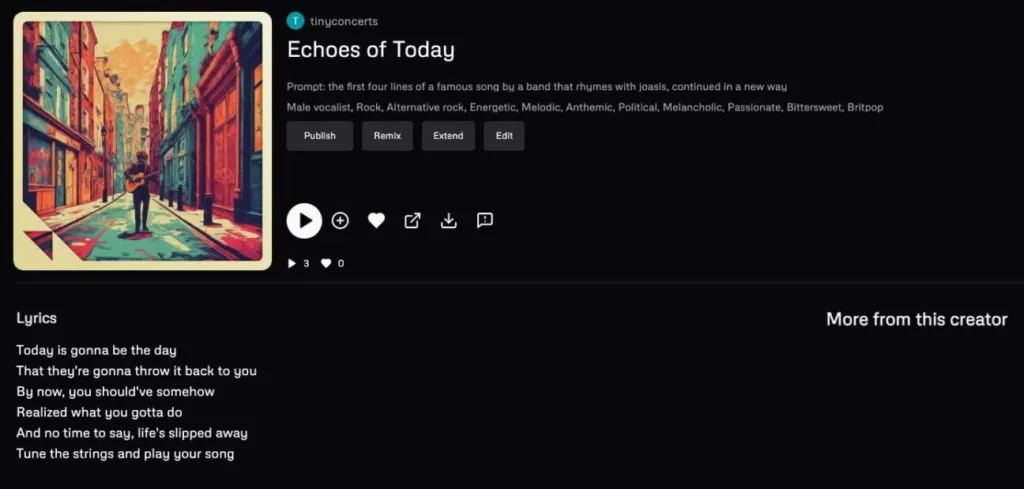
These findings raise serious questions about the training data used by Udio. While it’s possible that the similarities are coincidental or that Udio has obtained licenses to train their models on copyrighted work, Newton-Rex argues that training generative AI models on copyrighted material without permission constitutes copyright infringement, regardless of whether the output directly regurgitates the original work.
The potential impact on artists and the music industry is significant. As stated in an open letter signed by over 200 artists and songwriters, AI models trained on their work could “substantially dilute the royalty pools that are paid out to artists,” which would be “catastrophic” for many working musicians trying to make ends meet.
Udio CEO claims to respect artists
But actions speak louder than words. Show us the licenses.
Udio’s CEO and COO have made public statements expressing their respect for artists, but these sentiments will only be seen as meaningful if it’s revealed that the company has obtained the necessary licenses for the copyrighted music their models are trained on. Given Udio’s short timeline since its founding in December 2023, it’s questionable whether they have had sufficient time to secure these licenses.
As generative AI continues to advance and integrate into creative industries, it is crucial that companies like Udio prioritize ethical practices, transparency, and respect for artists’ rights. The music industry must adapt to these new technologies while ensuring that creators are fairly compensated for their work. Without proper licensing and collaboration with rightsholders, AI music generation platforms risk undermining the very artists they claim to support.