Everything you need to know:
- UMG removed its catalog from TikTok in January due to failed negotiations over royalties, content moderation, and treatment of AI-generated music.
- This threatens TikTok’s ability to break new music hits due to loss of major artists like Taylor Swift and Drake.
- The dispute could impact how music labels value social media promotion versus direct revenue sharing, setting precedents for compensating creative works online.
On January 31st, music fans logging onto TikTok were in for a shock. Universal Music Group, home to pop juggernauts like Taylor Swift, Drake and BTS, had removed its sprawling catalog from the video platform in an escalating dispute over royalty payments and artistic control.
The move threatens to upend music discovery and promotion on TikTok, which has become a primary driver of hits with the power to turn virtually unknown songs into global smashes. However, UMG felt it had no choice after negotiations over a new licensing agreement collapsed amid accusations of bullying tactics and lowball offers from TikTok.
The current deal between UMG and TikTok was set to expire on January 31st. In an explosive open letter published days before, UMG claimed TikTok was effectively trying to build “a music discovery and consumption business without paying fair value for the music.”
Specifically, UMG took issue with three key areas: compensation, artificial intelligence, and online safety for artists. On payments, UMG said TikTok offered a “fraction” of the industry standard rate, despite accounting for around 1% of the label’s total revenue in 2022 as one of the largest social platforms.
UMG artists dominated the Billboard Hot 100 in 2023, with 12 of the top 19 hits. Losing exposure for songs by mega-stars like Taylor Swift, Drake and BTS threatened major promotional opportunities. But UMG wanted compensation reflecting TikTok’s outsized cultural impact.
On AI, UMG worried about user-generated remixes diluting royalty pools and reputations, as well as TikTok’s own tools encouraging “artist replacement.” The label even threatened legal action if illegitimate AI songs surfaced using their artists’ voices without permission.
Finally, UMG criticized TikTok’s “Whack-a-Mole” approach to moderating harmful content like hate speech, bullying and pornography that could endanger artists. With no resolution in sight, UMG made good on threats to withdraw its music.
Here’s a summary of the key issues:
Content Moderation: UMG criticized TikTok’s approach to moderating harmful/illegal content like hate speech, bullying and pornography as “Whack-a-Mole” and not adequately protecting artists.
Artificial Intelligence: UMG worried about user-generated remixes and mashups diluting royalty pools and artists’ reputations. It also opposed TikTok developing its own AI tools to generate music without compensation.
Control Over Artists’ Works: UMG took issue with TikTok claiming contractual rights to essentially sponsor “artist replacement” through unchecked AI content that could use their artists’ voices.
Lack of Policy on AI Music: UMG wanted stronger rules around how AI-generated works could incorporate existing songs, similar to YouTube’s agreements with labels on this issue.
Reputational Risks: UMG was concerned about the potential for illegitimate deepfake-style AI songs to surface and harm artists’ brands without their consent or payment.
Selective Music Removal: UMG accused TikTok of removing smaller UMG artists’ music during negotiations in an attempt to gain leverage, which it viewed as intimidation.
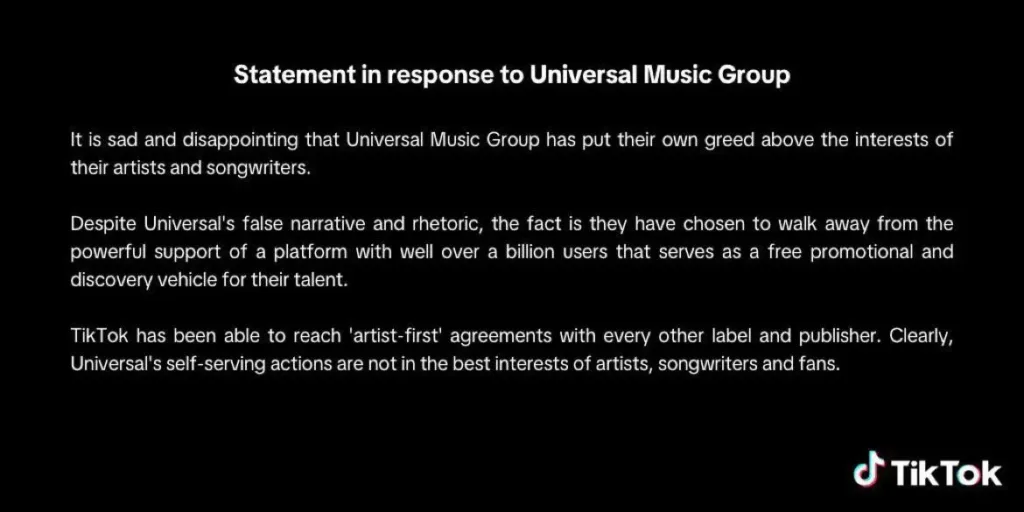
In response, TikTok accused UMG of “greed” and walking away from a “powerful” promotions platform. The company claimed to have deals with all other labels and publishers. But reports indicate Sony Music also wants higher short-video payouts, reflecting growing doubts about social media’s value as an unpaid endorsement.
ByteDance CEO Liang Rubo recently lamented insufficient focus on AI technologies, where TikTok lags YouTube’s partnership with labels. UMG isn’t against all AI but demands proper safeguards and compensation before popular songs could be algorithmically generated or altered without permission.
The move opens up a power struggle that could reshape the relationship between technology and creativity. In an interview with The New Yorker, UMG CEO Lucian Grainge painted a frightening vision of unregulated AI producing illegitimate songs using artists’ identities without compensation.
While exposure boosts streams and sales, the music industry now wants a fair stake in platforms’ advertising and data revenues. How TikTok and other social media balance promotion with fair deals could establish important precedents for creative rights in the digital era. The dispute continues, but one thing is clear – without popular catalogs, TikTok’s value as a breakout hit machine is seriously threatened.