7 Ways Musicians Can Prove They’re Human in the Age of AI Doubt (Ultimate Artist Guide)
My stack My fav 6 tools for AI music after testing 70+
-
 ElevenMusic · Music generation
 -
 Moises · Stem separation
 -
 Controlla · Voice swap & cloning
 -
 Cryo Mix · Mixing + mastering
 -
 Neural Frames · Music videos
 -
 ONCE · Distribution
Some links are affiliate links — I earn a commission at no cost to you. Every tool here is one I run myself and truly believe in. This stack is proven.
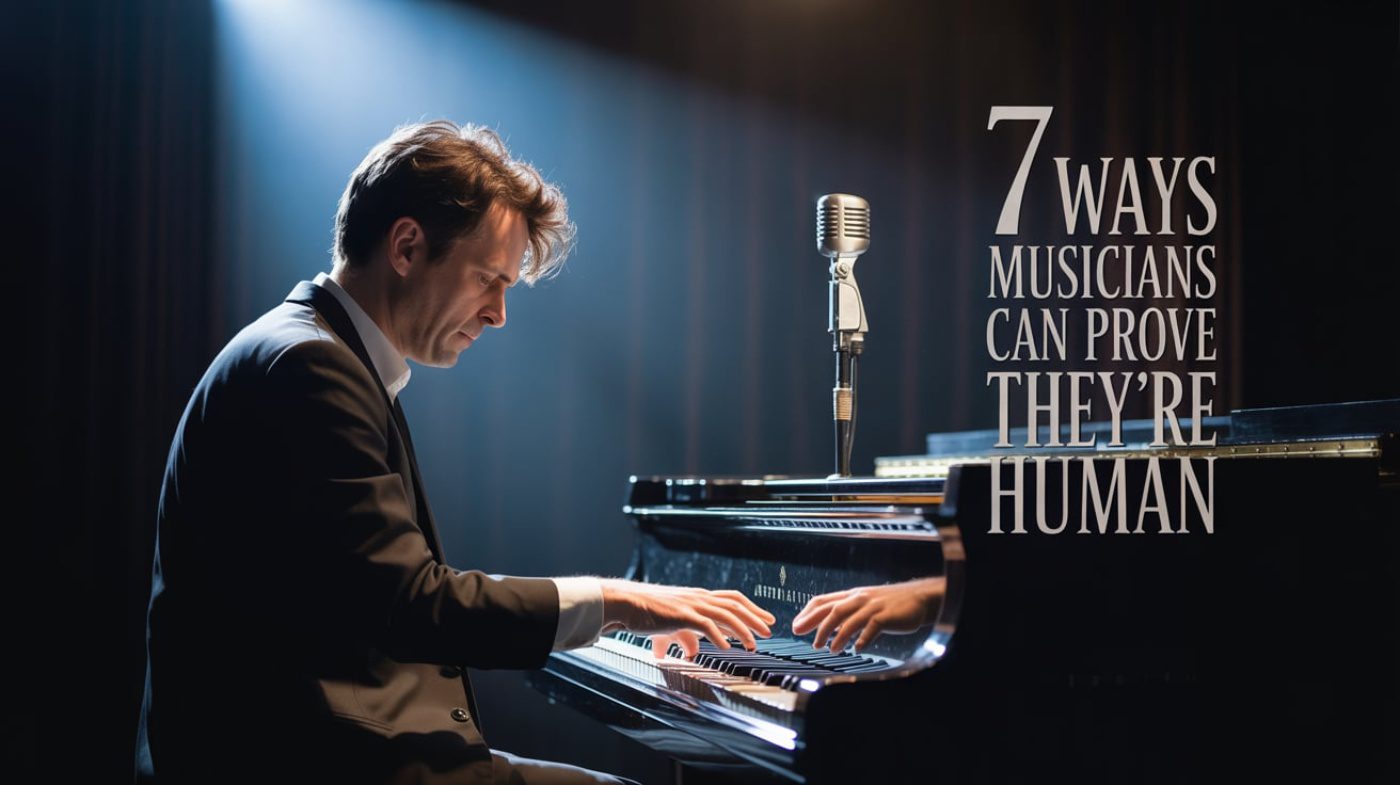
Musicians face new scrutiny as AI accusations spread across platforms and press outlets.
The Johnny Delaware case shows how quickly human artists get lumped with AI bands like The Velvet Sundown. Spotify groupings and Atlantic magazine coverage triggered a chain reaction of doubt. Your authenticity is now under a microscope.
Here are 7 tactics that help you prove your human origins to fans, press, and streaming platforms.
JUMP LINKS:
- 1. Document Your Creative Process From Start to Finish
- 2. Share Behind-the-Scenes Content Consistently
- 3. Maintain Professional Music Credits:
- 4. Engage in Real-Time Interactions With Your Audience
- 5. Provide Historical Evidence of Your Musical Journey
- 6. Use Technical Verification Methods
- 7. Build Personal Relationships Within the Music Industry
- Bonus 1: Create AI-Resistant Content That Machines Cannot Replicate
The 7 Strategies That Protect Your Human Identity as a Musician:
These methods work across digital and offline channels. Whether you’re an emerging artist or established musician, use these tactics to build an undeniable human presence.
Start with the first three for immediate impact.
1. Document Your Creative Process From Start to Finish
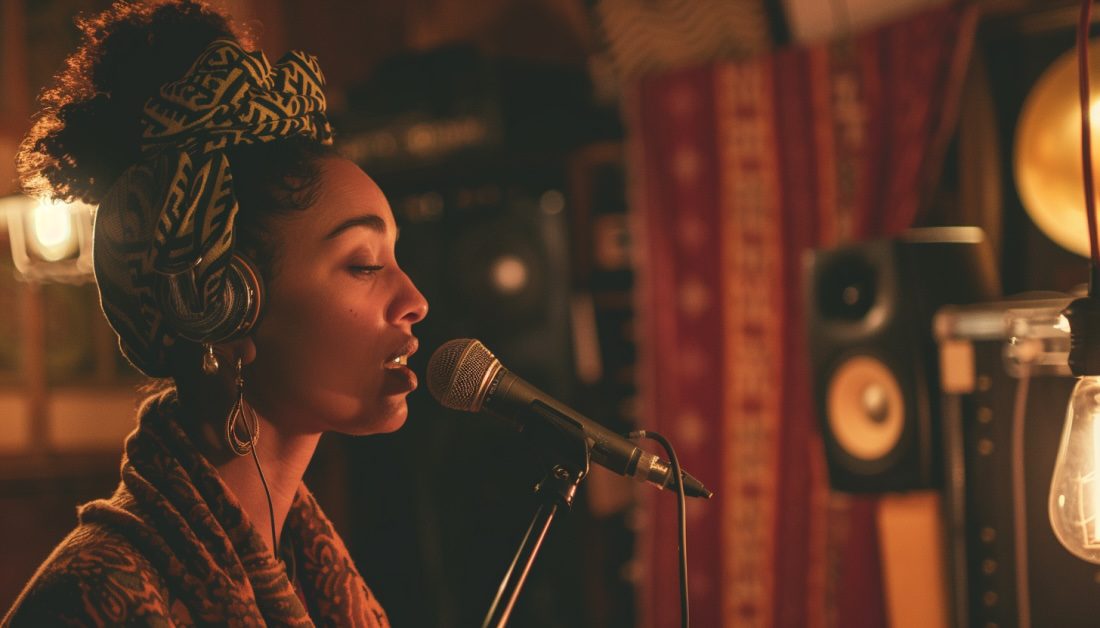
Your creation story becomes your strongest defense.
Musicians need proof points that AI cannot replicate. Studio sessions, songwriting notebooks, and instrument recordings create an authentic trail. Real artists leave messy, imperfect evidence that AI struggles to simulate.
Here’s what authentic documentation looks like:
- Voice memos of initial melody ideas
- Photos of handwritten lyrics and chord progressions
- Video clips showing multiple takes and mistakes
- Timestamps across different recording sessions
- Equipment lists with serial numbers and purchase dates
Example: Johnny Delaware could have avoided AI accusations by regularly sharing behind-the-scenes content from his recording sessions with producer Ryan “Wolfgang” Zimmerman.
2. Share Behind-the-Scenes Content Consistently
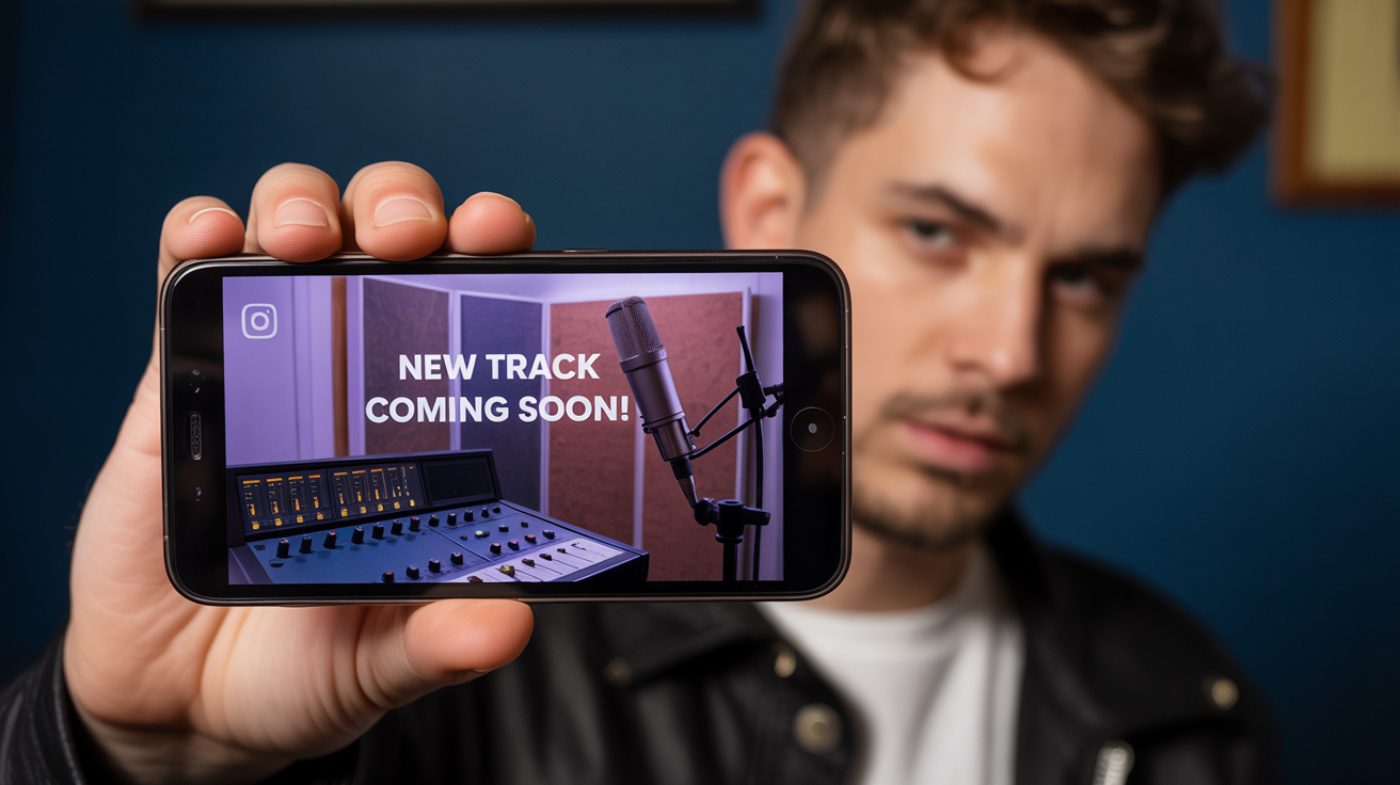
Transparency builds trust faster than finished products.
Your audience wants to see the human struggle behind great music. Show them practice sessions, recording fails, and creative frustration. AI generates perfect outputs, but humans create through trial and error.
Daily proof points that establish your presence:
- Instagram Stories from different studio locations
- Live streams of songwriting or practice sessions
- Photos with collaborators, producers, and session musicians
- Time-stamped social media posts showing creative evolution
Example: Post a video of yourself struggling with a difficult guitar part. The frustration and eventual breakthrough moment cannot be faked by AI.
3. Maintain Professional Music Credits:
Proper crediting on streaming platforms and music databases creates an official paper trail of your work. AI projects often lack detailed professional credits.
Register with performance rights organizations like ASCAP or BMI. Ensure your producer, engineer, and session musician credits appear on all releases. Submit your music to databases like AllMusic and Discogs with complete information.
Professional crediting checklist:
- Register with performance rights organizations
- Credit all collaborators on streaming releases
- Submit detailed information to music databases
- Maintain consistent artist name across platforms
- Document recording locations and dates
These official records create a verifiable history that AI projects typically cannot match.
4. Engage in Real-Time Interactions With Your Audience
Live interaction proves immediate human presence.
Respond to comments with personalized replies that reference specific details. Host live Q&A sessions where you answer unexpected questions. React to current events or trending topics in your posts. AI cannot match this level of contextual awareness and spontaneous response.
Quick ways to prove real-time humanity:
- Comment on fan posts using their names and specific details
- Host Instagram Live sessions with unscripted conversation
- Reference current news or local events in your posts
- Respond to messages within hours, not days
Your replies should feel conversational and include personal opinions that AI would avoid expressing.
5. Provide Historical Evidence of Your Musical Journey
Your past becomes your credibility foundation.
Dig up old recordings, performance videos, and photos from before AI music tools existed. School performances, early band photos, and amateur recordings from years ago create an impossible-to-fake timeline.
The AI music surge happened recently, but your musical history spans years or decades.
Essential historical proof points:
- Performance videos from 2020 or earlier
- Social media posts showing musical development over time
- Photos with instruments you’ve owned for years
- Recordings that predate advanced AI music tools
Quick rule: If you have content from before 2022, use it. That timeline predates most AI music capabilities.
6. Use Technical Verification Methods
Technology can prove human creation when used correctly.
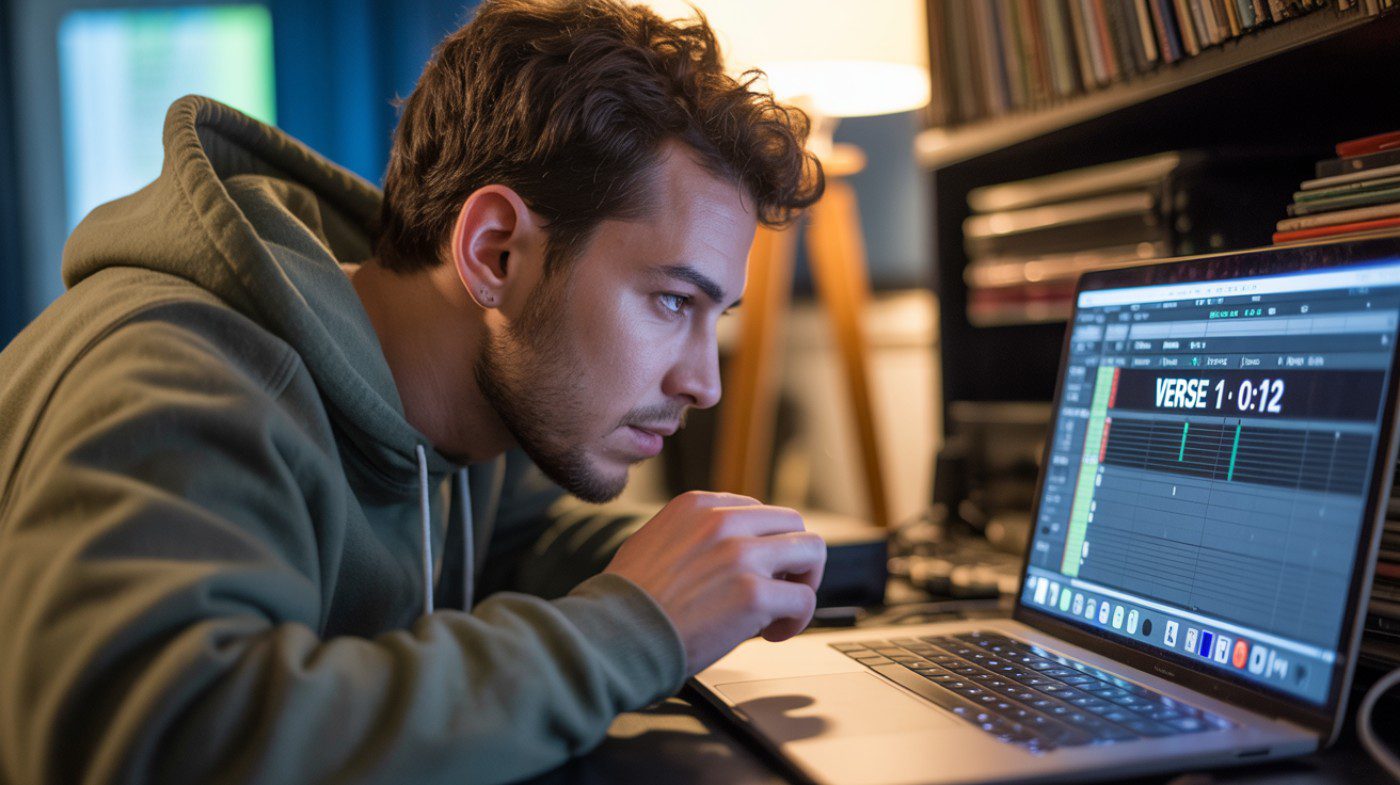
Digital audio workstation screenshots show your production process. Project files contain metadata that AI tools handle differently. Your recording chain includes specific equipment signatures that forensic audio analysis can identify. Some platforms now offer verification badges for human-created content.
Technical proof methods to consider:
- DAW project file screenshots with timestamp metadata
- Photos of your home studio setup with identifiable equipment
- Collaboration with verified human producers or engineers
- Audio analysis reports from detection services
Sony’s battle against 75,000 AI deepfakes shows how serious platforms take verification. Get ahead of this trend by building your technical proof library now.
7. Build Personal Relationships Within the Music Industry
Human networks validate human artists.
Connect with other verified musicians, producers, journalists, and industry professionals. Their endorsements carry weight when questions arise about your authenticity.
Collaborate on projects where your human contributions are witnessed by others. Attend industry events where people meet you face-to-face.
Network validation strategies:
- Collaborate with established human artists
- Work with recognized producers who can vouch for your process
- Build relationships with music journalists and bloggers
- Perform at industry showcases and networking events
Example: When music journalists meet you in person and watch you perform live, they become powerful advocates for your humanity.
Bonus 1: Create AI-Resistant Content That Machines Cannot Replicate
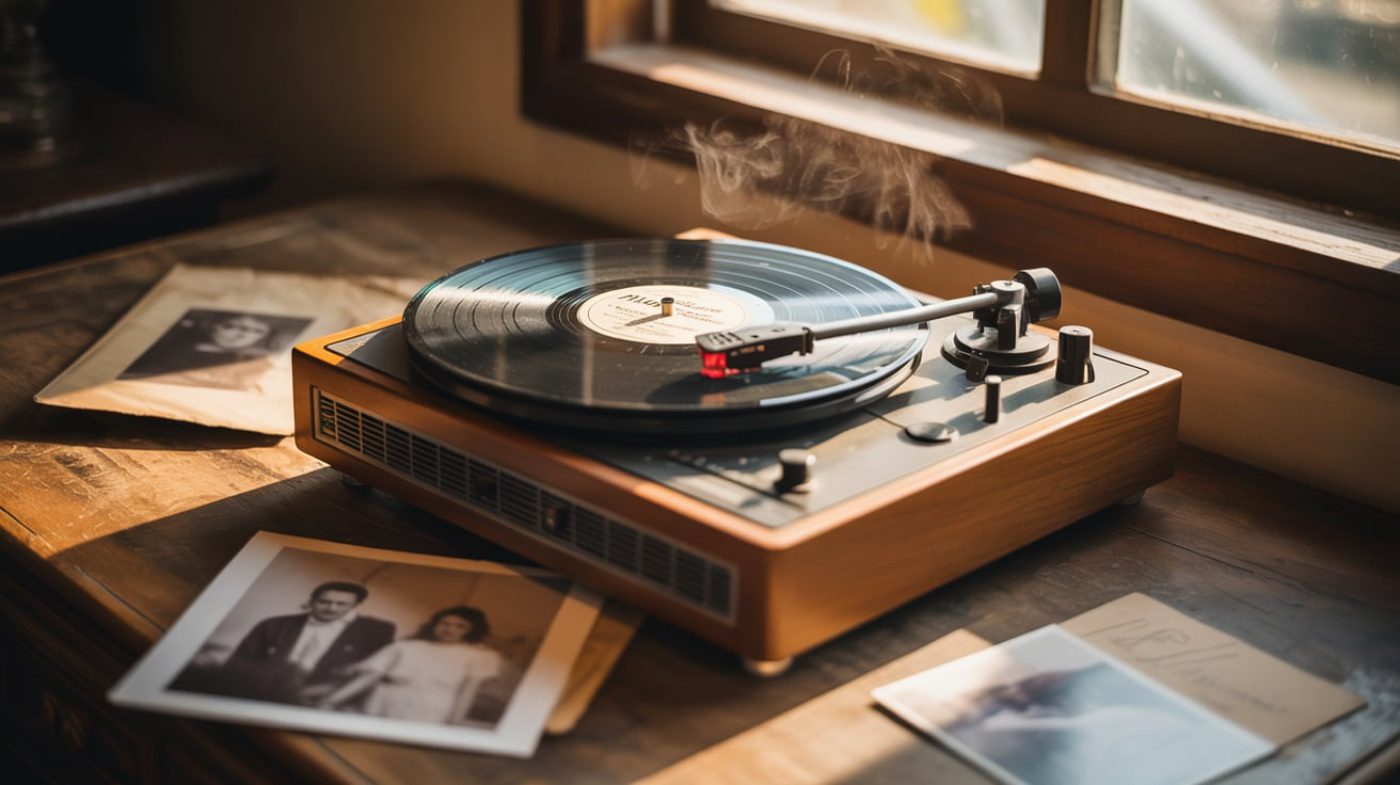
Some creative choices signal human authorship.
AI struggles with certain types of content that require lived experience, cultural context, or emotional nuance. Songs about specific personal memories, local references, or complex emotional situations feel distinctly human. Your imperfections, vocal quirks, and production choices become signatures.
Content types that prove human creation:
- Songs referencing specific personal experiences or memories
- Lyrics incorporating local slang or cultural references
- Vocal recordings with natural breath sounds and imperfections
- Production choices that prioritize emotion over technical perfection
Pro tip: The ELVIS Act protects artists from AI impersonation, but proving you’re human remains your responsibility.
Quick recap of the key takeaways:
- Document your messy creative process with timestamps and evidence
- Share behind-the-scenes content that shows human struggle and growth
- Maintain Professional Music Credits:
- Engage in real-time interactions that AI cannot replicate
- Use historical evidence from before AI music tools existed
- Apply technical verification methods and build proof libraries
- Build personal relationships that can vouch for your humanity
- Bonus: Create AI-resistant content using personal experiences and imperfections
Which strategy will you implement this week to start building your human credibility?
About the author

Covering AI music tools, industry shifts, and news for music creators and professionals. Twice-weekly newsletter at aimusicpreneur.com.