The rise of AI music generators allowing people to create new songs from simple text prompts has set off alarm bells in the songwriting community. While details are scarce on exactly what copyrighted works were used to train these AI tools, there are strong indications that songs and recordings by major artists were included without permission.

Everything you need to know:
✓ AI music generators spark outrage from big name songwriters
✓ But new tech also unlocks creative opportunities for artists
✓ The future: Will AI empower human music or replace it?
Sony Music fires a warning shot
Sony Music Group, home to labels like Columbia and RCA representing superstars like Adele and Beyoncé, has fired a warning shot. In an open letter, they cautioned hundreds of AI companies against training their models on Sony’s catalog without a license. Even bigger names like Nicki Minaj, Billie Eilish and Stevie Wonder joined the chorus, calling this practice “an assault on human creativity that must be stopped.”
Musicians are fearful of AI
For many working songwriters and musicians, this issue hits close to home. There is a humbling feeling that the most personal creative work is being mined to train AI without permission or compensation. Fears abound about music careers being devalued at a time when factors like low streaming royalties had already disrupted the industry.
“I know many working musicians…who are legitimately fearful of how their work is being devalued in the age of AI,” said Sharon Goldman writing for Fortune magazine who has also released original songs over the past two decades. “These are often independent or mid-level artists who already had to adapt to an era of laughably low streaming royalties.”
But these AI tools also unlock incredible new creative opportunities for artists to explore. Influential producer Metro Boomin pushed back on AI music in an open letter, only to accidentally sample an AI-generated Drake vocal impression on a viral new track.
Udio’s CEO David Ding believes there will always be a place for human artists that fans connect with beyond just the music.
“People love their artists. They are attached not only to the music, they also attach to the stories and personalities that are behind the music.”
Udio CEO David Ding
The emergence of AI music generators
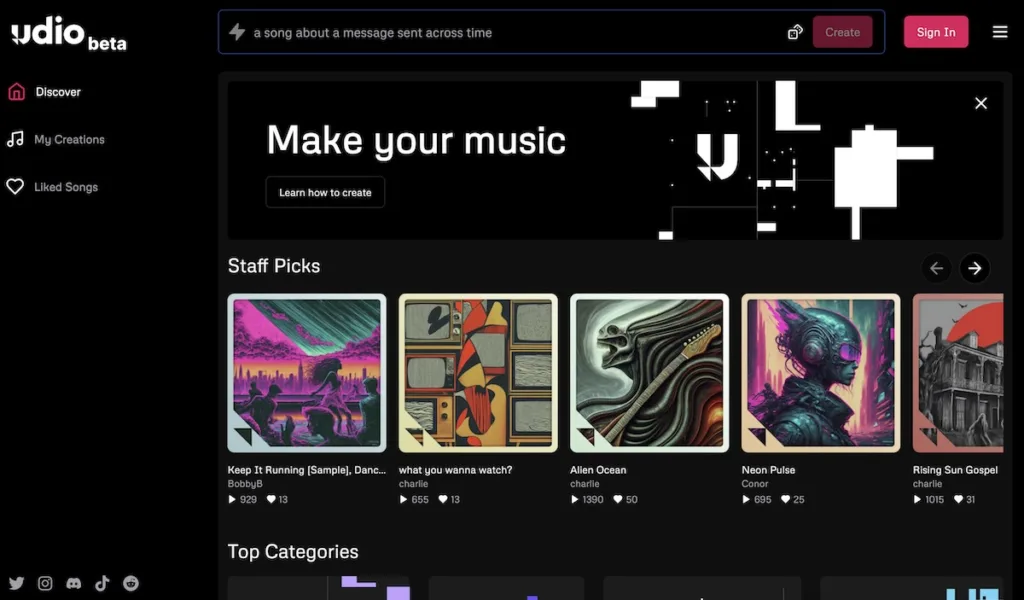 Screenshot of AI music tool Udio
Emerging AI tools from companies like Udio, ElevenLabs, and OpenAI’s Suno now allow users to create new songs simply by entering text prompts. Other products offer AI voice cloning capabilities that can mimic famous voices, as heard on the viral “Heart on My Sleeve” track imitating Drake and The Weeknd.
While the specific training data for these models is unclear, there are strong indicators that copyrighted music was used without proper licensing. Udio’s CEO David Ding admitted the tool was trained on “the best quality music that’s out there” and that “we are talking with different rights holders” about licensing going forward.
This has prompted a backlash from major music industry players. In an open letter, Sony Music Group warned hundreds of AI companies not to train models on its artists’ content without permission. The letter represents Sony’s intent to protect the rights of its signed acts which include global sensations like Adele, Beyoncé, and others.
Do AI music tools help or harm the music we know?
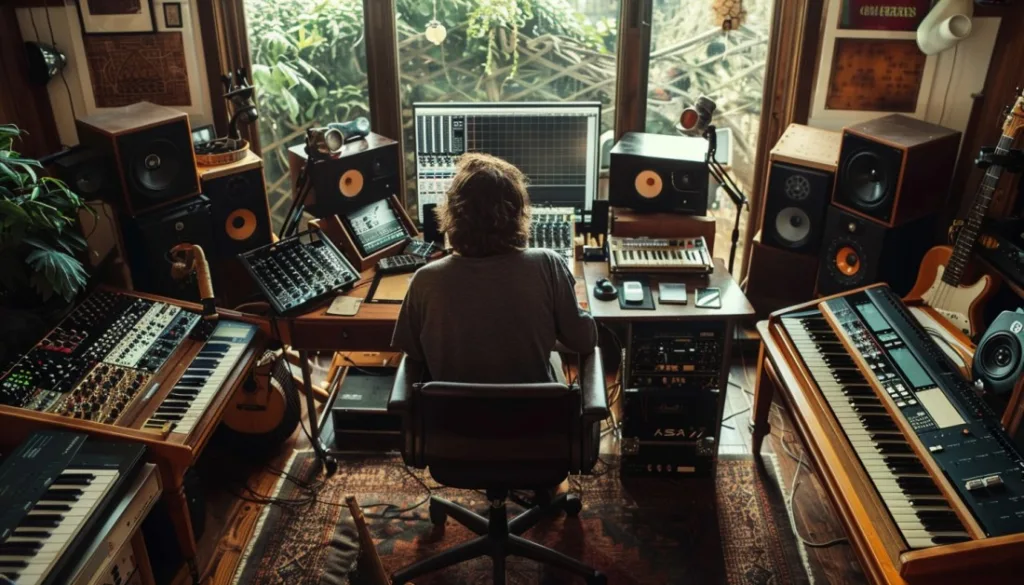
However, the emergence of AI music tools also enables new creative avenues and experiences for artists. For example, producer Metro Boomin signed the open letter against unauthorized AI use, but then accidentally sampled an AI-generated Drake vocal on his viral “BBL Drizzy” track.
“It’s easy to see the potential for new and unique AI-enabled music experiences,” I noted. Udio’s CEO remains optimistic about human artists: “People love their artists. They are attached not only to the music, they also attach to the stories and personalities that are behind the music.”
Perhaps paradoxically, AI music could empower rather than replace human songwriters and musicians. As Bob Dylan once said, “The world don’t need any more songs” but added “Unless someone’s gonna come along with a pure heart and has something to say. That’s a different story.”
AI music impact is like Napster & Limewire back then.
 Image Limewire
Ultimately, the conflict over AI music generation echoes previous battles over new technologies disrupting the music industry, like Napster and LimeWire’s impact years ago. A balanced path will need to be charted.
This means finding ways for AI companies to properly license and compensate the creators whose works are used to train models. It means open collaboration between the tech and music sectors. And it means reserving space for human artists to authentically connect with audiences through original songs.
While AI can produce impressive mimicry and could unleash new creative forms, the “human touch” of songs with honest emotion and meaning may endure. As veteran songwriter Bob Dylan reflected, “The world don’t need any more songs” unless they come “with a pure heart and something to say.”
As the AI music era dawns, that wisdom captures both the wonders and limitations of machine-made art. Perhaps AI’s role is not replacing human songwriters, but empowering their most authentic voices and the stories only they can tell.