In a recent interview with Billboard Canada, Vivien Lewit, Global Head of Artists at YouTube, discussed how the video streaming giant is aiming to support Canadian artists in the age of artificial intelligence (AI). As AI shakes up the music industry, YouTube sees tremendous opportunity but also complexity with the technology.
Everything you need to know:
✓ YouTube provides Canadian artists global reach to over 2B monthly viewers
✓ Programs like Black Voices and Artist on the Rise support emerging talent
✓ YouTube is partnering with labels on responsible AI tools for creators
Canadian artists are crushing it on YouTube
“The beauty for all artists and Canadian artists is the global reach,” Lewit told Billboard Canada. She noted that the platform draws over 2 billion monthly music video viewers globally, providing massive exposure for talent. Canadian hip-hop artist TOBi, a participant in YouTube’s Black Voices program, recently won two Juno awards. The program provides funding, mentorship and promotion to help creators grow their channels.
YouTube also spotlights local rising talent through initiatives like Artist on the Rise and Fifty Deep, a grant program for Black artists. The company makes a point to include and promote Canadian artists across all its marketing efforts.
Short-form video platform YouTube Shorts has been a huge driver of music discovery and fan engagement. Artists like viral pop duo Crash Adams and Punjabi rapper Karan Aujla have found massive audiences through Shorts. Aujla’s music videos drew 1.66 billion views globally in the past year alone.
What the “deepfake Drake” song means for the future
But along with the positive potential of tech, there are pitfalls. An AI-generated Drake and Weeknd song called “Heart On My Sleeve” that went viral last year sounded alarm bells about the disruptive power of AI. More recently, Drake himself used AI to mimic other rappers’ voices in a controversial new song.
“AI has brought us to yet another cusp of a new creative era,” Lewit said, drawing a parallel to the disruption caused by file-sharing in the 1990s. “There are tremendous possibilities associated with AI, yet complexities and problems for us to solve.”
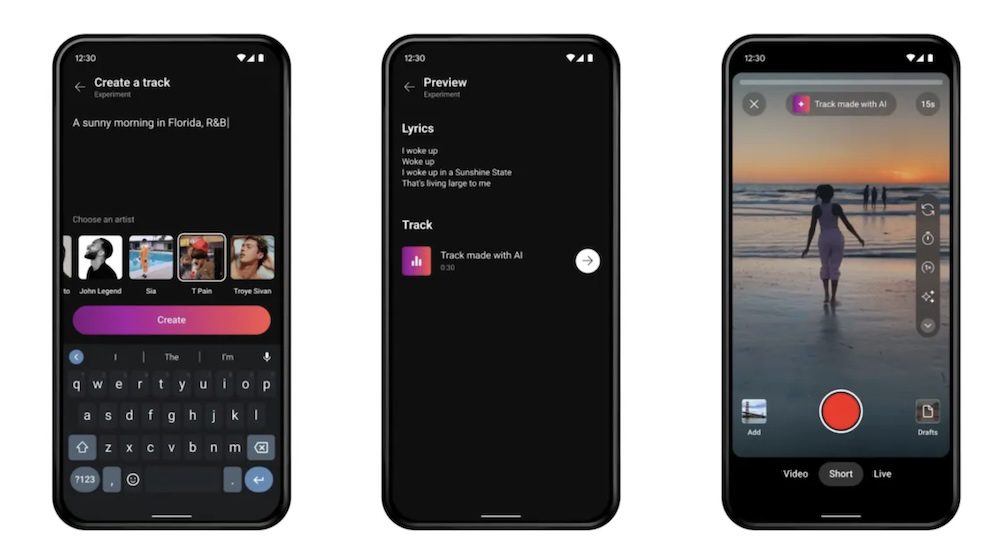
As over 200 artists called on music platforms to curb “predatory” AI voice mimicry, YouTube is taking a cautious approach. The company issued AI principles emphasizing responsible development in partnership with the music industry. They also launched an AI music incubator with Universal Music Group.
YouTube has given labels the ability to request takedowns of third-party AI content that uses an artist’s unique voice. And it now requires disclosure of any “synthetic content” in uploaded videos. Early experiments like letting select creators access custom AI voices aim to provide real-world learnings.
“We want to set a high standard for the future for artists, songwriters, producers, creators, labels and our publisher partners to succeed,” Lewit explained to Billboard Canada. “And that can then benefit the ecosystem on YouTube, [from] the creators to the fans.”
Navigating this new AI frontier will be an ongoing process as YouTube aims to balance innovation and artist support. But by working in close partnership with the music industry, the company hopes to unlock the creative potential of the technology while mitigating the risks. Time will tell how it all unfolds.