In a surprising and thought-provoking statement, renowned Dutch DJ and composer Tom Holkenborg, better known as Junkie XL, expressed his enthusiasm for artificial intelligence (AI) in music. Despite widespread concerns about AI potentially displacing musicians, Holkenborg welcomes the technology with open arms.
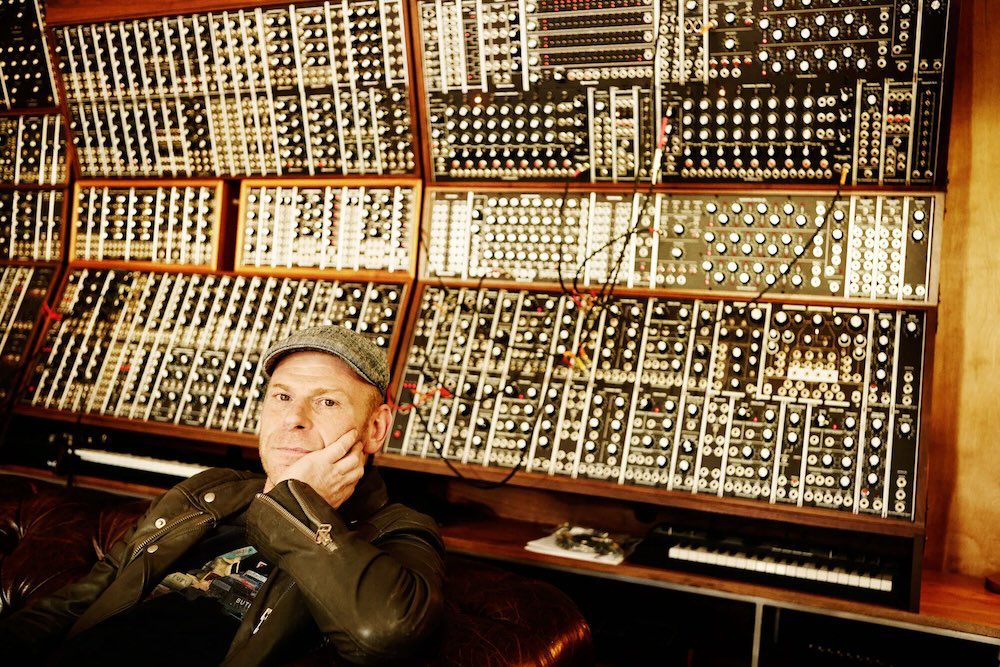
Everything you need to know:
✓ Junkie XL is excited about AI’s potential to enhance the music creation process
✓ He encourages musicians to embrace AI as a tool rather than fear it
✓ Holkenborg predicts AI will be integral to music production within 10-15 years
Legendary DJ Junkie XL sees AI as the next big thing in music
“I love AI, I embrace it,” Holkenborg declared in a recent video.
“I can’t wait until there becomes like a functioning software program where AI is really like integrated in the music making process and where a composer, a musician, a producer can steer the learning curve of AI to make better decisions.”
Tom Holkenborg aka. Junkie XL
Holkenborg, who famously reimagined Elvis Presley’s “A Little Less Conversation” into a worldwide smash hit, acknowledges the apprehension many feel about AI in creative fields. However, he sees it as part of a long history of technological disruption dating back to the Industrial Revolution in the 1800s.
“I know that a lot of people are afraid of the subjects and they might lose their job or whatsoever. This is a development that has been going on since the half 1800s when the Industrial Revolution started in England and certain professions were no longer needed.”
Tom Holkenborg aka. Junkie XL
Junkie XL worked with Hans Zimmer, scored blockbusters. Now, he’s championing AI.
Rather than resisting change, Holkenborg encourages musicians to embrace AI as a tool to enhance their craft. He compares it to pivotal inventions like the drum machine and synthesizer, which initially sparked fears among musicians but ultimately expanded creative possibilities.
While AI music generation is still in its early stages, Holkenborg believes it will advance rapidly. He predicts that within 10-15 years, or possibly as soon as 2029, AI will become an integral part of the music production process.
“It will happen at a certain point. My suggestion to everybody out there is embrace it, read about it, see what it can do, see what it doesn’t do, and the most important thing, use AI as your own personal tool.”
Tom Holkenborg aka. Junkie XL
Holkenborg’s optimism stems partly from his own experience leveraging technology to propel his career. From his early days with Dutch new wave band Weekend at Waikiki to his illustrious solo career and film scoring work, he has consistently adapted to and harnessed new tools.
His open-minded stance is particularly notable given his stature in the music industry. With a career spanning over three decades, Holkenborg has collaborated with the likes of Hans Zimmer, Robert Smith, and Dave Gahan, and scored blockbusters such as Mad Max: Fury Road, Deadpool, and Godzilla vs. Kong.
“Use AI to become a better composer,” urges Junkie XL
As AI continues to advance, Holkenborg’s perspective offers a refreshing counterpoint to the anxiety many musicians feel. By framing AI as a collaborator rather than a competitor, he suggests a path forward that embraces innovation while still centering human creativity.
Of course, the impact of AI on the music industry remains to be seen. Issues of copyright, attribution, and creative control will need to be navigated as the technology develops. But if Holkenborg’s outlook is any indication, AI may ultimately be welcomed into the musician’s toolkit as a powerful new instrument.
In the meantime, Holkenborg encourages experimentation and learning. “Use AI as a tool for you to become a better composer,” he urged. “To learn yourself, even if you will, and take it from there.”
While the future is uncertain, one thing seems clear: with influential figures like Junkie XL leading the charge, the integration of AI into music is not a matter of if, but when. As Holkenborg put it, “It’s not a matter of fighting it. It’s a matter of how can we use this to our advantage as musicians and keep evolving.”